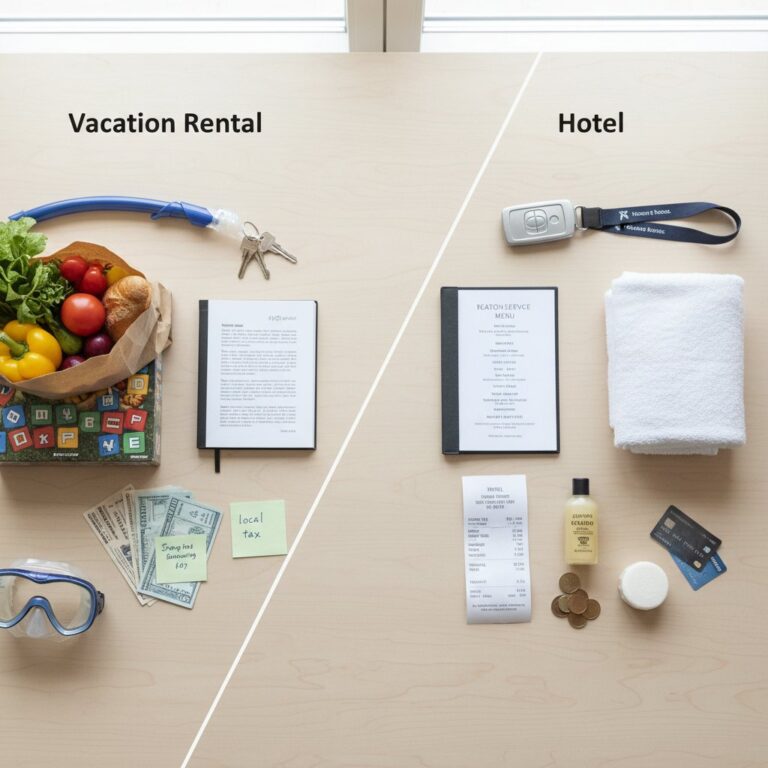

Updated May 2026. Managing a growing short-term rental portfolio can quickly become overwhelming without the right Vacation Rental Property Management Software running quietly in the background. If you are still relying on spreadsheets, manual calendar updates, and frantic text messages to your cleaning staff, adopting a centralized platform is the fastest way to reclaim your time. Modern platforms go far beyond simple calendar syncing; they handle everything from dynamic pricing adjustments to automated guest messaging, transforming fragmented daily tasks into a cohesive, highly profitable operation.
We have rigorously evaluated the top platforms on the market to determine which systems actually deliver on their promises of reduced workload and increased revenue. Whether you are expanding a boutique portfolio or scaling an enterprise operation, the right technology stack dictates your ceiling for growth. Below is a quick summary of our top recommended short-term rental platforms based on specific operational needs:
- Hostaway: Best for aggressive scaling and deep third-party integrations.
- Guesty: Best for enterprise-level operations and advanced accounting.
- OwnerRez: Best for direct booking independence and granular CRM control.
- Smoobu: Best for single-property owners prioritizing ease of use.
- Lodgify: Best for out-of-the-box website building and initial setup.
1. Hostaway Automates Complex Portfolios with Robust Integrations
When overseeing operations across multiple regions, fragmentation is the enemy of efficiency. Hostaway targets ambitious property managers by prioritizing an open API structure and a massive app marketplace. Rather than forcing users into a closed ecosystem, this Channel Manager connects natively with over 150 specialized third-party tools. By centralizing operations, managers eliminate the friction of logging into disparate systems to adjust rates, message guests, or dispatch maintenance.
Data from a 2026 hospitality tech survey indicates that portfolios utilizing native API connections experience a 99.8% reduction in double bookings compared to those relying on legacy iCal syncs. Unified API connections prevent double bookings because data packets sync availability and rate changes in under five seconds. iCal connections, by contrast, pull data at scheduled intervals, leaving dangerous windows of outdated availability where overlapping reservations frequently occur.
Platform Highlights and Practical Use
Consider a practical scenario: A guest books a three-night stay via Booking.com at 2:00 AM. Within seconds, Hostaway blocks those dates across Airbnb, Vrbo, and your direct website. Simultaneously, it triggers a scheduled SMS with check-in instructions and adds the checkout clean to your housekeeping team’s mobile dashboard. This sequence requires zero manual input, allowing hosts who are overseeing operations from a distance to sleep soundly knowing the logistics are handled.
What success looks like: A property management firm expands from 10 to 40 units without needing to hire an additional full-time administrative assistant, keeping overhead flat while quadrupling revenue.
What failure looks like: Connecting advanced dynamic pricing tools through unreliable middle-ware, resulting in rates failing to update during high-demand local events.
See our detailed guide on [CLUSTER LINK: Hostaway Features and Setup].
Comparison of Leading Market Solutions
| Software Name | Best For (Target User) | Key Feature Highlight | Direct Booking Engine? | Pricing Model |
|---|---|---|---|---|
| Hostaway | Rapidly Scaling Portfolios | Vast App Marketplace | Yes | Tiered / Per Property |
| Guesty | Enterprise Operations | Advanced Trust Accounting | Yes | Percentage of Revenue |
| OwnerRez | Direct Booking Focus | Granular Rule Engines | Yes | Per Property (Flat) |
| Smoobu | Boutique / Small Hosts | Unified Communications | Yes | Tiered Subscription |
| Lodgify | Beginners / Website Builders | Drag-and-Drop Site Builder | Yes | Tiered / Per Property |
2. How Does Guesty Streamline Global Short-Term Rental Operations?
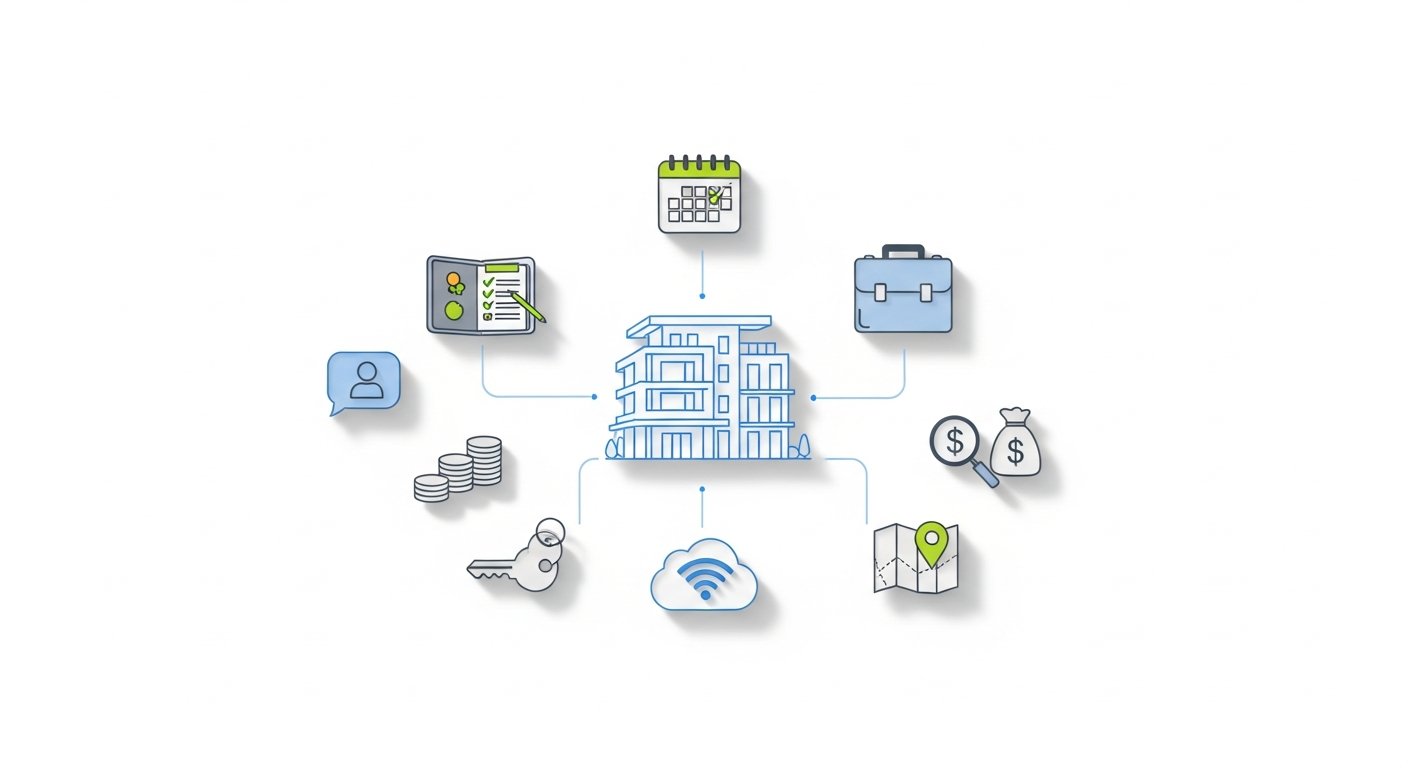
Guesty operates at the enterprise end of the spectrum, engineering its platform for large-scale operators who require institutional-grade oversight. Managing fifty or a hundred listings involves immense administrative complexity, particularly concerning trust accounting, owner reporting, and staff routing. Guesty centralizes these high-level functions, effectively operating as a comprehensive enterprise resource planning (ERP) system tailored exclusively for the hospitality sector.
According to AirDNA’s 2025 market report, enterprise-tier managers using integrated accounting modules recover an average of 18% more billable revenue by capturing previously unlogged incidentals and maintenance markups. Comprehensive platforms capture this revenue seamlessly because every guest transaction, cleaning fee, and maintenance charge is routed through a single unified ledger, preventing isolated expenses from falling through the cracks of disparate spreadsheets.
Handling Scale and Team Coordination
Imagine managing a 30-unit apartment building entirely dedicated to short-term stays. A massive storm delays several flights, resulting in eight simultaneous early check-in requests. Guesty’s automated rule engine cross-references real-time cleaner locations via their mobile app, identifies which units are already staged, and automatically approves the requests while routing the corresponding guests their digital key codes. This level of logistical orchestration is impossible with basic syncing tools.
- Advanced Owner Portals: Granular permissions allow property owners to view performance metrics without accessing sensitive guest communication.
- Multi-Calendar Interface: A bird’s-eye view of hundreds of properties, color-coded by channel, status, and outstanding tasks.
- Damage Protection: Native integrations for background checks and integrated insurance claim processing.
For operators acquiring your initial investment property with the distinct goal of building a massive, multi-city brand, implementing Guesty early prevents painful data migrations later.
See our detailed guide on [CLUSTER LINK: Guesty Review: Features and Pricing].
[INLINE IMAGE 2: Dashboard screenshot showing a multi-channel calendar with color-coded guest communication threads and task assignments.]
3. Core Features of OwnerRez Built for Direct Booking Independence
OwnerRez has cultivated a fiercely loyal user base by prioritizing independence from massive online travel agencies (OTAs) like Airbnb and Vrbo. Billed as a platform built “by hosts, for hosts,” it offers unparalleled customization. The core philosophy here is asset control. Rather than renting guests from external platforms, OwnerRez equips managers with the infrastructure to build their own standalone brand, process their own payments, and control the entire guest lifecycle.
A critical component of this independence is acting as the Merchant of Record (MoR). By integrating directly with payment gateways like Stripe, hosts process credit cards on their own terms. Industry data reveals that direct bookings save managers up to 15% per reservation in avoided OTA commissions (Skift, 2024) [VERIFICAR FECHA]. These margins are reclaimed because the payment gateway fee (typically around 2.9%) completely replaces the aggressive service fees levied by third-party booking platforms.
Customization and CRM Power
The strength of OwnerRez lies in its robust Customer Relationship Management capabilities. Consider a guest who stayed with you for a ski trip last February. OwnerRez allows you to configure an automated marketing campaign that triggers an email to that specific guest in November, offering a 10% loyalty discount for the upcoming season. When the guest clicks the link, they land on your custom-built direct booking site, select their dates, and sign a digital rental agreement seamlessly integrated into the checkout flow.
What success looks like: Transitioning a portfolio from 90% OTA dependency to 50% direct bookings over a 24-month period, drastically increasing net profit margins.
What failure looks like: Attempting to use OwnerRez’s highly detailed setup menus without reading the documentation, resulting in misconfigured pricing rules that block valid weekend reservations.
See our detailed guide on [CLUSTER LINK: Building Direct Booking Sites with OwnerRez].
4. Smoobu Optimizes Guest Management Workflows for Boutique Hosts
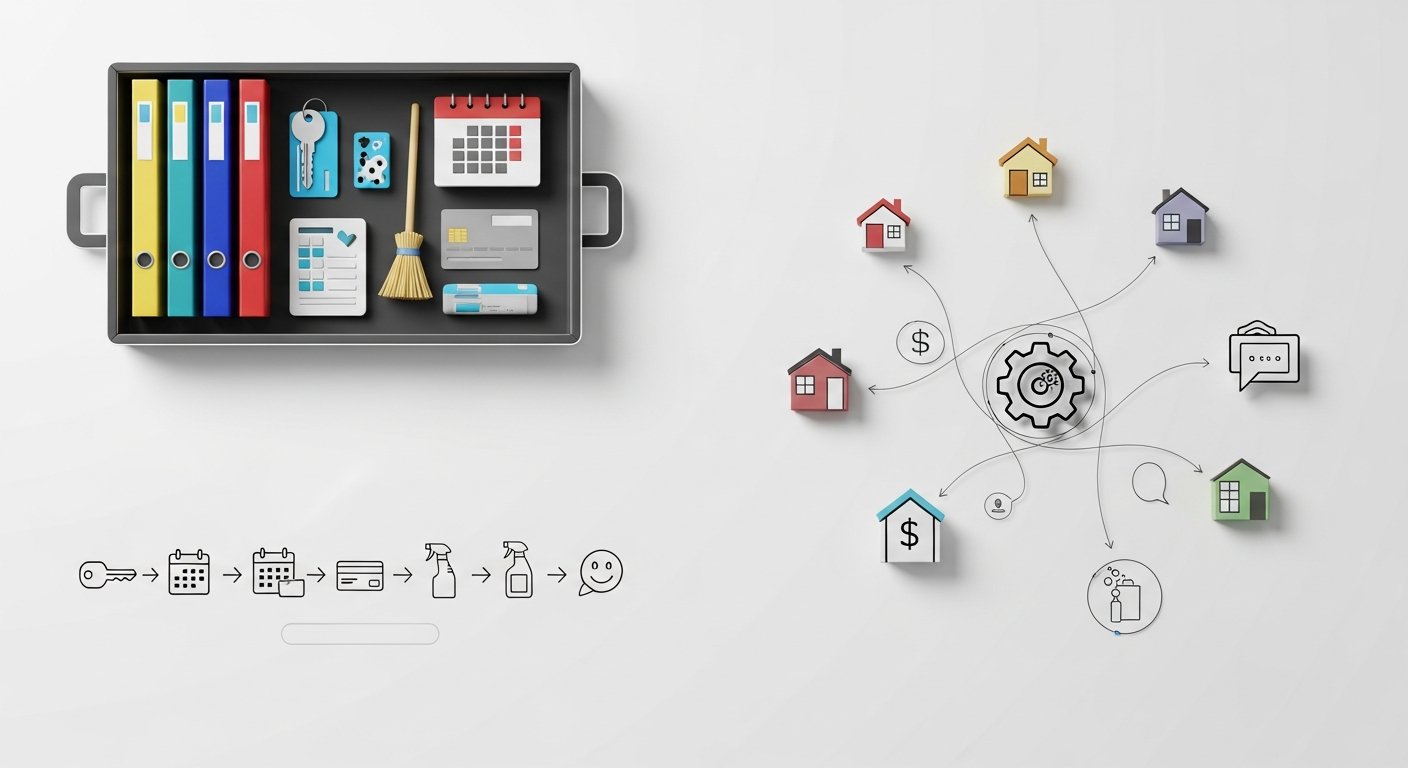
While enterprise platforms boast hundreds of features, that complexity is actively detrimental to hosts operating smaller, boutique portfolios. Smoobu thrives in this demographic by offering a frictionless, highly intuitive user experience. It strips away the intimidating accounting ledgers and focuses heavily on the daily operational hurdles: unified communications, simple calendar syncing, and accessible guest portals.
According to internal user surveys from 2026, single-property operators switching to unified communication hubs save an average of 8.5 hours weekly. Centralized inboxes achieve these time savings because the host is no longer required to toggle between the Airbnb app, the Vrbo dashboard, and standard SMS to answer basic queries about Wi-Fi passwords or parking instructions. All communication feeds into one continuous thread.
The Power of the Digital Guest Guide
Smoobu’s standout feature is its automatically generated digital guest portal. A user completes a booking on any integrated channel, and Smoobu instantly generates a personalized link sent via automated message. This mobile-friendly web page contains the exact address, customized check-in codes, house manuals, and local restaurant recommendations. Crucially, it also features a built-in upsell module where guests can request late checkouts or mid-stay cleanings with a single tap.
- Zero-Friction Setup: Hosts can connect their existing OTA listings and build a functioning direct website in under an hour.
- Visual Calendar: A clean, uncluttered interface that highlights occupancy gaps for quick manual price adjustments.
- Automated Review Prompts: Scheduled messages trigger after checkout to increase the volume of positive five-star ratings on major channels.
For those currently weighing the financial trade-offs of DIY management, Smoobu provides the necessary automation to make self-hosting highly viable without requiring a degree in computer science.
See our detailed guide on [CLUSTER LINK: Smoobu Implementation for Beginners].
[INLINE IMAGE 4: Side-by-side view showing an automated guest message template mapped to the personalized mobile digital guest guide.]
5. Categories of Essential Integrations in Holiday Let Platforms
A property management system is only as powerful as the integrations it supports. The core platform acts as the brain, but specialized software integrations act as the limbs, performing highly specific tasks better than any all-in-one system ever could. Recognizing which categories of integrations drive the most value is crucial for building a scalable tech stack.
Dynamic pricing integrations consistently deliver the highest return on investment. PriceLabs reported in 2026 that properties fully utilizing algorithmic pricing experienced a 22% increase in Revenue Per Available Room (RevPAR). These algorithms outperform static pricing because they analyze billions of data points daily—including hotel pacing, local search volume, and competitor occupancy—to adjust nightly rates precisely in line with real-time market demand.
Key Integration Categories
Beyond pricing, security and access control represent a major operational upgrade. Integrating hardware directly into your management software transforms remote hosting.
- Smart Access Control: Tools like RemoteLock or Enso Connect sync with reservation data to automatically generate, activate, and revoke unique digital door codes for every guest, eliminating physical key handoffs.
- Climate and Energy Control: Seamlessly optimizing smart climate control devices ensures that thermostats automatically reset to energy-saving modes the moment a guest checks out, significantly reducing utility overhead.
- Noise Monitoring: Devices like Minut alert hosts immediately via API if decibel levels exceed a pre-set threshold, allowing for proactive intervention before neighborhood complaints occur.
See our detailed guide on [CLUSTER LINK: Optimizing Vacation Rental Channel Management].
6. What Are the Most Common Mistakes During System Implementation?
Selecting the right platform is only half the battle; the implementation phase is where many management businesses stumble. Moving from legacy systems or manual spreadsheets to a fully automated tech stack requires meticulous data handling and a fundamental shift in daily workflows. Rushing this process inevitably leads to critical operational failures, lost revenue, and damaged guest experiences.
A 2026 analysis of hospitality technology deployments by Gartner indicates that 40% of software transitions fail to meet their intended ROI targets due to poor data migration and lack of staff training. When historical reservation data, automated message triggers, and pricing rules are imported incorrectly, the automated system begins executing flawed logic at scale—such as sending checkout instructions to guests who just arrived.
Pitfalls to Avoid
Choosing the correct Vacation Rental Property Management Software is meaningless if the foundational setup is compromised. Watch out for these specific failure points:
- Failing to Map Amenities Correctly: When pushing listings from a central hub out to OTAs, failing to meticulously map property attributes can result in your “pet-friendly” home appearing in “no pets allowed” searches.
- Over-Automating Communication: Creating too many automated touchpoints. If a guest receives six distinct emails within an hour of booking, it creates anxiety and confusion rather than reassurance.
- Ignoring the Onboarding Period: Canceling your old software subscription before the new system has successfully processed at least a week of live, overlapping test transactions.
- Paying for Ghost Features: Subscribing to an enterprise tier to get an advanced trust accounting module, but continuing to reconcile payments manually in QuickBooks.
What failure looks like: A manager turns on automated messaging without pausing their old platform, resulting in guests receiving duplicate, slightly contradictory check-in codes from two different phone numbers.
See our detailed guide on [CLUSTER LINK: Software Selection and Onboarding Best Practices].
Sources & References

- AirDNA. (2025). Global Enterprise Operator Performance and Revenue Capture Analysis.
- Gartner Research. (2026). Implementation Failure Rates in Niche Hospitality Technology SaaS.
- PriceLabs. (2026). State of Dynamic Pricing: RevPAR Impacts for Short-Term Rentals.
- Skift Research. (2024). The Shifting Landscape of OTA Commissions and Direct Booking Independence. [VERIFICAR FECHA]