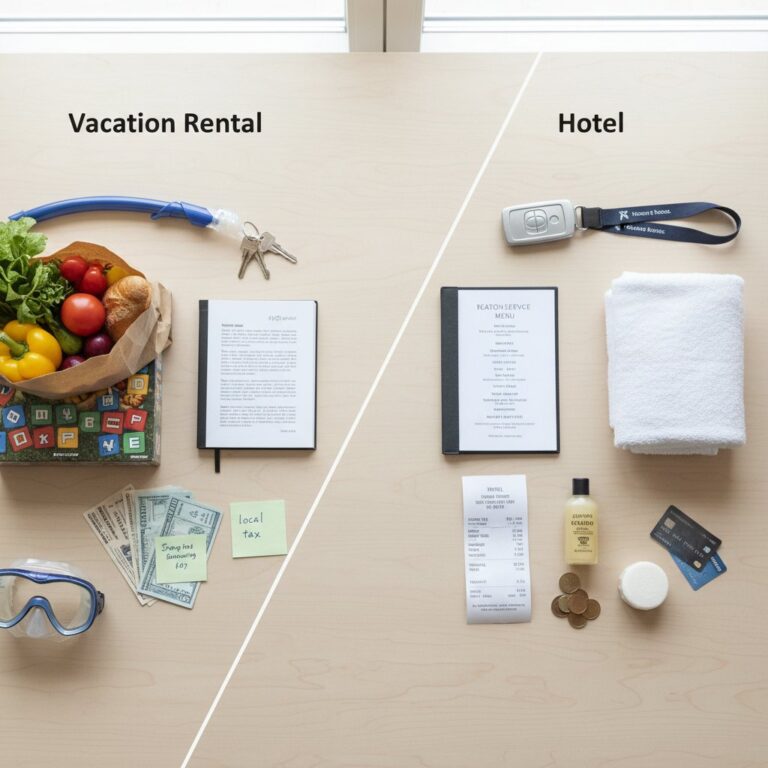

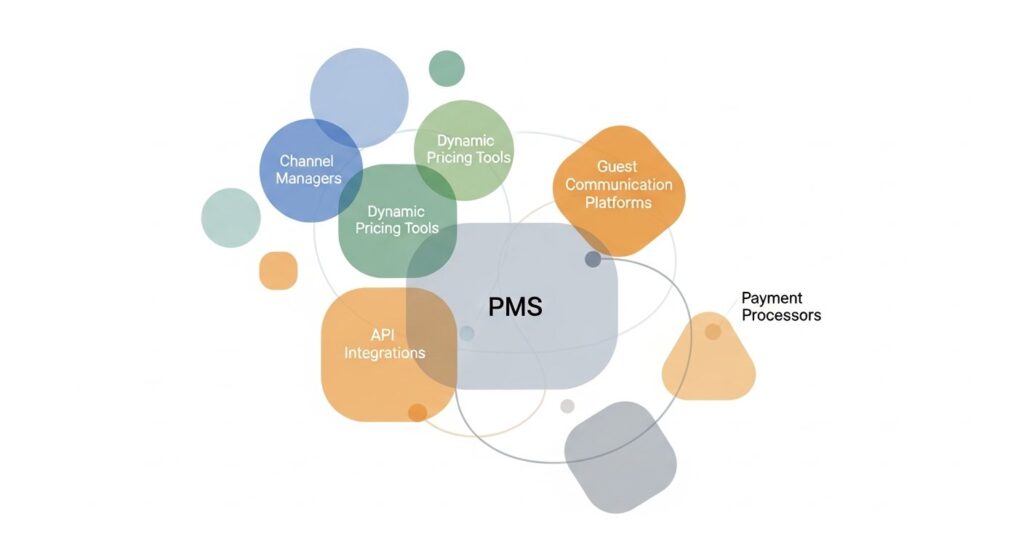
Updated April 2024. Managing a short-term property used to mean endless spreadsheets and late-night guest messages, but today, a modern vacation rental tech stack changes everything. By automating the heavy lifting, these integrated tools completely streamline property management for hosts at every level.
Whether you are hosting a single beachfront condo or scaling a massive portfolio of mountain cabins, relying on manual processes is a quick path to burnout. The right combination of software—from dynamic pricing engines to automated messaging platforms—acts as your round-the-clock digital property manager. This allows you to focus on delivering unforgettable guest experiences rather than getting bogged down by double-bookings or missed cleaning schedules.
In this comprehensive guide, we will break down the essential software components every modern host needs to stay competitive. We will explore how building a tailored technological ecosystem can increase your occupancy rates, protect your investments, and ultimately put your hospitality business on autopilot.
Why is a robust digital infrastructure crucial for short-term rental success?
Operating a hospitality business without a synchronized digital infrastructure is like flying a plane blindfolded. A comprehensive suite of property management tools is no longer a luxury; it is a fundamental requirement for survival in a highly competitive market. When hosts rely on fragmented systems, the risk of human error multiplies exponentially.
Consider the operational nightmare of a double booking. Without real-time calendar synchronization across platforms like Airbnb, Vrbo, and direct booking sites, a single property can be reserved by two different guests simultaneously. This leads to immediate cancellations, severe platform penalties, and irreparable damage to your brand reputation. By implementing a centralized digital ecosystem, calendar updates happen in milliseconds, entirely eliminating this risk.
Furthermore, a well-architected software environment drastically reduces overhead costs. Industry data indicates that automated guest communication and smart scheduling can save property managers up to 40 hours per week. Instead of manually coordinating with cleaning crews after every checkout, an integrated system automatically dispatches tasks based on real-time reservation data. This operational efficiency allows hosts to scale their portfolios without proportionally increasing their headcount.
Core Components of a Modern Rental Ecosystem
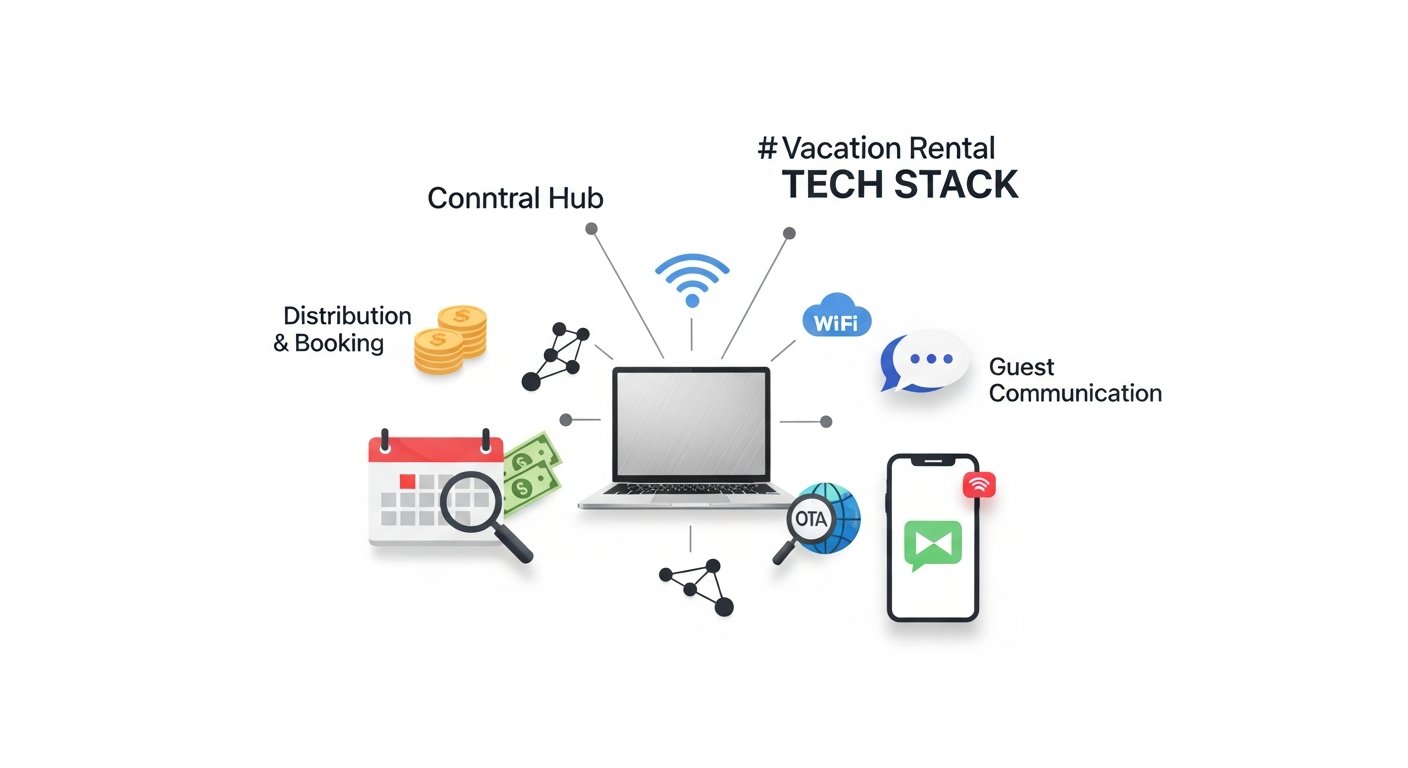
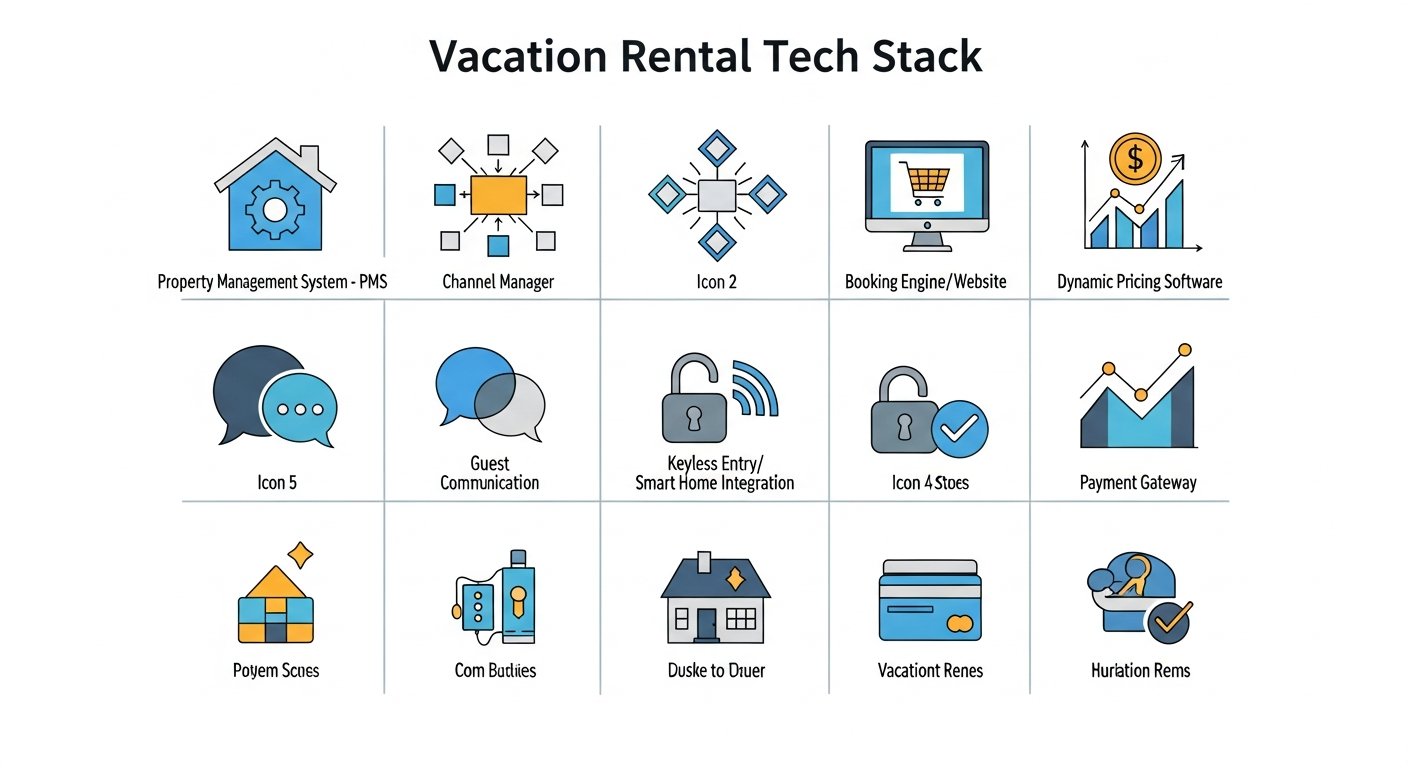
Building an effective operational framework requires selecting the right specialized tools. Each component serves a distinct purpose, working together to create a frictionless experience for both the host and the guest.
Property Management System (PMS)
The PMS is the central nervous system of your operations. It acts as the master database for all reservations, guest data, and property details. A robust PMS consolidates multi-channel bookings into a unified calendar, providing a single source of truth for your entire portfolio.
Channel Managers
While a PMS handles internal operations, a channel manager broadcasts your listings across the internet. It pushes your availability, rates, and minimum stay requirements to online travel agencies (OTAs) via API connections, ensuring parity and maximizing your property’s visibility.
Dynamic Pricing Engines
Static rates leave money on the table. Dynamic pricing software analyzes real-time market data, local events, seasonality, and competitor occupancy to automatically adjust your nightly rates. This algorithmic approach ensures you capture maximum revenue during peak demand while maintaining high occupancy during shoulder seasons.
Automated Guest Communication
Prompt communication is the cornerstone of excellent hospitality. Automated messaging platforms send triggered emails and SMS texts for booking confirmations, check-in instructions, and post-stay review requests. This ensures guests receive critical information exactly when they need it, without requiring manual intervention.
Smart Home Integration
Hardware and software must bridge the physical gap. Integrating smart locks, thermostats, and noise monitors directly into your central hub enhances security and reduces energy costs. For instance, unique access codes can be automatically generated for each reservation and revoked immediately upon checkout.
Trust Accounting Software
Managing owner payouts, taxes, and operational expenses requires specialized financial tools. Dedicated short-term rental accounting software automates ledger entries, simplifies tax compliance, and generates transparent financial statements for property owners.
Strategic Selection Drives Operational Excellence
Assessing Your Specific Business Needs
Every property portfolio demands an entirely unique approach. Before adopting new software, property managers must conduct a rigorous internal audit to identify their specific operational bottlenecks and guest communication gaps. Imagine managing a five-property portfolio in a mountain resort town where winter storms frequently delay cleanings. If your software cannot automatically trigger SMS alerts to incoming guests and adjust cleaning schedules dynamically, you will face cascading check-in failures. Aligning features directly with local operational hurdles works because it eliminates the friction of manual workarounds, allowing staff to focus on hospitality rather than logistics. Handling complex vacation rental cancellation policies requires specialized automation tailored to your unique market.
Considering Scalability and Future Growth
Growth breaks fragile systems. According to industry analyses of property management firms, those that prioritize API-first architectures scale their portfolios significantly faster than those relying on closed systems. We define an API-first architecture as a software design approach prioritizing seamless data exchange between different applications from the very beginning of development. A data-driven vacation rental investment relies heavily on interconnected platforms that handle increased transaction volumes effortlessly.
Budgeting and ROI for Technology Investments
Software expenses quickly accumulate if left unchecked. Careful financial planning ensures your digital tools generate actual profit rather than just operational overhead.
| Software Category | Immediate Cost | Long-term Value |
|---|---|---|
| Core Property Management | High | Centralized operations |
| Dynamic Pricing Tools | Medium | Immediate revenue lift |
Funding tools that maximize revenue through vacation rental guest loyalty programs often yields the highest measurable return.
Evaluating Vendor Support and Training
Even the most advanced digital ecosystem fails without adequate team onboarding. Ensure your staff completely understands standard vacation rental terms used within the platform to minimize daily friction.
See our detailed guide on software implementation timelines to ensure a smooth rollout.
How do you integrate diverse software solutions effectively?

Building a cohesive digital infrastructure requires more than just buying software. You must connect disparate tools so they communicate seamlessly. Isolated applications create data silos. Connected systems drive automation.
Understanding API Integrations and Webhooks
Most modern property software communicates through Application Programming Interfaces or webhooks. APIs allow two systems to request and exchange data on demand. Webhooks act differently. They automatically push data from one application to another the moment a specific action occurs.
Imagine a guest books your beachfront condo on a third-party channel. The booking platform immediately fires a webhook to your property management system. This triggers an event-driven architecture, a design pattern where state changes instantly initiate automated downstream workflows. Your smart lock software receives the signal, generates a unique door code valid only for the reservation dates, and texts the guest automatically. Because webhooks push data instantly rather than waiting for a scheduled sync, you eliminate the risk of double bookings and ensure guests are never locked out upon arrival.
Centralized Dashboards and Reporting
Managing fifteen properties across five different operational apps is unsustainable. You need a centralized dashboard to aggregate metrics from dynamic pricing tools, housekeeping schedules, and accounting platforms. Organizations with tightly integrated ecosystems resolve operational bottlenecks significantly faster. Centralization pulls raw data into a single unified view. This gives you immediate visibility into portfolio performance and operational friction points.
Data Synchronization Best Practices
Reliable integrations demand a clear hierarchy. Always establish your property management system as the single source of truth. If a cleaner updates a task status in a standalone housekeeping app, that change must write back to the central database immediately. One-way syncs often lead to conflicting records. Bidirectional synchronization ensures all connected platforms reflect the exact same reality at any given second. See our detailed guide on property management software data migration.
Troubleshooting Common Integration Challenges
Even the best systems occasionally falter. Connections drop. Authentication tokens expire. Knowing how to diagnose these failures keeps your business running smoothly.
| Integration Issue | Root Cause | Resolution Strategy |
|---|---|---|
| Rate Limiting Errors | Too many API requests sent within a short timeframe. | Batch data requests or upgrade your API tier. |
| Stale Calendar Data | iCal sync delays or broken webhook endpoints. | Switch to direct API connections instead of iCal feeds. |
| Authentication Failures | Expired OAuth tokens or changed passwords. | Implement automated token refresh workflows. |

[INLINE IMAGE 4: Flowchart diagram showing data flow from booking channel to PMS, smart locks, and accounting software in a short-term rental ecosystem.]
Emerging Technologies Shaping the Industry’s Future
The hospitality landscape is evolving rapidly. Property managers must look beyond basic software to stay competitive. Integrating these innovations into your operational framework ensures long-term viability and efficiency.
Artificial Intelligence and Automation
Imagine a guest messaging at 2:00 AM asking how to navigate a steep, icy driveway at a remote mountain cabin. An AI agent instantly retrieves the property’s digital manual, analyzes the context, and replies with precise, step-by-step parking directions. This immediate resolution happens because modern natural language processing models map incoming inquiries directly to specific data nodes in your property database. Instead of firing off generic templates, the system synthesizes a highly contextual response. AI-driven guest communication drastically reduces average response times while boosting direct booking conversions.
Smart Home Devices and IoT
Connected devices do more than just impress guests. They fundamentally protect your physical assets. Modern sensors monitor moisture levels under sinks and track decibel levels on patios. By utilizing edge computing, these smart devices process data locally at the property rather than relying on distant cloud servers. This localization ensures instant alerts if a pipe bursts or a party escalates, even during widespread internet outages.
Virtual Reality for Property Showings
Static photos no longer satisfy discerning luxury travelers. Immersive digital twins allow potential guests to walk through a property before booking. They can check the sightlines from the kitchen to the pool or evaluate the accessibility of the primary bathroom. See our detailed guide on virtual reality marketing for short-term rentals.
Blockchain for Secure Transactions and Payments
Financial security remains a top priority for property managers. Decentralized ledgers offer a new layer of protection against fraudulent bookings and disputed charges. Smart contracts automatically release funds only when specific conditions, like a verified smart lock entry, are met.
Sources & References
- VRMA (Vacation Rental Management Association). “The State of the Vacation Rental Industry.” VRMA.org.
- AirDNA. “Vacation Rental Technology and Automation Trends.” AirDNA.co.
- Skift Research. “The Property Management Software Ecosystem for Short-Term Rentals.” Skift.com.
About the Author
Mateo Rodriguez, Lead Travel Writer & Editor — I explore the globe, meticulously researching vacation rentals and crafting detailed guides to help you plan your perfect trip.
Reviewed by Dr. Anya Sharma, Senior Hospitality & Tourism Analyst — Last reviewed: April 2024