
Mastering Vacation Rental Terms: Your Essential Glossary for Flawless Stays in 2026
Affiliate disclosure: This article may contain affiliate links. Recommendations are independent and editorially driven.
Embarking on a vacation rental journey, whether it’s a cozy cabin for two or a sprawling villa for a family reunion, promises unique experiences and unparalleled freedom. However, the world of short-term rentals comes with its own lexicon, a collection of vacation rental terms that can sometimes feel like a foreign language. From understanding a “security deposit” versus a “damage waiver” to deciphering “flexible cancellation policies” and “occupancy taxes,” knowing these terms is not just helpful – it’s crucial for a smooth, enjoyable, and financially sound trip.
At vacationrentalplanners, we believe that informed travelers are happy travelers. This comprehensive guide is designed to demystify the most common and important vacation rental terms you’ll encounter. Our goal is to empower you to book with confidence, understand your rights and responsibilities, and avoid any unpleasant surprises, ensuring your 2026 vacation is nothing short of perfect. Dive in to become an expert in vacation rental lingo!
Understanding the Landscape: Key Players and Platforms
Before you even start browsing properties, it’s vital to grasp the ecosystem of vacation rentals. Knowing who you’re booking with and through can significantly impact your experience, from customer service to pricing and policy enforcement.
Online Travel Agencies (OTAs) vs. Direct Bookings
The first distinction you’ll often encounter is how properties are listed and booked. Understanding the difference between Online Travel Agencies (OTAs) and direct bookings is fundamental.
- Online Travel Agencies (OTAs): These are third-party platforms that aggregate listings from various hosts and property managers. Examples include Airbnb, Vrbo, Booking.com, and Expedia. OTAs offer convenience, a wide selection, and often provide dispute resolution services. However, they typically charge service fees to both guests and hosts, which can add to your overall cost. Their terms of service dictate how cancellations, refunds, and issues are handled, often superseding individual host policies to some extent.
- Direct Bookings: This refers to booking a property directly with the owner or a local property management company, bypassing OTAs. This can be done through dedicated property websites, local tourism boards, or even referrals. Direct bookings often offer more flexibility, potentially lower prices (by avoiding OTA fees), and direct communication with the decision-maker. However, you might have less built-in consumer protection compared to OTAs, so careful review of the rental agreement is paramount.
Expert Tip: Always compare prices between OTAs and direct booking options. Sometimes, the same property might offer a better deal or more flexible terms when booked directly, but consider the trade-off in terms of platform-provided safeguards.
Property Managers vs. Individual Hosts
Another crucial distinction is who is operating the rental property. This impacts the level of professionalism, communication style, and local support you can expect.
- Individual Host: This is typically a homeowner renting out their primary residence or a second home. Communication is often personal, and you might get unique local insights. Policies can sometimes be more flexible, but response times might vary, as hosting might not be their full-time job. Understanding an individual host’s specific expectations for their home is key.
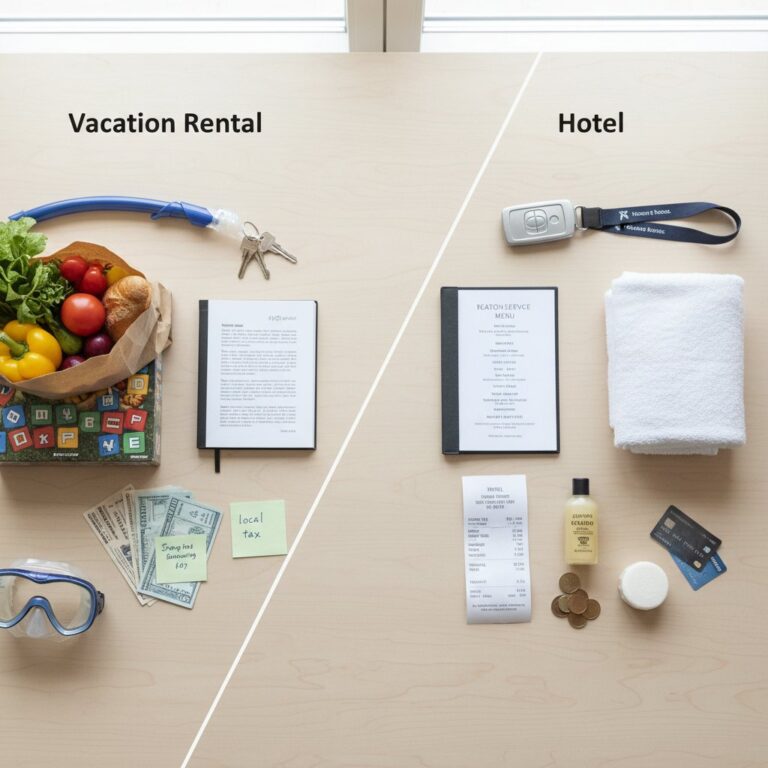
- Property Manager/Management Company: These are professional entities hired by property owners to handle all aspects of renting out a vacation home. This includes marketing, bookings, guest communication, cleaning, and maintenance. Property managers usually operate with more standardized procedures, professional staff, and 24/7 support. While they might feel less “personal,” they often provide a more hotel-like, consistent experience, especially for larger properties or multiple listings.
Expert Tip: For critical issues like last-minute cancellations or maintenance emergencies, a property manager often has more robust support systems in place. For a unique, personalized local experience, an individual host might be your preference. Look at reviews to gauge responsiveness regardless of who is managing the property.
[INLINE IMAGE 1: place after second H2 | alt=”vacation rental terms concept illustration”]
Navigating the Booking Process: Essential Pre-Arrival Terms
The journey from browsing to booking involves several critical steps, each with its own set of vacation rental terms. Understanding these ensures a smooth reservation and prevents financial misunderstandings.
Reservation & Payment Terms
How and when you pay is central to securing your booking. These terms dictate the financial commitment required.
- Booking Confirmation: This is the official document or email from the host or platform confirming your reservation details, including dates, property, price, and payment status. It’s your proof of a successful booking and often contains crucial information like check-in instructions or contact details.
- Deposit (Initial Deposit/Booking Deposit): Often, a percentage of the total rental cost (e.g., 20-50%) paid upfront to secure your dates. This initial payment locks in your reservation, with the remainder due closer to your arrival.
- Balance Due: The remaining amount of the total rental cost after the initial deposit has been paid. The due date for the balance is critical; missing it can result in cancellation of your booking and forfeiture of your deposit.
- Payment Schedule: A breakdown of when each payment (deposit, balance, any additional fees) is required. Always note these dates in your calendar to avoid issues.
- Payment Method: How you can pay (e.g., credit card, bank transfer, PayPal). Be aware of any associated transaction fees.
Expert Tip: Carefully review the payment schedule upon booking. Most platforms and hosts will have strict policies regarding late payments, which can lead to cancellation. If you anticipate issues, communicate proactively with your host or platform.
Cancellation Policies
One of the most important aspects to understand, cancellation policies dictate what happens if you need to change or cancel your reservation. They vary widely and significantly impact your potential refund.
| Policy Type | Description | Typical Refund Window | Guest Implication |
|---|---|---|---|
| Flexible | Full refund if cancelled within a certain period (e.g., 24-48 hours before check-in). After that, often a partial refund for unused nights. | Up to 24-48 hours before check-in | Maximum flexibility, good for uncertain plans. |
| Moderate | Full refund if cancelled within a longer period before check-in (e.g., 7 days). 50% refund after that, up to a closer deadline (e.g., 2 days). | Up to 7 days before check-in for full, 2 days for 50% | Good balance for planners, less strict than others. |
| Strict | Full refund often only within 48 hours of booking if cancellation is at least 14 days before check-in. 50% refund for cancellations 7-14 days before check-in. No refund within 7 days. | 7-14 days before check-in for 50%, very limited for full | Requires firm travel plans. Consider travel insurance. |
| Non-Refundable | No refund is given if the booking is cancelled, regardless of when. | No refund | Offers lowest rates but zero flexibility. Only for highly certain plans. |
| Long-Term | Specific policies for stays over 28-30 nights, often with a 30-day notice period for cancellation after check-in. | Varies, often 30 days notice post-check-in | Tailored for extended stays, different refund structure. |
Expert Tip: Always read the cancellation policy thoroughly BEFORE booking. If your plans are uncertain, opt for more flexible policies, even if they cost slightly more. Consider travel insurance for strict or non-refundable bookings, especially for significant investments or international travel. For more insights on safeguarding your trip, explore our guide on essential travel insurance tips.
Security Deposits & Damage Waivers
These terms protect the host against potential damage to their property during your stay.
- Security Deposit: An amount of money held by the host or platform to cover potential damages, excessive cleaning, or policy violations (like unauthorized pets). This money is typically authorized or charged before your stay and refunded in full after check-out, provided no issues are found. It’s important to understand the timeline for refund processing, which can sometimes take up to 14 days.
- Damage Waiver (or Property Damage Protection): Instead of a refundable deposit, some hosts or platforms offer or require a non-refundable fee that covers accidental damages up to a certain amount (e.g., $1,500). This fee is usually much smaller than a security deposit but is not refunded. It provides peace of mind against minor mishaps without a large sum being held.
Expert Tip: Document the condition of the property upon arrival with photos or videos. This can protect you if there’s a dispute over existing damage or if new damage is incorrectly attributed to you. Understand the claim process for both security deposits and damage waivers.
Booking Confirmation & Rental Agreement
These are the foundational documents of your rental. Don’t overlook them!
- Booking Confirmation: This is typically an email or message from the booking platform or host confirming your reservation, including dates, pricing, guest count, and sometimes basic check-in instructions.
- Rental Agreement (or Lease Agreement): A legally binding contract between the guest and the host/property manager outlining all terms and conditions of the rental. This document is far more detailed than a simple booking confirmation and covers everything from house rules, check-in/out times, payment schedules, cancellation policies, responsibilities for damages, and liability clauses. You may be required to sign this directly, especially for direct bookings or stays through property management companies.
Expert Tip: Always read the full rental agreement thoroughly before signing or completing your booking. This is where crucial details about your stay, including hidden fees or specific rules, will be found. If anything is unclear, ask for clarification before committing. Our site features an extensive article on what to look for in a vacation rental agreement.
Decoding Rental Types and Property Features
The variety of vacation rentals is immense, each offering a distinct experience. Understanding the terminology around property types and their features helps you find the perfect match for your travel style and needs.
Property Types
Beyond a generic “house,” vacation rentals encompass a wide array of dwelling types, each with its own charm and typical amenities.
- Apartment/Condo: Often found in urban areas or resort complexes, these are individual units within a larger building. They can offer amenities like shared pools, gyms, or concierge services.
- Villa: Typically a standalone, often luxurious, larger home, particularly popular in resort destinations or scenic countryside. Villas often come with private pools, gardens, and sometimes staff services.
- Cabin: A rustic or cozy home, usually in a rural or mountainous setting, often made of wood. Cabins evoke a sense of retreat and connection with nature.
- Chalet: Similar to a cabin but often larger and associated with ski resorts or alpine regions, characterized by a heavy, gently sloping roof and strong wooden construction.
- Houseboat/Floating Home: A unique accommodation option where your rental is on the water, offering distinctive views and experiences.
- Glamping: A blend of “glamorous” and “camping,” this involves staying in luxurious tents, yurts, treehouses, or geodesic domes, combining nature with upscale amenities.
- Tiny Home: Compact, cleverly designed living spaces gaining popularity for their minimalist charm and efficient use of space.
- Farm Stay: An opportunity to stay on a working farm, often involving interaction with farm animals and agricultural activities.
Expert Tip: Consider the specific type of experience you’re seeking. A villa might be great for a large family gathering needing space, while a tiny home offers a unique, intimate escape for a couple. Always verify the actual size and layout against your needs.
Amenities and Features
The extras that make your stay comfortable and enjoyable. Pay close attention to what is listed and what is implied.
- Full Kitchen: This usually means a kitchen equipped with a stove/oven, refrigerator, microwave, sink, and basic cookware and dishes. Confirm if smaller appliances like coffee makers, toasters, or blenders are included if important to you.
- En-suite Bathroom: A private bathroom directly accessible from a bedroom. This is a key feature for privacy and convenience, especially for multiple couples or adult groups.
- Wi-Fi/Internet Access: Essential for most travelers. Verify if it’s free, what the speed is, and if there’s a data cap.
- Pet-Friendly: Indicates that pets are allowed, though often with specific rules, restrictions (e.g., size, number of pets), and sometimes an additional fee or deposit.
- Pool Access (Private/Shared): Specifies whether the pool is exclusive to your rental or shared with other guests/residents.
- Air Conditioning/Heating: Crucial depending on the climate and season of your visit.
- Laundry Facilities (In-unit/Shared): Availability of a washer and dryer, either within your rental or in a common area.
- Smart Home Features: Technology like smart locks, voice-activated assistants, smart thermostats, or integrated entertainment systems.
- Hot Tub/Spa: Often a highly desired amenity, confirm if it’s private or shared, and if there are any additional costs for heating or maintenance.
Expert Tip: Don’t assume an amenity is included unless explicitly stated in the listing. If a specific amenity is crucial for your comfort (e.g., a high chair for a baby, accessible features), always message the host to confirm availability and condition before booking. For families, finding the right amenities is key to a successful trip, and we have dedicated resources on top family-friendly vacation rental amenities.
Occupancy Limits & Guest Policies
These terms define how many people can stay and who is allowed on the property.
- Maximum Occupancy: The strict limit on the number of people (adults, children, and infants included) allowed to stay overnight in the property. Exceeding this limit is a common violation that can lead to fines, immediate eviction, or loss of your security deposit.
- Guest Policies: Rules regarding visitors who are not staying overnight. Some properties might prohibit outside visitors entirely, while others allow them with prior notification or within certain hours.
- Events/Parties Prohibited: Most vacation rentals prohibit parties or large gatherings to prevent noise complaints, damage, and neighborhood disturbances. Always assume this is the case unless explicitly stated otherwise.
Expert Tip: Be upfront and accurate about your guest count. If your group size changes, inform the host immediately. Trying to sneak in extra guests can result in severe penalties and ruin your vacation.
ADA Compliant / Accessible Properties
For guests with disabilities, these terms are critical for ensuring a comfortable and safe stay.
- ADA Compliant: While strictly applicable to public accommodations in the US, some properties might use this term to indicate features designed to meet Americans with Disabilities Act standards, such as ramp access, grab bars, wider doorways, or roll-in showers.
- Wheelchair Accessible: Generally means the property has ramps or elevators, wide doorways, and potentially accessible bathrooms. Always verify specific features needed, as “accessible” can mean different things to different people.
- Service Animal Friendly: Properties that explicitly welcome trained service animals (as distinct from emotional support animals, which may have different regulations).
Expert Tip: Always communicate your specific accessibility needs with the host before booking. Photos and detailed descriptions are helpful, but direct communication ensures the property truly meets your requirements.
[INLINE IMAGE 2: place after fourth H2 | alt=”vacation rental terms comparison illustration”]
Arrival and Stay Essentials: Terms for a Smooth Experience
Once your booking is confirmed, understanding the procedures for arrival, during your stay, and departure will ensure a seamless experience.
Check-in/Check-out Procedures
The process of gaining access to and leaving the property.
- Check-in Time: The earliest time you are allowed to enter the property on your arrival day. Hosts often need time for cleaning and preparation between guests.
- Check-out Time: The latest time you must vacate the property on your departure day. This allows the cleaning crew to prepare for the next guests.
- Self Check-in: A common and convenient method where you don’t need to meet the host in person. This typically involves a key safe (lockbox), smart lock with a code, or a digital key accessed via an app.
- Key Exchange: Requires meeting the host or a representative in person to hand over keys. This is more common with individual hosts or properties without smart lock systems.
- Early Check-in/Late Check-out: Requests to arrive before the standard check-in time or leave after the standard check-out time. These are often subject to availability, require prior arrangement with the host, and may incur additional fees.
Expert Tip: Adhere strictly to check-in and check-out times unless you have explicit, written permission from the host for an alternative. Unauthorized early arrivals or late departures can lead to additional charges or inconvenience for the cleaning staff and next guests.
House Rules & Local Regulations
Every property has its own specific guidelines, and local areas have laws that apply to short-term rentals.
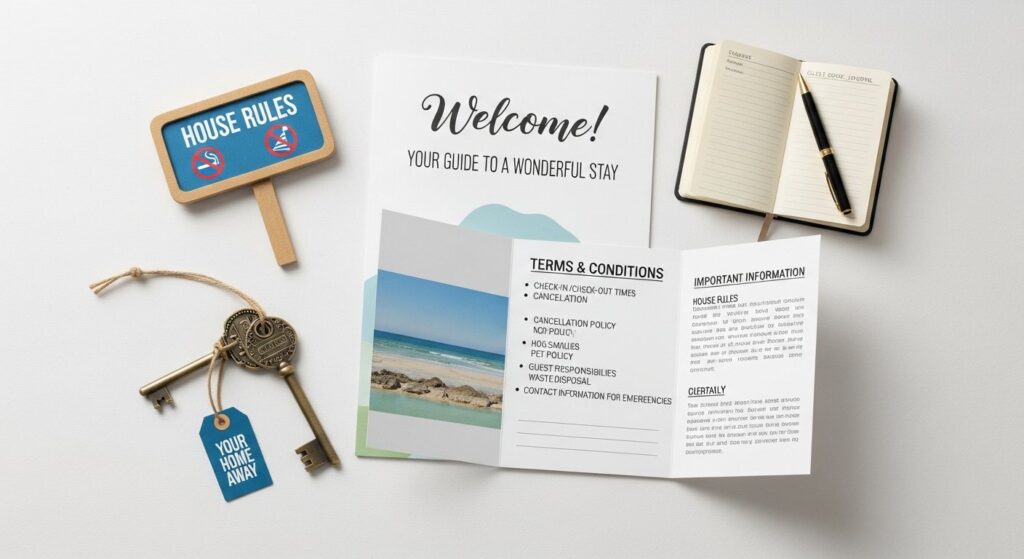
- House Rules: A set of guidelines established by the host to ensure the property is respected, neighbors are not disturbed, and safety is maintained. Common rules include quiet hours, no smoking, specific waste disposal instructions, shoe-off policies, or restrictions on using certain appliances.
- Quiet Hours: Designated times, usually late evening to early morning, during which noise levels must be kept to a minimum to respect neighbors.
- Local Regulations/Ordinances: Specific laws pertaining to short-term rentals in the destination. These can cover anything from tourist taxes, noise restrictions, parking rules, or specific waste management practices. Non-compliance can result in fines for both guests and hosts.
Expert Tip: Read the house rules thoroughly upon booking and again upon arrival. They are there for a reason. If you’re unsure about any rule, ask your host. Being a respectful guest who follows the rules contributes to positive reviews and a smoother stay.
Cleaning Fees & Expectations
Understanding cleaning terms ensures clarity on your responsibilities and costs.
- Cleaning Fee: A one-time charge added to the total cost of your booking, covering the expense of professional cleaning after your departure. This fee is non-refundable.
- Light Tidy-Up/Guest Responsibilities: Even with a cleaning fee, hosts typically expect guests to leave the property in a reasonable state, often including taking out trash, washing dishes, and tidying up any major messes. Failure to do so might result in additional cleaning charges deducted from your security deposit.
Expert Tip: Know what’s expected of you regarding tidiness before you check out. If you’re unsure, ask your host. Most hosts appreciate guests who leave the place respectfully.
Maintenance & Emergency Contacts
Knowing who to call and for what can make a significant difference in resolving issues quickly.
- Emergency Contact: The phone number or method of contacting the host or property manager for urgent issues (e.g., plumbing leak, power outage, lockout) that require immediate attention.
- Non-Emergency Contact: For less urgent questions (e.g., how to operate an appliance, local recommendations), there may be a separate contact method or slower response time.
- Maintenance Issues: Problems related to the property’s function (e.g., broken appliance, Wi-Fi not working). Guests are typically expected to report these promptly.
Expert Tip: Save the emergency contact details as soon as you receive them. In case of an emergency, having this information readily available can prevent escalating problems and ensure a quick resolution.
Financial & Legal Language: Understanding Your Obligations
Beyond the direct cost of the rental, there are often additional financial and legal terms that impact your budget and responsibilities. These are crucial for comprehensive vacation planning.
Rental Agreement / Lease
As mentioned earlier, this is the backbone of your booking. It’s the legally binding document detailing the terms and conditions.
- Term/Lease Period: The specific dates of your stay, from check-in to check-out.
- Governing Law: Specifies which jurisdiction’s laws will apply in case of a dispute. This is often the location of the property.
- Indemnification Clause: A clause where one party (often the guest) agrees to compensate the other party (the host) for any harm or loss suffered under certain circumstances, such as damages caused by the guest.
- Force Majeure: A clause that exempts both parties from liability or obligation when an unforeseen circumstance (e.g., natural disaster, war, pandemic) prevents them from fulfilling the contract. How this applies to refunds or rescheduling can vary widely.
Expert Tip: Never sign a rental agreement without reading it entirely. If you have any legal concerns or are making a significant booking, consider consulting with legal counsel. Pay particular attention to clauses regarding liability, cancellations, and dispute resolution.
Taxes & Fees
The total cost of your rental often includes more than just the nightly rate.
- Occupancy Tax / Tourist Tax / Lodging Tax: A tax levied by local or state governments on short-term accommodations. This can be a percentage of the nightly rate or a fixed amount per night/per person. It’s often added at checkout or included in the total price shown.
- Service Fee (Platform Fee): A charge by the booking platform (e.g., Airbnb, Vrbo) to cover their operational costs and services. This is typically a percentage of the booking subtotal and is usually displayed before final payment.
- Resort Fee: Some properties, especially within resort communities, may charge a mandatory daily or weekly resort fee to cover amenities like Wi-Fi, fitness center access, or shuttle services. This is often separate from the nightly rate and should be disclosed upfront.
- Additional Guest Fee: If your party exceeds a certain number of guests, some hosts charge an extra fee per person per night.
- Pet Fee: A non-refundable fee for bringing a pet, separate from a pet-related security deposit.
Expert Tip: Always look for the “total price” or “all-inclusive price” before confirming a booking. Many platforms now show this clearly. If booking directly, ask for a detailed breakdown of all potential charges to avoid hidden fees. Understanding these costs is part of savvy budget vacation planning.
Insurance
Protecting your investment and your trip.
- Travel Insurance: Purchased by the guest, this can cover trip cancellations, interruptions, medical emergencies, lost baggage, and sometimes even rental car damage. It’s highly recommended for significant travel investments or strict cancellation policies.
- Rental Damage Insurance: A specific type of insurance (sometimes offered through platforms or property managers) that covers accidental damage to the rental property, typically instead of a security deposit. This is different from your personal travel insurance.
- Host Liability Insurance: Insurance carried by the host to cover their liability in case a guest is injured on their property. This doesn’t protect the guest’s belongings or trip.
Expert Tip: Review your existing homeowner’s or renter’s insurance policy to see if it offers any coverage for personal belongings during travel. For broader protection, especially against unforeseen circumstances leading to trip cancellation, travel insurance is invaluable. Compare policies carefully to ensure they cover your specific concerns.
Emerging Trends and Specialized Terms in 2026
The vacation rental industry is constantly evolving, with new technologies and preferences shaping how we travel. Staying abreast of these emerging vacation rental terms can enhance your future bookings.
Smart Home Features & IoT (Internet of Things)
Modern rentals are increasingly equipped with technology to enhance convenience and security.
- Smart Lock: Keyless entry systems controlled via a keypad, smartphone app, or even remotely by the host. Enhances security and allows for seamless self check-in.
- Smart Thermostat: Devices like Nest or Ecobee that allow for remote temperature control, often pre-set by hosts for energy efficiency or personalized by guests within certain parameters.
- Voice Assistant Integration: Smart speakers (e.g., Amazon Echo, Google Home) that guests can use for music, information, or even controlling smart home devices within the rental.
- IoT Devices: A broader term for various internet-connected devices in the home, from smart lighting to security cameras (often exterior-only for guest privacy).
Expert Tip: Familiarize yourself with how these devices work if they’re present. Hosts should provide clear instructions. Always confirm the location and purpose of any security cameras, as interior cameras are generally not permitted when guests are present, unless explicitly disclosed and in public areas.
Digital Nomads & Long-Term Stays
With the rise of remote work, extended stays are becoming more common, bringing their own set of considerations.
- Digital Nomad: A person who works remotely while traveling, often staying in vacation rentals for weeks or months at a time.
- Long-Term Rental: Typically defined as a stay exceeding 28-30 nights. These bookings often come with different pricing structures (monthly rates), utilities policies, and sometimes distinct cancellation policies.
- Work-From-Anywhere (WFA) Ready: Properties specifically marketed to digital nomads, often featuring dedicated workspaces, reliable high-speed internet, and comfortable office chairs.
Expert Tip: For long-term stays, inquire about utility costs (sometimes separate), mail reception, and cleaning schedules. Monthly rates can offer significant savings compared to nightly rates. Consider properties with strong reviews regarding Wi-Fi speed and dedicated workspaces if you plan to work remotely.
Sustainable Travel & Eco-Certifications
Growing environmental awareness is influencing guest choices and host practices.
- Eco-Friendly/Sustainable Property: A rental that incorporates environmentally conscious practices, such as energy-efficient appliances, water conservation measures, waste reduction (recycling, composting), and locally sourced amenities.
- Green Certification: Formal certifications (e.g., LEED, Green Key Global) indicating that a property meets specific environmental standards.
- Carbon Offsetting: Some platforms or hosts offer options for guests to contribute to programs that reduce greenhouse gas emissions elsewhere, offsetting the carbon footprint of their travel.
Expert Tip: If sustainable travel is a priority, look for these terms in listings and don’t hesitate to ask hosts about their specific practices. Many hosts are proud to share their efforts in this area.
Experiential Stays & Add-ons
Beyond just accommodation, rentals are increasingly offering unique activities and services.
- Experiential Stay: A rental experience that includes or facilitates unique activities, such as cooking classes with a local chef, guided hikes, yoga retreats, or art workshops.
- Concierge Services: Available assistance for booking tours, restaurant reservations, transportation, or other local services, often provided by property managers for an additional fee.
- Welcome Package: A thoughtful gesture by hosts, often including local treats, basic necessities, or a guide to the area.
Expert Tip: These add-ons can significantly enhance your trip. If you see them advertised, inquire about pricing and how to book them. They often provide a deeper immersion into the local culture.
Common Misconceptions and How to Avoid Them
Even with a good grasp of vacation rental terms, misunderstandings can arise. Being aware of common pitfalls can save you stress and money.
The “All-Inclusive” Illusion
Unlike some resorts, vacation rentals are rarely “all-inclusive” in the sense of covering all meals, activities, and services by default.
- Misconception: Assuming that the rental price covers everything, including daily cleaning, meals, or guided tours.
- Reality: The base rental price covers the accommodation for the specified period. Most other services (like daily housekeeping, groceries, or excursions) are additional, though some luxury rentals may offer optional services at an extra cost.
How to Avoid: Read the listing details meticulously. If something isn’t explicitly mentioned as included, assume it’s not. Ask the host for clarification if you have any doubts about what’s covered. Look for clear descriptions of “included amenities” versus “services available for an additional fee.”
Hidden Fees vs. Transparent Pricing
The fear of unexpected costs is a common concern for travelers.
- Misconception: That hosts deliberately hide fees to surprise guests.
- Reality: While some fees might not be immediately obvious in the initial search results (like cleaning fees or service fees on OTAs), reputable platforms and hosts are generally transparent about all charges before you confirm your booking. The issue often stems from not reviewing the total breakdown.
How to Avoid: Always proceed to the final booking page where the complete price breakdown is displayed. This is where all taxes, cleaning fees, service fees, and any other charges should be itemized before you click “confirm” or “pay.” If booking directly, explicitly request a full itemized invoice. If a host asks for cash payments for fees not disclosed on the platform, consider it a red flag.
Reading Between the Lines of Reviews
Reviews are invaluable, but knowing how to interpret them correctly is an art.
- Misconception: Taking every review at face value without considering context or bias.
- Reality: Reviews are subjective. Some guests have unreasonably high expectations, while others might overlook minor issues. A single negative review among many positive ones might be an outlier, but a recurring theme across multiple reviews (e.g., “slow Wi-Fi,” “unresponsive host”) is a significant indicator.
How to Avoid: Look for patterns. Does the host consistently get praised for cleanliness and communication? Are there repeated complaints about a specific issue? Also, read the host’s responses to negative reviews; their attitude and willingness to address problems can tell you a lot. Consider the date of reviews; older issues might have been resolved. For families planning a trip, leveraging our review scouting guide can be incredibly helpful.
Expert Tips for Reviewing Rental Agreements
The rental agreement is the most important document you’ll interact with. Approaching it strategically can prevent many potential headaches.
Key Clauses to Scrutinize
While every clause is important, some demand extra attention:
- Payment Schedule & Refund Policy: Clearly understand when payments are due and what happens if you cancel. This is where strict cancellation policies will be detailed.
- Security Deposit/Damage Waiver Terms: How much is held, what can it be used for, and the timeline for its return. Look for clear definitions of what constitutes “damage” versus “normal wear and tear.”
- Occupancy Limits & Visitor Policy: Be absolutely clear on how many people are allowed to stay and if/when visitors are permitted.
- Check-in/Check-out Times & Fees: Note any charges for early arrival or late departure.
- House Rules & Penalties: Understand prohibitions (e.g., smoking, parties, specific pet rules) and the consequences for violating them.
- Liability and Indemnification: What are you responsible for, and what is the host responsible for? This can be complex, so read carefully.
- Dispute Resolution: How are disagreements handled? Is there a specific process or arbitration clause?
Expert Tip: Create a checklist of these key clauses and ensure you find satisfactory answers for each in the agreement. Don’t hesitate to highlight sections that seem ambiguous.
Questions to Ask Before Signing
Proactive communication is your best defense against surprises. If anything in the agreement or listing is unclear, ask!
- “Can you clarify the exact total cost, including all taxes and fees, for my specific dates?”
- “What is the exact process and timeline for the return of the security deposit?”
- “Are there any additional charges I might incur that are not listed here?”
- “What is your policy regarding maintenance issues during our stay, and who should we contact in an emergency?”
- “Can you confirm the maximum occupancy includes children/infants, or are they exempt?”
- “What is the expected level of cleanliness upon departure, beyond taking out the trash?”
Expert Tip: Keep all communication with the host or property manager in writing (e.g., through the booking platform’s messaging system or email). This provides a clear record if any disputes arise later.
Documenting Communication
A paper trail is your friend.
- Screenshot Important Information: Save screenshots of the listing description, prices, and any conversations.
- Keep Email Records: Retain all booking confirmations, rental agreements, and email exchanges.
- Photos/Videos: As mentioned, document the property’s condition upon arrival and departure. This is crucial for security deposit disputes.
Expert Tip: Treat your vacation rental booking with the same diligence you would any significant purchase. Thorough documentation protects both you and the host, leading to a more amicable resolution if issues ever arise.
The world of vacation rentals offers incredible opportunities for unique and memorable travel experiences. By investing a little time upfront to understand the common vacation rental terms and processes, you equip yourself with the knowledge to make informed decisions, avoid common pitfalls, and ensure your 2026 getaway is stress-free and exactly what you envisioned. Happy planning, and enjoy your perfectly understood stay!
Frequently Asked Questions
Q1: What is the difference between a security deposit and a damage waiver?
A1: A security deposit is a refundable amount of money held by the host or platform to cover potential damages or policy violations. It is returned after your stay if no issues are found. A damage waiver, conversely, is a non-refundable fee paid upfront that provides coverage for accidental damages up to a certain limit, replacing the need for a large security deposit. The damage waiver is not returned.
Q2: Why do vacation rentals have cleaning fees, even if I tidy up?
A2: Cleaning fees are a one-time charge to cover the cost of professional cleaning and sanitization after your stay, ensuring the property meets high standards for the next guests. Even if guests perform a “light tidy-up” (like washing dishes or taking out trash, as often requested), the fee covers deep
Mastering Vacation Rental Terms: Your Essential Glossary for Flawless Stays in 2026
Affiliate disclosure: This article may contain affiliate links. Recommendations are independent and editorially driven.
Embarking on a vacation rental journey, whether it’s a cozy cabin for two or a sprawling villa for a family reunion, promises unique experiences and unparalleled freedom. However, the world of short-term rentals comes with its own lexicon, a collection of vacation rental terms that can sometimes feel like a foreign language. From understanding a “security deposit” versus a “damage waiver” to deciphering “flexible cancellation policies” and “occupancy taxes,” knowing these terms is not just helpful – it’s crucial for a smooth, enjoyable, and financially sound trip.
At vacationrentalplanners, we believe that informed travelers are happy travelers. This comprehensive guide is designed to demystify the most common and important vacation rental terms you’ll encounter. Our goal is to empower you to book with confidence, understand your rights and responsibilities, and avoid any unpleasant surprises, ensuring your 2026 vacation is nothing short of perfect. Dive in to become an expert in vacation rental lingo!
Understanding the Landscape: Key Players and Platforms
Before you even start browsing properties, it’s vital to grasp the ecosystem of vacation rentals. Knowing who you’re booking with and through can significantly impact your experience, from customer service to pricing and policy enforcement.
Online Travel Agencies (OTAs) vs. Direct Bookings
The first distinction you’ll often encounter is how properties are listed and booked. Understanding the difference between Online Travel Agencies (OTAs) and direct bookings is fundamental.
- Online Travel Agencies (OTAs): These are third-party platforms that aggregate listings from various hosts and property managers. Examples include Airbnb, Vrbo, Booking.com, and Expedia. OTAs offer convenience, a wide selection, and often provide dispute resolution services. However, they typically charge service fees to both guests and hosts, which can add to your overall cost. Their terms of service dictate how cancellations, refunds, and issues are handled, often superseding individual host policies to some extent.
- Direct Bookings: This refers to booking a property directly with the owner or a local property management company, bypassing OTAs. This can be done through dedicated property websites, local tourism boards, or even referrals. Direct bookings often offer more flexibility, potentially lower prices (by avoiding OTA fees), and direct communication with the decision-maker. However, you might have less built-in consumer protection compared to OTAs, so careful review of the rental agreement is paramount.
Expert Tip: Always compare prices between OTAs and direct booking options. Sometimes, the same property might offer a better deal or more flexible terms when booked directly, but consider the trade-off in terms of platform-provided safeguards.
Property Managers vs. Individual Hosts
Another crucial distinction is who is operating the rental property. This impacts the level of professionalism, communication style, and local support you can expect.
- Individual Host: This is typically a homeowner renting out their primary residence or a second home. Communication is often personal, and you might get unique local insights. Policies can sometimes be more flexible, but response times might vary, as hosting might not be their full-time job. Understanding an individual host’s specific expectations for their home is key.
- Property Manager/Management Company: These are professional entities hired by property owners to handle all aspects of renting out a vacation home. This includes marketing, bookings, guest communication, cleaning, and maintenance. Property managers usually operate with more standardized procedures, professional staff, and 24/7 support. While they might feel less “personal,” they often provide a more hotel-like, consistent experience, especially for larger properties or multiple listings.
Expert Tip: For critical issues like last-minute cancellations or maintenance emergencies, a property manager often has more robust support systems in place. For a unique, personalized local experience, an individual host might be your preference. Look at reviews to gauge responsiveness regardless of who is managing the property.
[INLINE IMAGE 1: place after second H2 | alt=”vacation rental terms concept illustration”]
Navigating the Booking Process: Essential Pre-Arrival Terms
The journey from browsing to booking involves several critical steps, each with its own set of vacation rental terms. Understanding these ensures a smooth reservation and prevents financial misunderstandings.
Reservation & Payment Terms
How and when you pay is central to securing your booking. These terms dictate the financial commitment required.
- Booking Confirmation: This is the official document or email from the host or platform confirming your reservation details, including dates, property, price, and payment status. It’s your proof of a successful booking and often contains crucial information like check-in instructions or contact details.
- Deposit (Initial Deposit/Booking Deposit): Often, a percentage of the total rental cost (e.g., 20-50%) paid upfront to secure your dates. This initial payment locks in your reservation, with the remainder due closer to your arrival.
- Balance Due: The remaining amount of the total rental cost after the initial deposit has been paid. The due date for the balance is critical; missing it can result in cancellation of your booking and forfeiture of your deposit.
- Payment Schedule: A breakdown of when each payment (deposit, balance, any additional fees) is required. Always note these dates in your calendar to avoid issues.
- Payment Method: How you can pay (e.g., credit card, bank transfer, PayPal). Be aware of any associated transaction fees.
Expert Tip: Carefully review the payment schedule upon booking. Most platforms and hosts will have strict policies regarding late payments, which can lead to cancellation. If you anticipate issues, communicate proactively with your host or platform.
Cancellation Policies
One of the most important aspects to understand, cancellation policies dictate what happens if you need to change or cancel your reservation. They vary widely and significantly impact your potential refund.
| Policy Type | Description | Typical Refund Window | Guest Implication |
|---|---|---|---|
| Flexible | Full refund if cancelled within a certain period (e.g., 24-48 hours before check-in). After that, often a partial refund for unused nights. | Up to 24-48 hours before check-in | Maximum flexibility, good for uncertain plans. |
| Moderate | Full refund if cancelled within a longer period before check-in (e.g., 7 days). 50% refund after that, up to a closer deadline (e.g., 2 days). | Up to 7 days before check-in for full, 2 days for 50% | Good balance for planners, less strict than others. |
| Strict | Full refund often only within 48 hours of booking if cancellation is at least 14 days before check-in. 50% refund for cancellations 7-14 days before check-in. No refund within 7 days. | 7-14 days before check-in for 50%, very limited for full | Requires firm travel plans. Consider travel insurance. |
| Non-Refundable | No refund is given if the booking is cancelled, regardless of when. | No refund | Offers lowest rates but zero flexibility. Only for highly certain plans. |
| Long-Term | Specific policies for stays over 28-30 nights, often with a 30-day notice period for cancellation after check-in. | Varies, often 30 days notice post-check-in | Tailored for extended stays, different refund structure. |
Expert Tip: Always read the cancellation policy thoroughly BEFORE booking. If your plans are uncertain, opt for more flexible policies, even if they cost slightly more. Consider travel insurance for strict or non-refundable bookings, especially for significant investments or international travel. For more insights on safeguarding your trip, explore our guide on essential travel insurance tips.
Security Deposits & Damage Waivers
These terms protect the host against potential damage to their property during your stay.
- Security Deposit: An amount of money held by the host or platform to cover potential damages, excessive cleaning, or policy violations (like unauthorized pets). This money is typically authorized or charged before your stay and refunded in full after check-out, provided no issues are found. It’s important to understand the timeline for refund processing, which can sometimes take up to 14 days.
- Damage Waiver (or Property Damage Protection): Instead of a refundable deposit, some hosts or platforms offer or require a non-refundable fee that covers accidental damages up to a certain amount (e.g., $1,500). This fee is usually much smaller than a security deposit but is not refunded. It provides peace of mind against minor mishaps without a large sum being held.
Expert Tip: Document the condition of the property upon arrival with photos or videos. This can protect you if there’s a dispute over existing damage or if new damage is incorrectly attributed to you. Understand the claim process for both security deposits and damage waivers.
Booking Confirmation & Rental Agreement
These are the foundational documents of your rental. Don’t overlook them!
- Booking Confirmation: This is typically an email or message from the booking platform or host confirming your reservation, including dates, pricing, guest count, and sometimes basic check-in instructions.
- Rental Agreement (or Lease Agreement): A legally binding contract between the guest and the host/property manager outlining all terms and conditions of the rental. This document is far more detailed than a simple booking confirmation and covers everything from house rules, check-in/out times, payment schedules, cancellation policies, responsibilities for damages, and liability clauses. You may be required to sign this directly, especially for direct bookings or stays through property management companies.
Expert Tip: Always read the full rental agreement thoroughly before signing or completing your booking. This is where crucial details about your stay, including hidden fees or specific rules, will be found. If anything is unclear, ask for clarification before committing. Our site features an extensive article on what to look for in a vacation rental agreement.
Decoding Rental Types and Property Features
The variety of vacation rentals is immense, each offering a distinct experience. Understanding the terminology around property types and their features helps you find the perfect match for your travel style and needs.
Property Types
Beyond a generic “house,” vacation rentals encompass a wide array of dwelling types, each with its own charm and typical amenities.
- Apartment/Condo: Often found in urban areas or resort complexes, these are individual units within a larger building. They can offer amenities like shared pools, gyms, or concierge services.
- Villa: Typically a standalone, often luxurious, larger home, particularly popular in resort destinations or scenic countryside. Villas often come with private pools, gardens, and sometimes staff services.
- Cabin: A rustic or cozy home, usually in a rural or mountainous setting, often made of wood. Cabins evoke a sense of retreat and connection with nature.
- Chalet: Similar to a cabin but often larger and associated with ski resorts or alpine regions, characterized by a heavy, gently sloping roof and strong wooden construction.
- Houseboat/Floating Home: A unique accommodation option where your rental is on the water, offering distinctive views and experiences.
- Glamping: A blend of “glamorous” and “camping,” this involves staying in luxurious tents, yurts, treehouses, or geodesic domes, combining nature with upscale amenities.
- Tiny Home: Compact, cleverly designed living spaces gaining popularity for their minimalist charm and efficient use of space.
- Farm Stay: An opportunity to stay on a working farm, often involving interaction with farm animals and agricultural activities.
Expert Tip: Consider the specific type of experience you’re seeking. A villa might be great for a large family gathering needing space, while a tiny home offers a unique, intimate escape for a couple. Always verify the actual size and layout against your needs.
Amenities and Features
The extras that make your stay comfortable and enjoyable. Pay close attention to what is listed and what is implied.
- Full Kitchen: This usually means a kitchen equipped with a stove/oven, refrigerator, microwave, sink, and basic cookware and dishes. Confirm if smaller appliances like coffee makers, toasters, or blenders are included if important to you.
- En-suite Bathroom: A private bathroom directly accessible from a bedroom. This is a key feature for privacy and convenience, especially for multiple couples or adult groups.
- Wi-Fi/Internet Access: Essential for most travelers. Verify if it’s free, what the speed is, and if there’s a data cap.
- Pet-Friendly: Indicates that pets are allowed, though often with specific rules, restrictions (e.g., size, number of pets), and sometimes an additional fee or deposit.
- Pool Access (Private/Shared): Specifies whether the pool is exclusive to your rental or shared with other guests/residents.
- Air Conditioning/Heating: Crucial depending on the climate and season of your visit.
- Laundry Facilities (In-unit/Shared): Availability of a washer and dryer, either within your rental or in a common area.
- Smart Home Features: Technology like smart locks, voice-activated assistants, smart thermostats, or integrated entertainment systems.
- Hot Tub/Spa: Often a highly desired amenity, confirm if it’s private or shared, and if there are any additional costs for heating or maintenance.
Expert Tip: Don’t assume an amenity is included unless explicitly stated in the listing. If a specific amenity is crucial for your comfort (e.g., a high chair for a baby, accessible features), always message the host to confirm availability and condition before booking. For families, finding the right amenities is key to a successful trip, and we have dedicated resources on top family-friendly vacation rental amenities.
Occupancy Limits & Guest Policies
These terms define how many people can stay and who is allowed on the property.
- Maximum Occupancy: The strict limit on the number of people (adults, children, and infants included) allowed to stay overnight in the property. Exceeding this limit is a common violation that can lead to fines, immediate eviction, or loss of your security deposit.
- Guest Policies: Rules regarding visitors who are not staying overnight. Some properties might prohibit outside visitors entirely, while others allow them with prior notification or within certain hours.
- Events/Parties Prohibited: Most vacation rentals prohibit parties or large gatherings to prevent noise complaints, damage, and neighborhood disturbances. Always assume this is the case unless explicitly stated otherwise.
Expert Tip: Be upfront and accurate about your guest count. If your group size changes, inform the host immediately. Trying to sneak in extra guests can result in severe penalties and ruin your vacation.
ADA Compliant / Accessible Properties
For guests with disabilities, these terms are critical for ensuring a comfortable and safe stay.
- ADA Compliant: While strictly applicable to public accommodations in the US, some properties might use this term to indicate features designed to meet Americans with Disabilities Act standards, such as ramp access, grab bars, wider doorways, or roll-in showers.
- Wheelchair Accessible: Generally means the property has ramps or elevators, wide doorways, and potentially accessible bathrooms. Always verify specific features needed, as “accessible” can mean different things to different people.
- Service Animal Friendly: Properties that explicitly welcome trained service animals (as distinct from emotional support animals, which may have different regulations).
Expert Tip: Always communicate your specific accessibility needs with the host before booking. Photos and detailed descriptions are helpful, but direct communication ensures the property truly meets your requirements.
[INLINE IMAGE 2: place after fourth H2 | alt=”vacation rental terms comparison illustration”]
Arrival and Stay Essentials: Terms for a Smooth Experience
Once your booking is confirmed, understanding the procedures for arrival, during your stay, and departure will ensure a seamless experience.
Check-in/Check-out Procedures
The process of gaining access to and leaving the property.
- Check-in Time: The earliest time you are allowed to enter the property on your arrival day. Hosts often need time for cleaning and preparation between guests.
- Check-out Time: The latest time you must vacate the property on your departure day. This allows the cleaning crew to prepare for the next guests.
- Self Check-in: A common and convenient method where you don’t need to meet the host in person. This typically involves a key safe (lockbox), smart lock with a code, or a digital key accessed via an app.
- Key Exchange: Requires meeting the host or a representative in person to hand over keys. This is more common with individual hosts or properties without smart lock systems.
- Early Check-in/Late Check-out: Requests to arrive before the standard check-in time or leave after the standard check-out time. These are often subject to availability, require prior arrangement with the host, and may incur additional fees.
Expert Tip: Adhere strictly to check-in and check-out times unless you have explicit, written permission from the host for an alternative. Unauthorized early arrivals or late departures can lead to additional charges or inconvenience for the cleaning staff and next guests.
House Rules & Local Regulations
Every property has its own specific guidelines, and local areas have laws that apply to short-term rentals.
- House Rules: A set of guidelines established by the host to ensure the property is respected, neighbors are not disturbed, and safety is maintained. Common rules include quiet hours, no smoking, specific waste disposal instructions, shoe-off policies, or restrictions on using certain appliances.
- Quiet Hours: Designated times, usually late evening to early morning, during which noise levels must be kept to a minimum to respect neighbors.
- Local Regulations/Ordinances: Specific laws pertaining to short-term rentals in the destination. These can cover anything from tourist taxes, noise restrictions, parking rules, or specific waste management practices. Non-compliance can result in fines for both guests and hosts.
Expert Tip: Read the house rules thoroughly upon booking and again upon arrival. They are there for a reason. If you’re unsure about any rule, ask your host. Being a respectful guest who follows the rules contributes to positive reviews and a smoother stay.
Cleaning Fees & Expectations
Understanding cleaning terms ensures clarity on your responsibilities and costs.
- Cleaning Fee: A one-time charge added to the total cost of your booking, covering the expense of professional cleaning after your departure. This fee is non-refundable.
- Light Tidy-Up/Guest Responsibilities: Even with a cleaning fee, hosts typically expect guests to leave the property in a reasonable state, often including taking out trash, washing dishes, and tidying up any major messes. Failure to do so might result in additional cleaning charges deducted from your security deposit.
Expert Tip: Know what’s expected of you regarding tidiness before you check out. If you’re unsure, ask your host. Most hosts appreciate guests who leave the place respectfully.
Maintenance & Emergency Contacts
Knowing who to call and for what can make a significant difference in resolving issues quickly.
- Emergency Contact: The phone number or method of contacting the host or property manager for urgent issues (e.g., plumbing leak, power outage, lockout) that require immediate attention.
- Non-Emergency Contact: For less urgent questions (e.g., how to operate an appliance, local recommendations), there may be a separate contact method or slower response time.
- Maintenance Issues: Problems related to the property’s function (e.g., broken appliance, Wi-Fi not working). Guests are typically expected to report these promptly.
Expert Tip: Save the emergency contact details as soon as you receive them. In case of an emergency, having this information readily available can prevent escalating problems and ensure a quick resolution.
Financial & Legal Language: Understanding Your Obligations
Beyond the direct cost of the rental, there are often additional financial and legal terms that impact your budget and responsibilities. These are crucial for comprehensive vacation planning.
Rental Agreement / Lease
As mentioned earlier, this is the backbone of your booking. It’s the legally binding document detailing the terms and conditions.
- Term/Lease Period: The specific dates of your stay, from check-in to check-out.
- Governing Law: Specifies which jurisdiction’s laws will apply in case of a dispute. This is often the location of the property.
- Indemnification Clause: A clause where one party (often the guest) agrees to compensate the other party (the host) for any harm or loss suffered under certain circumstances, such as damages caused by the guest.
- Force Majeure: A clause that exempts both parties from liability or obligation when an unforeseen circumstance (e.g., natural disaster, war, pandemic) prevents them from fulfilling the contract. How this applies to refunds or rescheduling can vary widely.
Expert Tip: Never sign a rental agreement without reading it entirely. If you have any legal concerns or are making a significant booking, consider consulting with legal counsel. Pay particular attention to clauses regarding liability, cancellations, and dispute resolution.
Taxes & Fees
The total cost of your rental often includes more than just the nightly rate.
- Occupancy Tax / Tourist Tax / Lodging Tax: A tax levied by local or state governments on short-term accommodations. This can be a percentage of the nightly rate or a fixed amount per night/per person. It’s often added at checkout or included in the total price shown.
- Service Fee (Platform Fee): A charge by the booking platform (e.g., Airbnb, Vrbo) to cover their operational costs and services. This is typically a percentage of the booking subtotal and is usually displayed before final payment.
- Resort Fee: Some properties, especially within resort communities, may charge a mandatory daily or weekly resort fee to cover amenities like Wi-Fi, fitness center access, or shuttle services. This is often separate from the nightly rate and should be disclosed upfront.
- Additional Guest Fee: If your party exceeds a certain number of guests, some hosts charge an extra fee per person per night.
- Pet Fee: A non-refundable fee for bringing a pet, separate from a pet-related security deposit.
Expert Tip: Always look for the “total price” or “all-inclusive price” before confirming a booking. Many platforms now show this clearly. If booking directly, ask for a detailed breakdown of all potential charges to avoid hidden fees. Understanding these costs is part of savvy budget vacation planning.
Insurance
Protecting your investment and your trip.
- Travel Insurance: Purchased by the guest, this can cover trip cancellations, interruptions, medical emergencies, lost baggage, and sometimes even rental car damage. It’s highly recommended for significant travel investments or strict cancellation policies.
- Rental Damage Insurance: A specific type of insurance (sometimes offered through platforms or property managers) that covers accidental damage to the rental property, typically instead of a security deposit. This is different from your personal travel insurance.
- Host Liability Insurance: Insurance carried by the host to cover their liability in case a guest is injured on their property. This doesn’t protect the guest’s belongings or trip.
Expert Tip: Review your existing homeowner’s or renter’s insurance policy to see if it offers any coverage for personal belongings during travel. For broader protection, especially against unforeseen circumstances leading to trip cancellation, travel insurance is invaluable. Compare policies carefully to ensure they cover your specific concerns.
Emerging Trends and Specialized Terms in 2026
The vacation rental industry is constantly evolving, with new technologies and preferences shaping how we travel. Staying abreast of these emerging vacation rental terms can enhance your future bookings.
Smart Home Features & IoT (Internet of Things)
Modern rentals are increasingly equipped with technology to enhance convenience and security.
- Smart Lock: Keyless entry systems controlled via a keypad, smartphone app, or even remotely by the host. Enhances security and allows for seamless self check-in.
- Smart Thermostat: Devices like Nest or Ecobee that allow for remote temperature control, often pre-set by hosts for energy efficiency or personalized by guests within certain parameters.
- Voice Assistant Integration: Smart speakers (e.g., Amazon Echo, Google Home) that guests can use for music, information, or even controlling smart home devices within the rental.
- IoT Devices: A broader term for various internet-connected devices in the home, from smart lighting to security cameras (often exterior-only for guest privacy).
Expert Tip: Familiarize yourself with how these devices work if they’re present. Hosts should provide clear instructions. Always confirm the location and purpose of any security cameras, as interior cameras are generally not permitted when guests are present, unless explicitly disclosed and in public areas.
Digital Nomads & Long-Term Stays
With the rise of remote work, extended stays are becoming more common, bringing their own set of considerations.
- Digital Nomad: A person who works remotely while traveling, often staying in vacation rentals for weeks or months at a time.
- Long-Term Rental: Typically defined as a stay exceeding 28-30 nights. These bookings often come with different pricing structures (monthly rates), utilities policies, and sometimes distinct cancellation policies.
- Work-From-Anywhere (WFA) Ready: Properties specifically marketed to digital nomads, often featuring dedicated workspaces, reliable high-speed internet, and comfortable office chairs.
Expert Tip: For long-term stays, inquire about utility costs (sometimes separate), mail reception, and cleaning schedules. Monthly rates can offer significant savings compared to nightly rates. Consider properties with strong reviews regarding Wi-Fi speed and dedicated workspaces if you plan to work remotely.
Sustainable Travel & Eco-Certifications
Growing environmental awareness is influencing guest choices and host practices.
- Eco-Friendly/Sustainable Property: A rental that incorporates environmentally conscious practices, such as energy-efficient appliances, water conservation measures, waste reduction (recycling, composting), and locally sourced amenities.
- Green Certification: Formal certifications (e.g., LEED, Green Key Global) indicating that a property meets specific environmental standards.
- Carbon Offsetting: Some platforms or hosts offer options for guests to contribute to programs that reduce greenhouse gas emissions elsewhere, offsetting the carbon footprint of their travel.
Expert Tip: If sustainable travel is a priority, look for these terms in listings and don’t hesitate to ask hosts about their specific practices. Many hosts are proud to share their efforts in this area.
Experiential Stays & Add-ons
Beyond just accommodation, rentals are increasingly offering unique activities and services.
- Experiential Stay: A rental experience that includes or facilitates unique activities, such as cooking classes with a local chef, guided hikes, yoga retreats, or art workshops.
- Concierge Services: Available assistance for booking tours, restaurant reservations, transportation, or other local services, often provided by property managers for an additional fee.
- Welcome Package: A thoughtful gesture by hosts, often including local treats, basic necessities, or a guide to the area.
Expert Tip: These add-ons can significantly enhance your trip. If you see them advertised, inquire about pricing and how to book them. They often provide a deeper immersion into the local culture.
Common Misconceptions and How to Avoid Them
Even with a good grasp of vacation rental terms, misunderstandings can arise. Being aware of common pitfalls can save you stress and money.
The “All-Inclusive” Illusion
Unlike some resorts, vacation rentals are rarely “all-inclusive” in the sense of covering all meals, activities, and services by default.
- Misconception: Assuming that the rental price covers everything, including daily cleaning, meals, or guided tours.
- Reality: The base rental price covers the accommodation for the specified period. Most other services (like daily housekeeping, groceries, or excursions) are additional, though some luxury rentals may offer optional services at an extra cost.
How to Avoid: Read the listing details meticulously. If something isn’t explicitly mentioned as included, assume it’s not. Ask the host for clarification if you have any doubts about what’s covered. Look for clear descriptions of “included amenities” versus “services available for an additional fee.”
Hidden Fees vs. Transparent Pricing
The fear of unexpected costs is a common concern for travelers.
- Misconception: That hosts deliberately hide fees to surprise guests.
- Reality: While some fees might not be immediately obvious in the initial search results (like cleaning fees or service fees on OTAs), reputable platforms and hosts are generally transparent about all charges before you confirm your booking. The issue often stems from not reviewing the total breakdown.
How to Avoid: Always proceed to the final booking page where the complete price breakdown is displayed. This is where all taxes, cleaning fees, service fees, and any other charges should be itemized before you click “confirm” or “pay.” If booking directly, explicitly request a full itemized invoice. If a host asks for cash payments for fees not disclosed on the platform, consider it a red flag.
Reading Between the Lines of Reviews
Reviews are invaluable, but knowing how to interpret them correctly is an art.
- Misconception: Taking every review at face value without considering context or bias.
- Reality: Reviews are subjective. Some guests have unreasonably high expectations, while others might overlook minor issues. A single negative review among many positive ones might be an outlier, but a recurring theme across multiple reviews (e.g., “slow Wi-Fi,” “unresponsive host”) is a significant indicator.
How to Avoid: Look for patterns. Does the host consistently get praised for cleanliness and communication? Are there repeated complaints about a specific issue? Also, read the host’s responses to negative reviews; their attitude and willingness to address problems can tell you a lot. Consider the date of reviews; older issues might have been resolved. For families planning a trip, leveraging our review scouting guide can be incredibly helpful.
Expert Tips for Reviewing Rental Agreements
The rental agreement is the most important document you’ll interact with. Approaching it strategically can prevent many potential headaches.
Key Clauses to Scrutinize
While every clause is important, some demand extra attention:
- Payment Schedule & Refund Policy: Clearly understand when payments are due and what happens if you cancel. This is where strict cancellation policies will be detailed.
- Security Deposit/Damage Waiver Terms: How much is held, what can it be used for, and the timeline for its return. Look for clear definitions of what constitutes “damage” versus “normal wear and tear.”
- Occupancy Limits & Visitor Policy: Be absolutely clear on how many people are allowed to stay and if/when visitors are permitted.
- Check-in/Check-out Times & Fees: Note any charges for early arrival or late departure.
- House Rules & Penalties: Understand prohibitions (e.g., smoking, parties, specific pet rules) and the consequences for violating them.
- Liability and Indemnification: What are you responsible for, and what is the host responsible for? This can be complex, so read carefully.
- Dispute Resolution: How are disagreements handled? Is there a specific process or arbitration clause?
Expert Tip: Create a checklist of these key clauses and ensure you find satisfactory answers for each in the agreement. Don’t hesitate to highlight sections that seem ambiguous.
Questions to Ask Before Signing
Proactive communication is your best defense against surprises. If anything in the agreement or listing is unclear, ask!
- “Can you clarify the exact total cost, including all taxes and fees, for my specific dates?”
- “What is the exact process and timeline for the return of the security deposit?”
- “Are there any additional charges I might incur that are not listed here?”
- “What is your policy regarding maintenance issues during our stay, and who should we contact in an emergency?”
- “Can you confirm the maximum occupancy includes children/infants, or are they exempt?”
- “What is the expected level of cleanliness upon departure, beyond taking out the trash?”
Expert Tip: Keep all communication with the host or property manager in writing (e.g., through the booking platform’s messaging system or email). This provides a clear record if any disputes arise later.
Documenting Communication
A paper trail is your friend.
- Screenshot Important Information: Save screenshots of the listing description, prices, and any conversations.
- Keep Email Records: Retain all booking confirmations, rental agreements, and email exchanges.
- Photos/Videos: As mentioned, document the property’s condition upon arrival and departure. This is crucial for security deposit disputes.
Expert Tip: Treat your vacation rental booking with the same diligence you would any significant purchase. Thorough documentation protects both you and the host, leading to a more amicable resolution if issues ever arise.
The world of vacation rentals offers incredible opportunities for unique and memorable travel experiences. By investing a little time upfront to understand the common vacation rental terms and processes, you equip yourself with the knowledge to make informed decisions, avoid common pitfalls, and ensure your 2026 getaway is stress-free and exactly what you envisioned. Happy planning, and enjoy your perfectly understood stay!
Frequently Asked Questions
Q1: What is the difference between a security deposit and a damage waiver?
A1: A security deposit is a refundable amount of money held by the host or platform to cover potential damages or policy violations. It is returned after your stay if no issues are found. A damage waiver, conversely, is a non-refundable fee paid upfront that provides coverage for accidental damages up to a certain limit, replacing the need for a large security deposit. The damage waiver is not returned.
Q2: Why do vacation rentals have cleaning fees, even if I tidy up?
A2: Cleaning fees are a one-time charge to cover the cost of professional cleaning and sanitization after your stay, ensuring the property meets high standards for the next guests. Even if guests perform a “light tidy-up” (like washing dishes or taking out trash, as often requested), the fee covers deep