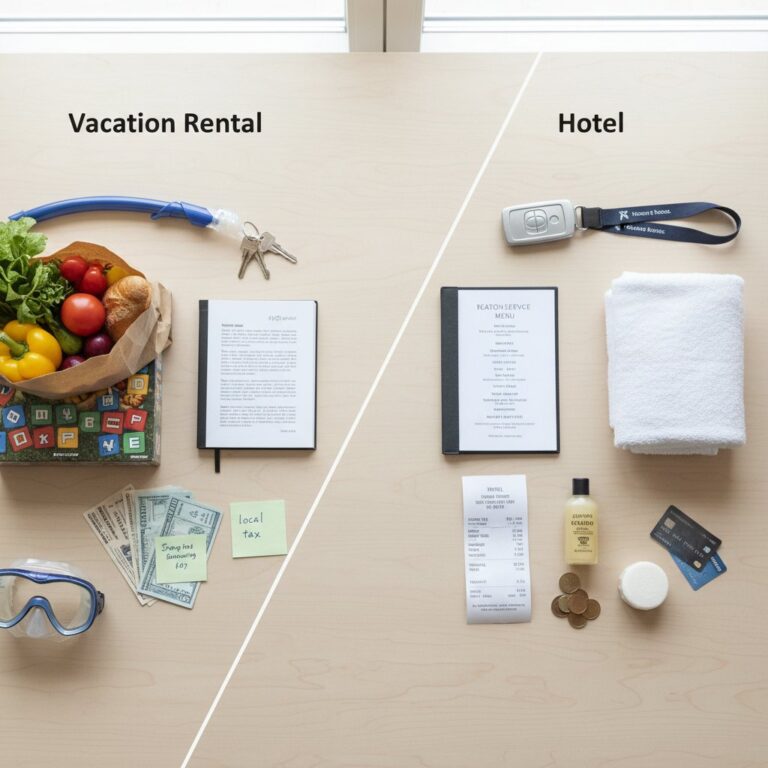

Airbnb vs. Hotel: Unlocking Your Perfect Vacation Stay – The Ultimate Planner’s Guide
Ah, the age-old travel dilemma! As you dream of sun-kissed beaches, vibrant cityscapes, or serene mountain retreats, one fundamental question often emerges: Should you book a cozy Airbnb, a spacious VRBO, or perhaps a classic, amenity-rich hotel? For vacationers, families embarking on an adventure, and even short-term rental hosts looking to understand the competitive landscape, this choice is more than just about a bed for the night. It’s about the very essence of your travel experience. Here at Vacation Rental Planners, your trusted guide to unforgettable journeys, we understand that every trip is unique, and so too should be your accommodation. Let’s embark on a comprehensive exploration, weighing the charm of personalized homes against the comforts of traditional hospitality, to help you confidently choose the perfect backdrop for your next cherished memories.
The Enduring Allure of the Hotel Experience: Comfort, Convenience, and Predictability
For generations, hotels have been the default choice for travelers, and for good reason. They offer a distinct blend of comfort, convenience, and a certain predictable luxury that many find irresistible. Imagine arriving after a long flight, knowing a smiling concierge is ready to assist, your room is impeccably cleaned, and a fresh towel awaits. This peace of mind is a cornerstone of the hotel experience.
One of the most significant advantages of hotels is the unparalleled level of service. From daily housekeeping that magically tidies your space while you’re out exploring, to 24/7 front desk support ready to answer questions, recommend local gems, or resolve any immediate concerns, hotels excel at providing a seamless, worry-free stay. Need an extra pillow? Room service at 2 AM? A taxi hailed to the airport? It’s all just a phone call away. This is particularly valuable for travelers who prefer minimal planning once they’ve reached their destination, or for business travelers who need efficiency and dedicated support.
Consider a stay at a luxury resort like the Four Seasons Maui at Wailea. Here, for upwards of $1000-$2000 per night during peak season (January-March), you’re not just paying for a room; you’re investing in an experience. You gain access to stunning beachfront pools with attentive service, world-class spas, multiple gourmet dining options, kids’ clubs that keep little ones entertained, and a level of personalized attention that anticipates your needs. For families, the convenience of on-site activities and dining, often with dedicated children’s menus and play areas, can be a game-changer, allowing parents to truly relax.
Beyond the high-end, even mid-range hotels offer substantial benefits. A Hilton Garden Inn in New York City, for example, typically priced between $200-$400 per night depending on the season and location, offers amenities like fitness centers, business services, and often a complimentary breakfast. For first-time visitors to a bustling metropolis, the central locations of many hotels, often within walking distance of major attractions, can save valuable time and transportation costs. Hotel loyalty programs, such as Marriott Bonvoy or Hilton Honors, are another compelling draw. Accumulating points with each stay can lead to free nights, room upgrades, and exclusive perks, making future travel even more rewarding – a perk largely absent in the short-term rental market.
However, hotels aren’t without their drawbacks. They can sometimes feel impersonal, offering a standardized experience that, while comfortable, lacks the unique character of a local dwelling. Space can also be a premium, especially in popular urban centers, where a standard hotel room might feel cramped for a family of four. And while hotels offer unparalleled service, that service comes at a price, often reflected in higher per-night rates and additional charges for things like parking, Wi-Fi (though increasingly free), and resort fees.
Embracing the Airbnb/VRBO Lifestyle: Space, Immersion, and Unforgettable Character
Stepping into the world of Airbnb, VRBO, and other vacation rental platforms is like opening a door to a different kind of travel – one focused on local immersion, unique experiences, and often, incredible value. Short-term rentals have revolutionized how many of us explore the globe, offering an authentic taste of life in your chosen destination.
The most immediate and often celebrated advantage of vacation rentals is space. Unlike a hotel room, even a suite, a rental home, apartment, or villa typically provides separate living areas, multiple bedrooms, and perhaps even a private garden or balcony. This is a monumental benefit for families and groups. Imagine a family trip to Orlando: Instead of booking two cramped hotel rooms that might cost $400-$800 per night total during peak seasons (March-April, June-August) at a Disney resort, you could find a 3-bedroom, 2-bathroom house with a private pool just minutes from the parks on VRBO or Airbnb for $250-$500 per night. This not only provides more room for everyone to spread out but also offers a common living space for evening board games or movie nights, fostering togetherness.
Beyond space, the ability to “live like a local” is a powerful draw. Staying in a charming apartment in the Marais district of Paris, complete with a fully equipped kitchen and a view of the rooftops, offers a vastly different experience than a hotel. You can wake up, brew your own coffee, head to a local boulangerie for fresh croissants, and truly feel the rhythm of the neighborhood. This immersion is often deeper, allowing for serendipitous discoveries of local markets, hidden cafes, and authentic interactions that might be missed from a hotel lobby. For travelers seeking cultural enrichment and a break from the tourist bubble, a rental is often the superior choice.
The unique character of these stays is another compelling factor. From a rustic cabin nestled in the Smoky Mountains to a chic loft in downtown Lisbon, a historic riad in Marrakech, or a charming houseboat in Amsterdam, vacation rentals offer an incredible diversity of accommodations that simply don’t exist in the hotel sphere. This allows travelers to tailor their stay to their specific interests and create truly memorable backdrops for their adventures. For instance, a group of friends planning a ski trip to Breckenridge might find a multi-bedroom chalet with a hot tub on Airbnb for $700-$1500 per night during ski season, providing both ample space and a cozy, communal atmosphere far beyond what individual hotel rooms could offer.
Cost-effectiveness, especially for longer stays or larger groups, is frequently cited as a major benefit. While a single night at an Airbnb might sometimes rival or exceed a budget hotel, the value proposition significantly increases with extended stays, as many hosts offer weekly or monthly discounts. Furthermore, having a kitchen can lead to substantial savings on dining out, allowing you to prepare some meals and snacks, which is particularly beneficial for families with specific dietary needs or picky eaters.
However, the Airbnb/VRBO experience comes with its own set of considerations. Service levels are typically more hands-off, with communication primarily through messaging with your host. While many hosts are incredibly responsive and dedicated, you won’t have 24/7 front desk support. Consistency can also vary; while reviews help, each property is unique, and standards can differ. Moreover, cleaning fees, service fees, and local taxes can sometimes add a significant percentage to the advertised nightly rate, making it crucial to review the total cost before booking. Privacy can also be a concern in certain rentals, especially if you’re booking a private room within a host’s occupied home rather than an entire dwelling.
Cost Considerations: A Deep Dive into Your Budget and Value Proposition
When it comes to budget, the “better” option between Airbnb/VRBO and hotels is rarely black and white. It’s a nuanced calculation involving nightly rates, hidden fees, included amenities, and the overall value you place on different aspects of your stay. Understanding these dynamics is key to making a financially savvy decision.
Let’s start with the advertised nightly rates. In many destinations, especially outside of major metropolitan centers, you might find vacation rentals offering more space for a comparable or even lower nightly rate than a standard hotel room. For example, a quaint cottage in the Cotswolds (UK) on Airbnb might be £150-£300 per night, offering multiple bedrooms and a kitchen, while a comparable hotel might only offer a single room for the same price. However, in highly competitive urban markets like New York City, a basic hotel room might start at $150-$250, while a comparable studio apartment on Airbnb could be similar, or even higher once all fees are factored in.
This brings us to the crucial element of fees. Hotels are often upfront with their room rate, but be aware of “resort fees” in certain destinations (like Las Vegas or Orlando), parking fees (especially in cities), and sometimes Wi-Fi charges. These can add $30-$100+ per night. Vacation rentals, on the other hand, almost always have a cleaning fee, which can range from a modest $50 to several hundred dollars for larger properties. There are also service fees charged by the platform (Airbnb’s guest service fee is typically 14.2% of the subtotal), and local occupancy taxes. For a short, one-night stay, these fees can dramatically inflate the per-night cost of a rental, sometimes making it more expensive than a hotel. For a longer stay (e.g., 5-7 nights), the cleaning fee is amortized over more nights, making the overall cost per night more competitive.
Consider a family of five heading to Rome for a week in shoulder season (April/May or Sept/Oct). A 2-bedroom Airbnb apartment near the Colosseum might be advertised at €150/night. Add a €100 cleaning fee and a €30 platform service fee, plus city tax, and your total for 7 nights could be around €1200-€1300. For a hotel, booking two connecting rooms (if available) or a family suite could easily cost €200-€400 per room per night, totaling €1400-€2800 for the week, often without a kitchen. In this scenario, the Airbnb offers significant savings, especially when factoring in the cost of preparing some meals rather than eating out three times a day.
Insider Tip for Budgeting: Always compare the total price for your entire stay, including all taxes and fees, when looking at both hotels and rentals. Don’t just compare the advertised nightly rate. Use the “total price” filter on Airbnb/VRBO to see the true cost upfront. For hotels, proceed to the booking confirmation page to see all tacked-on fees before finalizing.
For budget travelers, hostels often present the cheapest option, but if it’s strictly between hotels and rentals, look for private rooms in Airbnbs or budget hotel chains like Ibis Budget in Europe (often €70-€120/night) or Motel 6 in the US. For luxury, both offer incredible experiences, but vacation rentals tend to provide more unique, expansive, and private luxury (e.g., a private villa in Tuscany with a chef for $1000-$3000+/night) compared to a luxury hotel suite.
Beyond the Bed: Space, Amenities, and Privacy Tailored to Your Trip
The choice between an Airbnb/VRBO and a hotel often boils down to what amenities matter most to you and the level of privacy you desire for your vacation. These factors can profoundly shape your travel experience, especially for families and groups.
Space and Layout: This is where vacation rentals truly shine. Imagine a family vacation to Destin, Florida. Instead of two standard hotel rooms at a beachfront resort (which might run $400-$800/night during summer), you could rent a 4-bedroom beach house on VRBO for $500-$1000/night. This provides separate bedrooms for parents and children, multiple bathrooms, a spacious living area, and often a private pool or direct beach access. Children can have their own rooms, adults can have quiet evenings, and everyone can gather comfortably without feeling cramped. For multi-generational trips, this separation and shared communal space are invaluable.
Kitchen Facilities: A fully equipped kitchen is perhaps the single most impactful amenity offered by vacation rentals, especially for families. Being able to prepare breakfast, pack lunches for excursions, or cook dinner a few nights a week can lead to tremendous savings and convenience. For families with young children, special diets, or allergies, a kitchen is often a non-negotiable. Consider a trip to Iceland, where restaurant prices are notoriously high. An Airbnb with a kitchen could save hundreds of dollars over a week, allowing you to splurge on experiences instead. Hotels typically offer mini-fridges and microwaves in some rooms, but a full kitchen is rare outside of extended-stay hotels.
Unique Amenities & Local Flavor: Vacation rentals often boast unique features that hotels rarely offer. Think private hot tubs with mountain views, game rooms, home theaters, specialized workspaces, or even direct access to lakes or ski slopes. The “character” of a rental property, often adorned with local art or reflecting the regional architectural style, adds to the immersive experience. In Kyoto, Japan, staying in a traditional machiya (townhouse) on Airbnb provides a cultural depth a modern hotel simply cannot replicate, complete with tatami mats and sliding paper screens.
Hotels, on the other hand, excel in providing standardized, often resort-style amenities. Swimming pools, fitness centers, spas, on-site restaurants and bars, business centers, and concierge services are commonplace. Many hotels offer kids’ clubs or entertainment programs, which can be a huge bonus for parents seeking a few hours of adult time. For a luxurious experience, a hotel like The Ritz-Carlton in Naples, Florida, provides multiple pools, a private beach, golf courses, and an array of dining options directly on-site, meaning you rarely need to leave the property. These integrated services and facilities cater to a different kind of vacationer – one who values convenience and comprehensive service within a single property.
Privacy: While hotels offer the privacy of your own room, short-term rentals often provide a greater sense of seclusion, especially if you book an entire home. You won’t have neighbors knocking on the wall, noisy hallways, or the general hustle and bustle of a hotel lobby. This can be particularly appealing for romantic getaways, quiet retreats, or simply for travelers who prefer maximum solitude. However, it’s worth noting that some Airbnbs are private rooms within a shared house, so always check the listing carefully to understand the level of privacy offered.
Ultimately, the “better” option for amenities and privacy hinges on your travel style. Do you crave the comprehensive services and vibrant social atmosphere of a hotel resort? Or do you prioritize expansive living spaces, the freedom of a kitchen, and a unique, private retreat that feels like a home away from home?
Safety, Security, and Peace of Mind: Navigating Your Stay with Confidence
The topic of safety and security is paramount for any traveler, and both hotels and vacation rentals have distinct features and considerations in this regard. Understanding these differences, and knowing how to mitigate potential risks, is key to ensuring a truly relaxing and worry-free trip.
Hotels traditionally offer a well-established framework for security. They typically have 24/7 front desk staff, often security personnel, surveillance cameras in public areas, and secure key card access to rooms and sometimes even elevators. This centralized management provides a reassuring layer of protection. Many travelers, especially solo female travelers or those with young children, find comfort in the constant presence of hotel staff and the standardized safety protocols. In the unlikely event of an emergency, there’s a clear point of contact and immediate assistance available. Furthermore, hotels are subject to strict regulations regarding fire safety, building codes, and health standards, which are regularly inspected and enforced.
Vacation rentals, by their nature, operate differently. They are private properties, and while platforms like Airbnb and VRBO have implemented various safety measures, the primary responsibility for security often rests with the host and the guest. This doesn’t mean rentals are inherently unsafe, but it does require guests to be more proactive. Most hosts provide secure entry systems, whether keypads, lockboxes, or traditional keys. Good hosts will also ensure the property meets basic safety standards, such as working smoke detectors and carbon monoxide detectors, and clearly marked emergency exits. However, the absence of a 24/7 lobby or on-site security means a more independent approach to your safety.
Booking Tips for Vacation Rentals to Enhance Safety:
- Read Reviews Thoroughly: Pay close attention to what previous guests say about the safety of the neighborhood, the security of the property, and the responsiveness of the host. Look for reviews that mention feeling safe and secure.
- Verify the Host: Choose hosts with a strong track record, many positive reviews, and Superhost/Premier Host status where available. These hosts are typically more experienced and professional.
- Check the Listing Details: Ensure the listing provides clear photos of the exterior, entrance, and locks. Look for information on emergency contacts and local safety guidelines.
- Trust Your Gut: If something about a listing or a host’s communication feels off, don’t hesitate to move on to another option.
- Communicate with Your Host: Before arrival, confirm entry instructions and ask any questions you have about security. Establish a good communication channel.
- Research the Neighborhood: Use online maps (like Google Street View) to check out the area around the rental. Look up local crime statistics if you have concerns.
- Secure Your Belongings: Just as you would in a hotel, keep valuables out of sight and locked away if possible.
For destinations known for specific safety concerns, such as certain areas of large cities, researching the neighborhood is crucial for both hotels and rentals. For instance, while a hotel in Times Square, NYC, might feel incredibly secure due to its bustling nature and high police presence, a rental in a less-known neighborhood might require more diligent research. Similarly, in a secluded rural Airbnb, while beautiful, you might be further from emergency services, so it’s wise to know local emergency numbers and how to reach your host.
Both options have their merits. Hotels provide a standardized, institutionalized layer of security that many find reassuring. Vacation rentals offer privacy and a sense of home, but require guests to be more engaged in their own safety planning. By taking proactive steps and utilizing the resources provided by platforms and your own research, you can ensure peace of mind regardless of your choice.
The Family Factor: Tailoring Stays for All Ages and Stages
Traveling with family, especially with young children or teenagers, introduces a unique set of considerations that often weigh heavily on the Airbnb vs. hotel decision. What works for a solo traveler or a couple might fall short for a multi-generational group seeking comfort, convenience, and a sprinkle of magic.
Space, Glorious Space! This is perhaps the most compelling argument for vacation rentals when traveling with family. Picture a family of four or five in a standard hotel room. Even with two queen beds, it can feel like a sardine can after a day or two. Kids might struggle to sleep in the same room as parents, and there’s nowhere to relax once the little ones are asleep. A 2 or 3-bedroom Airbnb or VRBO, on the other hand, provides separate sleeping areas, a common living room for playtime or unwinding, and often multiple bathrooms. This allows parents to have adult time after bedtime, teenagers to have their own space, and younger children to nap undisturbed. For a week-long family trip to the Outer Banks, North Carolina, a large vacation home on VRBO (often $2000-$5000+ for a week in summer) with direct beach access, multiple living areas, and a private pool is often far more practical and enjoyable than several cramped hotel rooms, even if the per-night cost is higher for the entire group.
The Kitchen Conundrum: For families, a fully equipped kitchen in a vacation rental is a game-changer. It allows for preparing breakfasts, packing snacks and lunches for outings, and cooking dinners, which can lead to significant cost savings and cater to picky eaters or dietary restrictions. Imagine a morning in Barcelona: instead of herding everyone to a hotel breakfast buffet, you can make eggs and toast in your rental, grab fresh fruit from a local market, and enjoy a leisurely start to your day. This flexibility is invaluable, especially for parents with toddlers who need specific meal times or formula preparation.
Kid-Friendly Amenities: Many vacation rentals go the extra mile with family-friendly amenities. Look for properties that offer cribs, high chairs, toys, board games, video game consoles, or even a fenced yard. Some even have private pools, playgrounds, or themed bedrooms. When booking near attractions like Disneyland in Anaheim, you can find Airbnbs specifically designed for families, often with bunk beds, character decor, and enough space for everyone to recharge after a day at the park. These touches can make a huge difference in the overall enjoyment and ease of your family vacation.
However, hotels also offer strong advantages for families. Many resorts, particularly those in popular family destinations like Orlando or Cancun, boast extensive kids’ clubs, dedicated children’s pools, supervised activities, and even character dining experiences. The Ritz-Carlton Orlando, for instance, offers a “Ritz Kids” program with unique adventures, allowing parents to enjoy some adult time. Daily housekeeping means less stress about tidying up after active children, and room service can be a lifesaver on busy days. Some hotels even offer connecting rooms or family suites designed to accommodate larger groups while maintaining the convenience of hotel services.
Safety and Supervision: Hotels often provide a greater sense of security with 24/7 staff, monitored entrances, and clear emergency protocols. For parents who prefer this level of institutional oversight, it can be a significant draw. While vacation rentals require guests to be more proactive about their surroundings, many hosts are incredibly accommodating, providing local information and ensuring a safe environment.
For families, the decision often comes down to balancing the desire for space and autonomy (rentals) with the convenience and dedicated services (hotels). For short, bustling city breaks, a hotel might offer more convenience. For longer stays, multi-generational trips, or vacations focused on relaxation and togetherness, a vacation rental often emerges as the superior choice, providing a true home away from home.
Booking Wisdom: Insider Tips for a Seamless Experience
Regardless of whether you lean towards the classic comfort of a hotel or the unique charm of a vacation rental, smart booking strategies can significantly enhance your experience and secure the best value. Here are some insider tips from Vacation Rental Planners to guide your decision-making and ensure a seamless journey.
1. Start Early, Especially for Peak Seasons:
For popular destinations and peak travel times (e.g., summer in Europe, Christmas/New Year, school holidays, major festivals), accommodation books up quickly and prices skyrocket.
- Hotels: Booking 3-6 months in advance often secures better rates and a wider selection, particularly for family suites or specific room types.
- Vacation Rentals: For prime properties (e.g., beachfront villas, large family homes), 6-12 months in advance is not uncommon, especially if you have specific dates or requirements. Many hosts open their calendars a year out.
2. Read Reviews Religiously – They Are Your Best Friends:
Reviews offer invaluable insights that go beyond glossy photos and descriptions.
- For Hotels: Look beyond just the star rating. Focus on comments about cleanliness, noise levels, staff responsiveness, and the accuracy of amenity descriptions. Check multiple sites like Booking.com, TripAdvisor, and Google Reviews.
- For Vacation Rentals: Reviews are even more critical. Pay attention to comments on host communication, the accuracy of the listing, cleanliness, neighborhood safety, and any unexpected issues. Properties with many positive reviews from different guests are generally a safe bet. Be wary of listings with no reviews or only a few very new ones.
3. Understand the Total Cost Upfront:
As discussed, hidden fees can surprise you.
- Hotels: Always proceed to the final booking page before confirming to see if resort fees, parking fees, or other taxes have been added.
- Vacation Rentals: On platforms like Airbnb and VRBO, use the “total price” filter or ensure you click through to see the full breakdown including cleaning fees, service fees, and local taxes. For a 3-night stay, a $150 cleaning fee significantly impacts the per-night price. For a 10-night stay, it’s less impactful.
4. Leverage Platforms and Filters Effectively:
Booking platforms are powerful tools when used correctly.
- Hotels: Use filters for amenities (pool, gym, free breakfast), proximity to attractions, price range, and cancellation policies. Compare prices across multiple Online Travel Agencies (OTAs) like Expedia, Booking.com, and directly on the hotel’s website (they sometimes offer best rate guarantees or loyalty perks).
- Vacation Rentals: Utilize filters for number of bedrooms/bathrooms, specific amenities (kitchen, washer/dryer, pet-friendly, private pool), property type (entire home, private room), and instant book options. Pay attention to map views to understand the exact location, especially if you’re sensitive to noise or want to be near specific landmarks.
5. Communication is Key (Especially for Rentals):
Don’t be afraid to ask questions before booking.
- For Hotels: If you have specific needs (e.g., adjoining rooms, late check-in, special dietary requests), contact the hotel directly before or immediately after booking to confirm they can accommodate you.
- For Vacation Rentals: Message the host with any specific questions you have about the property, neighborhood, or check-in process. A responsive and helpful host before booking is a good indicator of a pleasant experience during your stay. Clarify anything unclear in the listing.
6. Understand Cancellation Policies:
Life happens. Be aware of the flexibility of your booking.
- Hotels: Many offer free cancellation up to 24-48 hours before check-in, especially for standard rates. Non-refundable rates are usually cheaper but offer no flexibility.
- Vacation Rentals: Policies vary widely, from flexible (full refund up to a few days before) to strict (no refund or partial refund only for early cancellation). Always check the specific policy for each listing before booking. Consider travel insurance for strict policies, especially for high-value bookings.