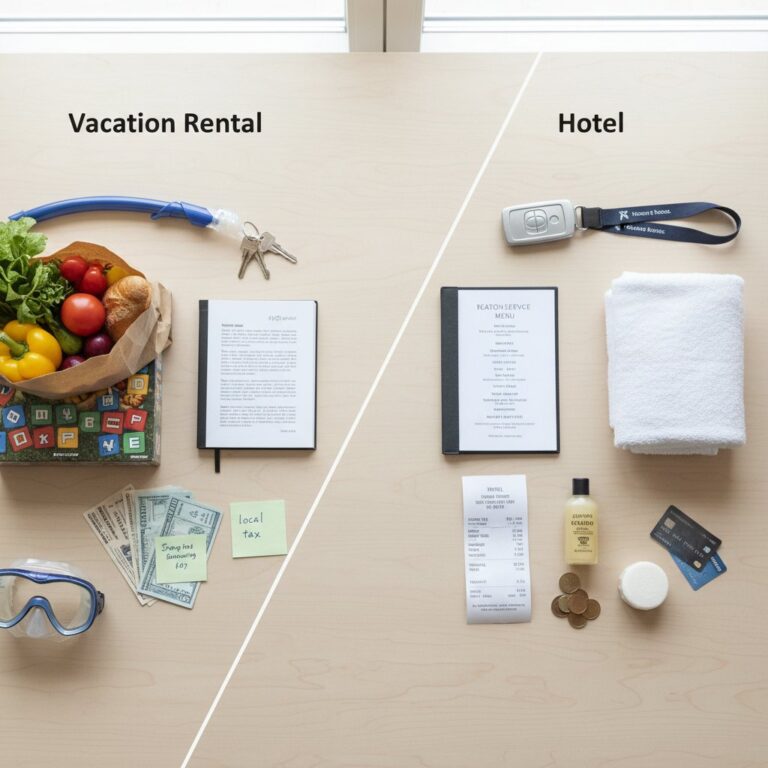


Updated May 2026. Vacation Rental Guest Loyalty Programs might sound like an initiative strictly reserved for massive multinational hotel conglomerates, but independent property managers and boutique operators are rapidly discovering the immense profitability hidden within repeat visitor frameworks. When travelers feel genuinely recognized and rewarded for returning to a specific property or portfolio, their booking behavior fundamentally shifts. Instead of endlessly scrolling through online travel agencies (OTAs) for the cheapest local rate, these travelers actively seek out the properties where their loyalty holds tangible value.
Creating these structured retention systems allows hosts to bypass high commission structures, stabilize seasonal revenue dips, and cultivate a community of brand advocates. Establishing this dynamic requires more than a simple automated thank-you email; it demands a strategic alignment of incentives, personalized communication, and flawless operational execution that consistently exceeds standard hospitality expectations. By transforming a one-time transaction into an ongoing relationship, operators insulate their businesses against market volatility and intense local competition.
The Foundations of Guest Retention in Short-Term Rentals
Understanding the architecture of return visits begins with shifting the operational focus from immediate acquisition to long-term relationship building. Guest retention strategies for short-term rentals operate on the principle that a property’s best future customers are the ones who have already slept in its beds. At the core of this strategy is the calculation of Customer Lifetime Value (CLTV), which projects the total net profit a host can expect from a single traveler over the entire duration of their relationship. Focusing on CLTV fundamentally alters how marketing budgets are allocated, moving funds away from expensive OTA bidding wars and toward enriching the experience of existing clientele.
A well-executed retention framework relies heavily on first impressions and seamless operations. For instance, streamlining the initial arrival experience through a comprehensive guest onboarding process establishes a baseline of trust that makes future marketing efforts significantly more effective. When a traveler navigates a frictionless check-in and finds a property perfectly matched to its digital listing, the psychological barrier to rebooking drops to near zero. According to a 2026 AirDNA market report, acquiring a new guest costs up to five times more than securing a reservation from a previous visitor.
The success of these programs relies on recognizing returning travelers instantly. Tagging repeat visitors within a Property Management System (PMS) allows hosts to customize communication pathways. Customization reduces cognitive friction; a guest receives an offer that perfectly aligns with their previous seasonal travel habits, making the decision to book again feel effortless rather than like a heavy financial commitment.
Why Implement Repeat Guest Incentives for Your Property Business?

Committing operational resources to repeat guest incentives transforms unpredictable seasonal booking patterns into a predictable revenue stream. The primary advantage lies in the aggressive reduction of third-party platform reliance. Every direct reservation generated through a rewards initiative bypasses the standard 15% to 20% commission fee charged by major OTAs. Recapturing these margins allows operators to reinvest in property upgrades, staff training, or aggressive wealth building without raising nightly rates.
Imagine a family books your coastal villa for a summer vacation. Seven months later, they receive an automated, highly personalized email offering a 10% direct booking discount and a complimentary paddleboard rental for their next stay. They bypass Airbnb entirely and secure a week on your direct website. This targeted outreach works brilliantly because the customized perk solves a specific pain point they experienced during their last trip—renting bulky equipment—while saving them money on platform fees.
Furthermore, loyal patrons tend to be significantly more forgiving of minor operational hiccups and are statistically more likely to leave glowing five-star reviews. They already trust the host, which means they are less likely to submit harsh public complaints about trivial issues. Beyond pure revenue, dedicated regulars also help hosts stabilize their finances by booking earlier in the year, which assists in forecasting and allows for better planning when optimizing operational overhead like seasonal energy usage.
A 2025 study by the VRMA (Vacation Rental Management Association) revealed that properties with formal retention structures maintained an occupancy rate 18% higher than the regional average during non-peak months. Securing these base bookings early in the booking window allows revenue managers to push daily rates higher for the remaining available calendar days, knowing their break-even point has already been achieved.
[INLINE IMAGE 2: A line graph showing customer acquisition costs dropping while overall customer lifetime value steadily climbs over a three-year period.]
Types of Loyalty Frameworks for Holiday Homes
Not all customer rewards in vacation properties are structured identically. Operators must match their program architecture to the specific demographics of their target audience and the realities of their portfolio size. Implementing the wrong framework creates administrative bloat without moving the needle on actual rebooking metrics.
Points-Based and Tiered Systems
Points-based models are the most universally recognized format, wherein travelers earn a specific number of points for every dollar spent or night stayed. These points are later redeemed for free nights or upgraded amenities. While highly effective for large property management companies with dozens of listings, points systems can be incredibly difficult for single-property hosts to manage, as the traveler may take years to accumulate enough points for a free night. Tiered systems group guests into distinct categories (e.g., Silver, Gold, Platinum) based on their booking history. Achieving a higher tier unlocks permanent perks, such as guaranteed late check-outs or waived cleaning fees. This structure plays on the psychological desire for status and exclusive recognition.
Membership and Experiential Models
An increasingly popular approach involves shifting away from points entirely in favor of Experiential Rewards, which offer tangible, immediate lifestyle enhancements rather than abstract currency. Skift Research (2025) found that 62% of millennial travelers prefer experiential perks like complimentary local food tours or private chef access over traditional point accumulation. Alternatively, the subscription model charges an upfront annual fee in exchange for wholesale nightly rates or zero booking fees throughout the year. This mimics the successful models of modern retail memberships, instantly injecting cash into the business while locking the traveler into utilizing your portfolio to justify their initial membership cost.
| Program Type | Primary Mechanism | Host Advantage | Ideal Portfolio Size |
|---|---|---|---|
| Points-Based | Currency earned per night/dollar spent | Highly quantifiable liability tracking | Large (50+ properties) |
| Tiered Status | Permanent perks based on stay frequency | Drives status-seeking behavior | Medium to Large |
| Experiential Perks | Partnering with local vendors for gifts/tours | High perceived value, low actual cost | Single to Small Portfolio |
| Subscription Model | Paid annual membership for discounted rates | Immediate upfront cash flow | Niche/Luxury Markets |
How Do You Design an Effective Reward Structure?

Building guest loyalty in vacation rentals requires a meticulous design phase to ensure the program is both enticing to the traveler and financially sustainable for the business. Launching a poorly constructed program can lead to severe revenue dilution if the rewards given outpace the profit generated from the return visits.
Step 1: Define Goals and Segment Audiences
Before selecting a software or announcing perks, hosts must clearly define what they are trying to achieve. Is the primary goal to fill mid-week vacancies, increase the average length of stay, or simply transition OTA guests to direct booking channels? Once the goal is set, segment the audience. A corporate traveler requires vastly different incentives—like high-speed internet guarantees and flexible cancellation—compared to a family booking a yearly summer retreat.
Step 2: Choose and Map the Incentives
Select a reward structure that complements your operational capacity. Providing a locally sourced welcome basket to returning guests is a highly effective, low-lift strategy for boutique operators. When mapping these incentives, the perceived value to the guest must heavily outweigh the hard cost to the host. For example, offering a late 2:00 PM check-out costs the host virtually nothing if no back-to-back booking exists, but provides immense logistical relief to a traveler coordinating afternoon flights.
Step 3: Integration and Promotion
A retention strategy fails if the guest doesn’t know it exists or finds it burdensome to use. Integration with your central reservation system ensures points or status are tracked automatically. Promotion should occur at multiple touchpoints: a subtle mention on the direct booking site, a dedicated page in your digital welcome guide, and a highly targeted post-departure email sequence. Reminding a traveler of their accrued benefits precisely 48 hours after they return home leverages their post-vacation glow to secure a future commitment.
[INLINE IMAGE 4: A mobile interface displaying a short-term rental digital welcome book with a prominent banner advertising a repeat booking discount code.]
Core Metrics for Measuring Retention Program Success
Implementing repeat guest incentives without establishing strict performance tracking is equivalent to driving blindfolded. Operators must monitor specific Key Performance Indicators (KPIs) to determine if the time and financial investments are yielding a positive Return on Investment (ROI). The foundation of this analysis rests on the Repeat Booking Rate, calculated by dividing the number of return reservations by the total number of unique bookings over a specified period.
Equally critical is tracking the Redemption Rate. This metric exposes the actual perceived value of your offerings; if members are accumulating rewards but never spending them, the incentives likely do not resonate with your demographic’s desires. Properties utilizing targeted CRM email flows see a 24% boost in redemption rates (Hostaway, 2024) [VERIFICAR FECHA]. High redemption rates are generally positive indicators, signaling that travelers are actively engaging with the ecosystem and finding the perks worthwhile.
| Key Metric | Definition | Calculation Method | Industry Benchmark |
|---|---|---|---|
| Repeat Booking Rate | Percentage of total guests who book more than once | (Return Guests / Total Unique Guests) x 100 | 12% – 20% |
| Redemption Rate | Frequency at which earned rewards are actually used | (Rewards Claimed / Rewards Issued) x 100 | 25% – 35% |
| Program Enrollment Rate | Percentage of eligible guests who sign up | (New Enrollments / Total Checkout Guests) x 100 | 15% – 25% |
To gauge the underlying sentiment driving these metrics, hosts must utilize the Net Promoter Score (NPS). This qualitative survey asks guests how likely they are to recommend the property to a friend or colleague on a scale of 0 to 10. NPS serves as a leading indicator of future retention; guests scoring a 9 or 10 are the prime candidates for aggressive loyalty marketing, while lower scores highlight operational failures that no amount of discount codes can fix.
Overcoming Common Challenges in Loyalty Management
While the financial upsides are substantial, structuring short-term rental loyalty initiatives presents distinct operational hurdles. One of the most prevalent challenges is mitigating data silos. When guest information is scattered across OTA dashboards, personal email inboxes, and physical logbooks, creating a unified traveler profile becomes impossible. Without a centralized CRM syncing seamlessly with the primary property management software, hosts cannot accurately track who has stayed previously, leading to awkward interactions where VIPs are treated like first-time strangers.
Common Mistakes in Short-Term Rental Rewards
A frequent misstep among independent managers is launching a massive, multi-tiered VIP club but failing to implement the backend tracking required to sustain it. Consider a scenario where an owner promises a premium local wine package to returning ‘Gold Tier’ members. If the host relies on manual spreadsheets and forgets to alert the cleaning staff to place the gift, the returning guest feels forgotten, destroying the intended VIP feeling and severely damaging trust. This highlights why proactive supply management and automated task generation are mandatory prerequisites for these programs.
Another significant hurdle is maintaining the perceived value of the rewards during periods of high inflation. Offering a flat $50 discount on a future stay might have been highly motivating three years ago, but as average nightly rates increase globally, that static dollar amount loses its psychological impact. Hosts must regularly audit their incentive structures, shifting toward percentage-based discounts or high-impact experiential add-ons that scale gracefully alongside rising market prices.
The Future Landscape of Short-Term Rental Loyalty Initiatives
The next phase of Vacation Rental Guest Loyalty Programs will be defined by hyper-personalization driven by predictive analytics. As artificial intelligence integration becomes standard within hospitality software suites, hosts will move away from generic email blasts offering blanket summer discounts. Instead, systems will automatically analyze a traveler’s past behavioral data—from their preferred ambient thermostat settings to their typical check-in times—to craft hyper-specific, one-to-one offers.
For example, predictive models will identify when a guest typically begins researching their annual winter ski trip and automatically deploy a customized booking link featuring a pre-stocked fridge of their favorite groceries. This level of automation ensures the marketing message reaches the consumer exactly when their purchasing intent is highest, severely undercutting the competition’s ability to capture their attention.
Additionally, we will likely see a rise in decentralized, coalition-based networks. Independent property managers in non-competing geographical markets will form micro-alliances, allowing a guest who frequently stays at a beach house in Florida to redeem their earned status for perks at a partnered mountain cabin in Colorado. This collaborative approach gives independent hosts the scale to compete with global hotel chains while maintaining their unique boutique appeal.
Ultimately, the core philosophy remains unchanged: exceptional hospitality is the engine, and structured incentives are the fuel. Mastering these retention systems is just one facet of comprehensive property success. For a broader perspective on scaling your operations, refer to our foundational guide on [PILLAR LINK: Vacation Rental Hosting & Management].
Sources & References
- AirDNA. (2026). The State of Short-Term Rental Customer Acquisition and Retention. AirDNA Market Research.
- VRMA (Vacation Rental Management Association). (2025). Annual Report on Booking Trends and Direct Revenue Strategies.
- Skift Research. (2025). Millennial and Gen Z Travel Preferences: The Shift to Experiential Hospitality. Skift Travel Insights.
- Hostaway. (2024). Email Marketing Benchmarks for Property Managers. Hostaway Analytics.