
Updated May 2026. Whether you are launching a new property or revamping an existing one, mastering vacation rental interior design is the fastest way to stand out in a saturated market. We have seen firsthand how a well-considered aesthetic transforms a standard listing into an irresistible destination, capturing the attention of guests long before they click the book button. The visual language of your property communicates its value, cleanliness, and comfort instantly.
Approaching your space with a strategic mindset means moving beyond mere decoration. It requires a delicate balance of commercial-grade durability and welcoming warmth, ensuring that high-turnover spaces remain pristine while feeling like a home away from home. Every choice, from the resilience of the living room upholstery to the placement of bedside lighting, plays a crucial role in shaping the guest’s subconscious perception of their stay. When executed flawlessly, these thoughtful details orchestrate an environment that practically guarantees five-star reviews and repeat visits.
The Core Principles of Guest-Centric Setup
Picture a tired family arriving at a mountain cabin after an eight-hour drive; they immediately notice the heavy-duty mudroom rugs, the intuitive placement of a bench for unlacing boots, and the warm, ambient lighting guiding them into the living space. Anticipating these precise physical and emotional needs drastically reduces friction upon arrival, establishing an immediate foundation of trust. By designing spaces that proactively solve traveler problems, hosts naturally elevate their property’s perceived value. Cultivating this level of foresight requires implementing guest-centric optimization, a framework where every furnishing and layout decision serves a functional purpose for the temporary occupant.
Balancing Form, Function, and Foot Traffic
The flow of a short-term rental must intuitively guide visitors who have never navigated the space before. Wide walkways, uncluttered surfaces, and logical furniture groupings prevent accidental damage and make the property feel expansive. We prioritize commercial-grade durability and scratch-resistant surfaces in our setups because high-traffic environments degrade residential-grade items exponentially faster. According to a 2026 Hostfully survey, properties that optimize their layout and materials for specific guest avatars generate 41% higher average daily rates than generic counterparts. Securing durable assets eliminates the stress of constant replacements and protects your profit margins over time.
- Select performance fabrics that resist stains and fading.
- Ensure all primary walkways have a minimum clearance of 36 inches.
- Install seamless internet connectivity so guests can easily connect multiple devices without hunting for routers.
What success looks like: Achieving a 90% occupancy rate over a six-month period with zero furniture-related damage claims and consistent praise for the property’s comfort and flow.
[INLINE IMAGE 1: diagram comparing durable guest-friendly living room layout vs. cluttered fragile setup]
Types of Room-by-Room Setup Checklists
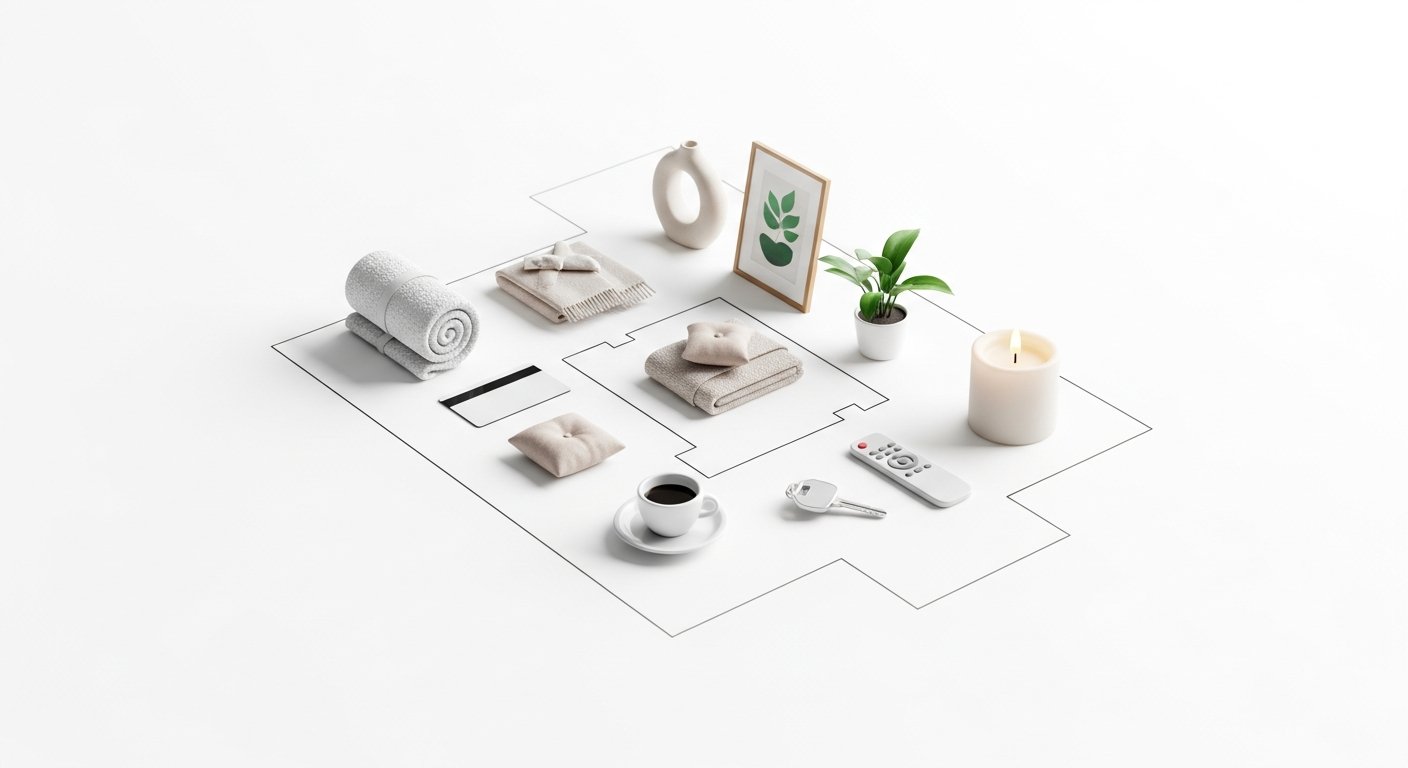
Different areas of a holiday home serve distinct psychological and practical purposes for travelers. A comprehensive approach ensures that no zone is neglected, elevating the entire property profile.
| Room Category | Must-Have Elements | Primary Attribute Requirement | Impact on Guest Experience |
|---|---|---|---|
| Living Area | Performance sofa, smart TV, layered lighting | High Durability | Encourages group bonding and extended dwell times. |
| Kitchen | Matching dishware, coffee station, sharp knives | Intuitive Functionality | Reduces frustration during meal prep and dining. |
| Bedrooms | Blackout curtains, quality mattress, bedside power | Restorative Comfort | Directly dictates sleep quality and subsequent reviews. |
| Bathrooms | Plush white towels, bulk amenities, ample hooks | Hygienic Perception | Creates a spa-like feel while masking minor wear. |
| Outdoor Spaces | Weather-proof seating, dining area, ambient lights | Atmospheric Appeal | Extends the livable footprint of the property. |
A 2026 Sleep Foundation report indicates that 78% of travelers cite mattress quality as the single most critical factor in their overall satisfaction with alternative accommodations. We consistently advise investing a disproportionate amount of your budget into the sleep experience. Upgrading to medium-firm, hotel-grade mattresses and high-thread-count linens triggers a restorative physical response, ensuring guests wake up refreshed and positively biased toward the rest of their stay.
Consider the remote worker who specifically filters listings for a dedicated workspace. If they arrive to find a cramped desk paired with a dining chair, their productivity suffers, leading to a mediocre review regardless of the home’s other amenities. Providing a proper remote professional workstation with ergonomic seating and dedicated task lighting caters directly to this lucrative demographic. Expanding this thoughtful approach outward, optimizing patio and garden areas with robust, comfortable seating transforms a basic backyard into a highly marketable retreat, extending the usable square footage of the home.
How Does Thematic Coherence Impact Booking Rates?
When prospective guests scroll through hundreds of digital listings, their brains actively seek visual patterns that are easy to process. A scattered design forces the viewer to expend cognitive energy deciphering the space, whereas a unified, distinct aesthetic instantly communicates a specific vibe or lifestyle. This cognitive fluency is why listings with a unified aesthetic secure bookings 24% faster than eclectic counterparts, according to Airbnb Insights (2025). Thematic resonance occurs when the color palette, textures, and local art organically connect the interior space to the destination’s broader culture, deepening the guest’s immersion.
Curating Local Flavor Without Cliché
Translating a location’s essence into interior decor demands subtlety. Imagine coordinating large group accommodations in a coastal town. Rather than filling every room with literal anchors, ship wheels, and bright nautical flags, a sophisticated approach utilizes a palette of sea-glass greens, sandy neutrals, and weathered driftwood textures. This evokes the feeling of the beach without overwhelming the senses. A family returning from a chaotic day at the boardwalk craves a tranquil sanctuary, not a souvenir shop aesthetic.
- Identify three core colors that reflect the local geography.
- Source artwork from regional creators to add authentic character.
- Utilize textures (like woven rattan for coastal or raw timber for mountain) to build sensory depth.
Types of Popular Design Styles for Short-Term Lets
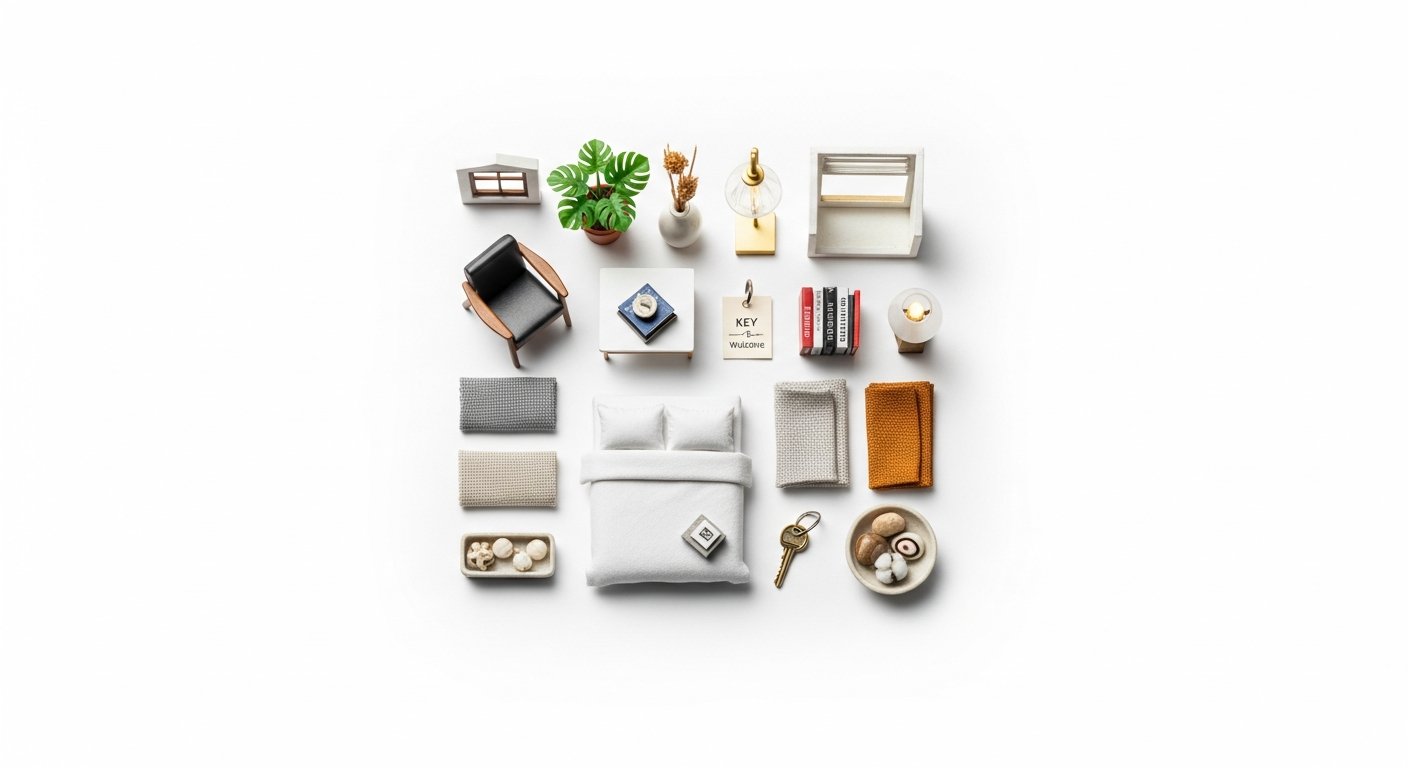
To further broaden your property’s appeal, selecting a specific aesthetic framework is essential. Catering to diverse search intents means understanding which visual language speaks to your ideal guest avatar.
Boho Chic for Desert Retreats
This style works exceptionally well for desert properties or coastal bungalows. It utilizes natural textures, macramé accents, and warm earth tones to create a relaxed, inviting vibe. The emphasis is on comfort and a connection to nature, often incorporating indoor plants and low-profile seating to encourage lounging.
Minimalist Scandinavian for Urban Lofts
Conversely, a minimalist approach is ideal for urban lofts or compact city apartments. Focusing on clean lines, highly functional furniture, and abundant natural light makes smaller spaces feel expansive and serene. By eliminating visual clutter, you provide a calming oasis for business travelers or tourists returning from a busy day of sightseeing.
Choosing the right style depends heavily on your target demographic and the local environment. A cohesive style not only photographs beautifully but also sets accurate expectations for the guest experience.
What Are the Most Common Pitfalls in Holiday Let Setup?
A 2023 property management analysis revealed that budget-tier residential furnishings require replacement 3.5 times more often than commercial-grade equivalents. Opting for the cheapest available dining chairs might save money initially, but cheap materials degrade exponentially under high-turnover stress. When a guest sits on a flimsy chair that suddenly splinters, it transforms a relaxing holiday into a stressful liability issue, prompting immediate refund demands and permanent reputational damage.
Avoiding the Personalization Trap
Another frequent misstep is confusing a holiday let with a primary residence. Consider a host who decorates their rental with family portraits, heavily religious iconography, and a massive collection of fragile antique porcelain. Guests stepping into this environment often feel as though they are intruding on someone else’s private life rather than arriving at their own exclusive retreat. Over-personalization alienates potential bookers and drastically shrinks the property’s target demographic.
- Remove all personal photographs and deeply sentimental items.
- Upgrade to heavy-duty hardware on cabinets and doors to withstand aggressive use.
- Implement layered lighting to avoid harsh overhead glares that make spaces feel clinical.
What failure looks like: A property that initially books well based on attractive photos but suffers a cascading drop in ratings after three months due to sagging sofa cushions, broken drawer tracks, and a generally worn-out atmosphere. Effectively managing asset replacement cycles is non-negotiable for preserving a high-end aesthetic.
[INLINE IMAGE 5: comparison of cluttered personalized bedroom vs. serene universally appealing sleeping space]
Strategies for Maintaining and Updating Rental Aesthetics
Imagine a property manager who utilizes the slow shoulder season to audit their spaces: touching up scuffed baseboards, replacing faded throw pillows, and tightening wobbly table legs. Because they catch minor wear and tear before it becomes visually dominant, their listing photos remain an accurate representation of the physical space. Consistent preventative aesthetic maintenance arrests the natural deterioration of an environment, ensuring the reality of the property continually matches the marketing promise.
The Financial Impact of Freshness
Regular aesthetic refreshes prevent the typical 12% year-over-year revenue decline seen in neglected properties, as highlighted by Guesty’s 2026 market report. Online travel agencies actively reward listings that update their photography, treating new images as a signal of active management. Swapping out a bold living room rug or updating the duvet covers allows you to upload fresh hero images, which can temporarily boost algorithmic visibility and capture a new segment of travelers.
We recommend establishing a quarterly review process for your property styling. Small investments yield outsized returns when they prevent negative reviews concerning cleanliness or upkeep. Replacing heavily stained silicone caulking in a bathroom costs a few dollars but completely resets the hygienic perception of the space. Treat your decor not as a static installation, but as a living asset that requires periodic pruning and feeding to thrive in a competitive marketplace.
What Future Trends Are Shaping the Short-Term Accommodation Market?
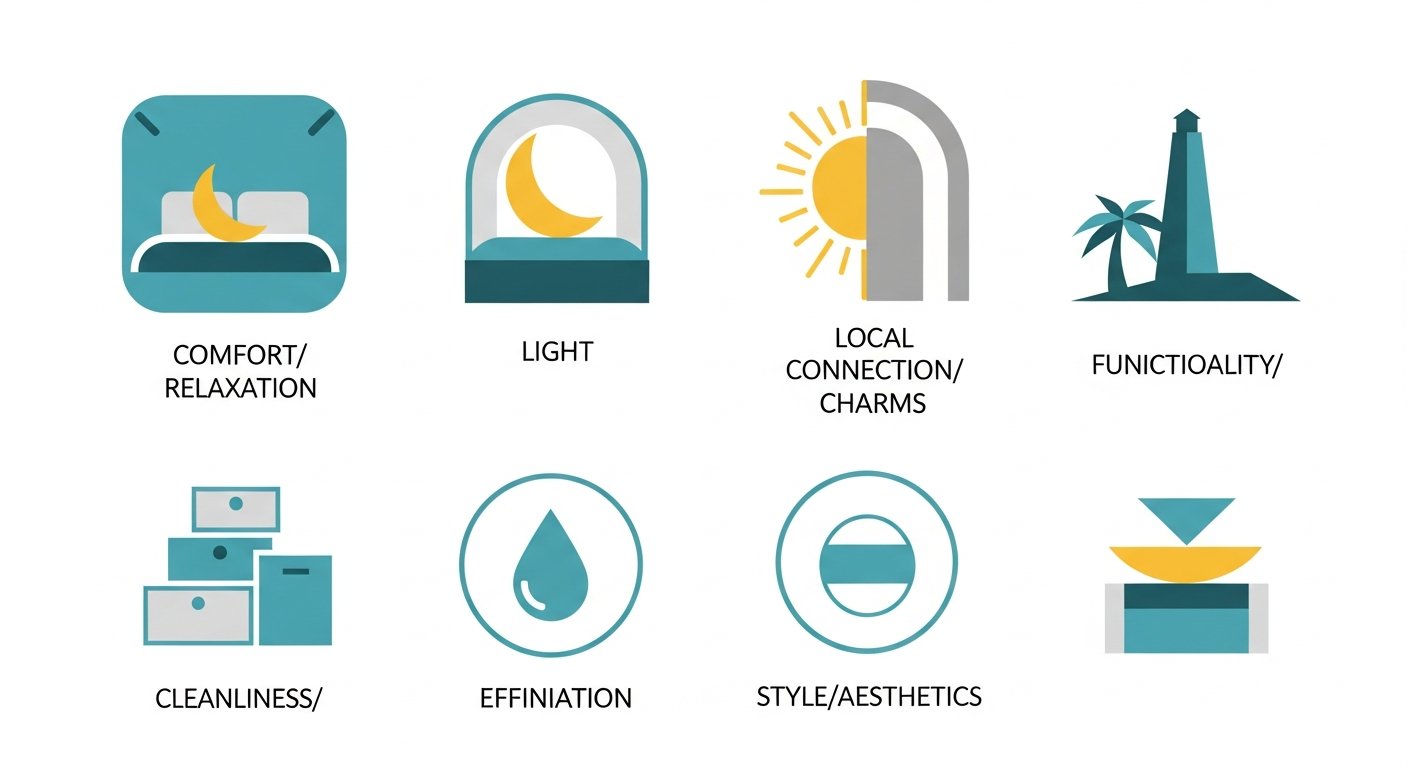
The integration of subtle automation features increases perceived luxury value by 18%, according to a 2026 Smart Home Trends report. Travelers increasingly expect properties to function with seamless, modern efficiency. Imagine a guest arriving during a mid-summer heatwave; as they unlock the smart door, the home is already pre-cooled, and soft ambient lighting illuminates the hallway. This environmental control removes cognitive load from the guest upon arrival, replacing travel fatigue with immediate comfort. Upgrading to a smart TV and robust Wi-Fi network is now the baseline expectation.
Sustainability and Intelligent Design
Beyond technology, travelers are demonstrating a strong preference for eco-conscious accommodations. Incorporating sustainable materials, such as reclaimed wood furniture and low-VOC paints, appeals to environmentally aware demographics while often providing superior durability. Furthermore, investing in intelligent climate control investments not only modernizes the space but significantly reduces overhead utility costs when the property is vacant.
Acoustic treatment is another emerging priority. With more guests mixing work and leisure, a property plagued by street noise or echoing hard floors will suffer in reviews. Adding heavy drapery, acoustic dampening panels disguised as modern art, and plush area rugs radically improves the auditory environment. As you refine your approach to property styling, remember that the most successful properties evolve continuously, adopting purposeful innovations that anticipate guest desires before they even articulate them.
Sources & References
- Airbnb Insights (2025). “Visual Cohesion in Short-Term Rentals and Booking Velocity.”
- Sleep Foundation (2026). “The Impact of Mattress Quality on Travel Accommodation Satisfaction.”
- Guesty (2026). “The ROI of Preventative Maintenance in the Short-Term Rental Market.”
- Hostfully (2026). “Guest Avatar Optimization and Its Effect on Average Daily Rates.”