
Vacation Rental vs Hotel: The Ultimate 2026 Guide to Choosing Your Perfect Stay
Affiliate disclosure: This article may contain affiliate links. Recommendations are independent and editorially driven.
Planning a vacation is an exciting endeavor, filled with dreams of relaxation, adventure, and new experiences. Yet, before you can dive into destination guides and itinerary planning, one fundamental decision often presents itself: should you book a vacation rental or a traditional hotel? This isn’t just a matter of preference; it’s a choice that profoundly impacts your budget, comfort, privacy, and the overall tenor of your trip.
In 2026, the travel landscape offers more diverse accommodation options than ever before. The lines between what defines a hotel and what defines a vacation rental have blurred, with boutique hotels offering apartment-style suites and luxury vacation rentals providing concierge services. This comprehensive guide from vacationrentalplanners is designed to help you navigate this complex choice, providing a deep dive into the pros and cons of vacation rentals versus hotels, ensuring your next getaway is nothing short of perfect.
Whether you’re planning a romantic escape, a fun-filled family adventure, a solo journey of discovery, or a professional business trip, understanding the nuances of each accommodation type is crucial. We’ll explore everything from cost implications and available amenities to the level of privacy you can expect and the kind of local experience each offers. By the end of this article, you’ll be equipped with the knowledge to make an informed decision tailored precisely to your travel style and needs for 2026 and beyond.
Understanding the Core Differences: Vacation Rental vs. Hotel
At their heart, both vacation rentals and hotels serve the same primary purpose: to provide temporary lodging for travelers. However, the experience, structure, and expectations associated with each are fundamentally distinct. Before delving into detailed comparisons, it’s vital to establish a clear understanding of what each option typically entails.
Defining Vacation Rentals
A vacation rental is essentially a privately owned property—an apartment, house, condo, villa, cabin, or even a unique dwelling like a treehouse or houseboat—rented out to travelers for short-term stays. These properties are typically furnished and equipped for self-catering, offering a “home away from home” experience. The rise of online platforms like Airbnb, Vrbo, and Booking.com has democratized access to vacation rentals, making them a popular choice for millions.
Key characteristics of vacation rentals include:
- Private Ownership: Properties are usually owned by individuals or small property management companies, not large hospitality chains.
- Self-Catering Facilities: Most come with fully equipped kitchens, laundry facilities, and living areas.
- Varied Property Types: From cozy studios to sprawling multi-bedroom homes, the range is vast.
- Personalized Experience: Often reflect the owner’s taste, offering unique decor and local charm.
- Host Interaction: Communication is typically directly with the property owner or their local representative.
Defining Hotels
Hotels are commercial establishments that provide paid lodging on a short-term basis. They range from budget motels to luxurious five-star resorts and are often part of larger chains (e.g., Marriott, Hilton, Hyatt) or independent boutique operations. Hotels offer standardized services and amenities designed to cater to a broad spectrum of guests.
Key characteristics of hotels include:
- Commercial Operation: Run by professional hospitality staff, adhering to corporate standards.
- Standardized Services: Expect services like daily housekeeping, front desk/concierge, room service, and often on-site restaurants and bars.
- Uniform Room Types: Typically offer standard rooms, suites, and accessible rooms with consistent layouts and amenities across categories within the same property.
- Consistent Experience: Brand standards ensure a predictable level of quality and service, regardless of location.
- Staff Interaction: Guests primarily interact with hotel employees rather than a private owner.
The Evolving Landscape of Travel Accommodation
The distinction between vacation rentals and hotels has become less rigid in recent years. Many hotel chains now offer extended-stay properties with kitchenettes, mimicking some aspects of vacation rentals. Conversely, a growing segment of luxury vacation rentals provides hotel-like services such as daily cleaning, private chefs, and concierge assistance. This convergence offers travelers even more nuanced choices, making it more important than ever to understand your priorities before booking.
Cost Comparison: Which Option Offers Better Value?
When budgeting for a trip, accommodation costs are almost always a significant factor. While it might seem straightforward to compare the nightly rate of a vacation rental to a hotel room, the true cost comparison is far more complex, encompassing hidden fees, potential savings on food, and the dynamics of group travel.
Upfront Pricing vs. Hidden Fees
At first glance, a vacation rental might appear more expensive per night than a standard hotel room. However, this initial perception can be misleading. Vacation rentals often come with a nightly rate that can be higher, but these are frequently offset by other factors.
- Vacation Rentals: Beyond the nightly rate, expect cleaning fees (which can be substantial, especially for shorter stays), service fees from booking platforms, and sometimes local occupancy taxes. These are usually added at the time of booking, making the final price clear. For longer stays, the per-night cost often decreases significantly, and cleaning fees become less impactful on the overall budget.
- Hotels: Hotels present a nightly rate, but often tack on resort fees (common in leisure destinations), parking fees, internet access charges (though increasingly included), and city taxes. While daily housekeeping is usually included, unexpected charges for things like minibar usage or premium Wi-Fi can add up.
It’s crucial to look at the total “all-in” price for both options when making a comparison, factoring in all additional fees and potential extras.
Savings on Food and Amenities
This is where vacation rentals often pull ahead in terms of value, particularly for budget-conscious travelers or those with specific dietary needs.
- Vacation Rentals: The presence of a full kitchen allows guests to prepare their own meals, snacks, and drinks. This can lead to substantial savings, especially for breakfast and some dinners, compared to dining out three times a day or relying on expensive hotel room service. The ability to do laundry also means packing less and avoiding hotel laundry service costs.
- Hotels: While many hotels offer complimentary breakfast, on-site restaurants, and room service are often priced at a premium. The convenience comes at a cost, and for extended stays, these expenses can quickly accumulate, significantly increasing the overall travel budget.
Group Travel and Per-Person Costs
For families or groups traveling together, vacation rentals almost always offer superior value.
- Vacation Rentals: A single vacation rental property, even a multi-bedroom house, typically has one flat rental fee, regardless of the number of occupants (up to its maximum capacity). When split among several people or families, the per-person cost can become remarkably low, often less than individual hotel rooms. Moreover, shared common areas foster a sense of togetherness that separate hotel rooms cannot provide.
- Hotels: Hotels usually charge per room, and often have limits on the number of occupants per room, sometimes with additional fees for extra guests. For groups, this often means booking multiple rooms, which can quickly become very expensive. Connecting rooms or suites offer a compromise but rarely match the cost-efficiency of a large vacation rental.
Long-Term Stays and Discounts
For extended trips, whether for work, relocation, or simply a longer holiday, vacation rentals often offer significant discounts.
- Vacation Rentals: Many hosts provide weekly or monthly discounts, making long-term stays highly economical. These properties are also designed for living, not just sleeping, offering the amenities needed for an extended period, such as full kitchens, laundry, and dedicated workspaces.
- Hotels: While some hotels offer extended-stay rates or loyalty program benefits, they generally struggle to compete with the long-term value of a vacation rental, especially when factoring in the cost of dining out.
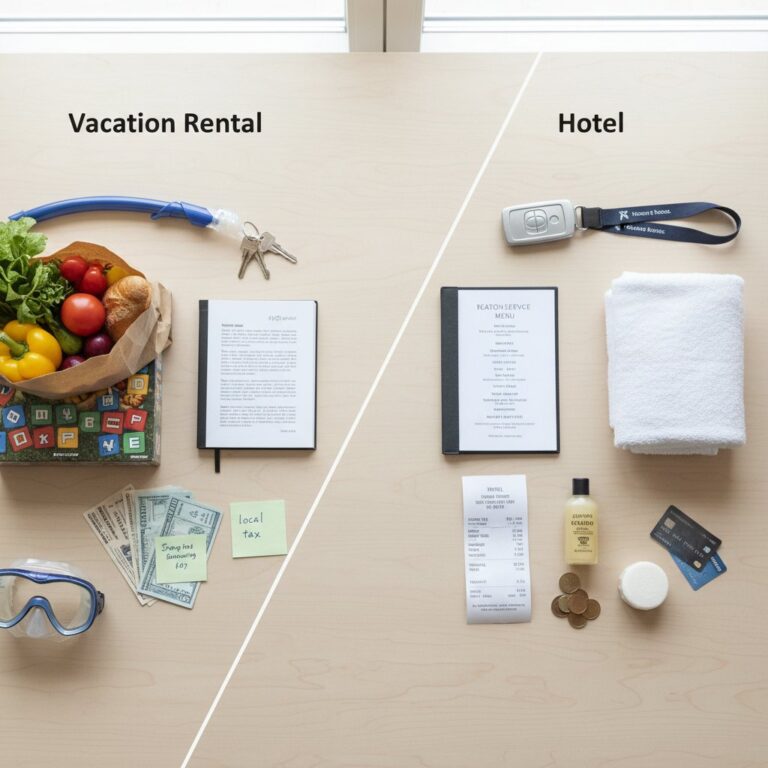
[INLINE IMAGE 1: place after second H2 | alt=”vacation rental vs hotel concept illustration”]
Space, Privacy, and Comfort: Finding Your Sanctuary Away From Home
Beyond cost, the physical environment of your accommodation profoundly impacts your travel experience. Considerations of space, privacy, and overall comfort are paramount, and here, vacation rentals often distinguish themselves from hotels.
The Allure of Extra Room
One of the most compelling advantages of a vacation rental is the sheer amount of space available. Unlike a hotel room, which typically consists of a bedroom and a bathroom, a vacation rental often includes separate living areas, multiple bedrooms, dining spaces, and sometimes even outdoor areas like patios, balconies, or gardens.
- Vacation Rentals: Offer separate zones for different activities. Parents can relax in the living room after children are asleep in their own bedrooms. Groups can gather for meals, games, or conversations without feeling cramped. This extra space reduces cabin fever, especially during longer stays or on days with inclement weather.
- Hotels: While suites offer more space, they usually come at a premium price. Standard hotel rooms can feel restrictive, particularly for families with active children or for groups needing communal areas beyond a lobby.
Uninterrupted Privacy and Seclusion
The desire for privacy is a significant factor for many travelers. Vacation rentals, especially standalone homes, offer a level of seclusion that hotels rarely can match.
- Vacation Rentals: You often have the entire property to yourself. There are no noisy neighbors on the other side of a thin wall, no shared hallways with constant foot traffic, and no public lobbies to navigate. This allows for a more relaxed and intimate experience, whether you’re enjoying a quiet morning coffee or hosting a private dinner with friends.
- Hotels: While individual rooms offer privacy from the outside world, you are always aware of being part of a larger establishment. Noise from adjoining rooms, hallways, elevators, and common areas is a common complaint. Shared amenities like pools and gyms also mean less personal space.
Personalized Comfort and Home-like Amenities
Vacation rentals are often designed to feel like a home, complete with personalized touches and amenities that contribute to a greater sense of comfort and belonging.
- Vacation Rentals: Beyond the full kitchen and laundry, many properties offer unique amenities such as private pools, hot tubs, home theaters, game rooms, fireplaces, or even instruments. The decor is often personal and varied, creating a distinct ambiance that can enhance the local experience. The ability to unpack and truly settle in, with plenty of storage and living space, fosters a feeling of being at home.
- Hotels: Hotels prioritize consistency and functional efficiency. While modern hotels offer comfortable beds and often stylish decor, the experience is standardized. Amenities are typically communal (pools, gyms, spas, business centers) and might lack the personalized, intimate feel of a private residence.
For those who value a personal retreat, where they can truly unwind and live like a local, the expansive space and privacy of a vacation rental are often the deciding factors.
Amenities and Services: What You Can Expect
The amenities and services available can significantly shape your travel experience, influencing convenience, comfort, and even your daily routine. Hotels and vacation rentals approach this aspect from fundamentally different philosophies, each with its own set of advantages.
Hotel Staples: Room Service, Housekeeping, Concierge
Hotels are built on the premise of providing comprehensive services to guests, ensuring a hassle-free stay. These services are often the primary reason travelers opt for a hotel.
- Daily Housekeeping: Your room is cleaned, and towels are refreshed daily, providing a perpetually tidy space without any effort on your part.
- Front Desk & Concierge: A central point of contact for questions, recommendations, booking tours, or resolving issues, available often 24/7.
- Room Service & On-site Dining: The convenience of having food and drinks delivered directly to your room or dining at an on-site restaurant is a major draw.
- Gyms, Pools & Spas: Access to fitness facilities, swimming pools, and sometimes full-service spas within the hotel premises.
- Security: Manned receptions, security cameras, and sometimes security personnel offer a sense of safety.
- Business Centers: Computers, printers, and meeting rooms are often available for business travelers.
The reliability and consistency of these services, coupled with the immediacy of assistance, are key selling points for hotels.
Vacation Rental Perks: Full Kitchens, Laundry, Unique Features
Vacation rentals trade the daily hotel services for a different set of amenities that emphasize independence, convenience for longer stays, and a more authentic living experience.
- Full Kitchens: As mentioned, this is a game-changer, allowing for home-cooked meals, saving money, and catering to specific dietary needs. It often includes cookware, dishes, and essential appliances.
- In-unit Laundry: Washers and dryers are common, especially in properties designed for longer stays. This means packing less, refreshing clothes mid-trip, and avoiding expensive hotel laundry services.
- More Living Space: Separate living rooms, dining areas, and multiple bedrooms provide ample space for relaxation and privacy.
- Unique Amenities: Private pools, hot tubs, game rooms, BBQ grills, fire pits, dedicated workspaces, or even unique architectural features are common. These add significant value and can enhance the vacation experience.
- Privacy & Seclusion: The entire property is yours, offering a level of privacy unmatched by hotels.
- Parking: Often includes free, dedicated parking, a significant advantage over often-costly hotel parking.
While most vacation rentals don’t offer daily housekeeping (though it can sometimes be arranged for an extra fee) or a 24/7 front desk, they provide the tools for self-sufficiency and a deeper immersion into the local lifestyle.
The Blended Experience: Hybrid Options
The market is increasingly seeing hybrid options. Aparthotels combine apartment-style living with hotel services, offering kitchenettes and living areas alongside daily cleaning and a front desk. Luxury vacation rentals might offer concierge services, private chefs, or maid service, blurring the lines further. These options can provide the best of both worlds for travelers seeking specific comforts and services without sacrificing space or the “home away from home” feel.
[INLINE IMAGE 2: place after fourth H2 | alt=”vacation rental vs hotel comparison illustration”]
Location and Local Experience: Immerse Yourself in Your Destination
Where you stay plays a crucial role in how you experience a destination. The choice between a vacation rental and a hotel often dictates your proximity to attractions, your interaction with local culture, and the overall ambiance of your surroundings.
Hotels: Centrality and Tourist Hubs
Hotels, especially those belonging to major chains, are strategically located for maximum convenience, particularly for tourists and business travelers.
- Prime Tourist Locations: Hotels are often found in city centers, near major attractions, business districts, airports, or popular entertainment venues. This makes sightseeing, attending conferences, or catching early flights extremely convenient.
- Accessibility: They are typically well-served by public transportation and taxis, making it easy to navigate the city.
- Established Infrastructure: Surrounded by restaurants, shops, and services catering to tourists, ensuring you have everything you need within easy reach.
- Predictability: In a new city, staying in a familiar hotel brand in a well-known area provides a sense of security and predictability.
If your priority is being in the thick of the action, with easy access to main tourist sites and a reliable network of services, a hotel is often the go-to choice.
Vacation Rentals: Authentic Neighborhoods and Local Living
Vacation rentals offer a gateway to a more authentic and immersive local experience, often allowing you to step off the beaten path.
- Residential Areas: Many vacation rentals are located in residential neighborhoods, away from the bustling tourist traps. This provides an opportunity to live like a local, shop at local markets, discover hidden gems, and experience the everyday rhythm of the community.
- Unique Locations: You can find vacation rentals in more diverse and sometimes remote locations – beachfront houses, mountain cabins, countryside cottages – offering experiences that hotels rarely can.
- Cultural Immersion: Staying in a local neighborhood often means interacting more with residents, frequenting local cafes and shops, and gaining a deeper appreciation for the destination’s culture.
- Quiet Retreats: While some vacation rentals are urban, many offer a tranquil escape from the noise and crowds of central tourist areas, providing a serene base for exploration.
For travelers who prioritize cultural immersion, seek unique surroundings, or prefer a quieter environment, vacation rentals provide unparalleled access to the soul of a destination.
Proximity to Attractions vs. Immersion in Culture
The choice often boils down to a trade-off: direct proximity to major attractions versus a deeper cultural dive. Hotels excel at the former, placing you within walking distance or a short ride from famous landmarks. Vacation rentals, while potentially requiring more travel to central tourist spots, compensate by offering an invaluable glimpse into the authentic local lifestyle.
Consider your travel goals: Are you ticking off a list of famous sights, or are you hoping to feel like a temporary resident, exploring local nuances?
Flexibility and Freedom: Designing Your Own Travel Itinerary
The degree of flexibility and freedom you desire on your trip can significantly influence whether a vacation rental or a hotel is the better fit. Both types of accommodation come with their own sets of rules, expectations, and operational norms that impact your travel style.
Check-in/Check-out Flexibility
The booking and operational models of hotels and vacation rentals lead to different levels of flexibility regarding arrival and departure times.
- Hotels: Generally operate with fixed check-in (e.g., 3:00 PM) and check-out (e.g., 11:00 AM) times. While early check-in or late check-out might be possible, it’s often subject to availability and can incur additional fees. However, the 24/7 front desk means you can typically arrive at any time of day or night and still be accommodated.
- Vacation Rentals: Check-in and check-out times can vary more widely. Some hosts offer keyless entry, allowing for very flexible self-check-in. Others require a coordinated meet-up with the host, which demands more scheduling. Flexibility on times often depends on the host’s schedule and whether new guests are arriving or departing the same day. While less rigid in some ways, it can also be less predictable than a hotel’s guaranteed service.
Rules and Restrictions
The inherent differences in property ownership and operation result in varying degrees of rules and restrictions.
- Hotels: Generally have clear, standardized rules regarding noise, pool hours, guest visitors, and pet policies. These rules are usually consistent across the property and are enforced by staff. While designed for broad appeal, this can sometimes feel restrictive (e.g., no outside food in public areas).
- Vacation Rentals: Rules are set by individual hosts and can vary widely. Some are very relaxed, while others have strict policies regarding noise, parties, use of amenities (like a hot tub), or specific guest instructions (e.g., separating recycling). You might also find restrictions on pets, number of guests, or even specific behaviors. It’s crucial to read the house rules carefully before booking to ensure they align with your expectations for freedom.
Tailoring Your Schedule
The “home-like” environment of a vacation rental often affords greater freedom to live on your own schedule, especially concerning meals and social activities.
- Vacation Rentals: With a private kitchen, you’re free to eat breakfast at midnight, host a dinner party, or simply enjoy a quiet meal whenever suits you. There are no restaurant closing times, no hotel breakfast buffets to catch, and no pressure to adhere to specific schedules. This freedom is particularly beneficial for families with young children or those with unconventional schedules.
- Hotels: While hotels offer convenience, they also impose subtle structures. You might feel obligated to eat at specific times if you want breakfast, or you might be limited by restaurant hours. While highly convenient for quick trips, the overall flexibility of your daily routine can be less.
Safety, Security, and Reliability: Peace of Mind on Your Trip
The safety and security of your accommodation, along with the reliability of your booking and stay, are paramount for a worry-free vacation. Both hotels and vacation rentals have different approaches and inherent characteristics that impact these concerns.
Hotel Security Measures
Hotels, as established commercial entities, typically have robust and standardized security protocols in place.
- 24/7 Front Desk Staff: A constant human presence at the entrance acts as a deterrent and a point of contact for emergencies.
- Controlled Access: Key card access to rooms and sometimes to floors ensures that only guests can enter certain areas.
- Security Cameras: Common in public areas, hallways, and entrances.
- Safe Deposit Boxes: Available in rooms or at the front desk for valuables.
- Emergency Services: Direct lines to emergency services and trained staff for crisis management.
- Brand Reputation: Large hotel chains have a vested interest in maintaining their reputation, leading to consistent safety standards across properties.
The institutional nature of hotels often provides a greater sense of consistent, professional security, especially for solo travelers or those unfamiliar with their destination.
Vacation Rental Vetting and Host Reliability
Safety and reliability in vacation rentals are largely dependent on the platform used, the host, and your own due diligence.
- Platform Vetting: Major platforms like Airbnb and Vrbo have policies in place to verify hosts and guests, offer secure payment processing, and provide dispute resolution services. However, the level of direct oversight on individual properties can vary.
- Host Communication: A responsive and communicative host is a good sign of reliability. Clear communication before, during, and after your stay is vital.
- Guest Reviews: This is arguably the most critical tool for assessing a vacation rental’s safety and reliability. Honest reviews from previous guests can highlight issues with security, cleanliness, accuracy of listing, or host responsiveness. Look for hosts with a high rating and a significant number of positive reviews.
- Self-Check-in Security: While convenient, keyless entry systems rely on technology. Ensure you understand how they work and what backup options exist.
- Location Awareness: Research the neighborhood. Is it safe? Are there adequate streetlights? Do locals feel comfortable walking around at night?
What to Look For: Reviews, Insurance, and Support
Regardless of your choice, a proactive approach can enhance your peace of mind.
- Reading Reviews: Always read recent reviews for both hotels and vacation rentals. Look for comments on safety, cleanliness, accuracy of description, and staff/host responsiveness.
- Understanding Support:
- Hotels: Offer immediate on-site support from staff for most issues.
- Vacation Rentals: Support comes from the host and/or the booking platform. Understand the process for contacting your host and what escalation options exist if an issue isn’t resolved.
- Travel Insurance: Considering travel insurance can provide a safety net for unforeseen circumstances like cancellations, medical emergencies, or even issues with your accommodation. Always check what your policy covers in relation to both hotels and vacation rentals.
- Local Emergency Contacts: Whether in a hotel or rental, know local emergency numbers (police, fire, ambulance) and the address of your accommodation.
While hotels provide a more standardized and often immediate safety net, a well-vetted vacation rental with a responsive host in a good location can offer an equally secure and reliable experience.
Choosing the Right Option: A Scenario-Based Approach
The “best” choice between a vacation rental and a hotel is rarely universal. It hinges entirely on your specific travel needs, priorities, budget, and the nature of your trip. Let’s explore various scenarios to help you determine which accommodation type aligns best with your upcoming travel plans in 2026.
Solo Travelers and Business Trips
Solo Travelers:
- Hotels: Often preferred for the sense of security, 24/7 staff, and ease of access to services. They can also offer more opportunities for casual social interaction in lobbies, bars, or communal areas.
- Vacation Rentals: A smaller apartment or studio can be a great option for budget-conscious solo travelers looking for more space and the ability to cook their own meals. Some may find the solitude appealing, while others might prefer the bustle of a hotel.
Business Trips:
- Hotels: Generally favored for their professional amenities like business centers, meeting rooms, reliable Wi-Fi, and convenient locations near corporate offices or convention centers. Services like dry cleaning, early breakfast options, and quick check-out are also highly valued.
- Vacation Rentals: Can be suitable for longer business assignments where a “home base” with a dedicated workspace and kitchen is preferred. Look for properties with excellent Wi-Fi and a quiet environment.
Couples Getaways
Hotels:
- Romantic ambiance: Luxury hotels often excel at creating a romantic atmosphere with fine dining, spa services, and couples’ packages.
- Convenience: For short, intense romantic weekends, the lack of chores (cooking, cleaning) and readily available services can enhance relaxation.
Vacation Rentals:
- Intimacy & Privacy: A private condo with a view, a secluded cabin, or a charming apartment offers unparalleled intimacy for couples. The ability to cook romantic dinners and have private spaces is a big draw.
- Unique Experiences: Finding a rental with a private hot tub, a cozy fireplace, or in a picturesque, non-touristy location can make for a truly memorable and personal escape.
Family Vacations with Children
This is where vacation rentals often shine the brightest.
- Vacation Rentals:
- Space: Separate bedrooms for parents and children means everyone gets better sleep and privacy.
- Kitchen: Indispensable for preparing kids’ meals, snacks, and catering to picky eaters or dietary restrictions. Saves a fortune on restaurant bills.
- Amenities: Access to a washer/dryer, a backyard for playing, or a private pool can be a lifesaver.
- Cost-effectiveness: A single rental property is usually much cheaper than booking multiple hotel rooms for a family.
- Home-like feel: Less disruption to children’s routines, leading to a more relaxed trip for everyone.
- Hotels: While some hotels are family-friendly with kids’ clubs and pools, fitting a family into a single room can be cramped and challenging. Connecting rooms are an option but increase costs.
Large Groups and Special Events
For reunions, wedding parties, or group adventures, vacation rentals are typically the superior choice.
- Vacation Rentals:
- Communal Spaces: Large living rooms, dining areas, and outdoor spaces are perfect for gathering, socializing, and creating shared memories.
- Cost-sharing: Splitting the cost of one large property among many people is almost always more economical than booking numerous hotel rooms.
- Privacy: Groups can enjoy their own space without disturbing or being disturbed by other guests.
- Flexibility: The ability to host meals, celebrate, and generally operate on your own schedule without hotel restrictions.
- Hotels: While hotels can accommodate large groups with blocks of rooms, the lack of a central communal living space often means less interaction and a more fragmented experience for the group.
Extended Stays and Relocation
For stays lasting weeks or months, vacation rentals are almost always the more practical and economical option.
- Vacation Rentals:
- Cost: Weekly and monthly discounts significantly reduce the per-night rate.
- Living Essentials: Full kitchens, laundry facilities, and separate living areas make long-term living comfortable and sustainable.
- Home Comforts: Provides a stable, private, and home-like environment during a transitional period or extended work assignment.
- Hotels: While extended-stay hotels exist, they often lack the space, privacy, and full kitchen amenities of a dedicated vacation rental, and long-term rates may still be higher.
Here’s a quick overview to help summarize these considerations:
| Feature | Vacation Rental | Hotel |
|---|---|---|
| Space & Privacy | Abundant, private living areas, multiple bedrooms, often entire property. High privacy. | Limited to room/suite, shared common areas. Less privacy. |
| Cost (Per Person) | Often lower for groups/families, especially with kitchen savings and long-term discounts. | Higher for groups needing multiple rooms. Can have hidden resort/parking fees. |
| Amenities | Full kitchen, laundry, unique features (private pool, BBQ), personalized decor. | Daily housekeeping, room service, 24/7 front desk, on-site gym/pool, concierge. |
| Local Experience | Authentic neighborhood immersion, living like a local. | Central tourist/business hubs, convenient access to attractions. |
| Flexibility | More freedom with schedules, cooking, social gatherings. Check-in/out can vary. | Fixed schedules for services, standardized rules. 24/7 check-in. |
| Service & Support | Relies on host responsiveness, platform support. Less immediate. | Immediate, professional on-site staff support. |
| Best For | Families, large groups, long stays, intimate couples trips, cultural immersion. | Solo travelers, business trips, short stays, convenience, consistent service. |
Booking Tips and What to Watch Out For
Once you’ve decided whether a vacation rental or a hotel suits your needs, the next step is to secure your booking. This process, while seemingly straightforward, requires careful attention to detail to ensure a smooth and pleasant experience. For both options, smart booking practices can save you money, prevent headaches, and guarantee your expectations are met.
Reading Reviews and Understanding Ratings
Reviews are your most valuable resource, offering insights that official descriptions might miss.
- For Both: Always read recent reviews. Look for consistent themes – positive or negative – regarding cleanliness, noise, location accuracy, and service/host responsiveness. Don’t just look at the star rating; delve into the comments.
- Vacation Rentals: Pay close attention to reviews about the host’s communication and problem-solving. Issues with Wi-Fi, heating/cooling, or amenities not working are often highlighted here. Photos posted by guests can also be very informative.
- Hotels: Look for comments on staff helpfulness, specific room types, breakfast quality, and the effectiveness of soundproofing.
Booking Platforms and Direct Reservations
Where you book can influence pricing, flexibility, and support.
- Vacation Rentals: Major platforms like Airbnb, Vrbo, and Booking.com offer a wide selection, secure payment processing, and some level of guest protection. They also provide a standardized way to view listings and communicate with hosts. Always book through the platform for security and dispute resolution. Learn more about tips for booking on Airbnb-style platforms here.
- Hotels: You can book directly through the hotel’s website (often offering loyalty points or best rate guarantees), through online travel agencies (OTAs) like Expedia or Booking.com, or via metasearch engines. Compare prices across multiple channels, but consider booking direct for better loyalty benefits and easier problem resolution.
Cancellation Policies and Insurance
Life happens, and plans can change. Understanding cancellation policies is crucial.
- Vacation Rentals: Policies range from flexible (full refund up to a few days before check-in) to strict (no refunds). Read this carefully before booking. Some platforms offer travel insurance during checkout.
- Hotels: Many hotels offer flexible cancellation options, often allowing cancellation up to 24-72 hours before check-in without penalty. Non-refundable rates are usually cheaper but carry more risk.
Consider purchasing travel insurance, especially for expensive trips or those booked with strict cancellation policies, to protect your investment.
Communication with Hosts and Hotel Staff
Good communication is key to a smooth stay.
- Vacation Rentals: Don’t hesitate to message the host before booking with any specific questions (e.g., “Is the Wi-Fi reliable for remote work?”, “What’s the parking situation?”, “Is the kitchen well-stocked?”). Clear communication upfront can prevent misunderstandings. During your stay, use the platform’s messaging system for any issues.
- Hotels: For special requests or concerns, contact the hotel directly before arrival or speak with front desk staff immediately upon check-in or when an issue arises. They are there to help resolve problems quickly.
Scrutinizing the Listing
Beyond reviews, carefully examine the listing itself.
- Photos: Are they high quality and numerous? Do they seem recent? Be wary of listings with few or blurry photos.
- Description: Read it thoroughly. Are all listed amenities actually included? Are there any disclaimers about noise, stairs, or accessibility?
- Location: Don’t just rely on the map pin. Use street view and research the neighborhood
Vacation Rental vs Hotel: The Ultimate 2026 Guide to Choosing Your Perfect Stay
Affiliate disclosure: This article may contain affiliate links. Recommendations are independent and editorially driven.
Planning a vacation is an exciting endeavor, filled with dreams of relaxation, adventure, and new experiences. Yet, before you can dive into destination guides and itinerary planning, one fundamental decision often presents itself: should you book a vacation rental or a traditional hotel? This isn’t just a matter of preference; it’s a choice that profoundly impacts your budget, comfort, privacy, and the overall tenor of your trip.
In 2026, the travel landscape offers more diverse accommodation options than ever before. The lines between what defines a hotel and what defines a vacation rental have blurred, with boutique hotels offering apartment-style suites and luxury vacation rentals providing concierge services. This comprehensive guide from vacationrentalplanners is designed to help you navigate this complex choice, providing a deep dive into the pros and cons of vacation rentals versus hotels, ensuring your next getaway is nothing short of perfect.
Whether you’re planning a romantic escape, a fun-filled family adventure, a solo journey of discovery, or a professional business trip, understanding the nuances of each accommodation type is crucial. We’ll explore everything from cost implications and available amenities to the level of privacy you can expect and the kind of local experience each offers. By the end of this article, you’ll be equipped with the knowledge to make an informed decision tailored precisely to your travel style and needs for 2026 and beyond.
Understanding the Core Differences: Vacation Rental vs. Hotel
At their heart, both vacation rentals and hotels serve the same primary purpose: to provide temporary lodging for travelers. However, the experience, structure, and expectations associated with each are fundamentally distinct. Before delving into detailed comparisons, it’s vital to establish a clear understanding of what each option typically entails.
Defining Vacation Rentals
A vacation rental is essentially a privately owned property—an apartment, house, condo, villa, cabin, or even a unique dwelling like a treehouse or houseboat—rented out to travelers for short-term stays. These properties are typically furnished and equipped for self-catering, offering a “home away from home” experience. The rise of online platforms like Airbnb, Vrbo, and Booking.com has democratized access to vacation rentals, making them a popular choice for millions.
Key characteristics of vacation rentals include:
- Private Ownership: Properties are usually owned by individuals or small property management companies, not large hospitality chains.
- Self-Catering Facilities: Most come with fully equipped kitchens, laundry facilities, and living areas.
- Varied Property Types: From cozy studios to sprawling multi-bedroom homes, the range is vast.
- Personalized Experience: Often reflect the owner’s taste, offering unique decor and local charm.
- Host Interaction: Communication is typically directly with the property owner or their local representative.
Defining Hotels
Hotels are commercial establishments that provide paid lodging on a short-term basis. They range from budget motels to luxurious five-star resorts and are often part of larger chains (e.g., Marriott, Hilton, Hyatt) or independent boutique operations. Hotels offer standardized services and amenities designed to cater to a broad spectrum of guests.
Key characteristics of hotels include:
- Commercial Operation: Run by professional hospitality staff, adhering to corporate standards.
- Standardized Services: Expect services like daily housekeeping, front desk/concierge, room service, and often on-site restaurants and bars.
- Uniform Room Types: Typically offer standard rooms, suites, and accessible rooms with consistent layouts and amenities across categories within the same property.
- Consistent Experience: Brand standards ensure a predictable level of quality and service, regardless of location.
- Staff Interaction: Guests primarily interact with hotel employees rather than a private owner.
The Evolving Landscape of Travel Accommodation
The distinction between vacation rentals and hotels has become less rigid in recent years. Many hotel chains now offer extended-stay properties with kitchenettes, mimicking some aspects of vacation rentals. Conversely, a growing segment of luxury vacation rentals provides hotel-like services such as daily cleaning, private chefs, and concierge assistance. This convergence offers travelers even more nuanced choices, making it more important than ever to understand your priorities before booking.
Cost Comparison: Which Option Offers Better Value?
When budgeting for a trip, accommodation costs are almost always a significant factor. While it might seem straightforward to compare the nightly rate of a vacation rental to a hotel room, the true cost comparison is far more complex, encompassing hidden fees, potential savings on food, and the dynamics of group travel.
Upfront Pricing vs. Hidden Fees
At first glance, a vacation rental might appear more expensive per night than a standard hotel room. However, this initial perception can be misleading. Vacation rentals often come with a nightly rate that can be higher, but these are frequently offset by other factors.
- Vacation Rentals: Beyond the nightly rate, expect cleaning fees (which can be substantial, especially for shorter stays), service fees from booking platforms, and sometimes local occupancy taxes. These are usually added at the time of booking, making the final price clear. For longer stays, the per-night cost often decreases significantly, and cleaning fees become less impactful on the overall budget.
- Hotels: Hotels present a nightly rate, but often tack on resort fees (common in leisure destinations), parking fees, internet access charges (though increasingly included), and city taxes. While daily housekeeping is usually included, unexpected charges for things like minibar usage or premium Wi-Fi can add up.
It’s crucial to look at the total “all-in” price for both options when making a comparison, factoring in all additional fees and potential extras.
Savings on Food and Amenities
This is where vacation rentals often pull ahead in terms of value, particularly for budget-conscious travelers or those with specific dietary needs.
- Vacation Rentals: The presence of a full kitchen allows guests to prepare their own meals, snacks, and drinks. This can lead to substantial savings, especially for breakfast and some dinners, compared to dining out three times a day or relying on expensive hotel room service. The ability to do laundry also means packing less and avoiding hotel laundry service costs.
- Hotels: While many hotels offer complimentary breakfast, on-site restaurants, and room service are often priced at a premium. The convenience comes at a cost, and for extended stays, these expenses can quickly accumulate, significantly increasing the overall travel budget.
Group Travel and Per-Person Costs
For families or groups traveling together, vacation rentals almost always offer superior value.
- Vacation Rentals: A single vacation rental property, even a multi-bedroom house, typically has one flat rental fee, regardless of the number of occupants (up to its maximum capacity). When split among several people or families, the per-person cost can become remarkably low, often less than individual hotel rooms. Moreover, shared common areas foster a sense of togetherness that separate hotel rooms cannot provide.
- Hotels: Hotels usually charge per room, and often have limits on the number of occupants per room, sometimes with additional fees for extra guests. For groups, this often means booking multiple rooms, which can quickly become very expensive. Connecting rooms or suites offer a compromise but rarely match the cost-efficiency of a large vacation rental.
Long-Term Stays and Discounts
For extended trips, whether for work, relocation, or simply a longer holiday, vacation rentals often offer significant discounts.
- Vacation Rentals: Many hosts provide weekly or monthly discounts, making long-term stays highly economical. These properties are also designed for living, not just sleeping, offering the amenities needed for an extended period, such as full kitchens, laundry, and dedicated workspaces.
- Hotels: While some hotels offer extended-stay rates or loyalty program benefits, they generally struggle to compete with the long-term value of a vacation rental, especially when factoring in the cost of dining out.
[INLINE IMAGE 1: place after second H2 | alt=”vacation rental vs hotel concept illustration”]
Space, Privacy, and Comfort: Finding Your Sanctuary Away From Home
Beyond cost, the physical environment of your accommodation profoundly impacts your travel experience. Considerations of space, privacy, and overall comfort are paramount, and here, vacation rentals often distinguish themselves from hotels.
The Allure of Extra Room
One of the most compelling advantages of a vacation rental is the sheer amount of space available. Unlike a hotel room, which typically consists of a bedroom and a bathroom, a vacation rental often includes separate living areas, multiple bedrooms, dining spaces, and sometimes even outdoor areas like patios, balconies, or gardens.
- Vacation Rentals: Offer separate zones for different activities. Parents can relax in the living room after children are asleep in their own bedrooms. Groups can gather for meals, games, or conversations without feeling cramped. This extra space reduces cabin fever, especially during longer stays or on days with inclement weather.
- Hotels: While suites offer more space, they usually come at a premium price. Standard hotel rooms can feel restrictive, particularly for families with active children or for groups needing communal areas beyond a lobby.
Uninterrupted Privacy and Seclusion
The desire for privacy is a significant factor for many travelers. Vacation rentals, especially standalone homes, offer a level of seclusion that hotels rarely can match.
- Vacation Rentals: You often have the entire property to yourself. There are no noisy neighbors on the other side of a thin wall, no shared hallways with constant foot traffic, and no public lobbies to navigate. This allows for a more relaxed and intimate experience, whether you’re enjoying a quiet morning coffee or hosting a private dinner with friends.
- Hotels: While individual rooms offer privacy from the outside world, you are always aware of being part of a larger establishment. Noise from adjoining rooms, hallways, elevators, and common areas is a common complaint. Shared amenities like pools and gyms also mean less personal space.
Personalized Comfort and Home-like Amenities
Vacation rentals are often designed to feel like a home, complete with personalized touches and amenities that contribute to a greater sense of comfort and belonging.
- Vacation Rentals: Beyond the full kitchen and laundry, many properties offer unique amenities such as private pools, hot tubs, home theaters, game rooms, fireplaces, or even instruments. The decor is often personal and varied, creating a distinct ambiance that can enhance the local experience. The ability to unpack and truly settle in, with plenty of storage and living space, fosters a feeling of being at home.
- Hotels: Hotels prioritize consistency and functional efficiency. While modern hotels offer comfortable beds and often stylish decor, the experience is standardized. Amenities are typically communal (pools, gyms, spas, business centers) and might lack the personalized, intimate feel of a private residence.
For those who value a personal retreat, where they can truly unwind and live like a local, the expansive space and privacy of a vacation rental are often the deciding factors.
Amenities and Services: What You Can Expect
The amenities and services available can significantly shape your travel experience, influencing convenience, comfort, and even your daily routine. Hotels and vacation rentals approach this aspect from fundamentally different philosophies, each with its own set of advantages.
Hotel Staples: Room Service, Housekeeping, Concierge
Hotels are built on the premise of providing comprehensive services to guests, ensuring a hassle-free stay. These services are often the primary reason travelers opt for a hotel.
- Daily Housekeeping: Your room is cleaned, and towels are refreshed daily, providing a perpetually tidy space without any effort on your part.
- Front Desk & Concierge: A central point of contact for questions, recommendations, booking tours, or resolving issues, available often 24/7.
- Room Service & On-site Dining: The convenience of having food and drinks delivered directly to your room or dining at an on-site restaurant is a major draw.
- Gyms, Pools & Spas: Access to fitness facilities, swimming pools, and sometimes full-service spas within the hotel premises.
- Security: Manned receptions, security cameras, and sometimes security personnel offer a sense of safety.
- Business Centers: Computers, printers, and meeting rooms are often available for business travelers.
The reliability and consistency of these services, coupled with the immediacy of assistance, are key selling points for hotels.
Vacation Rental Perks: Full Kitchens, Laundry, Unique Features
Vacation rentals trade the daily hotel services for a different set of amenities that emphasize independence, convenience for longer stays, and a more authentic living experience.
- Full Kitchens: As mentioned, this is a game-changer, allowing for home-cooked meals, saving money, and catering to specific dietary needs. It often includes cookware, dishes, and essential appliances.
- In-unit Laundry: Washers and dryers are common, especially in properties designed for longer stays. This means packing less, refreshing clothes mid-trip, and avoiding expensive hotel laundry services.
- More Living Space: Separate living rooms, dining areas, and multiple bedrooms provide ample space for relaxation and privacy.
- Unique Amenities: Private pools, hot tubs, game rooms, BBQ grills, fire pits, dedicated workspaces, or even unique architectural features are common. These add significant value and can enhance the vacation experience.
- Privacy & Seclusion: The entire property is yours, offering a level of privacy unmatched by hotels.
- Parking: Often includes free, dedicated parking, a significant advantage over often-costly hotel parking.
While most vacation rentals don’t offer daily housekeeping (though it can sometimes be arranged for an extra fee) or a 24/7 front desk, they provide the tools for self-sufficiency and a deeper immersion into the local lifestyle.
The Blended Experience: Hybrid Options
The market is increasingly seeing hybrid options. Aparthotels combine apartment-style living with hotel services, offering kitchenettes and living areas alongside daily cleaning and a front desk. Luxury vacation rentals might offer concierge services, private chefs, or maid service, blurring the lines further. These options can provide the best of both worlds for travelers seeking specific comforts and services without sacrificing space or the “home away from home” feel.
[INLINE IMAGE 2: place after fourth H2 | alt=”vacation rental vs hotel comparison illustration”]
Location and Local Experience: Immerse Yourself in Your Destination
Where you stay plays a crucial role in how you experience a destination. The choice between a vacation rental and a hotel often dictates your proximity to attractions, your interaction with local culture, and the overall ambiance of your surroundings.
Hotels: Centrality and Tourist Hubs
Hotels, especially those belonging to major chains, are strategically located for maximum convenience, particularly for tourists and business travelers.
- Prime Tourist Locations: Hotels are often found in city centers, near major attractions, business districts, airports, or popular entertainment venues. This makes sightseeing, attending conferences, or catching early flights extremely convenient.
- Accessibility: They are typically well-served by public transportation and taxis, making it easy to navigate the city.
- Established Infrastructure: Surrounded by restaurants, shops, and services catering to tourists, ensuring you have everything you need within easy reach.
- Predictability: In a new city, staying in a familiar hotel brand in a well-known area provides a sense of security and predictability.
If your priority is being in the thick of the action, with easy access to main tourist sites and a reliable network of services, a hotel is often the go-to choice.
Vacation Rentals: Authentic Neighborhoods and Local Living
Vacation rentals offer a gateway to a more authentic and immersive local experience, often allowing you to step off the beaten path.
- Residential Areas: Many vacation rentals are located in residential neighborhoods, away from the bustling tourist traps. This provides an opportunity to live like a local, shop at local markets, discover hidden gems, and experience the everyday rhythm of the community.
- Unique Locations: You can find vacation rentals in more diverse and sometimes remote locations – beachfront houses, mountain cabins, countryside cottages – offering experiences that hotels rarely can.
- Cultural Immersion: Staying in a local neighborhood often means interacting more with residents, frequenting local cafes and shops, and gaining a deeper appreciation for the destination’s culture.
- Quiet Retreats: While some vacation rentals are urban, many offer a tranquil escape from the noise and crowds of central tourist areas, providing a serene base for exploration.
For travelers who prioritize cultural immersion, seek unique surroundings, or prefer a quieter environment, vacation rentals provide unparalleled access to the soul of a destination.
Proximity to Attractions vs. Immersion in Culture
The choice often boils down to a trade-off: direct proximity to major attractions versus a deeper cultural dive. Hotels excel at the former, placing you within walking distance or a short ride from famous landmarks. Vacation rentals, while potentially requiring more travel to central tourist spots, compensate by offering an invaluable glimpse into the authentic local lifestyle.
Consider your travel goals: Are you ticking off a list of famous sights, or are you hoping to feel like a temporary resident, exploring local nuances?
Flexibility and Freedom: Designing Your Own Travel Itinerary
The degree of flexibility and freedom you desire on your trip can significantly influence whether a vacation rental or a hotel is the better fit. Both types of accommodation come with their own sets of rules, expectations, and operational norms that impact your travel style.
Check-in/Check-out Flexibility
The booking and operational models of hotels and vacation rentals lead to different levels of flexibility regarding arrival and departure times.
- Hotels: Generally operate with fixed check-in (e.g., 3:00 PM) and check-out (e.g., 11:00 AM) times. While early check-in or late check-out might be possible, it’s often subject to availability and can incur additional fees. However, the 24/7 front desk means you can typically arrive at any time of day or night and still be accommodated.
- Vacation Rentals: Check-in and check-out times can vary more widely. Some hosts offer keyless entry, allowing for very flexible self-check-in. Others require a coordinated meet-up with the host, which demands more scheduling. Flexibility on times often depends on the host’s schedule and whether new guests are arriving or departing the same day. While less rigid in some ways, it can also be less predictable than a hotel’s guaranteed service.
Rules and Restrictions
The inherent differences in property ownership and operation result in varying degrees of rules and restrictions.
- Hotels: Generally have clear, standardized rules regarding noise, pool hours, guest visitors, and pet policies. These rules are usually consistent across the property and are enforced by staff. While designed for broad appeal, this can sometimes feel restrictive (e.g., no outside food in public areas).
- Vacation Rentals: Rules are set by individual hosts and can vary widely. Some are very relaxed, while others have strict policies regarding noise, parties, use of amenities (like a hot tub), or specific guest instructions (e.g., separating recycling). You might also find restrictions on pets, number of guests, or even specific behaviors. It’s crucial to read the house rules carefully before booking to ensure they align with your expectations for freedom.
Tailoring Your Schedule
The “home-like” environment of a vacation rental often affords greater freedom to live on your own schedule, especially concerning meals and social activities.
- Vacation Rentals: With a private kitchen, you’re free to eat breakfast at midnight, host a dinner party, or simply enjoy a quiet meal whenever suits you. There are no restaurant closing times, no hotel breakfast buffets to catch, and no pressure to adhere to specific schedules. This freedom is particularly beneficial for families with young children or those with unconventional schedules.
- Hotels: While hotels offer convenience, they also impose subtle structures. You might feel obligated to eat at specific times if you want breakfast, or you might be limited by restaurant hours. While highly convenient for quick trips, the overall flexibility of your daily routine can be less.
Safety, Security, and Reliability: Peace of Mind on Your Trip
The safety and security of your accommodation, along with the reliability of your booking and stay, are paramount for a worry-free vacation. Both hotels and vacation rentals have different approaches and inherent characteristics that impact these concerns.
Hotel Security Measures
Hotels, as established commercial entities, typically have robust and standardized security protocols in place.
- 24/7 Front Desk Staff: A constant human presence at the entrance acts as a deterrent and a point of contact for emergencies.
- Controlled Access: Key card access to rooms and sometimes to floors ensures that only guests can enter certain areas.
- Security Cameras: Common in public areas, hallways, and entrances.
- Safe Deposit Boxes: Available in rooms or at the front desk for valuables.
- Emergency Services: Direct lines to emergency services and trained staff for crisis management.
- Brand Reputation: Large hotel chains have a vested interest in maintaining their reputation, leading to consistent safety standards across properties.
The institutional nature of hotels often provides a greater sense of consistent, professional security, especially for solo travelers or those unfamiliar with their destination.
Vacation Rental Vetting and Host Reliability
Safety and reliability in vacation rentals are largely dependent on the platform used, the host, and your own due diligence.
- Platform Vetting: Major platforms like Airbnb and Vrbo have policies in place to verify hosts and guests, offer secure payment processing, and provide dispute resolution services. However, the level of direct oversight on individual properties can vary.
- Host Communication: A responsive and communicative host is a good sign of reliability. Clear communication before, during, and after your stay is vital.
- Guest Reviews: This is arguably the most critical tool for assessing a vacation rental’s safety and reliability. Honest reviews from previous guests can highlight issues with security, cleanliness, accuracy of listing, or host responsiveness. Look for hosts with a high rating and a significant number of positive reviews.
- Self-Check-in Security: While convenient, keyless entry systems rely on technology. Ensure you understand how they work and what backup options exist.
- Location Awareness: Research the neighborhood. Is it safe? Are there adequate streetlights? Do locals feel comfortable walking around at night?
What to Look For: Reviews, Insurance, and Support
Regardless of your choice, a proactive approach can enhance your peace of mind.
- Reading Reviews: Always read recent reviews for both hotels and vacation rentals. Look for comments on safety, cleanliness, accuracy of description, and staff/host responsiveness.
- Understanding Support:
- Hotels: Offer immediate on-site support from staff for most issues.
- Vacation Rentals: Support comes from the host and/or the booking platform. Understand the process for contacting your host and what escalation options exist if an issue isn’t resolved.
- Travel Insurance: Considering travel insurance can provide a safety net for unforeseen circumstances like cancellations, medical emergencies, or even issues with your accommodation. Always check what your policy covers in relation to both hotels and vacation rentals.
- Local Emergency Contacts: Whether in a hotel or rental, know local emergency numbers (police, fire, ambulance) and the address of your accommodation.
While hotels provide a more standardized and often immediate safety net, a well-vetted vacation rental with a responsive host in a good location can offer an equally secure and reliable experience.
Choosing the Right Option: A Scenario-Based Approach
The “best” choice between a vacation rental and a hotel is rarely universal. It hinges entirely on your specific travel needs, priorities, budget, and the nature of your trip. Let’s explore various scenarios to help you determine which accommodation type aligns best with your upcoming travel plans in 2026.
Solo Travelers and Business Trips
Solo Travelers:
- Hotels: Often preferred for the sense of security, 24/7 staff, and ease of access to services. They can also offer more opportunities for casual social interaction in lobbies, bars, or communal areas.
- Vacation Rentals: A smaller apartment or studio can be a great option for budget-conscious solo travelers looking for more space and the ability to cook their own meals. Some may find the solitude appealing, while others might prefer the bustle of a hotel.
Business Trips:
- Hotels: Generally favored for their professional amenities like business centers, meeting rooms, reliable Wi-Fi, and convenient locations near corporate offices or convention centers. Services like dry cleaning, early breakfast options, and quick check-out are also highly valued.
- Vacation Rentals: Can be suitable for longer business assignments where a “home base” with a dedicated workspace and kitchen is preferred. Look for properties with excellent Wi-Fi and a quiet environment.
Couples Getaways
Hotels:
- Romantic ambiance: Luxury hotels often excel at creating a romantic atmosphere with fine dining, spa services, and couples’ packages.
- Convenience: For short, intense romantic weekends, the lack of chores (cooking, cleaning) and readily available services can enhance relaxation.
Vacation Rentals:
- Intimacy & Privacy: A private condo with a view, a secluded cabin, or a charming apartment offers unparalleled intimacy for couples. The ability to cook romantic dinners and have private spaces is a big draw.
- Unique Experiences: Finding a rental with a private hot tub, a cozy fireplace, or in a picturesque, non-touristy location can make for a truly memorable and personal escape.
Family Vacations with Children
This is where vacation rentals often shine the brightest.
- Vacation Rentals:
- Space: Separate bedrooms for parents and children means everyone gets better sleep and privacy.
- Kitchen: Indispensable for preparing kids’ meals, snacks, and catering to picky eaters or dietary restrictions. Saves a fortune on restaurant bills.
- Amenities: Access to a washer/dryer, a backyard for playing, or a private pool can be a lifesaver.
- Cost-effectiveness: A single rental property is usually much cheaper than booking multiple hotel rooms for a family.
- Home-like feel: Less disruption to children’s routines, leading to a more relaxed trip for everyone.
- Hotels: While some hotels are family-friendly with kids’ clubs and pools, fitting a family into a single room can be cramped and challenging. Connecting rooms are an option but increase costs.
Large Groups and Special Events
For reunions, wedding parties, or group adventures, vacation rentals are typically the superior choice.
- Vacation Rentals:
- Communal Spaces: Large living rooms, dining areas, and outdoor spaces are perfect for gathering, socializing, and creating shared memories.
- Cost-sharing: Splitting the cost of one large property among many people is almost always more economical than booking numerous hotel rooms.
- Privacy: Groups can enjoy their own space without disturbing or being disturbed by other guests.
- Flexibility: The ability to host meals, celebrate, and generally operate on your own schedule without hotel restrictions.
- Hotels: While hotels can accommodate large groups with blocks of rooms, the lack of a central communal living space often means less interaction and a more fragmented experience for the group.
Extended Stays and Relocation
For stays lasting weeks or months, vacation rentals are almost always the more practical and economical option.
- Vacation Rentals:
- Cost: Weekly and monthly discounts significantly reduce the per-night rate.
- Living Essentials: Full kitchens, laundry facilities, and separate living areas make long-term living comfortable and sustainable.
- Home Comforts: Provides a stable, private, and home-like environment during a transitional period or extended work assignment.
- Hotels: While extended-stay hotels exist, they often lack the space, privacy, and full kitchen amenities of a dedicated vacation rental, and long-term rates may still be higher.
Here’s a quick overview to help summarize these considerations:
Feature Vacation Rental Hotel Space & Privacy Abundant, private living areas, multiple bedrooms, often entire property. High privacy. Limited to room/suite, shared common areas. Less privacy. Cost (Per Person) Often lower for groups/families, especially with kitchen savings and long-term discounts. Higher for groups needing multiple rooms. Can have hidden resort/parking fees. Amenities Full kitchen, laundry, unique features (private pool, BBQ), personalized decor. Daily housekeeping, room service, 24/7 front desk, on-site gym/pool, concierge. Local Experience Authentic neighborhood immersion, living like a local. Central tourist/business hubs, convenient access to attractions. Flexibility More freedom with schedules, cooking, social gatherings. Check-in/out can vary. Fixed schedules for services, standardized rules. 24/7 check-in. Service & Support Relies on host responsiveness, platform support. Less immediate. Immediate, professional on-site staff support. Best For Families, large groups, long stays, intimate couples trips, cultural immersion. Solo travelers, business trips, short stays, convenience, consistent service. Booking Tips and What to Watch Out For
Once you’ve decided whether a vacation rental or a hotel suits your needs, the next step is to secure your booking. This process, while seemingly straightforward, requires careful attention to detail to ensure a smooth and pleasant experience. For both options, smart booking practices can save you money, prevent headaches, and guarantee your expectations are met.
Reading Reviews and Understanding Ratings
Reviews are your most valuable resource, offering insights that official descriptions might miss.
- For Both: Always read recent reviews. Look for consistent themes – positive or negative – regarding cleanliness, noise, location accuracy, and service/host responsiveness. Don’t just look at the star rating; delve into the comments.
- Vacation Rentals: Pay close attention to reviews about the host’s communication and problem-solving. Issues with Wi-Fi, heating/cooling, or amenities not working are often highlighted here. Photos posted by guests can also be very informative.
- Hotels: Look for comments on staff helpfulness, specific room types, breakfast quality, and the effectiveness of soundproofing.
Booking Platforms and Direct Reservations
Where you book can influence pricing, flexibility, and support.
- Vacation Rentals: Major platforms like Airbnb, Vrbo, and Booking.com offer a wide selection, secure payment processing, and some level of guest protection. They also provide a standardized way to view listings and communicate with hosts. Always book through the platform for security and dispute resolution. Learn more about tips for booking on Airbnb-style platforms here.
- Hotels: You can book directly through the hotel’s website (often offering loyalty points or best rate guarantees), through online travel agencies (OTAs) like Expedia or Booking.com, or via metasearch engines. Compare prices across multiple channels, but consider booking direct for better loyalty benefits and easier problem resolution.
Cancellation Policies and Insurance
Life happens, and plans can change. Understanding cancellation policies is crucial.
- Vacation Rentals: Policies range from flexible (full refund up to a few days before check-in) to strict (no refunds). Read this carefully before booking. Some platforms offer travel insurance during checkout.
- Hotels: Many hotels offer flexible cancellation options, often allowing cancellation up to 24-72 hours before check-in without penalty. Non-refundable rates are usually cheaper but carry more risk.
Consider purchasing travel insurance, especially for expensive trips or those booked with strict cancellation policies, to protect your investment.
Communication with Hosts and Hotel Staff
Good communication is key to a smooth stay.
- Vacation Rentals: Don’t hesitate to message the host before booking with any specific questions (e.g., “Is the Wi-Fi reliable for remote work?”, “What’s the parking situation?”, “Is the kitchen well-stocked?”). Clear communication upfront can prevent misunderstandings. During your stay, use the platform’s messaging system for any issues.
- Hotels: For special requests or concerns, contact the hotel directly before arrival or speak with front desk staff immediately upon check-in or when an issue arises. They are there to help resolve problems quickly.
Scrutinizing the Listing
Beyond reviews, carefully examine the listing itself.
- Photos: Are they high quality and numerous? Do they seem recent? Be wary of listings with few or blurry photos.
- Description: Read it thoroughly. Are all listed amenities actually included? Are there any disclaimers about noise, stairs, or accessibility?
- Location: Don’t just rely on the map pin. Use street view and research the neighborhood