
How to Book a Vacation Rental: Your Expert Guide to Seamless Stays
Affiliate disclosure: This article may contain affiliate links. Recommendations are independent and editorially driven.
Embarking on a vacation should be an exciting journey, not a stressful one. In 2026, vacation rentals have become the preferred accommodation choice for millions of travelers, offering unparalleled privacy, space, and a true sense of local immersion compared to traditional hotels. However, navigating the vast world of short-term rentals, from quaint cottages to sprawling villas, can feel daunting. With countless platforms, varied pricing structures, and a multitude of property types, knowing precisely how to book a vacation rental successfully requires more than just a quick search.
This comprehensive guide from vacationrentalplanners is designed to transform you from a hesitant browser into a confident, savvy vacation rental booker. Whether you’re planning a romantic escape, a fun-filled family reunion, or a solo adventure, we’ll walk you through every critical step. From understanding the rental landscape and setting your non-negotiable criteria to mastering search filters, evaluating listings like a pro, and securing your booking with confidence, we cover it all. Get ready to unlock the secrets to finding and booking your perfect home-away-from-home, ensuring your next trip is unforgettable for all the right reasons.
Understanding the Vacation Rental Landscape: Why Choose One?
Before diving into the mechanics of how to book a vacation rental, it’s essential to understand why they’ve surged in popularity and what unique benefits they offer. Vacation rentals aren’t just an alternative; they often provide a superior travel experience tailored to modern preferences.
The Allure of Home-Away-From-Home
Unlike hotels, which offer standardized rooms and limited facilities, vacation rentals provide an authentic living experience. You get a kitchen, living areas, and often multiple bedrooms, creating a genuine sense of home. This is particularly appealing for extended stays, family trips, or group travel, where the communal spaces foster bonding and relaxation.
Key Benefits Over Traditional Hotels
- Space and Privacy: Enjoy separate living areas, private bedrooms, and often outdoor spaces like patios or gardens. This is invaluable for families with children or groups seeking personal space after a day of activities.
- Cost-Effectiveness: For groups or longer stays, splitting the cost of a rental can be significantly cheaper than booking multiple hotel rooms. The ability to cook your own meals also leads to substantial savings on dining out.
- Local Immersion: Staying in a residential neighborhood allows you to experience a destination like a local. Discover hidden cafes, grocery stores, and parks off the main tourist paths.
- Unique Amenities: Many rentals boast unique features such as private pools, hot tubs, game rooms, home theaters, or even access to private beaches. These amenities often go beyond what standard hotels can offer.
- Flexibility and Freedom: Set your own schedule, eat when you want, and enjoy the freedom to truly relax without hotel timings or restrictions.
Types of Vacation Rentals: Finding Your Fit
The term “vacation rental” encompasses a vast array of property types. Understanding these will help you narrow down your search:
- Apartments/Condos: Ideal for urban getaways or those seeking modern amenities and central locations. Often part of larger complexes with shared facilities.
- Houses/Villas: Perfect for families, groups, or travelers seeking more space, privacy, and potentially private amenities like a pool or yard.
- Cabins/Chalets: Popular for nature-focused trips, mountain getaways, or cozy retreats, often in scenic, secluded locations.
- Boutique & Unique Stays: Think treehouses, yurts, historic castles, houseboats, or glamping tents. These offer memorable, one-of-a-kind experiences.
- Farm Stays/Agritourism: For those looking to connect with rural life, often offering activities like fruit picking or animal feeding.
- Serviced Apartments: A hybrid of a hotel and a rental, offering apartment-style living with hotel services like cleaning and concierge.
By appreciating the diverse benefits and options, you’ll be better equipped to determine if a vacation rental is the right choice for your next adventure and how to approach booking it effectively.
Setting the Stage: Your Pre-Booking Checklist
The secret to a successful vacation rental booking isn’t just about finding a good deal; it’s about finding the right deal for you. A thorough pre-booking checklist ensures you define your needs and expectations before you even start browsing. This foundational step dramatically streamlines the process of how to book a vacation rental.
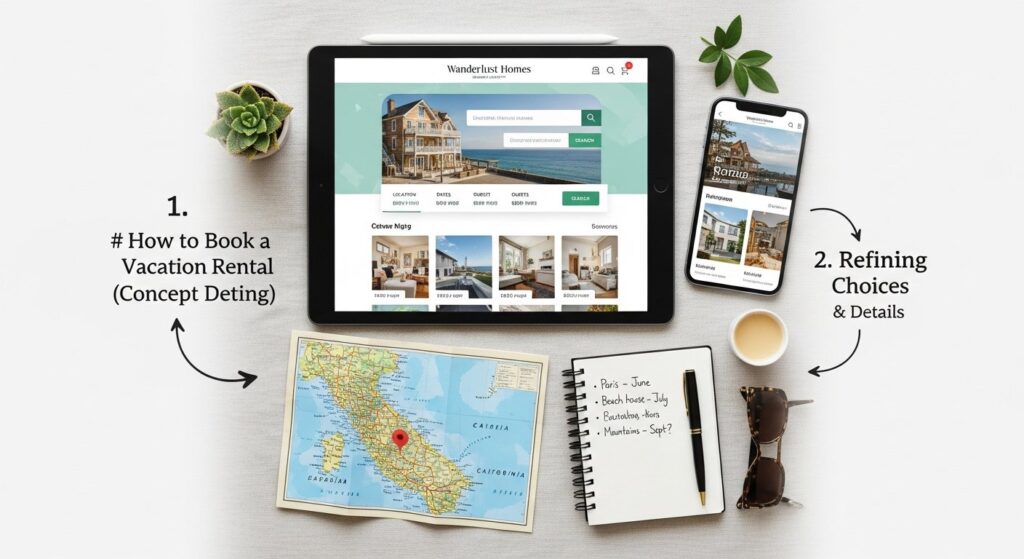
[INLINE IMAGE 1: place after second H2 | alt=”how to book a vacation rental concept illustration”]
Defining Your Destination and Dates
- Destination Research: Beyond just the city, consider specific neighborhoods or regions within your destination. Are you looking for a vibrant city center, a quiet beachfront, or a secluded mountain retreat? Researching local attractions, transportation, and dining options in different areas will guide your choice.
- Travel Dates: Pinpoint your exact travel dates. Be aware that flexibility can often lead to better deals, especially during shoulder seasons or mid-week. Peak seasons (holidays, school breaks) will have higher prices and less availability.
- Length of Stay: Will it be a weekend getaway, a week-long escape, or an extended stay? Some properties offer discounts for longer bookings.
Budgeting Wisely: Beyond the Nightly Rate
Your budget isn’t just the advertised nightly rate. When figuring out how to book a vacation rental, factor in all potential costs:
- Nightly Rate: The base price per night.
- Service Fees: Most platforms (Airbnb, Vrbo) charge a guest service fee, typically a percentage of the subtotal.
- Cleaning Fees: A one-time fee charged by the host for cleaning the property after your stay. These can vary significantly.
- Taxes: Local occupancy taxes, sales taxes, or tourism taxes often apply.
- Security Deposit: A refundable deposit to cover potential damages, held by the platform or host.
- Additional Guest Fees: Some hosts charge extra per person beyond a certain number of guests.
- Optional Add-ons: Parking, pet fees, early check-in/late check-out, or resort fees (less common for private rentals but good to be aware of for managed properties).
- Transportation: Cost of flights, car rental, or local public transport.
- Activities & Dining: Factor in your estimated spending on experiences and food.
Always review the “total price” breakdown before confirming a booking to avoid surprises.
Who’s Coming? Group Size and Dynamics
The number and type of travelers significantly impact your rental choice:
- Number of Guests: This is crucial. Ensure the property can comfortably accommodate everyone. Don’t try to squeeze in extra people beyond the stated capacity, as this can violate house rules and lead to issues.
- Children: If traveling with kids, look for child-friendly amenities like cribs, high chairs, safety gates, or a fenced yard. Proximity to parks or kid-friendly attractions is also key.
- Pets: If you’re bringing a furry friend, you’ll need a pet-friendly rental. Be prepared for potential pet fees and specific rules.
- Accessibility Needs: For guests with mobility challenges, filter for accessible properties, considering features like ramps, ground-floor bedrooms, roll-in showers, or elevators.
- Couples/Families/Groups: A romantic getaway might prefer a cozy studio, while a family reunion needs multiple bedrooms and common spaces.
Must-Have Amenities and Non-Negotiables
List your essential amenities versus your “nice-to-haves.” This helps filter effectively and prioritize listings.
- Kitchen: Full kitchen, kitchenette, or just a microwave? Essential for budget travelers or those with dietary restrictions.
- Laundry Facilities: Washer and dryer are a game-changer for longer stays or families.
- Internet Access: Reliable Wi-Fi is almost universally expected but always confirm, especially if you plan to work remotely.
- Air Conditioning/Heating: Crucial depending on your destination and travel season.
- Parking: If driving, dedicated parking is a major plus, especially in urban areas.
- Outdoor Space: Balcony, patio, garden, or pool – important for relaxation and entertainment.
- Specific Features: Hot tub, fireplace, BBQ grill, workspace, specific entertainment options.
By meticulously working through this checklist, you’ll approach the booking platforms with a clear vision, making the search for your ideal vacation rental much more efficient and targeted.
Navigating the Platforms: Where to Find Your Ideal Rental
Once you know what you’re looking for, the next step in how to book a vacation rental is deciding where to look. The vacation rental market is dominated by a few major players, alongside numerous niche sites and direct booking options. Each has its strengths, weaknesses, and unique inventory.
The Major Players: Airbnb, Vrbo, and Booking.com
These platforms collectively host millions of listings worldwide and are often the first stop for most travelers.
- Airbnb:
- Strengths: Known for its vast selection of unique properties, from private rooms to entire homes, including “Experiences.” Strong community focus with detailed host profiles and guest reviews. Excellent for finding quirky or off-the-beaten-path stays.
- Weaknesses: Service fees can be high. Some hosts are less professional. Instant Book listings are common, but others require host approval.
- Best for: Unique stays, budget-friendly options, exploring local culture through experiences, individual travelers or couples.
- Vrbo (Vacation Rentals by Owner):
- Strengths: Focuses exclusively on entire homes, making it ideal for families and groups. Often features larger properties with more amenities like pools and spacious yards. Clearer fee structures than some competitors.
- Weaknesses: Fewer urban apartment options compared to Airbnb. Can have higher cleaning fees due to larger properties.
- Best for: Family vacations, group trips, searching for houses with specific amenities like private pools, longer stays.
- Booking.com:
- Strengths: Originally hotel-centric, but has expanded its vacation rental inventory significantly. Often offers free cancellation policies. User-friendly interface and loyalty programs. Very strong international presence.
- Weaknesses: Vacation rental selection can be less curated than dedicated platforms. Reviews are tied to guests who actually stayed, but might be less detailed for rentals.
- Best for: Those who appreciate flexible cancellation, last-minute bookings, bundling with flights/cars, or combining rental search with hotel options.
Niche Platforms and Direct Booking Options
Don’t overlook these alternatives, especially if you have specific requirements or want to avoid platform fees.
- Tripadvisor Rentals: Aggregates listings from various partners, offering a wide range of options alongside reviews for attractions and restaurants.
- HomeAway (now part of Vrbo): Offers a similar experience to Vrbo, focusing on whole homes.
- Local Property Management Companies: Many destinations have local companies specializing in vacation rentals. Booking direct can sometimes save on platform fees and offer more personalized service. Search “vacation rentals [destination]” to find them.
- Specialty Sites: For luxury rentals (e.g., Luxury Retreats, The Plum Guide), unique accommodations (e.g., Glamping Hub), or specific regions.
- Social Media Groups: Sometimes, local Facebook groups or forums for a destination can connect you directly with owners. Exercise caution and verify legitimacy.
Comparison Table: Major Vacation Rental Platforms in 2026
To help you decide where to begin your search, here’s a quick comparison:
| Feature | Airbnb | Vrbo | Booking.com | Direct Booking (Local PMs/Owners) |
|---|---|---|---|---|
| Primary Focus | Unique stays, rooms, entire homes, experiences | Entire homes & condos | Hotels, then rentals & apartments | Specific properties managed locally |
| Inventory Diversity | Very High (quirky to luxury) | High (focus on larger homes) | High (across all accommodation types) | Moderate (specialized by region) |
| Best for | Singles, couples, unique experiences, city breaks | Families, groups, longer stays, amenities like pools | Flexible bookings, international travel, bundles | Avoiding platform fees, personalized service, niche properties |
| Fee Structure | Guest service fee + cleaning fee + taxes | Service fee + cleaning fee + taxes | Variable (some include fees, some add on) | Varies (may have booking fee, cleaning fee, taxes) |
| Cancellation Policy | Set by host (flexible, moderate, strict) | Set by host (strict, moderate, relaxed) | Often flexible/free cancellation options | Set by individual owner/company |
| Review System | Detailed guest & host reviews | Guest reviews for properties | Guest reviews (verified stays) | Varies (website reviews, testimonials) |
Our recommendation for how to book a vacation rental is often to start your search on 2-3 major platforms to get a broad overview of availability and pricing. Then, if you find a specific property you love, you might explore if it’s available for direct booking through a local property manager, potentially saving on platform fees. Remember to always compare the total cost across different platforms before making a decision.
Mastering the Search Filters: Pinpointing Your Perfect Stay
Once you’ve chosen your platform, the sheer volume of listings can be overwhelming. This is where mastering search filters becomes critical in your quest for how to book a vacation rental. Filters are your most powerful tools for quickly narrowing down options and finding properties that truly match your pre-booking checklist.
Essential Filters for Every Search
No matter which platform you use, these are the fundamental filters you should always apply:
- Destination: Start with your desired city, region, or even specific neighborhood.
- Dates: Enter your exact check-in and check-out dates. If flexible, try a “flexible dates” option or adjust your search to see how prices change.
- Number of Guests: Be precise here, including children and infants. This prevents you from seeing properties that are too small or those with strict occupancy limits.
- Property Type: As discussed earlier, filter for “entire home/apartment,” “cabin,” “villa,” etc., depending on your preference.
- Price Range: Set a realistic minimum and maximum budget based on your pre-booking analysis. Remember to account for service and cleaning fees that will be added to the base price.
[INLINE IMAGE 2: place after fourth H2 | alt=”how to book a vacation rental comparison illustration”]
Advanced Filters for Specific Needs
These are where you customize your search to meet your non-negotiables and desired amenities:
- Bedrooms/Bathrooms: Essential for groups or families. Don’t rely solely on guest count; verify the number of actual sleeping spaces.
- Amenities: This is a crucial section. Select all your “must-have” amenities from your checklist, such as:
- Wi-Fi/Internet
- Kitchen (full kitchen, dishwasher, microwave)
- Air conditioning/Heating
- Washer/Dryer
- Parking (free, on-site, street)
- Pool (private, shared, indoor)
- Hot tub
- Pet-friendly
- TV (with streaming services)
- Dedicated workspace
- Outdoor space (balcony, patio, garden)
- Grill/BBQ
- Fireplace
- Accessibility features (step-free access, grab rails, wider doorways)
- Superhost/Premier Host/Host Rating: Many platforms allow you to filter for hosts with high ratings or special designations (e.g., Airbnb Superhost, Vrbo Premier Host). These hosts typically offer excellent service and reliable properties.
- Instant Book: If you’re looking for a quick, confirmed booking without waiting for host approval, use this filter.
- Cancellation Policy: Filter for properties with flexible cancellation if your plans are uncertain. This allows you to cancel without penalty up to a certain point.
- Specific Features (e.g., Waterfront, Ski-in/Ski-out): For destination-specific trips, these filters can be invaluable.
Tips for Effective Filtering
- Start Broad, Then Refine: Begin with your core filters (destination, dates, guests, property type). Once you have a manageable number of results, start adding more specific amenity filters.
- Be Realistic: Filtering for every single amenity might yield zero results, especially in specific locations or budget ranges. Prioritize your true non-negotiables.
- Check “Map View”: Always use the map view to see the exact location of properties. This helps confirm proximity to attractions, public transport, or desired neighborhoods.
- Save Your Searches: Most platforms allow you to save searches or create wishlists. This is useful if you’re not ready to book immediately or want to compare options.
- Set Price Alerts: Some platforms or third-party tools can notify you if the price of a favorited property changes.
- Read Between the Lines: Even with filters, always read the description. For example, “sleeps 6” might mean two bedrooms and a sofa bed. A “kitchenette” isn’t a full kitchen.
By diligently using these filters, you’ll efficiently sort through the thousands of listings, bringing your perfect vacation rental directly to your attention. This proactive approach is key to understanding how to book a vacation rental that meets all your expectations.
Evaluating Listings Like a Pro: Photos, Descriptions, and Reviews
You’ve filtered down your options, and now you have a shortlist of promising properties. This is perhaps the most critical stage in how to book a vacation rental: meticulously evaluating each listing. It’s about becoming a detective, looking beyond the surface to ensure the property truly lives up to its promise.
Deciphering the Visuals: What Photos Really Tell You
Photos are your first impression, but they can also be misleading. Develop a critical eye:
- Quantity and Quality: Look for numerous, high-resolution photos that showcase all areas of the property (bedrooms, bathrooms, living spaces, kitchen, outdoor areas). A sparse gallery with blurry shots is a red flag.
- Consistency: Do the photos depict the same property from different angles? Are they well-lit and professional, or do they look like rushed phone snaps?
- Context and Layout: Try to piece together the floor plan from the photos. Can you see how rooms connect? Are there any obvious missing areas (e.g., no bathroom photos implies a potential issue)?
- Outdoor Spaces: If an outdoor area is important, look for photos that clearly show its size, furnishings, and condition. Are there neighbors close by?
- Date of Photos: Some listings indicate when photos were taken. Newer photos are always better, reflecting the current state of the property.
- Detail Shots: Look for close-ups of specific features like kitchen appliances, bedding, or bathroom fixtures.
If something feels off or too good to be true, it might be.
Reading Between the Lines: The Property Description
The description is where the host provides details that photos can’t. Scrutinize every word:
- Clarity and Specificity: A good description is clear, concise, and specific. It will detail sleeping arrangements, amenities, and unique features. Vague language or excessive marketing fluff can be a warning sign.
- Sleeping Arrangements: Don’t just rely on the number of guests. The description should clarify how many beds are available, their sizes (King, Queen, Twin), and if sofa beds or air mattresses are used.
- Location Details: Beyond the general area, does it mention proximity to specific landmarks, public transport, or potential noise sources (e.g., “near lively bar district”)?
- Unique Features: Pay attention to any special amenities or quirks mentioned. Is there a unique coffee maker you’d like to use?
- House Rules: While often in a separate section, sometimes key rules are embedded in the description. Note any restrictions on pets, parties, quiet hours, or smoking.
- Things NOT Mentioned: If an amenity you consider essential (e.g., A/C, Wi-Fi) isn’t mentioned, assume it’s not available unless explicitly stated.
- Language and Tone: Does the description sound professional, friendly, and helpful, or does it seem rushed or even aggressive?
The Power of Reviews: What Past Guests Say
Reviews are invaluable and often the most honest assessment of a property. They are arguably the single most important factor when learning how to book a vacation rental with confidence. Learning to analyze vacation rental reviews is a skill every savvy traveler needs.
- Quantity and Recency: A property with many recent, positive reviews is generally safer. Few or outdated reviews can be a red flag.
- Overall Rating: A 4.5-star rating or higher is usually a good indicator of quality. Be wary of anything below 4 stars unless you understand why.
- Read the Actual Comments: Don’t just look at the star rating. Dive into the detailed comments. Look for recurring themes, both positive and negative.
- Positive Themes: “Spotlessly clean,” “responsive host,” “great location,” “well-equipped kitchen,” “accurate description.”
- Negative Themes/Red Flags: “Unresponsive host,” “photos are misleading,” “dirty upon arrival,” “noisy,” “broken appliances,” “hidden fees,” “strong odor.”
- Host Responses: Do hosts respond to reviews, especially negative ones? A thoughtful, apologetic, or explanatory response indicates a host who cares. No response to criticism is a concern.
- Specific Feedback: Look for comments related to your specific needs (e.g., “the Wi-Fi was excellent for remote work,” “kids loved the backyard,” “very accessible for my elderly parents”).
- “Superhost” or “Premier Host” Status: These badges (on Airbnb and Vrbo, respectively) indicate a host with a proven track record of excellent service, high ratings, and low cancellation rates.
Considering the Host Profile and Communication
The host plays a huge role in your experience. Review their profile:
- Host Profile: Is it complete? Do they have a photo? Any verified badges? Do they have other listings with good reviews?
- Communication: Before booking, consider sending a polite inquiry, even if you plan to Instant Book. Ask a specific question about the property or area. Gauge their responsiveness and tone. A quick, friendly, and helpful reply is a good sign.
By diligently examining all these elements, you significantly reduce the risk of booking a disappointing rental and increase your chances of finding a true gem that perfectly matches your vacation dreams.
The Booking Process: Confirmation, Payments, and Contracts
You’ve found your ideal vacation rental. Now it’s time to seal the deal. Understanding the intricacies of the booking process, from payment to understanding the terms, is vital for a smooth transaction. This section details the final steps in how to book a vacation rental.
Inquiry vs. Instant Book: Which Option is Right for You?
- Instant Book: Many listings offer “Instant Book,” allowing you to book immediately without waiting for host approval. This is convenient for last-minute trips or if you’re certain about the property. However, it means less direct interaction with the host before booking. Always ensure your profile is complete if using Instant Book.
- Inquiry/Request to Book: For properties without Instant Book, or if you have specific questions, you’ll send an inquiry or “Request to Book.” This allows you to communicate with the host first, confirm details, and ensures the host reviews your profile before approving your stay. It’s a good option if you have special requests or want to confirm something critical.
Understanding the Total Cost Breakdown
Before clicking “Confirm and Pay,” meticulously review the total price breakdown. This is where hidden fees can sometimes lurk, though major platforms have become much more transparent.
- Nightly Rate: The base price.
- Service/Platform Fees: Charged by the booking platform (e.g., Airbnb guest service fee, Vrbo service fee). These are a percentage of the subtotal.
- Cleaning Fee: A one-time charge from the host.
- Occupancy Taxes: Local and state taxes, often a percentage of the total.
- Security Deposit: This might be a hold on your credit card, or an amount collected upfront and refunded after your stay if no damages occur. Understand how and when it will be processed.
- Additional Guest Fees: If applicable, ensure this aligns with your group size.
- Currency Conversion: If booking internationally, be aware of currency conversion rates your bank or credit card may charge, in addition to the platform’s displayed rate.
Always ensure the “total price” matches your budget and expectations before proceeding.
Payment Methods and Security
Most major platforms accept standard credit cards (Visa, Mastercard, American Express) and sometimes debit cards or digital payment systems like PayPal. Some key considerations:
- Payment Security: Always book and pay through the official platform. Never agree to pay a host directly via bank transfer, Venmo, or other off-platform methods. This is a common scam tactic and forfeits any platform protection you might have.
- Payment Schedule: Some bookings require full payment upfront, while others offer installment plans, especially for bookings made far in advance. Understand your payment schedule.
- Credit Card Benefits: Using a credit card often provides additional fraud protection and travel insurance benefits, depending on your card issuer.
The Importance of the Rental Agreement & House Rules
A rental agreement (often called a “contract” or “terms of service”) is a legally binding document between you and the host/property owner. While major platforms standardize many terms, individual hosts also set specific rules.
- Read Everything Carefully: Do not skip reading the full rental agreement and house rules. These documents outline:
- Check-in/Check-out Times: Strict adherence is usually required.
- Cancellation Policy: Re-confirm the policy you selected (flexible, moderate, strict). Understand refund percentages and deadlines.
- Damage Policy: How damages are assessed and charged.
- Occupancy Limits: The maximum number of guests allowed.
- Pet Policy: Specific rules for pets (e.g., leash requirements, restricted areas).
- Noise Restrictions/Quiet Hours: Especially important in residential areas.
- Smoking Policy: Usually strictly prohibited indoors.
- Cleaning Expectations: What is expected of you before departure (e.g., wash dishes, take out trash).
- Prohibited Activities: Parties, illegal activities, unauthorized guests.
- Platform Protection: Booking through major platforms offers some level of guest protection, but this protection is often contingent on you adhering to the rental agreement and house rules.
- Questions: If any part of the agreement is unclear, contact the host for clarification BEFORE you book.
Confirmation and What Comes Next
Once you click “Confirm and Pay,” you should receive an instant booking confirmation via email from the platform. This confirmation will typically include:
- Your reservation details (dates, property, total cost).
- Contact information for the host.
- Directions or general location details.
- Key check-in instructions (though often more detailed instructions are sent closer to the date).
- Cancellation policy reminder.
Save this confirmation email and add the reservation to your travel itinerary. With your booking secured, you’re one step closer to your dream vacation! Now you understand how to book a vacation rental from start to finish. The next steps focus on preparing for your arrival.
Pre-Arrival Essentials: Communication, Keys, and House Rules
Congratulations, your vacation rental is booked! However, the journey to a flawless stay doesn’t end there. The pre-arrival phase is critical for ensuring a smooth check-in and an enjoyable experience. Proactive communication and preparation are key when figuring out how to book a vacation rental effectively, all the way to arrival.
Communicating with Your Host: Bridging the Gap
Good communication with your host is paramount. Don’t wait until the last minute.
- Initial Reach Out: A week or two before your arrival (or earlier for longer stays), send a friendly message to your host. Reconfirm your arrival time, especially if it might be outside standard check-in windows.
- Ask Clarifying Questions: This is your chance to ask any remaining questions you might have.
- “What’s the best way to get from the airport/train station to the property?”
- “Can you recommend a nearby grocery store or restaurant?”
- “Are there any special instructions for using appliances or amenities?”
- “What should we do with trash/recycling?”
- Share Travel Updates: If your flight is delayed or you anticipate arriving later (or earlier) than expected, inform your host immediately. This courtesy goes a long way.
- Use the Platform’s Messaging System: Always communicate through the booking platform’s messaging system. This creates a documented record of all correspondence, which can be invaluable if any disputes arise.
Understanding Check-in Procedures and Key Collection
This is where things can vary significantly between rentals and is a critical detail for how to book a vacation rental successfully.
- Key Code/Smart Lock: Increasingly common, especially for remote check-ins. You’ll receive a code before arrival, allowing self-entry. This offers flexibility.
- Lockbox: A key is left in a secure lockbox near the entrance, and you’re given a code to access it.
- In-Person Meet-and-Greet: The host or a property manager meets you at the property to hand over keys, provide a tour, and answer questions. Confirm the exact meeting time.
- Front Desk/Concierge: For rentals in apartment buildings or managed complexes, keys might be picked up from a building reception.
Ensure you have clear, written instructions (including photos or diagrams if helpful) well in advance of your arrival. Save these instructions offline (e.g., screenshot, printout) in case of poor cell service.
Reviewing House Rules and Important Information
While you read them during booking, give the house rules another glance before you arrive. This helps avoid misunderstandings.
- Quiet Hours: Be mindful of neighbors, especially in residential areas.
- Smoking Policy: Confirm if smoking is allowed anywhere on the property (even outdoors).
- Waste Management: Understand local recycling and trash disposal rules.
- Appliance Use: Some unique appliances (e.g., European washing machines, complex coffee makers) might have specific instructions.
- Emergency Contacts: Ensure you have the host’s emergency contact number and local emergency services numbers.
Packing Smart: What to Bring (and What to Expect)
- Basic Supplies: While rentals usually provide essentials, it’s wise to pack a small supply of toiletries, coffee, tea, and basic cooking spices for your first day. Some rentals are more stocked than others.
- Connectivity: Bring chargers, power banks, and universal adapters for international travel.
- Entertainment: Books, games, or streaming device logins if the rental’s entertainment options are limited.
- Documents: Keep your booking confirmation, host contact info, and ID readily accessible.
By taking these pre-arrival steps, you’ll feel prepared and confident, setting the stage for a relaxed and trouble-free start to your vacation rental experience.
During Your Stay: Making the Most of Your Rental
You’ve arrived, checked in, and settled into your vacation rental. Now it’s time to truly enjoy your home-away-from-home. Being a considerate guest and knowing how to handle any issues that arise are key aspects of mastering how to book a vacation rental and experiencing it fully.
Being a Thoughtful and Respectful Guest
Your actions during your stay reflect on you and contribute to your host’s willingness to welcome future guests. Being a good guest is simple:
- Treat the Property with Care: Just as you would your own home. Avoid excessive noise, especially during quiet hours.
- Adhere to House Rules: Follow all rules regarding pets, smoking, waste disposal, and occupancy limits.
- Conserve Resources: Be mindful of electricity, water, and heating/cooling usage, especially in areas where resources are precious.
- Keep it Clean: Maintain a reasonable level of cleanliness. Don’t leave excessive messes.
- Communicate Issues Promptly: If something breaks or isn’t working, notify your host immediately. Don’t wait until check-out.
Troubleshooting and Problem Solving
Even the best-prepared trips can encounter minor hiccups. Knowing how to react is crucial.
- Minor Issues (e.g., Wi-Fi isn’t working, can’t find extra towels):
- Check provided instructions: Many hosts leave a welcome binder with Wi-Fi passwords, appliance guides, and FAQs.
- Politely message your host: Explain the issue clearly and calmly. Give them a reasonable amount of time to respond and resolve it.
- Significant Issues (e.g., no hot water, major appliance breakdown, safety concern):
- Contact your host immediately: Call or message, explaining the urgency.
- Document the issue: Take photos or videos. This is important evidence if a dispute arises later.
- Contact the Platform’s Support: If the host is unresponsive or unable to resolve a major issue quickly, contact the booking platform’s customer support. They can mediate or offer alternative solutions.
- Emergencies (e.g., medical emergency, fire, break-in):
How to Book a Vacation Rental: Your Expert Guide to Seamless Stays
Affiliate disclosure: This article may contain affiliate links. Recommendations are independent and editorially driven.
Embarking on a vacation should be an exciting journey, not a stressful one. In 2026, vacation rentals have become the preferred accommodation choice for millions of travelers, offering unparalleled privacy, space, and a true sense of local immersion compared to traditional hotels. However, navigating the vast world of short-term rentals, from quaint cottages to sprawling villas, can feel daunting. With countless platforms, varied pricing structures, and a multitude of property types, knowing precisely how to book a vacation rental successfully requires more than just a quick search.
This comprehensive guide from vacationrentalplanners is designed to transform you from a hesitant browser into a confident, savvy vacation rental booker. Whether you’re planning a romantic escape, a fun-filled family reunion, or a solo adventure, we’ll walk you through every critical step. From understanding the rental landscape and setting your non-negotiable criteria to mastering search filters, evaluating listings like a pro, and securing your booking with confidence, we cover it all. Get ready to unlock the secrets to finding and booking your perfect home-away-from-home, ensuring your next trip is unforgettable for all the right reasons.
Understanding the Vacation Rental Landscape: Why Choose One?
Before diving into the mechanics of how to book a vacation rental, it’s essential to understand why they’ve surged in popularity and what unique benefits they offer. Vacation rentals aren’t just an alternative; they often provide a superior travel experience tailored to modern preferences.
The Allure of Home-Away-From-Home
Unlike hotels, which offer standardized rooms and limited facilities, vacation rentals provide an authentic living experience. You get a kitchen, living areas, and often multiple bedrooms, creating a genuine sense of home. This is particularly appealing for extended stays, family trips, or group travel, where the communal spaces foster bonding and relaxation.
Key Benefits Over Traditional Hotels
- Space and Privacy: Enjoy separate living areas, private bedrooms, and often outdoor spaces like patios or gardens. This is invaluable for families with children or groups seeking personal space after a day of activities.
- Cost-Effectiveness: For groups or longer stays, splitting the cost of a rental can be significantly cheaper than booking multiple hotel rooms. The ability to cook your own meals also leads to substantial savings on dining out.
- Local Immersion: Staying in a residential neighborhood allows you to experience a destination like a local. Discover hidden cafes, grocery stores, and parks off the main tourist paths.
- Unique Amenities: Many rentals boast unique features such as private pools, hot tubs, game rooms, home theaters, or even access to private beaches. These amenities often go beyond what standard hotels can offer.
- Flexibility and Freedom: Set your own schedule, eat when you want, and enjoy the freedom to truly relax without hotel timings or restrictions.
Types of Vacation Rentals: Finding Your Fit
The term “vacation rental” encompasses a vast array of property types. Understanding these will help you narrow down your search:
- Apartments/Condos: Ideal for urban getaways or those seeking modern amenities and central locations. Often part of larger complexes with shared facilities.
- Houses/Villas: Perfect for families, groups, or travelers seeking more space, privacy, and potentially private amenities like a pool or yard.
- Cabins/Chalets: Popular for nature-focused trips, mountain getaways, or cozy retreats, often in scenic, secluded locations.
- Boutique & Unique Stays: Think treehouses, yurts, historic castles, houseboats, or glamping tents. These offer memorable, one-of-a-kind experiences.
- Farm Stays/Agritourism: For those looking to connect with rural life, often offering activities like fruit picking or animal feeding.
- Serviced Apartments: A hybrid of a hotel and a rental, offering apartment-style living with hotel services like cleaning and concierge.
By appreciating the diverse benefits and options, you’ll be better equipped to determine if a vacation rental is the right choice for your next adventure and how to approach booking it effectively.
Setting the Stage: Your Pre-Booking Checklist
The secret to a successful vacation rental booking isn’t just about finding a good deal; it’s about finding the right deal for you. A thorough pre-booking checklist ensures you define your needs and expectations before you even start browsing. This foundational step dramatically streamlines the process of how to book a vacation rental.
[INLINE IMAGE 1: place after second H2 | alt=”how to book a vacation rental concept illustration”]
Defining Your Destination and Dates
- Destination Research: Beyond just the city, consider specific neighborhoods or regions within your destination. Are you looking for a vibrant city center, a quiet beachfront, or a secluded mountain retreat? Researching local attractions, transportation, and dining options in different areas will guide your choice.
- Travel Dates: Pinpoint your exact travel dates. Be aware that flexibility can often lead to better deals, especially during shoulder seasons or mid-week. Peak seasons (holidays, school breaks) will have higher prices and less availability.
- Length of Stay: Will it be a weekend getaway, a week-long escape, or an extended stay? Some properties offer discounts for longer bookings.
Budgeting Wisely: Beyond the Nightly Rate
Your budget isn’t just the advertised nightly rate. When figuring out how to book a vacation rental, factor in all potential costs:
- Nightly Rate: The base price per night.
- Service Fees: Most platforms (Airbnb, Vrbo) charge a guest service fee, typically a percentage of the subtotal.
- Cleaning Fees: A one-time fee charged by the host for cleaning the property after your stay. These can vary significantly.
- Taxes: Local occupancy taxes, sales taxes, or tourism taxes often apply.
- Security Deposit: A refundable deposit to cover potential damages, held by the platform or host.
- Additional Guest Fees: Some hosts charge extra per person beyond a certain number of guests.
- Optional Add-ons: Parking, pet fees, early check-in/late check-out, or resort fees (less common for private rentals but good to be aware of for managed properties).
- Transportation: Cost of flights, car rental, or local public transport.
- Activities & Dining: Factor in your estimated spending on experiences and food.
Always review the “total price” breakdown before confirming a booking to avoid surprises.
Who’s Coming? Group Size and Dynamics
The number and type of travelers significantly impact your rental choice:
- Number of Guests: This is crucial. Ensure the property can comfortably accommodate everyone. Don’t try to squeeze in extra people beyond the stated capacity, as this can violate house rules and lead to issues.
- Children: If traveling with kids, look for child-friendly amenities like cribs, high chairs, safety gates, or a fenced yard. Proximity to parks or kid-friendly attractions is also key.
- Pets: If you’re bringing a furry friend, you’ll need a pet-friendly rental. Be prepared for potential pet fees and specific rules.
- Accessibility Needs: For guests with mobility challenges, filter for accessible properties, considering features like ramps, ground-floor bedrooms, roll-in showers, or elevators.
- Couples/Families/Groups: A romantic getaway might prefer a cozy studio, while a family reunion needs multiple bedrooms and common spaces.
Must-Have Amenities and Non-Negotiables
List your essential amenities versus your “nice-to-haves.” This helps filter effectively and prioritize listings.
- Kitchen: Full kitchen, kitchenette, or just a microwave? Essential for budget travelers or those with dietary restrictions.
- Laundry Facilities: Washer and dryer are a game-changer for longer stays or families.
- Internet Access: Reliable Wi-Fi is almost universally expected but always confirm, especially if you plan to work remotely.
- Air Conditioning/Heating: Crucial depending on your destination and travel season.
- Parking: If driving, dedicated parking is a major plus, especially in urban areas.
- Outdoor Space: Balcony, patio, garden, or pool – important for relaxation and entertainment.
- Specific Features: Hot tub, fireplace, BBQ grill, workspace, specific entertainment options.
By meticulously working through this checklist, you’ll approach the booking platforms with a clear vision, making the search for your ideal vacation rental much more efficient and targeted.
Navigating the Platforms: Where to Find Your Ideal Rental
Once you know what you’re looking for, the next step in how to book a vacation rental is deciding where to look. The vacation rental market is dominated by a few major players, alongside numerous niche sites and direct booking options. Each has its strengths, weaknesses, and unique inventory.
The Major Players: Airbnb, Vrbo, and Booking.com
These platforms collectively host millions of listings worldwide and are often the first stop for most travelers.
- Airbnb:
- Strengths: Known for its vast selection of unique properties, from private rooms to entire homes, including “Experiences.” Strong community focus with detailed host profiles and guest reviews. Excellent for finding quirky or off-the-beaten-path stays.
- Weaknesses: Service fees can be high. Some hosts are less professional. Instant Book listings are common, but others require host approval.
- Best for: Unique stays, budget-friendly options, exploring local culture through experiences, individual travelers or couples.
- Vrbo (Vacation Rentals by Owner):
- Strengths: Focuses exclusively on entire homes, making it ideal for families and groups. Often features larger properties with more amenities like pools and spacious yards. Clearer fee structures than some competitors.
- Weaknesses: Fewer urban apartment options compared to Airbnb. Can have higher cleaning fees due to larger properties.
- Best for: Family vacations, group trips, searching for houses with specific amenities like private pools, longer stays.
- Booking.com:
- Strengths: Originally hotel-centric, but has expanded its vacation rental inventory significantly. Often offers free cancellation policies. User-friendly interface and loyalty programs. Very strong international presence.
- Weaknesses: Vacation rental selection can be less curated than dedicated platforms. Reviews are tied to guests who actually stayed, but might be less detailed for rentals.
- Best for: Those who appreciate flexible cancellation, last-minute bookings, bundling with flights/cars, or combining rental search with hotel options.
Niche Platforms and Direct Booking Options
Don’t overlook these alternatives, especially if you have specific requirements or want to avoid platform fees.
- Tripadvisor Rentals: Aggregates listings from various partners, offering a wide range of options alongside reviews for attractions and restaurants.
- HomeAway (now part of Vrbo): Offers a similar experience to Vrbo, focusing on whole homes.
- Local Property Management Companies: Many destinations have local companies specializing in vacation rentals. Booking direct can sometimes save on platform fees and offer more personalized service. Search “vacation rentals [destination]” to find them.
- Specialty Sites: For luxury rentals (e.g., Luxury Retreats, The Plum Guide), unique accommodations (e.g., Glamping Hub), or specific regions.
- Social Media Groups: Sometimes, local Facebook groups or forums for a destination can connect you directly with owners. Exercise caution and verify legitimacy.
Comparison Table: Major Vacation Rental Platforms in 2026
To help you decide where to begin your search, here’s a quick comparison:
Feature Airbnb Vrbo Booking.com Direct Booking (Local PMs/Owners) Primary Focus Unique stays, rooms, entire homes, experiences Entire homes & condos Hotels, then rentals & apartments Specific properties managed locally Inventory Diversity Very High (quirky to luxury) High (focus on larger homes) High (across all accommodation types) Moderate (specialized by region) Best for Singles, couples, unique experiences, city breaks Families, groups, longer stays, amenities like pools Flexible bookings, international travel, bundles Avoiding platform fees, personalized service, niche properties Fee Structure Guest service fee + cleaning fee + taxes Service fee + cleaning fee + taxes Variable (some include fees, some add on) Varies (may have booking fee, cleaning fee, taxes) Cancellation Policy Set by host (flexible, moderate, strict) Set by host (strict, moderate, relaxed) Often flexible/free cancellation options Set by individual owner/company Review System Detailed guest & host reviews Guest reviews for properties Guest reviews (verified stays) Varies (website reviews, testimonials) Our recommendation for how to book a vacation rental is often to start your search on 2-3 major platforms to get a broad overview of availability and pricing. Then, if you find a specific property you love, you might explore if it’s available for direct booking through a local property manager, potentially saving on platform fees. Remember to always compare the total cost across different platforms before making a decision.
Mastering the Search Filters: Pinpointing Your Perfect Stay
Once you’ve chosen your platform, the sheer volume of listings can be overwhelming. This is where mastering search filters becomes critical in your quest for how to book a vacation rental. Filters are your most powerful tools for quickly narrowing down options and finding properties that truly match your pre-booking checklist.
Essential Filters for Every Search
No matter which platform you use, these are the fundamental filters you should always apply:
- Destination: Start with your desired city, region, or even specific neighborhood.
- Dates: Enter your exact check-in and check-out dates. If flexible, try a “flexible dates” option or adjust your search to see how prices change.
- Number of Guests: Be precise here, including children and infants. This prevents you from seeing properties that are too small or those with strict occupancy limits.
- Property Type: As discussed earlier, filter for “entire home/apartment,” “cabin,” “villa,” etc., depending on your preference.
- Price Range: Set a realistic minimum and maximum budget based on your pre-booking analysis. Remember to account for service and cleaning fees that will be added to the base price.
[INLINE IMAGE 2: place after fourth H2 | alt=”how to book a vacation rental comparison illustration”]
Advanced Filters for Specific Needs
These are where you customize your search to meet your non-negotiables and desired amenities:
- Bedrooms/Bathrooms: Essential for groups or families. Don’t rely solely on guest count; verify the number of actual sleeping spaces.
- Amenities: This is a crucial section. Select all your “must-have” amenities from your checklist, such as:
- Wi-Fi/Internet
- Kitchen (full kitchen, dishwasher, microwave)
- Air conditioning/Heating
- Washer/Dryer
- Parking (free, on-site, street)
- Pool (private, shared, indoor)
- Hot tub
- Pet-friendly
- TV (with streaming services)
- Dedicated workspace
- Outdoor space (balcony, patio, garden)
- Grill/BBQ
- Fireplace
- Accessibility features (step-free access, grab rails, wider doorways)
- Superhost/Premier Host/Host Rating: Many platforms allow you to filter for hosts with high ratings or special designations (e.g., Airbnb Superhost, Vrbo Premier Host). These hosts typically offer excellent service and reliable properties.
- Instant Book: If you’re looking for a quick, confirmed booking without waiting for host approval, use this filter.
- Cancellation Policy: Filter for properties with flexible cancellation if your plans are uncertain. This allows you to cancel without penalty up to a certain point.
- Specific Features (e.g., Waterfront, Ski-in/Ski-out): For destination-specific trips, these filters can be invaluable.
Tips for Effective Filtering
- Start Broad, Then Refine: Begin with your core filters (destination, dates, guests, property type). Once you have a manageable number of results, start adding more specific amenity filters.
- Be Realistic: Filtering for every single amenity might yield zero results, especially in specific locations or budget ranges. Prioritize your true non-negotiables.
- Check “Map View”: Always use the map view to see the exact location of properties. This helps confirm proximity to attractions, public transport, or desired neighborhoods.
- Save Your Searches: Most platforms allow you to save searches or create wishlists. This is useful if you’re not ready to book immediately or want to compare options.
- Set Price Alerts: Some platforms or third-party tools can notify you if the price of a favorited property changes.
- Read Between the Lines: Even with filters, always read the description. For example, “sleeps 6” might mean two bedrooms and a sofa bed. A “kitchenette” isn’t a full kitchen.
By diligently using these filters, you’ll efficiently sort through the thousands of listings, bringing your perfect vacation rental directly to your attention. This proactive approach is key to understanding how to book a vacation rental that meets all your expectations.
Evaluating Listings Like a Pro: Photos, Descriptions, and Reviews
You’ve filtered down your options, and now you have a shortlist of promising properties. This is perhaps the most critical stage in how to book a vacation rental: meticulously evaluating each listing. It’s about becoming a detective, looking beyond the surface to ensure the property truly lives up to its promise.
Deciphering the Visuals: What Photos Really Tell You
Photos are your first impression, but they can also be misleading. Develop a critical eye:
- Quantity and Quality: Look for numerous, high-resolution photos that showcase all areas of the property (bedrooms, bathrooms, living spaces, kitchen, outdoor areas). A sparse gallery with blurry shots is a red flag.
- Consistency: Do the photos depict the same property from different angles? Are they well-lit and professional, or do they look like rushed phone snaps?
- Context and Layout: Try to piece together the floor plan from the photos. Can you see how rooms connect? Are there any obvious missing areas (e.g., no bathroom photos implies a potential issue)?
- Outdoor Spaces: If an outdoor area is important, look for photos that clearly show its size, furnishings, and condition. Are there neighbors close by?
- Date of Photos: Some listings indicate when photos were taken. Newer photos are always better, reflecting the current state of the property.
- Detail Shots: Look for close-ups of specific features like kitchen appliances, bedding, or bathroom fixtures.
If something feels off or too good to be true, it might be.
Reading Between the Lines: The Property Description
The description is where the host provides details that photos can’t. Scrutinize every word:
- Clarity and Specificity: A good description is clear, concise, and specific. It will detail sleeping arrangements, amenities, and unique features. Vague language or excessive marketing fluff can be a warning sign.
- Sleeping Arrangements: Don’t just rely on the number of guests. The description should clarify how many beds are available, their sizes (King, Queen, Twin), and if sofa beds or air mattresses are used.
- Location Details: Beyond the general area, does it mention proximity to specific landmarks, public transport, or potential noise sources (e.g., “near lively bar district”)?
- Unique Features: Pay attention to any special amenities or quirks mentioned. Is there a unique coffee maker you’d like to use?
- House Rules: While often in a separate section, sometimes key rules are embedded in the description. Note any restrictions on pets, parties, quiet hours, or smoking.
- Things NOT Mentioned: If an amenity you consider essential (e.g., A/C, Wi-Fi) isn’t mentioned, assume it’s not available unless explicitly stated.
- Language and Tone: Does the description sound professional, friendly, and helpful, or does it seem rushed or even aggressive?
The Power of Reviews: What Past Guests Say
Reviews are invaluable and often the most honest assessment of a property. They are arguably the single most important factor when learning how to book a vacation rental with confidence. Learning to analyze vacation rental reviews is a skill every savvy traveler needs.
- Quantity and Recency: A property with many recent, positive reviews is generally safer. Few or outdated reviews can be a red flag.
- Overall Rating: A 4.5-star rating or higher is usually a good indicator of quality. Be wary of anything below 4 stars unless you understand why.
- Read the Actual Comments: Don’t just look at the star rating. Dive into the detailed comments. Look for recurring themes, both positive and negative.
- Positive Themes: “Spotlessly clean,” “responsive host,” “great location,” “well-equipped kitchen,” “accurate description.”
- Negative Themes/Red Flags: “Unresponsive host,” “photos are misleading,” “dirty upon arrival,” “noisy,” “broken appliances,” “hidden fees,” “strong odor.”
- Host Responses: Do hosts respond to reviews, especially negative ones? A thoughtful, apologetic, or explanatory response indicates a host who cares. No response to criticism is a concern.
- Specific Feedback: Look for comments related to your specific needs (e.g., “the Wi-Fi was excellent for remote work,” “kids loved the backyard,” “very accessible for my elderly parents”).
- “Superhost” or “Premier Host” Status: These badges (on Airbnb and Vrbo, respectively) indicate a host with a proven track record of excellent service, high ratings, and low cancellation rates.
Considering the Host Profile and Communication
The host plays a huge role in your experience. Review their profile:
- Host Profile: Is it complete? Do they have a photo? Any verified badges? Do they have other listings with good reviews?
- Communication: Before booking, consider sending a polite inquiry, even if you plan to Instant Book. Ask a specific question about the property or area. Gauge their responsiveness and tone. A quick, friendly, and helpful reply is a good sign.
By diligently examining all these elements, you significantly reduce the risk of booking a disappointing rental and increase your chances of finding a true gem that perfectly matches your vacation dreams.
The Booking Process: Confirmation, Payments, and Contracts
You’ve found your ideal vacation rental. Now it’s time to seal the deal. Understanding the intricacies of the booking process, from payment to understanding the terms, is vital for a smooth transaction. This section details the final steps in how to book a vacation rental.
Inquiry vs. Instant Book: Which Option is Right for You?
- Instant Book: Many listings offer “Instant Book,” allowing you to book immediately without waiting for host approval. This is convenient for last-minute trips or if you’re certain about the property. However, it means less direct interaction with the host before booking. Always ensure your profile is complete if using Instant Book.
- Inquiry/Request to Book: For properties without Instant Book, or if you have specific questions, you’ll send an inquiry or “Request to Book.” This allows you to communicate with the host first, confirm details, and ensures the host reviews your profile before approving your stay. It’s a good option if you have special requests or want to confirm something critical.
Understanding the Total Cost Breakdown
Before clicking “Confirm and Pay,” meticulously review the total price breakdown. This is where hidden fees can sometimes lurk, though major platforms have become much more transparent.
- Nightly Rate: The base price.
- Service/Platform Fees: Charged by the booking platform (e.g., Airbnb guest service fee, Vrbo service fee). These are a percentage of the subtotal.
- Cleaning Fee: A one-time charge from the host.
- Occupancy Taxes: Local and state taxes, often a percentage of the total.
- Security Deposit: This might be a hold on your credit card, or an amount collected upfront and refunded after your stay if no damages occur. Understand how and when it will be processed.
- Additional Guest Fees: If applicable, ensure this aligns with your group size.
- Currency Conversion: If booking internationally, be aware of currency conversion rates your bank or credit card may charge, in addition to the platform’s displayed rate.
Always ensure the “total price” matches your budget and expectations before proceeding.
Payment Methods and Security
Most major platforms accept standard credit cards (Visa, Mastercard, American Express) and sometimes debit cards or digital payment systems like PayPal. Some key considerations:
- Payment Security: Always book and pay through the official platform. Never agree to pay a host directly via bank transfer, Venmo, or other off-platform methods. This is a common scam tactic and forfeits any platform protection you might have.
- Payment Schedule: Some bookings require full payment upfront, while others offer installment plans, especially for bookings made far in advance. Understand your payment schedule.
- Credit Card Benefits: Using a credit card often provides additional fraud protection and travel insurance benefits, depending on your card issuer.
The Importance of the Rental Agreement & House Rules
A rental agreement (often called a “contract” or “terms of service”) is a legally binding document between you and the host/property owner. While major platforms standardize many terms, individual hosts also set specific rules.
- Read Everything Carefully: Do not skip reading the full rental agreement and house rules. These documents outline:
- Check-in/Check-out Times: Strict adherence is usually required.
- Cancellation Policy: Re-confirm the policy you selected (flexible, moderate, strict). Understand refund percentages and deadlines.
- Damage Policy: How damages are assessed and charged.
- Occupancy Limits: The maximum number of guests allowed.
- Pet Policy: Specific rules for pets (e.g., leash requirements, restricted areas).
- Noise Restrictions/Quiet Hours: Especially important in residential areas.
- Smoking Policy: Usually strictly prohibited indoors.
- Cleaning Expectations: What is expected of you before departure (e.g., wash dishes, take out trash).
- Prohibited Activities: Parties, illegal activities, unauthorized guests.
- Platform Protection: Booking through major platforms offers some level of guest protection, but this protection is often contingent on you adhering to the rental agreement and house rules.
- Questions: If any part of the agreement is unclear, contact the host for clarification BEFORE you book.
Confirmation and What Comes Next
Once you click “Confirm and Pay,” you should receive an instant booking confirmation via email from the platform. This confirmation will typically include:
- Your reservation details (dates, property, total cost).
- Contact information for the host.
- Directions or general location details.
- Key check-in instructions (though often more detailed instructions are sent closer to the date).
- Cancellation policy reminder.
Save this confirmation email and add the reservation to your travel itinerary. With your booking secured, you’re one step closer to your dream vacation! Now you understand how to book a vacation rental from start to finish. The next steps focus on preparing for your arrival.
Pre-Arrival Essentials: Communication, Keys, and House Rules
Congratulations, your vacation rental is booked! However, the journey to a flawless stay doesn’t end there. The pre-arrival phase is critical for ensuring a smooth check-in and an enjoyable experience. Proactive communication and preparation are key when figuring out how to book a vacation rental effectively, all the way to arrival.
Communicating with Your Host: Bridging the Gap
Good communication with your host is paramount. Don’t wait until the last minute.
- Initial Reach Out: A week or two before your arrival (or earlier for longer stays), send a friendly message to your host. Reconfirm your arrival time, especially if it might be outside standard check-in windows.
- Ask Clarifying Questions: This is your chance to ask any remaining questions you might have.
- “What’s the best way to get from the airport/train station to the property?”
- “Can you recommend a nearby grocery store or restaurant?”
- “Are there any special instructions for using appliances or amenities?”
- “What should we do with trash/recycling?”
- Share Travel Updates: If your flight is delayed or you anticipate arriving later (or earlier) than expected, inform your host immediately. This courtesy goes a long way.
- Use the Platform’s Messaging System: Always communicate through the booking platform’s messaging system. This creates a documented record of all correspondence, which can be invaluable if any disputes arise.
Understanding Check-in Procedures and Key Collection
This is where things can vary significantly between rentals and is a critical detail for how to book a vacation rental successfully.
- Key Code/Smart Lock: Increasingly common, especially for remote check-ins. You’ll receive a code before arrival, allowing self-entry. This offers flexibility.
- Lockbox: A key is left in a secure lockbox near the entrance, and you’re given a code to access it.
- In-Person Meet-and-Greet: The host or a property manager meets you at the property to hand over keys, provide a tour, and answer questions. Confirm the exact meeting time.
- Front Desk/Concierge: For rentals in apartment buildings or managed complexes, keys might be picked up from a building reception.
Ensure you have clear, written instructions (including photos or diagrams if helpful) well in advance of your arrival. Save these instructions offline (e.g., screenshot, printout) in case of poor cell service.
Reviewing House Rules and Important Information
While you read them during booking, give the house rules another glance before you arrive. This helps avoid misunderstandings.
- Quiet Hours: Be mindful of neighbors, especially in residential areas.
- Smoking Policy: Confirm if smoking is allowed anywhere on the property (even outdoors).
- Waste Management: Understand local recycling and trash disposal rules.
- Appliance Use: Some unique appliances (e.g., European washing machines, complex coffee makers) might have specific instructions.
- Emergency Contacts: Ensure you have the host’s emergency contact number and local emergency services numbers.
Packing Smart: What to Bring (and What to Expect)
- Basic Supplies: While rentals usually provide essentials, it’s wise to pack a small supply of toiletries, coffee, tea, and basic cooking spices for your first day. Some rentals are more stocked than others.
- Connectivity: Bring chargers, power banks, and universal adapters for international travel.
- Entertainment: Books, games, or streaming device logins if the rental’s entertainment options are limited.
- Documents: Keep your booking confirmation, host contact info, and ID readily accessible.
By taking these pre-arrival steps, you’ll feel prepared and confident, setting the stage for a relaxed and trouble-free start to your vacation rental experience.
During Your Stay: Making the Most of Your Rental
You’ve arrived, checked in, and settled into your vacation rental. Now it’s time to truly enjoy your home-away-from-home. Being a considerate guest and knowing how to handle any issues that arise are key aspects of mastering how to book a vacation rental and experiencing it fully.
Being a Thoughtful and Respectful Guest
Your actions during your stay reflect on you and contribute to your host’s willingness to welcome future guests. Being a good guest is simple:
- Treat the Property with Care: Just as you would your own home. Avoid excessive noise, especially during quiet hours.
- Adhere to House Rules: Follow all rules regarding pets, smoking, waste disposal, and occupancy limits.
- Conserve Resources: Be mindful of electricity, water, and heating/cooling usage, especially in areas where resources are precious.
- Keep it Clean: Maintain a reasonable level of cleanliness. Don’t leave excessive messes.
- Communicate Issues Promptly: If something breaks or isn’t working, notify your host immediately. Don’t wait until check-out.
Troubleshooting and Problem Solving
Even the best-prepared trips can encounter minor hiccups. Knowing how to react is crucial.
- Minor Issues (e.g., Wi-Fi isn’t working, can’t find extra towels):
- Check provided instructions: Many hosts leave a welcome binder with Wi-Fi passwords, appliance guides, and FAQs.
- Politely message your host: Explain the issue clearly and calmly. Give them a reasonable amount of time to respond and resolve it.
- Significant Issues (e.g., no hot water, major appliance breakdown, safety concern):
- Contact your host immediately: Call or message, explaining the urgency.
- Document the issue: Take photos or videos. This is important evidence if a dispute arises later.
- Contact the Platform’s Support: If the host is unresponsive or unable to resolve a major issue quickly, contact the booking platform’s customer support. They can mediate or offer alternative solutions.
- Emergencies (e.g., medical emergency, fire, break-in):