
Unlock Unforgettable Stays: Your Ultimate Guide to Direct Booking Vacation Rentals
Affiliate disclosure: This article may contain affiliate links. Recommendations are independent and editorially driven.
In the evolving landscape of travel, where personalized experiences and value for money are paramount, the concept of direct booking vacation rentals has surged in popularity. For years, online travel agencies (OTAs) like Airbnb, Vrbo, and Booking.com have dominated the short-term rental market, acting as convenient intermediaries. However, a growing number of savvy travelers are now bypassing these platforms, opting instead to book directly with property owners and professional managers. This shift isn’t merely a trend; it’s a strategic move to unlock significant advantages, from cost savings to more authentic interactions and enhanced flexibility.
At vacationrentalplanners, our mission is to empower you with the knowledge and tools to plan your perfect getaway. This comprehensive guide dives deep into the world of direct booking vacation rentals, revealing why it’s often the superior choice for discerning travelers, how to navigate the process effectively, and what to look out for to ensure a seamless and unforgettable trip. Whether you’re planning a romantic retreat, a family adventure, or a solo escape, understanding the nuances of direct booking can transform your travel experience, offering a level of control and connection that traditional platforms simply can’t match.
From understanding the financial benefits to mastering the art of finding hidden gems and communicating directly with hosts, we’ll cover every aspect of direct booking. Prepare to discover a new way to travel that prioritizes your needs, offers unparalleled value, and fosters genuine connections with the places you visit.
The Allure of Direct Booking: Beyond the Platforms
The rise of platforms like Airbnb and Vrbo revolutionized travel, making vacation rentals accessible to the masses. Yet, with their ubiquity came increasing fees, standardized experiences, and a perceived distance between guest and host. Direct booking offers a refreshing alternative, harkening back to a more personalized approach while leveraging modern digital tools. It’s about regaining control, fostering direct relationships, and often, securing a better deal.
Understanding the Shift: Why Travelers Are Going Direct
The primary driver behind the shift to direct booking vacation rentals is often financial. OTAs charge service fees to both guests and hosts, which can add a significant percentage to the total cost of a booking. By eliminating this intermediary, travelers can immediately save on these fees, sometimes by as much as 5% to 20% or even more. This isn’t just about saving money; it’s about getting more value for every dollar spent, allowing for longer stays, upgraded experiences, or more memorable activities during the trip.
Beyond cost, the desire for a more authentic and personal experience plays a crucial role. Direct communication with an owner or local property manager allows for a deeper understanding of the property, the local area, and any specific needs or requests a traveler might have. This direct line can lead to tailored recommendations, special accommodations, and a genuinely warmer welcome, transforming a generic stay into a truly memorable one.
Defining Direct Booking in the Modern Era
Direct booking, in its simplest form, means renting a vacation property directly from the owner or a property management company without using a third-party online booking platform. This can happen through various channels:
- Dedicated Property Websites: Many owners and professional managers have their own websites showcasing their properties, complete with calendars, pricing, and secure booking engines.
- Social Media: Platforms like Facebook and Instagram groups, as well as dedicated business pages, are increasingly used by owners to advertise and facilitate direct inquiries.
- Email & Phone: Traditional methods of contact, often initiated after finding a listing on a directory or a referral.
- Local Tourism Boards & Chambers of Commerce: These organizations often maintain lists of local accommodations, including direct rentals.
- Referrals: Word-of-mouth recommendations from friends, family, or past guests.
The essence remains the same: a direct transaction and communication line between guest and host, free from the constraints and costs of large intermediary platforms. This freedom allows for greater flexibility in terms and conditions, better negotiation potential, and a more intimate understanding of the rental property and its surroundings.
Benefits for Travelers: Why Go Direct?

The advantages of choosing direct booking vacation rentals extend far beyond mere cost savings. They encompass a holistic improvement in the travel planning and on-site experience, making it a highly appealing option for those seeking more control, personalization, and value.
[INLINE IMAGE 1: place after second H2 | alt=”direct booking vacation rentals concept illustration”]
Significant Cost Savings: Avoiding Platform Fees
As touched upon, the most immediate and tangible benefit of direct booking is the elimination of service fees charged by major OTAs. These fees, often ranging from 5% to 20% (and sometimes more) of the total booking cost, can quickly add up, especially for longer stays or more luxurious properties. By booking directly, travelers keep these savings in their pockets, which can then be allocated to other aspects of their trip – dining out, local excursions, or extending their stay. This direct financial advantage makes direct booking vacation rentals a smart economic choice for budget-conscious travelers and those looking to maximize their vacation budget.
Enhanced Communication and Personalization
When you book directly, you establish a direct line of communication with the property owner or manager. This fosters a level of personalization that is often absent when dealing with large platforms. Want to know the best local seafood spot? Need a specific type of coffee maker? Curious about hiking trails nearby? A direct host can provide tailored recommendations, answer specific questions about the property, and often go the extra mile to accommodate special requests. This direct relationship builds trust and allows for a more customized stay, ensuring your vacation rental truly feels like a home away from home, perfectly suited to your preferences.
- Tailored Recommendations: Receive insider tips on local attractions, restaurants, and hidden gems.
- Flexible Check-in/Check-out: While not guaranteed, direct hosts may be more flexible with times, especially during off-peak seasons.
- Special Requests: Easier to arrange specific amenities, such as a crib for a baby, pet accommodations, or a late luggage drop-off.
Greater Flexibility and Negotiation Potential
One of the less obvious but significant benefits of direct booking is the increased flexibility in terms and conditions. While OTAs enforce rigid cancellation policies and payment schedules, a direct owner may be more willing to negotiate. This could mean:
- More Lenient Cancellation Policies: Especially for bookings made well in advance, an owner might offer more flexible cancellation options than a platform would dictate.
- Payment Schedule Adjustments: Rather than paying a large sum upfront, you might be able to arrange for installment payments or a smaller deposit.
- Discounts for Extended Stays or Off-Peak Travel: Owners are often more open to offering discounts for longer bookings or during slower seasons when their calendars aren’t full. This direct incentive benefits both parties.
This flexibility empowers travelers to craft a booking agreement that better suits their individual needs, rather than being confined by a platform’s one-size-fits-all rules.
Access to Unique and Exclusive Properties
Not all vacation rental properties are listed on major OTAs. Many owners, particularly those with unique, high-end, or niche properties, prefer to manage their bookings directly. They might avoid platform fees, maintain brand control, or simply prefer a more personal vetting process for guests. By exploring direct booking channels, you gain access to a wider array of properties, including hidden gems, luxury estates, and quirky rentals that you simply won’t find anywhere else. This opens up opportunities for truly distinctive and memorable stays, allowing you to discover accommodations that perfectly align with your travel style and preferences.
For example, a charming historic cottage managed by its owner in a picturesque European village or a secluded beachfront villa in a lesser-known tropical paradise might exclusively be available through direct channels. These properties often offer a more authentic local experience and a level of privacy and uniqueness that can elevate your entire trip. If you’re looking for something truly special, direct booking is often the path less traveled, leading to extraordinary discoveries.
How to Find Direct Booking Vacation Rentals
Embarking on the journey to find direct booking vacation rentals might seem daunting at first, given the vastness of the internet. However, with the right strategies and resources, you can efficiently uncover a plethora of options that align with your travel desires. The key is knowing where to look and how to utilize various tools at your disposal.
Leveraging Search Engines and Specific Keywords
Your journey often begins with a targeted search. Instead of just “vacation rentals [destination],” refine your search terms to include phrases that indicate direct booking. Consider using combinations like:
- “direct booking vacation rentals [destination]”
- “vacation rentals by owner [destination]”
- “[destination] private rentals”
- “book direct [destination] vacation homes”
- “no fee vacation rentals [destination]”
- “[destination] property management rentals”
When reviewing search results, look for individual property websites or local property management company sites, rather than aggregator platforms. Pay attention to domain names and contact information. Often, property management companies specializing in a specific region will have dedicated local sites that allow for direct booking.
Exploring Niche Directories and Local Resources
While major OTAs are aggregators, there are smaller, specialized directories that focus on direct booking or specific types of rentals. These can be goldmines for finding unique properties:
- Regional or Destination-Specific Rental Sites: Many popular tourist destinations have local tourism boards or independent websites that list vacation rentals, often with direct contact information for owners or managers. Search for “[destination] tourism vacation rentals” or “[destination] rental companies.”
- Specialty Rental Directories: Some sites focus on niche markets, such as pet-friendly rentals, luxury villas, eco-lodges, or unique stays like treehouses or houseboats, where direct booking is more common.
- Facebook Groups and Social Media: Search for Facebook groups dedicated to vacation rentals in your target destination (e.g., “Outer Banks Vacation Rentals By Owner”). Many owners actively promote their properties and engage directly with potential guests here. Instagram can also be useful by searching relevant hashtags.
- Word-of-Mouth and Referrals: Don’t underestimate the power of personal connections. Ask friends, family, or colleagues for recommendations if they’ve traveled to your desired destination. A positive past experience can lead you directly to a trusted owner.
When you find a promising property on an OTA, try to identify the property name or owner’s name. A quick Google search for “[property name] direct” or “[owner name] vacation rentals” might lead you to their independent website or direct contact information, allowing you to bypass the platform.
Verifying Property and Owner Legitimacy
The biggest concern with direct booking is the potential for scams or misrepresentation. Due diligence is crucial. Here’s how to verify legitimacy:
- Cross-Reference Information: If you find a property directly, try to see if it’s also listed on any reputable OTA (even if you don’t book there). Consistent photos, descriptions, and addresses across multiple platforms can be a good sign. Be wary if a property only appears on one obscure direct site.
- Professional Websites: A legitimate owner or property manager often has a professional, well-maintained website with clear contact information, terms and conditions, and a secure payment gateway. Lack of professionalism can be a red flag.
- Public Records (if applicable): For properties in certain areas, you might be able to search for property ownership records, though this can be more complex.
- Review Online Presence: Search for the owner’s or property manager’s name and their business name online. Look for independent reviews, testimonials, or any red flags from past guests.
- Video Calls: Ask for a video call with the owner or property manager. This allows you to see the person you’re dealing with and ask questions directly. They might even offer a virtual tour.
- Payment Methods: Be extremely cautious if an owner insists on wire transfers, cashier’s checks, or non-traceable payment methods. Reputable direct bookings will typically use secure online payment processors, credit cards, or established bank transfers. Never pay with gift cards.
- Contracts and Agreements: A professional direct booking will involve a clear rental agreement or contract outlining terms, cancellation policies, check-in/out procedures, and house rules. Review this thoroughly before committing.
By taking these steps, you significantly reduce the risk and increase your confidence in securing a legitimate and enjoyable direct booking vacation rental. Remember, a little extra effort upfront can save you a lot of headache and potential disappointment down the road.
Negotiating and Securing Your Direct Booking
Once you’ve identified a potential direct booking vacation rental, the next phase involves communication, negotiation, and securely finalizing your reservation. This process allows for a more personal touch and often results in a better deal and a more customized experience than booking through an OTA.
[INLINE IMAGE 2: place after fourth H2 | alt=”direct booking vacation rentals comparison illustration”]
Effective Communication with Owners and Managers
The foundation of a successful direct booking is clear, polite, and thorough communication. When you first reach out, whether by email or phone, be prepared with specific questions and details about your trip:
- Initial Inquiry: Clearly state your desired dates, number of guests (adults/children), and any specific needs (e.g., pet-friendly, accessible features). Be polite and professional.
- Ask Specific Questions: Don’t hesitate to ask for more photos, details about amenities not clearly shown, proximity to attractions, internet speed, or parking availability. This shows you’re a serious potential guest.
- Share Your Intentions: Briefly explain the purpose of your trip (e.g., “family vacation,” “romantic getaway”) to help the owner understand your needs and build rapport.
- Be Responsive: Timely responses to the owner’s questions or offers show you are engaged and reliable.
Effective communication builds trust, which is invaluable in direct booking. It allows both parties to feel comfortable and confident in the arrangement.
Strategies for Negotiating Price and Terms
One of the most exciting aspects of direct booking vacation rentals is the potential for negotiation. Unlike fixed OTA prices, direct bookings often have more wiggle room. Here’s how to approach it:
- Research Market Rates: Before negotiating, understand what similar properties in the area are renting for, both on OTAs and direct channels. This gives you leverage.
- Target Off-Peak Seasons: Owners are more likely to offer discounts during slower travel periods when demand is lower. Mention if your dates are flexible within an off-peak window.
- Longer Stays: If you’re planning an extended vacation, inquire about weekly or monthly discounts. Owners often prefer longer, stable bookings.
- Be Respectful with Offers: Don’t make an insultingly low offer. Instead, politely ask, “Is there any flexibility in the rate for our dates?” or “Would you consider a slight discount for a [X]-night stay?” Frame it as a mutually beneficial arrangement.
- Highlight Your Guest Profile: If you’re a responsible traveler with good references from previous rentals (e.g., “We’re a quiet family looking for a relaxing stay”), mention it. Owners want reliable guests.
- Package Deals: Sometimes, instead of a direct price reduction, an owner might offer an added value, such as a complimentary late check-out, a welcome basket, or a discount on a local activity they partner with.
- Payment Terms: If a price negotiation isn’t possible, inquire about more flexible payment terms, such as a smaller upfront deposit or a staggered payment plan.
Remember, the goal is a win-win situation. A fair negotiation benefits both you and the owner, fostering a positive relationship from the start.
Understanding and Securing the Rental Agreement
A legitimate direct booking will always involve a rental agreement or contract. This document protects both you and the owner by outlining the terms and conditions of your stay. Do not proceed without one.
- Review Thoroughly: Read every clause of the agreement carefully. Pay close attention to:
- Dates and Pricing: Confirm the booking dates, total cost, and what is included/excluded (e.g., cleaning fees, taxes, utilities).
- Payment Schedule: Understand when deposits are due, final payments, and what payment methods are accepted.
- Cancellation Policy: This is crucial. Know what happens if you need to cancel and what refunds (if any) you are entitled to.
- Check-in/Check-out Procedures: Details on key collection, access codes, and departure instructions.
- House Rules: Pet policies, smoking rules, noise restrictions, maximum occupancy, and any other specific guidelines.
- Damage Deposit: The amount, conditions for forfeiture, and timeline for return.
- Liability and Insurance: Understand responsibilities for damage and what insurance (yours or theirs) covers.
- Ask for Clarification: If anything in the agreement is unclear, ask the owner or manager for clarification before signing.
- Secure Payment Methods: Insist on paying via traceable methods such as credit card (which often offers fraud protection), bank transfer, or a secure online payment system (like PayPal Goods & Services). Avoid cash, wire transfers, or cryptocurrency unless you are absolutely certain of the owner’s legitimacy and have a strong contract in place.
- Signed Agreement: Ensure both you and the owner sign the agreement. Keep a copy for your records. This serves as your legal protection.
By meticulously reviewing and understanding the rental agreement and using secure payment methods, you can confidently secure your direct booking vacation rental, knowing you’re protected and prepared for your trip.
Check out our comprehensive destination guides for inspiration!
Potential Downsides and How to Mitigate Them
While direct booking vacation rentals offer numerous advantages, it’s important to approach them with a clear understanding of potential challenges. Unlike booking through established OTAs, direct bookings typically involve fewer built-in safeguards. However, with careful planning and due diligence, most risks can be effectively mitigated.
Addressing the Lack of Third-Party Protection
The primary “downside” of direct booking is the absence of a large intermediary platform to mediate disputes or provide standardized protections. OTAs often offer guest guarantees, dispute resolution services, and a layer of financial protection in case of scams or significant issues with the property.
- Mitigation Strategy: Comprehensive Contract: The rental agreement becomes your primary form of protection. Ensure it is detailed, covers all eventualities (cancellation, damage, refunds), and is legally binding. Don’t sign anything you don’t fully understand.
- Mitigation Strategy: Secure Payment Methods: Always pay via credit card or a traceable bank transfer. Credit card companies often provide chargeback options if services are not rendered as agreed, offering a layer of financial protection similar to what an OTA might provide. Avoid wire transfers, cashier’s checks, or cash unless you have absolute trust and a robust legal agreement.
- Mitigation Strategy: Travel Insurance: Consider purchasing comprehensive travel insurance that covers trip cancellation, interruption, and emergency medical situations. Some policies specifically offer “cancel for any reason” options, which can be invaluable for direct bookings where cancellation policies might be less flexible than desired. This is especially important for high-value bookings.
Vetting Properties and Owners: Avoiding Scams
The risk of encountering fraudulent listings or dishonest owners is higher with direct bookings, as there’s no platform to vet listings beforehand. Scams can range from properties that don’t exist to those that are vastly different from their descriptions.
- Mitigation Strategy: Thorough Verification:
- Cross-reference listings: If you find a property directly, try to locate it on major OTAs. If it’s listed there, compare details and photos. Consistency is key. If it’s only listed directly, this is a minor red flag but not a deal-breaker.
- Search owner/manager online: Look for reviews, social media presence, or any history of complaints. A professional online presence is a good sign.
- Request a video tour: Ask the owner to do a live video walkthrough of the property. This is a powerful way to confirm the property exists and matches the photos.
- Ask for references: While not always practical, for high-value bookings, you could ask for references from previous guests (with their permission).
- Check property address: Use Google Maps Street View to verify the exterior of the property and its surroundings match the description.
- Mitigation Strategy: Trust Your Gut: If something feels off, it probably is. Unusually low prices for prime locations, pressure to book quickly, or insistence on unusual payment methods are all major red flags.
The Responsibility of Self-Service
With direct booking, you become the primary point of contact for all aspects of your stay. There’s no customer service department of a major platform to call if you have issues during your trip. This means more personal responsibility.
- Mitigation Strategy: Clear Pre-Arrival Communication: Ensure you have all necessary information before you arrive: check-in instructions, key codes, Wi-Fi passwords, emergency contact numbers for the owner/manager, and directions.
- Mitigation Strategy: Establish Emergency Protocols: Ask the owner what to do in case of emergencies (e.g., plumbing issue, power outage, medical emergency). Have local emergency numbers readily available.
- Mitigation Strategy: Be Proactive: If an issue arises during your stay, communicate it promptly and directly to the owner/manager. Most legitimate hosts are keen to resolve problems quickly to ensure a positive guest experience and protect their reputation. Document all communications if a resolution is not immediate.
By being informed, proactive, and meticulous in your planning and communication, the potential downsides of direct booking vacation rentals can be effectively managed, allowing you to enjoy all its benefits with peace of mind.
Direct vs. OTA: A Head-to-Head Comparison
When planning a vacation, the choice between direct booking vacation rentals and using Online Travel Agencies (OTAs) like Airbnb, Vrbo, or Booking.com is a pivotal decision. Both approaches offer unique advantages and disadvantages, and the best option often depends on your priorities as a traveler. Let’s break down the key differences to help you make an informed choice.
Analyzing Key Differences: Cost, Flexibility, Service
The core distinctions between direct booking and OTAs revolve around these three critical areas:
- Cost: This is often the most significant differentiator.
- Direct Booking: Generally offers lower overall costs due to the absence of platform service fees. Owners can pass these savings directly to guests or offer more competitive rates.
- OTAs: Guests pay a service fee (typically 5-20%) on top of the nightly rate, leading to a higher total cost.
- Flexibility: The degree to which terms and conditions can be adjusted.
- Direct Booking: High flexibility. Owners/managers can often negotiate on price, cancellation policies, payment schedules, and check-in/check-out times, especially for longer stays or off-peak periods.
- OTAs: Low flexibility. Policies are standardized and often rigid, dictated by the platform. While owners set their specific cancellation policies, the platform mediates them strictly.
- Service & Communication: The nature of interaction and support.
- Direct Booking: Highly personalized service and direct communication with the owner/manager. This allows for tailored advice, specific requests, and a more personal connection. Resolution of issues depends solely on the owner.
- OTAs: Standardized customer service from the platform, which can be helpful for disputes. Communication with the host is channeled through the platform, which can sometimes feel impersonal or delayed.
When to Choose Direct Booking vs. When to Use an OTA
Understanding these differences helps determine the optimal booking strategy for various scenarios:
Choose Direct Booking When:
- You prioritize cost savings: If getting the best possible price is your main goal.
- You seek a personalized experience: For unique requests, local insights, or a more direct relationship with your host.
- You’re booking for a longer stay: Where cumulative OTA fees become substantial, and owners are more open to negotiation.
- You’re traveling to a niche destination: Where local property managers or owners might not list on major platforms.
- You’re comfortable with due diligence: If you’re willing to invest time in verifying properties and managing communication.
- You have specific needs: For accessibility, pet accommodations, or other unique requirements that might need direct discussion.
Choose an OTA When:
- You prioritize convenience and speed: For quick, hassle-free bookings with immediate confirmation.
- You want built-in safeguards: If you prefer the safety net of platform dispute resolution and guest guarantees.
- You’re new to vacation rentals: The standardized experience can be less intimidating.
- You’re looking for a last-minute booking: OTAs often have a wider selection of available properties for immediate stays.
- You need a vast selection: OTAs typically offer the largest inventory of properties globally.
- You’re accumulating loyalty points: Some OTAs offer rewards programs.
Ultimately, a hybrid approach can be effective. Use OTAs for initial research and to discover properties, then attempt to find the property’s direct booking channel for potential savings and enhanced benefits. This allows you to leverage the best of both worlds.
Comparison Table: Direct Booking Vacation Rentals vs. OTAs
| Feature | Direct Booking Vacation Rentals | Online Travel Agencies (OTAs) |
|---|---|---|
| Cost (Service Fees) | None (direct savings to traveler) | Typically 5-20% added to guest’s total |
| Communication | Direct, personal, and immediate with owner/manager | Mediated through platform, can be less personal |
| Flexibility & Negotiation | High potential for negotiation on price, terms, policies | Low; standardized policies, limited negotiation |
| Property Selection | Access to unique, exclusive, and local properties (might require more searching) | Vast, global inventory; easy to browse and compare |
| Guest Protection | Relies on robust contract, secure payment methods, and travel insurance | Platform’s guest guarantee, dispute resolution, and payment protection |
| Trust & Verification | Requires traveler’s due diligence to vet owner/property | Platform vets listings (to varying degrees), relies on review systems |
| Special Requests | Easier to accommodate and discuss directly | Often limited by platform functionality; less direct discussion |
| Booking Speed | Can take longer due to direct communication/negotiation | Instant booking often available, fast confirmation |
Planning a family trip? Discover our top family-friendly destination guides!
Maximizing Your Direct Booking Experience: Tips & Tricks
Once you’ve decided to explore direct booking vacation rentals, there are several strategies you can employ to ensure a smooth, rewarding, and hassle-free experience. These tips focus on optimizing your search, communication, and overall preparation.
Best Practices for Research and Vetting
Thorough research is your most powerful tool when engaging in direct booking. Treat it like a personal investigation to ensure legitimacy and suitability.
- Deep Dive into Photos and Descriptions: Don’t just glance at the photos. Look for consistency, detail, and recent updates. Read descriptions meticulously for nuances about amenities, local access, and house rules.
- Read ALL Reviews (Even Negative Ones): If the property or owner has an online presence with reviews (e.g., on Google, Facebook, or old OTA listings), read them carefully. Pay attention to how owners respond to criticism, as this reveals their professionalism.
- Verify the Address and Location: Use Google Maps, Street View, and satellite imagery to confirm the property’s exact location, proximity to attractions, and surrounding environment. Ensure it matches what’s advertised.
- Check for Consistency: If you find the property listed on multiple sites (even OTAs), compare prices, descriptions, and photos. Major discrepancies are red flags. Consistent information across various platforms builds confidence.
- Request Proof of Ownership/Management: For high-value or long-term rentals, it’s reasonable to politely ask for proof that the person you’re communicating with is indeed the owner or authorized property manager. This could be a business registration number or a link to their official company page.
Crafting an Ideal Guest Profile and Inquiry
Just as you vet the host, hosts are also vetting you. Presenting yourself as a responsible, desirable guest can improve your chances of securing a booking and even receiving favorable terms.
- Be Clear and Concise: In your initial inquiry, state your desired dates, number of guests, and general purpose of your trip.
- Introduce Yourself Briefly: A polite introduction (e.g., “We are a family of four planning a relaxing beach vacation…”) helps the owner get a sense of who you are.
- Highlight Responsible Behavior: If you’ve previously stayed in vacation rentals and had positive experiences, you can mention it. Owners value guests who are respectful of their property.
- Ask Thoughtful Questions: Show genuine interest in the property and local area with specific questions, demonstrating that you’ve done your research.
- Be Respectful of Their Time: Keep communication professional and respond promptly.
A well-crafted inquiry not only helps you get the information you need but also builds a positive rapport with the host from the outset.
Payment Security and Contractual Safeguards
Protecting your money and ensuring a clear understanding of the terms are paramount for a secure direct booking.
- Always Use Secure Payment Methods: Prioritize credit cards, as they offer fraud protection and chargeback options. Bank transfers are generally safe but offer less recourse than credit cards. Avoid cash, wire transfers, or gift cards at all costs for initial payments.
- Never Pay the Full Amount Upfront: A legitimate direct booking will typically require a deposit (20-50%) and the remaining balance closer to the check-in date. Be wary of requests for 100% upfront payment, especially for bookings far in advance.
- Demand a Detailed Rental Agreement: A comprehensive contract is your legal safeguard. Ensure it includes:
- Full names and contact information of both parties.
- Exact dates and times of check-in/check-out.
- Detailed cost breakdown (nightly rate, cleaning fees, taxes, security deposit).
- Clear cancellation and refund policy.
- House rules (pets, smoking, noise, maximum occupancy).
- Emergency contact information for the owner/manager.
- Procedure for returning the security deposit.
- Keep All Correspondence: Maintain records of all emails, messages, and calls with the owner/manager. This documentation is crucial if any disputes arise.
- Consider Travel Insurance: As mentioned, travel insurance that covers trip interruption or cancellation can provide an extra layer of financial protection against unforeseen circumstances, especially relevant for direct bookings where cancellation policies might be less forgiving.
By diligently applying these tips, you can significantly enhance your direct booking experience, ensuring not only cost savings but also peace of mind and a truly personalized vacation rental stay. Your meticulous planning upfront will pay dividends in the form of a stress-free and enjoyable trip.
Discover essential travel insurance tips before your next adventure!
Direct Booking for Different Trip Types
The flexibility and personalization offered by direct booking vacation rentals make them a versatile option, adaptable to a wide array of travel types. Whether you’re planning a sprawling family reunion or a quiet solo retreat, direct booking can often provide a more tailored and rewarding accommodation experience.
Family Vacations: Space, Amenities, and Safety
Family vacations often demand specific requirements that direct booking vacation rentals are uniquely suited to meet. Families need space, child-friendly amenities, and a sense of safety and security.
- More Space and Privacy: Direct rentals often offer larger homes with multiple bedrooms, living areas, and private outdoor spaces, providing ample room for everyone without the cramped feeling of hotel rooms.
- Kid-Friendly Features: Directly communicate with owners to inquire about amenities like cribs, high chairs, safety gates, playgrounds, games, or even pools with safety fences. Owners are often more willing to provide these when booking direct.
- Kitchen Facilities: A fully equipped kitchen is a huge money-saver for families, allowing for meal preparation and catering to picky eaters or dietary restrictions.
- Proximity to Attractions: You can specifically search for direct rentals that are walking distance to parks, beaches, or family entertainment, often finding properties in quieter, residential neighborhoods.
- Personalized Recommendations: Owners can offer invaluable insights into local family-friendly activities, restaurants, and hidden gems that cater to all ages, enriching your family’s experience.
- Safety Checks: Directly discuss safety features like smoke detectors, carbon monoxide detectors, fire extinguishers, and secure locking mechanisms for peace of mind.
When booking direct for a family, clearly state the ages of your children and any specific needs upfront to ensure the property is a perfect fit. This open dialogue ensures a smoother and more enjoyable family getaway.
Couples’ Getaways: Intimacy, Romance, and Unique Experiences
For couples seeking a romantic escape or an intimate adventure, direct booking offers the chance to find truly special properties that enhance the overall experience.
- Unique Romantic Settings: Discover charming cottages, secluded cabins, beachfront bungalows, or city-view lofts that offer privacy and ambiance far beyond a standard hotel room. Owners often highlight these romantic features in their direct listings.
- Personal Touches: Owners might be able to arrange special requests for an anniversary or birthday – think flowers, a bottle of local wine, or a private chef recommendation – directly catering to your romantic plans.
- Local Expertise: Get recommendations for the most romantic restaurants, scenic drives, or hidden viewpoints from an owner who knows the area intimately.
- Flexible Stays: If you’re looking for a mid-week escape or an unconventional length of stay, direct owners are often more flexible to accommodate, maximizing your romantic time together.
- Privacy: Many direct booking vacation rentals offer a level of privacy unmatched by hotels, allowing couples to truly relax and connect without interruption.
When communicating, mention you’re a couple looking for a romantic retreat; this can help owners suggest properties with suitable amenities like hot tubs, fireplaces, or stunning views.
Solo Travel: Security, Comfort, and Local Immersion
Solo travelers can also greatly benefit from direct booking vacation rentals, finding secure, comfortable, and immersive accommodations that cater to their individual needs.
- Enhanced Security: Direct communication allows solo travelers to ask specific questions about neighborhood safety, property security features, and emergency contacts, providing a greater sense of peace of mind.
- Comfort and Independence: A private vacation rental offers a comfortable base with kitchen facilities and living spaces, allowing solo travelers to maintain routines and enjoy downtime without feeling isolated.
- Authentic Local Immersion: Staying in a residential area through a direct booking offers a more authentic experience, allowing solo travelers to live like a local and discover hidden gems away from tourist traps.
- Cost-Effective: For longer solo trips, direct booking can be more cost-effective than hotels, especially with access to kitchen facilities and potential discounts for extended stays.
- Flexible Itineraries: Solo travelers often have more flexible plans; direct owners might be more accommodating for slight changes
Unlock Unforgettable Stays: Your Ultimate Guide to Direct Booking Vacation Rentals
Affiliate disclosure: This article may contain affiliate links. Recommendations are independent and editorially driven.
In the evolving landscape of travel, where personalized experiences and value for money are paramount, the concept of direct booking vacation rentals has surged in popularity. For years, online travel agencies (OTAs) like Airbnb, Vrbo, and Booking.com have dominated the short-term rental market, acting as convenient intermediaries. However, a growing number of savvy travelers are now bypassing these platforms, opting instead to book directly with property owners and professional managers. This shift isn’t merely a trend; it’s a strategic move to unlock significant advantages, from cost savings to more authentic interactions and enhanced flexibility.
At vacationrentalplanners, our mission is to empower you with the knowledge and tools to plan your perfect getaway. This comprehensive guide dives deep into the world of direct booking vacation rentals, revealing why it’s often the superior choice for discerning travelers, how to navigate the process effectively, and what to look out for to ensure a seamless and unforgettable trip. Whether you’re planning a romantic retreat, a family adventure, or a solo escape, understanding the nuances of direct booking can transform your travel experience, offering a level of control and connection that traditional platforms simply can’t match.
From understanding the financial benefits to mastering the art of finding hidden gems and communicating directly with hosts, we’ll cover every aspect of direct booking. Prepare to discover a new way to travel that prioritizes your needs, offers unparalleled value, and fosters genuine connections with the places you visit.
The Allure of Direct Booking: Beyond the Platforms
The rise of platforms like Airbnb and Vrbo revolutionized travel, making vacation rentals accessible to the masses. Yet, with their ubiquity came increasing fees, standardized experiences, and a perceived distance between guest and host. Direct booking offers a refreshing alternative, harkening back to a more personalized approach while leveraging modern digital tools. It’s about regaining control, fostering direct relationships, and often, securing a better deal.
Understanding the Shift: Why Travelers Are Going Direct
The primary driver behind the shift to direct booking vacation rentals is often financial. OTAs charge service fees to both guests and hosts, which can add a significant percentage to the total cost of a booking. By eliminating this intermediary, travelers can immediately save on these fees, sometimes by as much as 5% to 20% or even more. This isn’t just about saving money; it’s about getting more value for every dollar spent, allowing for longer stays, upgraded experiences, or more memorable activities during the trip.
Beyond cost, the desire for a more authentic and personal experience plays a crucial role. Direct communication with an owner or local property manager allows for a deeper understanding of the property, the local area, and any specific needs or requests a traveler might have. This direct line can lead to tailored recommendations, special accommodations, and a genuinely warmer welcome, transforming a generic stay into a truly memorable one.
Defining Direct Booking in the Modern Era
Direct booking, in its simplest form, means renting a vacation property directly from the owner or a property management company without using a third-party online booking platform. This can happen through various channels:
- Dedicated Property Websites: Many owners and professional managers have their own websites showcasing their properties, complete with calendars, pricing, and secure booking engines.
- Social Media: Platforms like Facebook and Instagram groups, as well as dedicated business pages, are increasingly used by owners to advertise and facilitate direct inquiries.
- Email & Phone: Traditional methods of contact, often initiated after finding a listing on a directory or a referral.
- Local Tourism Boards & Chambers of Commerce: These organizations often maintain lists of local accommodations, including direct rentals.
- Referrals: Word-of-mouth recommendations from friends, family, or past guests.
The essence remains the same: a direct transaction and communication line between guest and host, free from the constraints and costs of large intermediary platforms. This freedom allows for greater flexibility in terms and conditions, better negotiation potential, and a more intimate understanding of the rental property and its surroundings.
Benefits for Travelers: Why Go Direct?
The advantages of choosing direct booking vacation rentals extend far beyond mere cost savings. They encompass a holistic improvement in the travel planning and on-site experience, making it a highly appealing option for those seeking more control, personalization, and value.
[INLINE IMAGE 1: place after second H2 | alt=”direct booking vacation rentals concept illustration”]
Significant Cost Savings: Avoiding Platform Fees
As touched upon, the most immediate and tangible benefit of direct booking is the elimination of service fees charged by major OTAs. These fees, often ranging from 5% to 20% (and sometimes more) of the total booking cost, can quickly add up, especially for longer stays or more luxurious properties. By booking directly, travelers keep these savings in their pockets, which can then be allocated to other aspects of their trip – dining out, local excursions, or extending their stay. This direct financial advantage makes direct booking vacation rentals a smart economic choice for budget-conscious travelers and those looking to maximize their vacation budget.
Enhanced Communication and Personalization
When you book directly, you establish a direct line of communication with the property owner or manager. This fosters a level of personalization that is often absent when dealing with large platforms. Want to know the best local seafood spot? Need a specific type of coffee maker? Curious about hiking trails nearby? A direct host can provide tailored recommendations, answer specific questions about the property, and often go the extra mile to accommodate special requests. This direct relationship builds trust and allows for a more customized stay, ensuring your vacation rental truly feels like a home away from home, perfectly suited to your preferences.
- Tailored Recommendations: Receive insider tips on local attractions, restaurants, and hidden gems.
- Flexible Check-in/Check-out: While not guaranteed, direct hosts may be more flexible with times, especially during off-peak seasons.
- Special Requests: Easier to arrange specific amenities, such as a crib for a baby, pet accommodations, or a late luggage drop-off.
Greater Flexibility and Negotiation Potential
One of the less obvious but significant benefits of direct booking is the increased flexibility in terms and conditions. While OTAs enforce rigid cancellation policies and payment schedules, a direct owner may be more willing to negotiate. This could mean:
- More Lenient Cancellation Policies: Especially for bookings made well in advance, an owner might offer more flexible cancellation options than a platform would dictate.
- Payment Schedule Adjustments: Rather than paying a large sum upfront, you might be able to arrange for installment payments or a smaller deposit.
- Discounts for Extended Stays or Off-Peak Travel: Owners are often more open to offering discounts for longer bookings or during slower seasons when their calendars aren’t full. This direct incentive benefits both parties.
This flexibility empowers travelers to craft a booking agreement that better suits their individual needs, rather than being confined by a platform’s one-size-fits-all rules.
Access to Unique and Exclusive Properties
Not all vacation rental properties are listed on major OTAs. Many owners, particularly those with unique, high-end, or niche properties, prefer to manage their bookings directly. They might avoid platform fees, maintain brand control, or simply prefer a more personal vetting process for guests. By exploring direct booking channels, you gain access to a wider array of properties, including hidden gems, luxury estates, and quirky rentals that you simply won’t find anywhere else. This opens up opportunities for truly distinctive and memorable stays, allowing you to discover accommodations that perfectly align with your travel style and preferences.
For example, a charming historic cottage managed by its owner in a picturesque European village or a secluded beachfront villa in a lesser-known tropical paradise might exclusively be available through direct channels. These properties often offer a more authentic local experience and a level of privacy and uniqueness that can elevate your entire trip. If you’re looking for something truly special, direct booking is often the path less traveled, leading to extraordinary discoveries.
How to Find Direct Booking Vacation Rentals
Embarking on the journey to find direct booking vacation rentals might seem daunting at first, given the vastness of the internet. However, with the right strategies and resources, you can efficiently uncover a plethora of options that align with your travel desires. The key is knowing where to look and how to utilize various tools at your disposal.
Leveraging Search Engines and Specific Keywords
Your journey often begins with a targeted search. Instead of just “vacation rentals [destination],” refine your search terms to include phrases that indicate direct booking. Consider using combinations like:
- “direct booking vacation rentals [destination]”
- “vacation rentals by owner [destination]”
- “[destination] private rentals”
- “book direct [destination] vacation homes”
- “no fee vacation rentals [destination]”
- “[destination] property management rentals”
When reviewing search results, look for individual property websites or local property management company sites, rather than aggregator platforms. Pay attention to domain names and contact information. Often, property management companies specializing in a specific region will have dedicated local sites that allow for direct booking.
Exploring Niche Directories and Local Resources
While major OTAs are aggregators, there are smaller, specialized directories that focus on direct booking or specific types of rentals. These can be goldmines for finding unique properties:
- Regional or Destination-Specific Rental Sites: Many popular tourist destinations have local tourism boards or independent websites that list vacation rentals, often with direct contact information for owners or managers. Search for “[destination] tourism vacation rentals” or “[destination] rental companies.”
- Specialty Rental Directories: Some sites focus on niche markets, such as pet-friendly rentals, luxury villas, eco-lodges, or unique stays like treehouses or houseboats, where direct booking is more common.
- Facebook Groups and Social Media: Search for Facebook groups dedicated to vacation rentals in your target destination (e.g., “Outer Banks Vacation Rentals By Owner”). Many owners actively promote their properties and engage directly with potential guests here. Instagram can also be useful by searching relevant hashtags.
- Word-of-Mouth and Referrals: Don’t underestimate the power of personal connections. Ask friends, family, or colleagues for recommendations if they’ve traveled to your desired destination. A positive past experience can lead you directly to a trusted owner.
When you find a promising property on an OTA, try to identify the property name or owner’s name. A quick Google search for “[property name] direct” or “[owner name] vacation rentals” might lead you to their independent website or direct contact information, allowing you to bypass the platform.
Verifying Property and Owner Legitimacy
The biggest concern with direct booking is the potential for scams or misrepresentation. Due diligence is crucial. Here’s how to verify legitimacy:
- Cross-Reference Information: If you find a property directly, try to see if it’s also listed on any reputable OTA (even if you don’t book there). Consistent photos, descriptions, and addresses across multiple platforms can be a good sign. Be wary if a property only appears on one obscure direct site.
- Professional Websites: A legitimate owner or property manager often has a professional, well-maintained website with clear contact information, terms and conditions, and a secure payment gateway. Lack of professionalism can be a red flag.
- Public Records (if applicable): For properties in certain areas, you might be able to search for property ownership records, though this can be more complex.
- Review Online Presence: Search for the owner’s or property manager’s name and their business name online. Look for independent reviews, testimonials, or any red flags from past guests.
- Video Calls: Ask for a video call with the owner or property manager. This allows you to see the person you’re dealing with and ask questions directly. They might even offer a virtual tour.
- Payment Methods: Be extremely cautious if an owner insists on wire transfers, cashier’s checks, or non-traceable payment methods. Reputable direct bookings will typically use secure online payment processors, credit cards, or established bank transfers. Never pay with gift cards.
- Contracts and Agreements: A professional direct booking will involve a clear rental agreement or contract outlining terms, cancellation policies, check-in/out procedures, and house rules. Review this thoroughly before committing.
By taking these steps, you significantly reduce the risk and increase your confidence in securing a legitimate and enjoyable direct booking vacation rental. Remember, a little extra effort upfront can save you a lot of headache and potential disappointment down the road.
Negotiating and Securing Your Direct Booking
Once you’ve identified a potential direct booking vacation rental, the next phase involves communication, negotiation, and securely finalizing your reservation. This process allows for a more personal touch and often results in a better deal and a more customized experience than booking through an OTA.
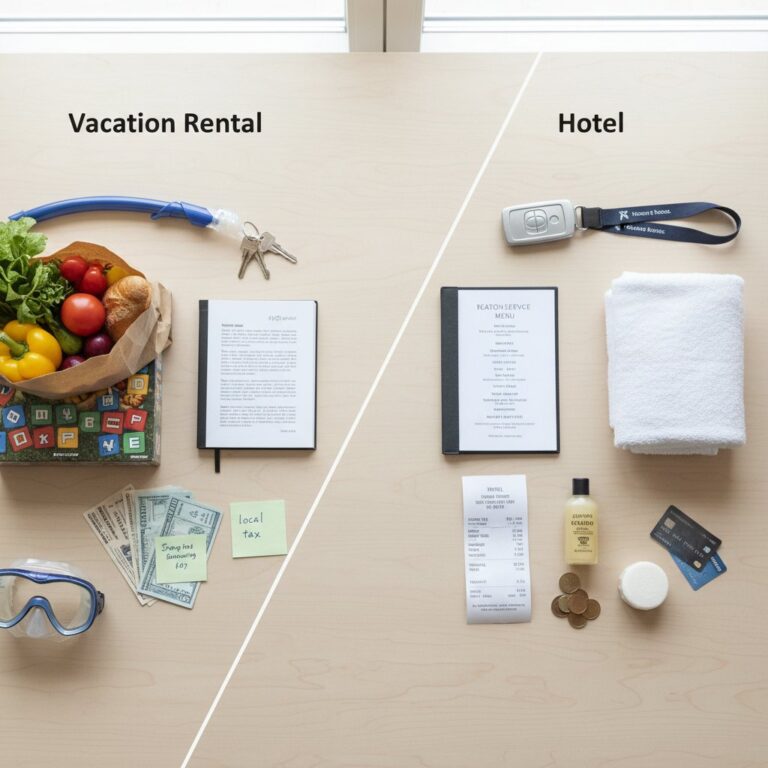
[INLINE IMAGE 2: place after fourth H2 | alt=”direct booking vacation rentals comparison illustration”]
Effective Communication with Owners and Managers
The foundation of a successful direct booking is clear, polite, and thorough communication. When you first reach out, whether by email or phone, be prepared with specific questions and details about your trip:
- Initial Inquiry: Clearly state your desired dates, number of guests (adults/children), and any specific needs (e.g., pet-friendly, accessible features). Be polite and professional.
- Ask Specific Questions: Don’t hesitate to ask for more photos, details about amenities not clearly shown, proximity to attractions, internet speed, or parking availability. This shows you’re a serious potential guest.
- Share Your Intentions: Briefly explain the purpose of your trip (e.g., “family vacation,” “romantic getaway”) to help the owner understand your needs and build rapport.
- Be Responsive: Timely responses to the owner’s questions or offers show you are engaged and reliable.
Effective communication builds trust, which is invaluable in direct booking. It allows both parties to feel comfortable and confident in the arrangement.
Strategies for Negotiating Price and Terms
One of the most exciting aspects of direct booking vacation rentals is the potential for negotiation. Unlike fixed OTA prices, direct bookings often have more wiggle room. Here’s how to approach it:
- Research Market Rates: Before negotiating, understand what similar properties in the area are renting for, both on OTAs and direct channels. This gives you leverage.
- Target Off-Peak Seasons: Owners are more likely to offer discounts during slower travel periods when demand is lower. Mention if your dates are flexible within an off-peak window.
- Longer Stays: If you’re planning an extended vacation, inquire about weekly or monthly discounts. Owners often prefer longer, stable bookings.
- Be Respectful with Offers: Don’t make an insultingly low offer. Instead, politely ask, “Is there any flexibility in the rate for our dates?” or “Would you consider a slight discount for a [X]-night stay?” Frame it as a mutually beneficial arrangement.
- Highlight Your Guest Profile: If you’re a responsible traveler with good references from previous rentals (e.g., “We’re a quiet family looking for a relaxing stay”), mention it. Owners want reliable guests.
- Package Deals: Sometimes, instead of a direct price reduction, an owner might offer an added value, such as a complimentary late check-out, a welcome basket, or a discount on a local activity they partner with.
- Payment Terms: If a price negotiation isn’t possible, inquire about more flexible payment terms, such as a smaller upfront deposit or a staggered payment plan.
Remember, the goal is a win-win situation. A fair negotiation benefits both you and the owner, fostering a positive relationship from the start.
Understanding and Securing the Rental Agreement
A legitimate direct booking will always involve a rental agreement or contract. This document protects both you and the owner by outlining the terms and conditions of your stay. Do not proceed without one.
- Review Thoroughly: Read every clause of the agreement carefully. Pay close attention to:
- Dates and Pricing: Confirm the booking dates, total cost, and what is included/excluded (e.g., cleaning fees, taxes, utilities).
- Payment Schedule: Understand when deposits are due, final payments, and what payment methods are accepted.
- Cancellation Policy: This is crucial. Know what happens if you need to cancel and what refunds (if any) you are entitled to.
- Check-in/Check-out Procedures: Details on key collection, access codes, and departure instructions.
- House Rules: Pet policies, smoking rules, noise restrictions, maximum occupancy, and any other specific guidelines.
- Damage Deposit: The amount, conditions for forfeiture, and timeline for return.
- Liability and Insurance: Understand responsibilities for damage and what insurance (yours or theirs) covers.
- Ask for Clarification: If anything in the agreement is unclear, ask the owner or manager for clarification before signing.
- Secure Payment Methods: Insist on paying via traceable methods such as credit card (which often offers fraud protection), bank transfer, or a secure online payment system (like PayPal Goods & Services). Avoid cash, wire transfers, or cryptocurrency unless you are absolutely certain of the owner’s legitimacy and have a strong contract in place.
- Signed Agreement: Ensure both you and the owner sign the agreement. Keep a copy for your records. This serves as your legal protection.
By meticulously reviewing and understanding the rental agreement and using secure payment methods, you can confidently secure your direct booking vacation rental, knowing you’re protected and prepared for your trip.
Check out our comprehensive destination guides for inspiration!
Potential Downsides and How to Mitigate Them
While direct booking vacation rentals offer numerous advantages, it’s important to approach them with a clear understanding of potential challenges. Unlike booking through established OTAs, direct bookings typically involve fewer built-in safeguards. However, with careful planning and due diligence, most risks can be effectively mitigated.
Addressing the Lack of Third-Party Protection
The primary “downside” of direct booking is the absence of a large intermediary platform to mediate disputes or provide standardized protections. OTAs often offer guest guarantees, dispute resolution services, and a layer of financial protection in case of scams or significant issues with the property.
- Mitigation Strategy: Comprehensive Contract: The rental agreement becomes your primary form of protection. Ensure it is detailed, covers all eventualities (cancellation, damage, refunds), and is legally binding. Don’t sign anything you don’t fully understand.
- Mitigation Strategy: Secure Payment Methods: Always pay via credit card or a traceable bank transfer. Credit card companies often provide chargeback options if services are not rendered as agreed, offering a layer of financial protection similar to what an OTA might provide. Avoid wire transfers, cashier’s checks, or cash unless you have absolute trust and a robust legal agreement.
- Mitigation Strategy: Travel Insurance: Consider purchasing comprehensive travel insurance that covers trip cancellation, interruption, and emergency medical situations. Some policies specifically offer “cancel for any reason” options, which can be invaluable for direct bookings where cancellation policies might be less flexible than desired. This is especially important for high-value bookings.
Vetting Properties and Owners: Avoiding Scams
The risk of encountering fraudulent listings or dishonest owners is higher with direct bookings, as there’s no platform to vet listings beforehand. Scams can range from properties that don’t exist to those that are vastly different from their descriptions.
- Mitigation Strategy: Thorough Verification:
- Cross-reference listings: If you find a property directly, try to locate it on major OTAs. If it’s listed there, compare details and photos. Consistency is key. If it’s only listed directly, this is a minor red flag but not a deal-breaker.
- Search owner/manager online: Look for reviews, social media presence, or any history of complaints. A professional online presence is a good sign.
- Request a video tour: Ask the owner to do a live video walkthrough of the property. This is a powerful way to confirm the property exists and matches the photos.
- Ask for references: While not always practical, for high-value bookings, you could ask for references from previous guests (with their permission).
- Check property address: Use Google Maps Street View to verify the exterior of the property and its surroundings match the description.
- Mitigation Strategy: Trust Your Gut: If something feels off, it probably is. Unusually low prices for prime locations, pressure to book quickly, or insistence on unusual payment methods are all major red flags.
The Responsibility of Self-Service
With direct booking, you become the primary point of contact for all aspects of your stay. There’s no customer service department of a major platform to call if you have issues during your trip. This means more personal responsibility.
- Mitigation Strategy: Clear Pre-Arrival Communication: Ensure you have all necessary information before you arrive: check-in instructions, key codes, Wi-Fi passwords, emergency contact numbers for the owner/manager, and directions.
- Mitigation Strategy: Establish Emergency Protocols: Ask the owner what to do in case of emergencies (e.g., plumbing issue, power outage, medical emergency). Have local emergency numbers readily available.
- Mitigation Strategy: Be Proactive: If an issue arises during your stay, communicate it promptly and directly to the owner/manager. Most legitimate hosts are keen to resolve problems quickly to ensure a positive guest experience and protect their reputation. Document all communications if a resolution is not immediate.
By being informed, proactive, and meticulous in your planning and communication, the potential downsides of direct booking vacation rentals can be effectively managed, allowing you to enjoy all its benefits with peace of mind.
Direct vs. OTA: A Head-to-Head Comparison
When planning a vacation, the choice between direct booking vacation rentals and using Online Travel Agencies (OTAs) like Airbnb, Vrbo, or Booking.com is a pivotal decision. Both approaches offer unique advantages and disadvantages, and the best option often depends on your priorities as a traveler. Let’s break down the key differences to help you make an informed choice.
Analyzing Key Differences: Cost, Flexibility, Service
The core distinctions between direct booking and OTAs revolve around these three critical areas:
- Cost: This is often the most significant differentiator.
- Direct Booking: Generally offers lower overall costs due to the absence of platform service fees. Owners can pass these savings directly to guests or offer more competitive rates.
- OTAs: Guests pay a service fee (typically 5-20%) on top of the nightly rate, leading to a higher total cost.
- Flexibility: The degree to which terms and conditions can be adjusted.
- Direct Booking: High flexibility. Owners/managers can often negotiate on price, cancellation policies, payment schedules, and check-in/check-out times, especially for longer stays or off-peak periods.
- OTAs: Low flexibility. Policies are standardized and often rigid, dictated by the platform. While owners set their specific cancellation policies, the platform mediates them strictly.
- Service & Communication: The nature of interaction and support.
- Direct Booking: Highly personalized service and direct communication with the owner/manager. This allows for tailored advice, specific requests, and a more personal connection. Resolution of issues depends solely on the owner.
- OTAs: Standardized customer service from the platform, which can be helpful for disputes. Communication with the host is channeled through the platform, which can sometimes feel impersonal or delayed.
When to Choose Direct Booking vs. When to Use an OTA
Understanding these differences helps determine the optimal booking strategy for various scenarios:
Choose Direct Booking When:
- You prioritize cost savings: If getting the best possible price is your main goal.
- You seek a personalized experience: For unique requests, local insights, or a more direct relationship with your host.
- You’re booking for a longer stay: Where cumulative OTA fees become substantial, and owners are more open to negotiation.
- You’re traveling to a niche destination: Where local property managers or owners might not list on major platforms.
- You’re comfortable with due diligence: If you’re willing to invest time in verifying properties and managing communication.
- You have specific needs: For accessibility, pet accommodations, or other unique requirements that might need direct discussion.
Choose an OTA When:
- You prioritize convenience and speed: For quick, hassle-free bookings with immediate confirmation.
- You want built-in safeguards: If you prefer the safety net of platform dispute resolution and guest guarantees.
- You’re new to vacation rentals: The standardized experience can be less intimidating.
- You’re looking for a last-minute booking: OTAs often have a wider selection of available properties for immediate stays.
- You need a vast selection: OTAs typically offer the largest inventory of properties globally.
- You’re accumulating loyalty points: Some OTAs offer rewards programs.
Ultimately, a hybrid approach can be effective. Use OTAs for initial research and to discover properties, then attempt to find the property’s direct booking channel for potential savings and enhanced benefits. This allows you to leverage the best of both worlds.
Comparison Table: Direct Booking Vacation Rentals vs. OTAs
Feature Direct Booking Vacation Rentals Online Travel Agencies (OTAs) Cost (Service Fees) None (direct savings to traveler) Typically 5-20% added to guest’s total Communication Direct, personal, and immediate with owner/manager Mediated through platform, can be less personal Flexibility & Negotiation High potential for negotiation on price, terms, policies Low; standardized policies, limited negotiation Property Selection Access to unique, exclusive, and local properties (might require more searching) Vast, global inventory; easy to browse and compare Guest Protection Relies on robust contract, secure payment methods, and travel insurance Platform’s guest guarantee, dispute resolution, and payment protection Trust & Verification Requires traveler’s due diligence to vet owner/property Platform vets listings (to varying degrees), relies on review systems Special Requests Easier to accommodate and discuss directly Often limited by platform functionality; less direct discussion Booking Speed Can take longer due to direct communication/negotiation Instant booking often available, fast confirmation Planning a family trip? Discover our top family-friendly destination guides!
Maximizing Your Direct Booking Experience: Tips & Tricks
Once you’ve decided to explore direct booking vacation rentals, there are several strategies you can employ to ensure a smooth, rewarding, and hassle-free experience. These tips focus on optimizing your search, communication, and overall preparation.
Best Practices for Research and Vetting
Thorough research is your most powerful tool when engaging in direct booking. Treat it like a personal investigation to ensure legitimacy and suitability.
- Deep Dive into Photos and Descriptions: Don’t just glance at the photos. Look for consistency, detail, and recent updates. Read descriptions meticulously for nuances about amenities, local access, and house rules.
- Read ALL Reviews (Even Negative Ones): If the property or owner has an online presence with reviews (e.g., on Google, Facebook, or old OTA listings), read them carefully. Pay attention to how owners respond to criticism, as this reveals their professionalism.
- Verify the Address and Location: Use Google Maps, Street View, and satellite imagery to confirm the property’s exact location, proximity to attractions, and surrounding environment. Ensure it matches what’s advertised.
- Check for Consistency: If you find the property listed on multiple sites (even OTAs), compare prices, descriptions, and photos. Major discrepancies are red flags. Consistent information across various platforms builds confidence.
- Request Proof of Ownership/Management: For high-value or long-term rentals, it’s reasonable to politely ask for proof that the person you’re communicating with is indeed the owner or authorized property manager. This could be a business registration number or a link to their official company page.
Crafting an Ideal Guest Profile and Inquiry
Just as you vet the host, hosts are also vetting you. Presenting yourself as a responsible, desirable guest can improve your chances of securing a booking and even receiving favorable terms.
- Be Clear and Concise: In your initial inquiry, state your desired dates, number of guests, and general purpose of your trip.
- Introduce Yourself Briefly: A polite introduction (e.g., “We are a family of four planning a relaxing beach vacation…”) helps the owner get a sense of who you are.
- Highlight Responsible Behavior: If you’ve previously stayed in vacation rentals and had positive experiences, you can mention it. Owners value guests who are respectful of their property.
- Ask Thoughtful Questions: Show genuine interest in the property and local area with specific questions, demonstrating that you’ve done your research.
- Be Respectful of Their Time: Keep communication professional and respond promptly.
A well-crafted inquiry not only helps you get the information you need but also builds a positive rapport with the host from the outset.
Payment Security and Contractual Safeguards
Protecting your money and ensuring a clear understanding of the terms are paramount for a secure direct booking.
- Always Use Secure Payment Methods: Prioritize credit cards, as they offer fraud protection and chargeback options. Bank transfers are generally safe but offer less recourse than credit cards. Avoid cash, wire transfers, or gift cards at all costs for initial payments.
- Never Pay the Full Amount Upfront: A legitimate direct booking will typically require a deposit (20-50%) and the remaining balance closer to the check-in date. Be wary of requests for 100% upfront payment, especially for bookings far in advance.
- Demand a Detailed Rental Agreement: A comprehensive contract is your legal safeguard. Ensure it includes:
- Full names and contact information of both parties.
- Exact dates and times of check-in/check-out.
- Detailed cost breakdown (nightly rate, cleaning fees, taxes, security deposit).
- Clear cancellation and refund policy.
- House rules (pets, smoking, noise, maximum occupancy).
- Emergency contact information for the owner/manager.
- Procedure for returning the security deposit.
- Keep All Correspondence: Maintain records of all emails, messages, and calls with the owner/manager. This documentation is crucial if any disputes arise.
- Consider Travel Insurance: As mentioned, travel insurance that covers trip interruption or cancellation can provide an extra layer of financial protection against unforeseen circumstances, especially relevant for direct bookings where cancellation policies might be less forgiving.
By diligently applying these tips, you can significantly enhance your direct booking experience, ensuring not only cost savings but also peace of mind and a truly personalized vacation rental stay. Your meticulous planning upfront will pay dividends in the form of a stress-free and enjoyable trip.
Discover essential travel insurance tips before your next adventure!
Direct Booking for Different Trip Types
The flexibility and personalization offered by direct booking vacation rentals make them a versatile option, adaptable to a wide array of travel types. Whether you’re planning a sprawling family reunion or a quiet solo retreat, direct booking can often provide a more tailored and rewarding accommodation experience.
Family Vacations: Space, Amenities, and Safety
Family vacations often demand specific requirements that direct booking vacation rentals are uniquely suited to meet. Families need space, child-friendly amenities, and a sense of safety and security.
- More Space and Privacy: Direct rentals often offer larger homes with multiple bedrooms, living areas, and private outdoor spaces, providing ample room for everyone without the cramped feeling of hotel rooms.
- Kid-Friendly Features: Directly communicate with owners to inquire about amenities like cribs, high chairs, safety gates, playgrounds, games, or even pools with safety fences. Owners are often more willing to provide these when booking direct.
- Kitchen Facilities: A fully equipped kitchen is a huge money-saver for families, allowing for meal preparation and catering to picky eaters or dietary restrictions.
- Proximity to Attractions: You can specifically search for direct rentals that are walking distance to parks, beaches, or family entertainment, often finding properties in quieter, residential neighborhoods.
- Personalized Recommendations: Owners can offer invaluable insights into local family-friendly activities, restaurants, and hidden gems that cater to all ages, enriching your family’s experience.
- Safety Checks: Directly discuss safety features like smoke detectors, carbon monoxide detectors, fire extinguishers, and secure locking mechanisms for peace of mind.
When booking direct for a family, clearly state the ages of your children and any specific needs upfront to ensure the property is a perfect fit. This open dialogue ensures a smoother and more enjoyable family getaway.
Couples’ Getaways: Intimacy, Romance, and Unique Experiences
For couples seeking a romantic escape or an intimate adventure, direct booking offers the chance to find truly special properties that enhance the overall experience.
- Unique Romantic Settings: Discover charming cottages, secluded cabins, beachfront bungalows, or city-view lofts that offer privacy and ambiance far beyond a standard hotel room. Owners often highlight these romantic features in their direct listings.
- Personal Touches: Owners might be able to arrange special requests for an anniversary or birthday – think flowers, a bottle of local wine, or a private chef recommendation – directly catering to your romantic plans.
- Local Expertise: Get recommendations for the most romantic restaurants, scenic drives, or hidden viewpoints from an owner who knows the area intimately.
- Flexible Stays: If you’re looking for a mid-week escape or an unconventional length of stay, direct owners are often more flexible to accommodate, maximizing your romantic time together.
- Privacy: Many direct booking vacation rentals offer a level of privacy unmatched by hotels, allowing couples to truly relax and connect without interruption.
When communicating, mention you’re a couple looking for a romantic retreat; this can help owners suggest properties with suitable amenities like hot tubs, fireplaces, or stunning views.
Solo Travel: Security, Comfort, and Local Immersion
Solo travelers can also greatly benefit from direct booking vacation rentals, finding secure, comfortable, and immersive accommodations that cater to their individual needs.
- Enhanced Security: Direct communication allows solo travelers to ask specific questions about neighborhood safety, property security features, and emergency contacts, providing a greater sense of peace of mind.
- Comfort and Independence: A private vacation rental offers a comfortable base with kitchen facilities and living spaces, allowing solo travelers to maintain routines and enjoy downtime without feeling isolated.
- Authentic Local Immersion: Staying in a residential area through a direct booking offers a more authentic experience, allowing solo travelers to live like a local and discover hidden gems away from tourist traps.
- Cost-Effective: For longer solo trips, direct booking can be more cost-effective than hotels, especially with access to kitchen facilities and potential discounts for extended stays.
- Flexible Itineraries: Solo travelers often have more flexible plans; direct owners might be more accommodating for slight changes