
Booking.com vs Airbnb: The Ultimate 2026 Guide for Travelers, Hosts, and Property Managers
Affiliate disclosure: This article may contain affiliate links. Recommendations are independent and editorially driven.
The short-term rental market has exploded over the past decade, transforming how we plan vacations and offering homeowners unprecedented opportunities to monetize their properties. At the forefront of this revolution stand two titan platforms: Booking.com and Airbnb. For both travelers seeking the perfect getaway and hosts aiming to maximize their rental income, the choice between these two giants can be a critical one.
This comprehensive guide delves deep into the Booking.com vs Airbnb debate, offering an exhaustive comparison for 2026. We’ll dissect their business models, user experiences, fee structures, property types, and unique features, equipping you with the knowledge to make an informed decision, whether you’re planning a family vacation, a romantic escape, or looking to list your investment property.
Understanding the nuances of each platform is more important than ever. While both offer a gateway to millions of accommodations worldwide, their philosophies, target audiences, and operational mechanics often differ significantly. By the end of this article, you’ll have a clear picture of which platform aligns best with your specific travel needs or hosting aspirations.
Navigating the Short-Term Rental Landscape: Booking.com vs. Airbnb – A Core Distinction
While often grouped together as leaders in the short-term rental space, Booking.com and Airbnb originated from fundamentally different business models, and these origins still shape their offerings and user experiences today. Understanding these foundational differences is key to appreciating their current strengths and weaknesses.
Booking.com’s Hotel-Centric Origins and Evolution
Booking.com is part of Booking Holdings, a massive travel conglomerate that also owns Priceline, Kayak, Agoda, and Rentalcars.com. Its roots are firmly planted in the traditional hotel industry. For decades, Booking.com has served as a primary booking engine for hotels, resorts, and guesthouses around the globe. This legacy has imbued the platform with certain characteristics:
- Vast Inventory of Traditional Accommodations: Booking.com boasts an unparalleled selection of hotels, from budget motels to five-star luxury resorts.
- Instant Confirmation: The hotel model often allows for immediate booking confirmation, a feature carried over to many of its short-term rental listings.
- Professionalized Experience: The platform is geared towards standardized check-in/check-out processes, professional customer service, and amenities typically found in commercial lodging.
- Late Entry into Short-Term Rentals: While it has successfully expanded into vacation rentals, Booking.com entered this space later than Airbnb, adapting its existing framework to accommodate private homes, apartments, and villas.
Airbnb’s Peer-to-Peer Revolution and Community Focus
Airbnb, on the other hand, was born out of a much more disruptive, peer-to-peer concept. It started with founders renting out air mattresses in their living room, evolving into a platform that empowers individuals to share their homes, spare rooms, or unique spaces with travelers. This origin story dictates Airbnb’s distinct approach:
- Emphasis on Unique Stays: Airbnb is renowned for its diverse and often quirky accommodations, from treehouses and yurts to castles and igloos, alongside traditional apartments and houses.
- “Live Like a Local” Ethos: The platform fosters a sense of local immersion and personal connection between guests and hosts, often encouraging direct communication and personalized recommendations.
- Community and Trust: A robust review system for both guests and hosts, alongside host profiles and guest verification, is central to building trust within its community.
- Experiences Beyond Stays: Airbnb has expanded beyond just accommodation to offer “Experiences,” allowing local hosts to share unique activities with travelers.
Convergence and Divergence in the Modern Era
In recent years, both platforms have increasingly encroached upon each other’s traditional territory. Booking.com has aggressively expanded its vacation rental inventory, recognizing the growing demand for private accommodations. Similarly, Airbnb has seen an influx of professional property managers and boutique hotels listing on its platform, blurring the lines between “hotel” and “home.”
Despite this convergence, their core philosophies remain. Booking.com often feels more like a transactional marketplace for lodging, offering efficiency and a vast array of standardized options. Airbnb, while increasingly professionalized, still strives to maintain its community feel, emphasizing unique stays and personal interactions. These fundamental differences ripple through every aspect of the user experience, from search filters to customer support, and are crucial considerations for anyone deciding where to book or list their property.
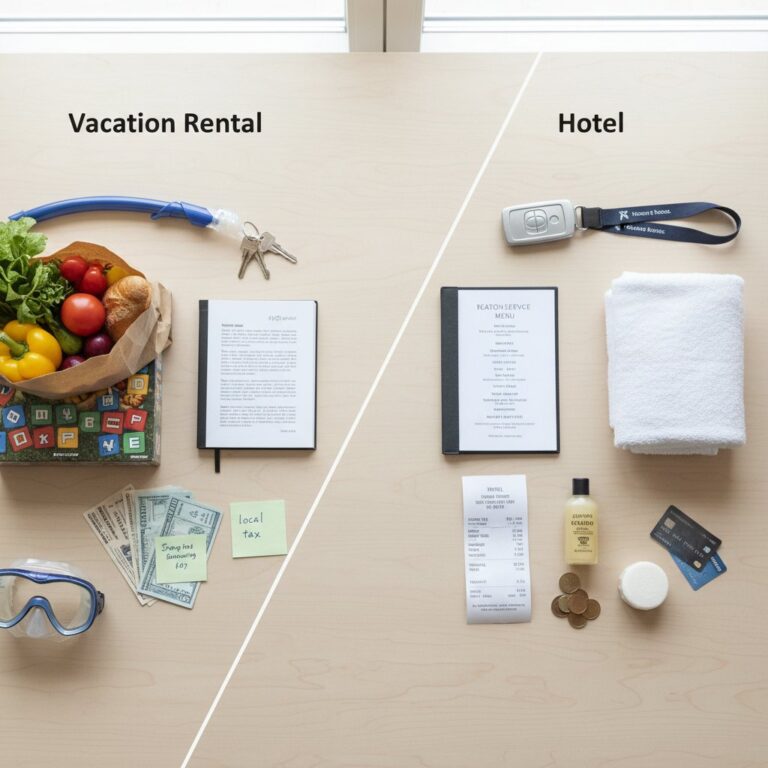
[INLINE IMAGE 1: place after second H2 | alt=”booking.com vs airbnb concept illustration”]
For the Traveler: Which Platform Offers a Better Guest Experience?
When planning a trip, travelers prioritize different aspects: price, property type, ease of booking, cancellation flexibility, and reliable support. Let’s break down how Booking.com and Airbnb measure up from a guest’s perspective in 2026.
Pricing Structures and Hidden Fees
One of the most frequent points of comparison, and often contention, is how each platform presents and calculates pricing.
-
Booking.com’s Price Transparency
Booking.com has traditionally excelled at displaying the total price upfront. While some properties might have additional local taxes or resort fees, the base nightly rate, service fees (if applicable), and cleaning fees are generally included in the initial price displayed. This can lead to a more straightforward comparison across different listings. However, it’s essential to always review the “price details” breakdown before confirming, as some properties, particularly hotels, might have city taxes or tourism levies added at check-in.
-
Airbnb’s Evolving Price Display
Airbnb has faced criticism in the past for its less transparent pricing, often showing only the nightly rate initially, with cleaning fees, service fees, and taxes added later in the booking process. In response to user feedback, Airbnb has made strides in recent years to improve price transparency, often displaying the “total price” including all fees earlier in the search results. Despite these improvements, the cleaning fee can still be a significant and sometimes disproportionate addition, especially for shorter stays. Travelers should always use the “total price” filter or review the detailed breakdown carefully to avoid surprises.
-
Dynamic Pricing and Deals
Both platforms utilize dynamic pricing algorithms, meaning prices can fluctuate based on demand, season, events, and even user browsing history. Booking.com frequently offers “Genius” discounts for loyal users, flash sales, and last-minute deals. Airbnb also has various promotions, particularly for new listings or off-peak seasons, and allows hosts to offer discounts for longer stays. Comparing prices across both platforms for the same dates and property type is always recommended.
Diversity of Accommodations and Property Types
The type of accommodation you’re looking for significantly influences which platform might be better suited.
-
Booking.com: The All-Encompassing Directory
Booking.com boasts an incredibly diverse inventory that spans the entire spectrum of lodging. From budget hostels and grand hotels to resorts, guesthouses, villas, apartments, and even unique stays like boats or treehouses, its sheer volume of listings is staggering. If you’re open to various options and primarily focused on location and price, Booking.com’s extensive filters make it easy to narrow down choices across all accommodation types.
-
Airbnb: Curated for Unique and Homely Stays
Airbnb built its reputation on offering unique, local, and often more homely stays. While it now includes many professionally managed properties, its strength remains in private homes, apartments, rooms, and truly unconventional accommodations that offer a distinct experience. If you’re looking for a personalized touch, a chance to “live like a local,” or a truly one-of-a-kind place, Airbnb often delivers. Its filters allow for searching by “unique stays” or specific types like “treehouse” or “farm stay.”
Search and Booking Experience
The user interface and overall booking flow can impact the stress level of trip planning.
-
Booking.com: Efficient and Feature-Rich
Booking.com’s search interface is highly functional, offering a plethora of filters: star ratings, review scores, property amenities (pool, parking, pet-friendly), specific neighborhoods, and even payment options. The booking process is typically streamlined, often requiring just a few clicks. Its strength lies in its ability to quickly compare many options side-by-side, making it efficient for travelers with specific requirements or those who value speed and clarity.
-
Airbnb: Visually Driven and Experiential
Airbnb’s interface is often lauded for its visual appeal and emphasis on discovery. Larger images, immersive descriptions, and a focus on the “story” of the home or host define its presentation. Filters are robust, allowing searches by “unique stays,” specific amenities, or even style. The booking process for many listings involves “Instant Book,” but some still require a “Request to Book,” where the host must approve the reservation. This can add a slight delay but also allows for personalized communication before confirmation.
Cancellation Policies
Flexibility is paramount for many travelers, especially in an unpredictable world.
-
Booking.com: Generally More Flexible
Booking.com often provides more flexible cancellation policies, particularly for hotels. Many listings offer “free cancellation” up to a specific date, sometimes even allowing cancellation until the day of arrival. This flexibility is a significant draw. For vacation rentals, policies can vary but are often clearly stated upfront as “fully flexible,” “non-refundable,” or “partially refundable.”
-
Airbnb: Host-Defined Policies Vary Widely
Airbnb’s cancellation policies are set by individual hosts, ranging from “Flexible” (full refund up to 24 hours before check-in) to “Strict” (50% refund for cancellations made between 7 days and 30 days before check-in, no refund within 7 days). This variability requires travelers to pay close attention to the specific policy of each listing. While this offers hosts control, it can be less predictable for guests.
Guest Support and Resolution
When things go wrong, reliable customer service is invaluable.
-
Booking.com: Standardized and Accessible
Booking.com offers 24/7 customer support via phone, email, and chat, available in multiple languages. Their support often follows a more standardized protocol, which can be efficient for common issues. For vacation rentals, they act as an intermediary, and disputes are often handled by their team based on platform policies. They are generally adept at facilitating refunds or finding alternative accommodations if a booking issue arises.
-
Airbnb: Mediation-Focused and Host-Dependent
Airbnb’s support system is often described as more mediation-focused, encouraging guests and hosts to resolve issues directly first. If an agreement isn’t reached, Airbnb’s support team steps in. While they also offer 24/7 support, response times and resolution quality can sometimes vary. Issues like misrepresentations of a listing often fall under their “Guest Guarantee” or “Rebooking and Refund Policy,” but the process can sometimes feel less immediate than Booking.com’s more direct approach.
For the Host: Maximizing Your Rental Income and Management Efficiency
For property owners, the choice between Booking.com and Airbnb significantly impacts listing visibility, booking volume, fee structures, management tools, and host protection. Here’s a detailed comparison for 2026.
Listing Creation and Management
Getting your property listed and managing it effectively is crucial for success.
-
Booking.com: Geared for Professionalism
Listing on Booking.com is a straightforward process, often feeling more akin to registering a business. It emphasizes professional photography, detailed descriptions, and a comprehensive amenity list. The extranet (host dashboard) is robust, offering advanced features for managing rates, availability, promotions, and messaging. It’s particularly well-suited for hosts with multiple properties or those accustomed to a professional property management interface.
-
Airbnb: Intuitive and Community-Focused
Airbnb’s listing process is designed to be intuitive for individual homeowners, guiding them through creating an appealing profile, uploading photos, and crafting compelling narratives. The dashboard is user-friendly, with a focus on guest communication and calendar management. While it accommodates professional managers, its initial design ethos caters to the individual host looking to share their unique space.
Commission Fees and Payouts
The fees charged by each platform directly impact a host’s profitability.
-
Booking.com’s Host-Paid Model
Booking.com primarily operates on a host-paid commission model, meaning the guest pays the displayed price, and Booking.com takes a commission (typically 15-20% for vacation rentals, though it can vary by location and property type) from the host’s payout. There is no separate guest service fee. This model ensures price transparency for the guest, as the total price they see is what they pay, simplifying the booking decision. Payouts are generally processed quickly after guest check-out, with various options including bank transfer.
-
Airbnb’s Split-Fee or Host-Only Model
Airbnb traditionally used a “split-fee” model: hosts pay a lower commission (usually 3% to 5%), and guests pay a separate service fee (typically 14.2%). However, for many professional hosts and property managers, Airbnb now defaults to a “host-only” fee model, where the host pays a higher commission (typically 14-16%) and the guest sees a single, all-inclusive price. This change aligns Airbnb more closely with Booking.com’s pricing transparency for guests. Payouts are typically released 24 hours after the guest checks in, offering hosts a degree of security.
-
Understanding the Real Cost
When comparing the two, it’s crucial to calculate the *net* income you receive. While Airbnb’s traditional host fee might seem lower, the guest service fee effectively raises the total cost for the guest, which can influence booking decisions. Booking.com’s model might mean a higher percentage deduction for the host, but the guest sees a more attractive upfront price. Hosts should model their pricing strategy for both platforms based on their respective fee structures.
Host Tools and Resources
Effective management requires robust tools and support.
-
Booking.com: Advanced Extranet and Connectivity
Booking.com’s extranet is powerful, offering detailed analytics, performance reports, revenue management tools, and options for setting up promotions and discounts. It integrates seamlessly with numerous Channel Managers and Property Management Systems (PMS), making it ideal for hosts managing multiple listings across various platforms. They also provide market insights to help hosts optimize pricing and availability.
-
Airbnb: User-Friendly Dashboard and Local Insights
Airbnb’s host dashboard is intuitive, focusing on ease of use for individual hosts. It provides tools for managing calendars, messaging guests, creating guidebooks, and setting automated messages. While its analytics might not be as in-depth as Booking.com’s, it offers “Smart Pricing” recommendations and insights into local demand. Its open API allows integration with a growing number of third-party tools.
Host Protection and Insurance
Protecting your property is a primary concern for any host.
-
Booking.com: Liability Coverage for Partners
Booking.com offers a “Partner Liability Insurance” program for eligible hosts, which provides primary liability coverage for up to $1,000,000 USD against third-party lawsuits for bodily injury or property damage. This is a significant benefit, acting as a safeguard beyond a host’s personal home insurance. Additionally, they facilitate security deposits for properties, which hosts can choose to implement.
-
Airbnb: AirCover for Hosts
Airbnb provides “AirCover for Hosts,” which includes Host Liability Insurance (up to $1,000,000 USD in liability coverage) and Host Damage Protection (up to $3,000,000 USD in damage protection). This comprehensive package covers damage to your property, belongings, and even lost income due to qualifying damage. It also provides deep cleaning services in certain situations. AirCover is automatically included with every booking, offering substantial peace of mind for hosts.
Communication and Guest Relations
Managing guest inquiries and relationships differs between platforms.
-
Booking.com: Streamlined and Direct Communication
Booking.com’s platform facilitates direct messaging between guests and hosts through its extranet and mobile app. While it offers templates, the communication tends to be more direct and transaction-oriented, focusing on check-in instructions, questions about amenities, or resolving issues. The platform’s professional background often means less emphasis on personal connection and more on efficient information exchange.
-
Airbnb: Encouraging Personal Connection
Airbnb’s messaging system is robust and encourages a more personal interaction between guests and hosts. Hosts can create custom welcome messages, automated responses, and provide local recommendations through the platform. This fosters the “live like a local” ethos and can lead to more engaged guests and potentially better reviews. The ability to vet guests through profiles and reviews also plays a role in fostering trust.
[INLINE IMAGE 2: place after fourth H2 | alt=”booking.com vs airbnb comparison illustration”]
Unique Features and Niche Markets: Beyond the Basics
Beyond standard accommodation bookings, both platforms offer distinct features that cater to specific market segments or enhance the overall travel experience.
Experiences and Local Activities
-
Booking.com: Focused on Destination Activities (Third-Party)
While Booking.com’s primary focus remains accommodations, it does offer a robust “Experiences” or “Things to Do” section, typically powered by third-party aggregators. This allows travelers to book tours, attractions, and activities in their destination directly through the platform, often integrating seamlessly with their accommodation booking. These are usually professionally organized tours rather than peer-to-peer activities.
-
Airbnb: The Pioneer of Host-Led Experiences
Airbnb Experiences are a hallmark of the platform, allowing local hosts to offer unique, hands-on activities to travelers. These can range from cooking classes and guided hikes to photography workshops or local bar crawls. The emphasis is on authentic, small-group interactions led by passionate locals. This feature significantly enhances Airbnb’s “live like a local” philosophy and provides an additional revenue stream for hosts.
Instant Booking vs. Request-to-Book
The method of confirming a reservation affects both guest and host experience.
-
Booking.com: Predominantly Instant Booking
A vast majority of listings on Booking.com, including hotels and many vacation rentals, operate on an instant booking model. This means once a guest clicks “Book Now” and provides payment details, the reservation is confirmed immediately. This efficiency is a major draw for guests who want quick confirmations and for hosts who prefer automated bookings.
-
Airbnb: Mix of Instant Book and Request-to-Book
Airbnb offers both “Instant Book” and “Request to Book” options. While Instant Book has become more prevalent, particularly for Superhosts and professional managers, many individual hosts still prefer “Request to Book.” This allows hosts to review a guest’s profile and reviews before accepting a reservation, offering an added layer of vetting. For guests, this means a slight delay in confirmation, typically within 24 hours.
Corporate and Group Travel Solutions
-
Booking.com: Business Travel Focus
Booking.com offers a dedicated “Booking.com for Business” platform, catering to corporate travelers and companies needing to manage travel expenses. It provides tools for expense reporting, discounted rates, and centralized billing. Its extensive hotel network makes it a strong contender for business travel where standardized amenities and services are preferred.
-
Airbnb: Airbnb for Work
Airbnb for Work (formerly Airbnb Business Travel) focuses on offering unique and comfortable stays for business travelers, often providing amenities like Wi-Fi, dedicated workspaces, and flexible check-ins. It also allows companies to manage employee travel, track expenses, and access tailored reporting. While it targets a specific niche within business travel (often longer stays or team offsites), it offers a more personal alternative to traditional corporate lodging.
Long-Term Stays
-
Booking.com: Growing Long-Term Options
While historically focused on shorter stays, Booking.com has been expanding its capabilities for longer bookings, particularly for apartments and aparthotels. Some properties offer discounted weekly or monthly rates, and the platform continues to refine its search filters to accommodate extended stays.
-
Airbnb: A Stronghold for Extended Reservations
Airbnb has always been popular for long-term stays, from digital nomads to individuals relocating or seeking temporary housing. Hosts can offer significant discounts for monthly bookings, and the platform’s focus on homely environments makes it appealing for extended periods. Filters for specific amenities like “kitchen” or “washer/dryer” are particularly useful for long-term guests.
Explore our guide on maximizing revenue for long-term rentals.
A Head-to-Head Comparison: Pros and Cons of Each Platform
To summarize the strengths and weaknesses, here’s a direct comparison of Booking.com vs Airbnb for both travelers and hosts.
Booking.com: Advantages and Disadvantages
Advantages for Guests:
- Vast Inventory: Unbeatable selection of hotels, resorts, and vacation rentals globally.
- Price Transparency: More often displays the total price upfront, including fees and taxes.
- Flexible Cancellations: Many listings offer free cancellation policies.
- Professional Support: 24/7 multi-language customer service with standardized protocols.
- Instant Booking: High likelihood of immediate confirmation for bookings.
- Genius Program: Loyalty program offers discounts and perks.
Disadvantages for Guests:
- Less Unique: While growing, fewer truly unique or quirky stays compared to Airbnb.
- Less Personal: Generally less emphasis on host interaction and local immersion.
- Varying Quality of Vacation Rentals: Quality can be less consistent for non-hotel listings as the platform has fewer specific quality controls for private homes.
Advantages for Hosts:
- Massive Global Reach: Access to a huge, diverse customer base, including business travelers.
- Host-Paid Commission Model: Simplifies pricing for guests, potentially increasing conversion.
- Robust Extranet: Powerful tools for managing multiple properties, dynamic pricing, and promotions.
- API Integration: Seamless connectivity with Channel Managers and PMS.
- Partner Liability Insurance: Provides significant liability coverage.
- Instant Booking Default: Streamlines the booking process and reduces manual effort.
Disadvantages for Hosts:
- Higher Commission Rates: Generally higher commission percentage (15-20%) for hosts.
- Less Personal Vetting: Less opportunity to vet guests directly before booking.
- Standardized Communication: Less emphasis on personalized guest interactions.
- Competition from Hotels: Vacation rentals compete directly with a vast array of hotels on the same platform.
Airbnb: Advantages and Disadvantages
Advantages for Guests:
- Unique Stays: Unrivaled selection of distinctive and often charming accommodations.
- “Live Like a Local”: Strong emphasis on local immersion and personalized host interactions.
- Airbnb Experiences: Opportunity to book unique activities led by locals.
- Guest/Host Reviews: Comprehensive review system for both sides, fostering trust.
- AirCover for Guests: Comprehensive rebooking and refund policy for issues.
- Long-Term Stays: Excellent platform for extended bookings with host discounts.
Disadvantages for Guests:
- Variable Pricing Transparency: While improved, cleaning fees can still add significantly to total cost.
- Variable Cancellation Policies: Policies are host-defined and can be very strict.
- Request-to-Book: Some listings require host approval, delaying confirmation.
- Less Standardized Support: Customer service can sometimes be less immediate or consistent.
Advantages for Hosts:
- Curated Audience: Attracts travelers specifically looking for unique, authentic home-sharing experiences.
- AirCover for Hosts: Comprehensive damage protection and liability insurance ($3M/$1M).
- Host Vetting: “Request to Book” allows for guest screening; guest reviews provide insights.
- Personalized Interaction: Strong platform for building rapport with guests.
- Experiences Revenue: Opportunity to offer local experiences as an additional income stream.
- Strong Brand Loyalty: Many guests are dedicated Airbnb users.
Disadvantages for Hosts:
- Cleaning Fee Sensitivity: Guests can be deterred by high cleaning fees for short stays.
- Guest Service Fee (if split): Can make your listing appear more expensive to guests.
- Less Business Travel Focus: While growing, less appealing for traditional corporate trips.
- Reliance on Host Involvement: Requires more active communication and management for a high rating.
Comparison Table: Booking.com vs. Airbnb (2026)
| Feature / Aspect | Booking.com | Airbnb |
|---|---|---|
| Primary Origin | Hotel & Guesthouse bookings | Peer-to-peer home sharing |
| Accommodation Types | Hotels, resorts, guesthouses, apartments, villas, hostels (extensive) | Private rooms, apartments, houses, unique stays (treehouses, yurts), boutique hotels |
| Guest Fees | Generally none (included in host commission) | ~14.2% service fee (in split-fee model, or rolled into host-only fee) |
| Host Commission | 15-20% (varies by region/property) | 3-5% (split-fee model) or 14-16% (host-only model) |
| Pricing Transparency (Guest) | High (total price often shown upfront) | Improved, but cleaning fees can still surprise if not careful |
| Cancellation Policies | Often flexible, free cancellation widely available | Set by host (Flexible, Moderate, Strict, etc.) – varies greatly |
| Booking Confirmation | Predominantly Instant Booking | Mix of Instant Book and Request-to-Book |
| Host Protection | Partner Liability Insurance ($1M) | AirCover for Hosts (Host Damage Protection up to $3M, Host Liability Insurance up to $1M) |
| Customer Support | 24/7, multi-language, standardized | 24/7, mediation-focused, variable response/resolution |
| Unique Features | Genius Loyalty Program, vast hotel network, business travel solutions | Airbnb Experiences, “Unique Stays” category, community focus |
| Ideal For Travelers | Seeking hotels, diverse options, flexible cancellation, clear pricing, business trips | Seeking unique stays, local immersion, longer stays, peer-to-peer experiences |
| Ideal For Hosts | Professional managers, hotels, high volume, less guest interaction preferred | Individual homeowners, unique properties, community engagement, high protection |
When to Choose Booking.com: Ideal Scenarios
Based on our comprehensive analysis, Booking.com shines in specific situations for both travelers and hosts.
For Travelers, Opt for Booking.com If:
-
You Prioritize Price Transparency and Upfront Costs
Booking.com generally excels at showing the total price, including most fees, early in the booking process. If you dislike hidden charges and want to compare final prices quickly without calculating additional service or cleaning fees, Booking.com is often the clearer choice.
-
You Value Flexible Cancellation Policies
Many Booking.com listings, particularly hotels, offer free cancellation up to a certain point, sometimes even on the day of arrival. This flexibility is invaluable if your travel plans are uncertain or might change.
-
You’re Looking for Traditional Hotel Stays or Resorts
If your primary interest is a hotel, resort, or professionally managed guesthouse with standard amenities, room service, and a front desk, Booking.com’s inventory is unparalleled. Its search filters are optimized for these types of properties.
-
You Need a Wide Range of Options in a Specific Location
With its massive database, Booking.com is excellent for finding a wide variety of accommodation types (hotels, apartments, hostels) in virtually any destination worldwide. If you want to see all available options and compare them side-by-side, Booking.com provides extensive choices.
-
You’re a Business Traveler
Booking.com for Business offers tools for corporate travel management, and the platform’s extensive network of hotels with consistent standards makes it a reliable choice for business trips.
-
You Prefer Instant Confirmation
The vast majority of Booking.com listings offer instant booking, meaning your reservation is confirmed immediately after payment, without waiting for host approval.
For Hosts, List on Booking.com If:
-
You Manage Multiple Properties or Are a Hotelier
Booking.com’s extranet is robust, designed for professional property managers and hotels. Its integration capabilities with Channel Managers and Property Management Systems are top-tier, streamlining operations for multiple units.
-
You Want Broad Exposure to a Diverse Guest Pool
Booking.com taps into a massive, global audience that includes traditional tourists, business travelers, and spontaneous bookers. Listing here can significantly increase your property’s visibility.
-
You Prefer a Host-Paid Commission Model
If you prefer that guests see a single, all-inclusive price and you absorb the commission, Booking.com’s model simplifies pricing for your potential guests, which can be a competitive advantage.
-
You Value Instant Bookings and Automated Processes
Booking.com’s default is instant booking, reducing the need for manual approval and streamlining your reservation workflow. This is ideal for hosts who prefer a hands-off approach to individual booking confirmations.
-
You Need Robust Analytics and Revenue Management Tools
The platform provides extensive data, performance reports, and tools to help you optimize your pricing, availability, and promotions, aligning with professional revenue management strategies.
-
You Offer a More Standardized Experience
If your property offers a professional, hotel-like experience with standardized amenities and services, Booking.com’s audience is well-primed for such offerings.
Discover essential tools for seamless vacation rental management.
When to Choose Airbnb: Ideal Scenarios
Airbnb caters to a slightly different demographic and hosting philosophy, excelling in unique, personalized experiences.
For Travelers, Opt for Airbnb If:
-
You’re Seeking Unique and Authentic Local Experiences
If you want to stay in a treehouse, a restored castle, a quirky apartment, or simply “live like a local” in a residential neighborhood, Airbnb is your go-to. Its emphasis on unique stays and host-led experiences is unmatched.
-
You Desire a More Personal Connection with Your Host
Airbnb’s platform encourages direct communication and a more personal relationship with your host, often leading to personalized recommendations, local insights, and a warmer welcome. If you value this human connection, Airbnb is ideal.
-
You’re Planning a Long-Term Stay
For bookings of a week, a month, or longer, Airbnb often provides better value with host-offered discounts for extended stays. The homely environment of many listings also makes them more comfortable for prolonged periods.
-
You’re Traveling with Family or a Group and Need Space
Airbnb excels at offering entire homes, apartments, and villas with multiple bedrooms, full kitchens, and living areas – often at a more competitive price point than multiple hotel rooms. This is perfect for families or groups who want to stay together.
-
You Want Access to Local Experiences
Beyond just accommodation, Airbnb’s “Experiences” allow you to book unique activities led by locals, enriching your trip with authentic cultural immersion.
-
You Value Host Vetting and Community Reviews
The comprehensive review system for both guests and hosts helps build trust and transparency, allowing you to choose hosts with proven track records.
For Hosts, List on Airbnb If:
-
You Have a Unique Property or Offer a Local Experience
If your property stands out (e.g., a themed apartment, a cabin in the woods, an artistic loft), Airbnb’s audience actively seeks these distinctive stays. Offering local “Experiences” can also be a significant draw and revenue booster.
-
You Want Comprehensive Host Protection (AirCover)
Airbnb’s AirCover for Hosts, with its substantial damage protection and liability insurance, provides a high level of security that is particularly appealing to individual homeowners.
-
You Enjoy Interacting with Guests and Providing Personalized Service
If you love being a host, sharing local tips, and fostering a personal connection with your guests, Airbnb’s community-driven platform is a natural fit. Positive interactions often translate into higher ratings.
-
You Prefer to Vet Guests Before Accepting Bookings
The “Request to Book” option on Airbnb allows you to review a guest’s profile and past reviews before confirming their stay, giving you greater control over who stays in your home.
-
Your Property Caters Well to Longer Stays or Specific Niche Markets
If your property is suitable for digital nomads, temporary relocations, or specific travel styles (e.g., glamping, remote work retreats), Airbnb’s audience is more likely to search for and appreciate these offerings.
-
You Want a User-Friendly Dashboard for Individual Properties
While increasingly sophisticated, Airbnb’s host dashboard remains highly intuitive for managing single or a few properties, with a focus on ease of use for the individual host.
Making Your Informed Decision: Factors to Consider
The choice between Booking.com and Airbnb isn’t always black and white. Often, the best strategy involves considering your specific needs and even utilizing both platforms for different purposes. Here are the key factors to weigh before making your decision in 2026.
For Travelers: Define Your Travel Style
-
Type of Accommodation
- Hotel/Resort: Booking.com’s strength.
- Unique Home/Apartment: Airbnb’s strength, though Booking.com is catching up.
- Budget Hostels/Guesthouses: Both offer good options, with Booking.com having slightly more traditional hostel inventory.
-
Budget and Price Sensitivity
- Total Price Clarity: Booking.com generally offers better upfront transparency.
- Overall Cheapest: Always compare. A “cheap” nightly rate on Airbnb can become expensive with fees. Consider Booking.com’s “Genius” discounts or Airbnb’s long-stay discounts.
-
Flexibility Needs
- Likely Changes: Booking.com often provides more flexible cancellation options.
- Fixed Plans: Airbnb’s strict policies might be acceptable if your plans are solid.
-
Desired Level
Booking.com vs Airbnb: The Ultimate 2026 Guide for Travelers, Hosts, and Property Managers
Affiliate disclosure: This article may contain affiliate links. Recommendations are independent and editorially driven.
The short-term rental market has exploded over the past decade, transforming how we plan vacations and offering homeowners unprecedented opportunities to monetize their properties. At the forefront of this revolution stand two titan platforms: Booking.com and Airbnb. For both travelers seeking the perfect getaway and hosts aiming to maximize their rental income, the choice between these two giants can be a critical one.
This comprehensive guide delves deep into the Booking.com vs Airbnb debate, offering an exhaustive comparison for 2026. We’ll dissect their business models, user experiences, fee structures, property types, and unique features, equipping you with the knowledge to make an informed decision, whether you’re planning a family vacation, a romantic escape, or looking to list your investment property.
Understanding the nuances of each platform is more important than ever. While both offer a gateway to millions of accommodations worldwide, their philosophies, target audiences, and operational mechanics often differ significantly. By the end of this article, you’ll have a clear picture of which platform aligns best with your specific travel needs or hosting aspirations.
Navigating the Short-Term Rental Landscape: Booking.com vs. Airbnb – A Core Distinction
While often grouped together as leaders in the short-term rental space, Booking.com and Airbnb originated from fundamentally different business models, and these origins still shape their offerings and user experiences today. Understanding these foundational differences is key to appreciating their current strengths and weaknesses.
Booking.com’s Hotel-Centric Origins and Evolution
Booking.com is part of Booking Holdings, a massive travel conglomerate that also owns Priceline, Kayak, Agoda, and Rentalcars.com. Its roots are firmly planted in the traditional hotel industry. For decades, Booking.com has served as a primary booking engine for hotels, resorts, and guesthouses around the globe. This legacy has imbued the platform with certain characteristics:
- Vast Inventory of Traditional Accommodations: Booking.com boasts an unparalleled selection of hotels, from budget motels to five-star luxury resorts.
- Instant Confirmation: The hotel model often allows for immediate booking confirmation, a feature carried over to many of its short-term rental listings.
- Professionalized Experience: The platform is geared towards standardized check-in/check-out processes, professional customer service, and amenities typically found in commercial lodging.
- Late Entry into Short-Term Rentals: While it has successfully expanded into vacation rentals, Booking.com entered this space later than Airbnb, adapting its existing framework to accommodate private homes, apartments, and villas.
Airbnb’s Peer-to-Peer Revolution and Community Focus
Airbnb, on the other hand, was born out of a much more disruptive, peer-to-peer concept. It started with founders renting out air mattresses in their living room, evolving into a platform that empowers individuals to share their homes, spare rooms, or unique spaces with travelers. This origin story dictates Airbnb’s distinct approach:
- Emphasis on Unique Stays: Airbnb is renowned for its diverse and often quirky accommodations, from treehouses and yurts to castles and igloos, alongside traditional apartments and houses.
- “Live Like a Local” Ethos: The platform fosters a sense of local immersion and personal connection between guests and hosts, often encouraging direct communication and personalized recommendations.
- Community and Trust: A robust review system for both guests and hosts, alongside host profiles and guest verification, is central to building trust within its community.
- Experiences Beyond Stays: Airbnb has expanded beyond just accommodation to offer “Experiences,” allowing local hosts to share unique activities with travelers.
Convergence and Divergence in the Modern Era
In recent years, both platforms have increasingly encroached upon each other’s traditional territory. Booking.com has aggressively expanded its vacation rental inventory, recognizing the growing demand for private accommodations. Similarly, Airbnb has seen an influx of professional property managers and boutique hotels listing on its platform, blurring the lines between “hotel” and “home.”
Despite this convergence, their core philosophies remain. Booking.com often feels more like a transactional marketplace for lodging, offering efficiency and a vast array of standardized options. Airbnb, while increasingly professionalized, still strives to maintain its community feel, emphasizing unique stays and personal interactions. These fundamental differences ripple through every aspect of the user experience, from search filters to customer support, and are crucial considerations for anyone deciding where to book or list their property.
[INLINE IMAGE 1: place after second H2 | alt=”booking.com vs airbnb concept illustration”]
For the Traveler: Which Platform Offers a Better Guest Experience?
When planning a trip, travelers prioritize different aspects: price, property type, ease of booking, cancellation flexibility, and reliable support. Let’s break down how Booking.com and Airbnb measure up from a guest’s perspective in 2026.
Pricing Structures and Hidden Fees
One of the most frequent points of comparison, and often contention, is how each platform presents and calculates pricing.
-
Booking.com’s Price Transparency
Booking.com has traditionally excelled at displaying the total price upfront. While some properties might have additional local taxes or resort fees, the base nightly rate, service fees (if applicable), and cleaning fees are generally included in the initial price displayed. This can lead to a more straightforward comparison across different listings. However, it’s essential to always review the “price details” breakdown before confirming, as some properties, particularly hotels, might have city taxes or tourism levies added at check-in.
-
Airbnb’s Evolving Price Display
Airbnb has faced criticism in the past for its less transparent pricing, often showing only the nightly rate initially, with cleaning fees, service fees, and taxes added later in the booking process. In response to user feedback, Airbnb has made strides in recent years to improve price transparency, often displaying the “total price” including all fees earlier in the search results. Despite these improvements, the cleaning fee can still be a significant and sometimes disproportionate addition, especially for shorter stays. Travelers should always use the “total price” filter or review the detailed breakdown carefully to avoid surprises.
-
Dynamic Pricing and Deals
Both platforms utilize dynamic pricing algorithms, meaning prices can fluctuate based on demand, season, events, and even user browsing history. Booking.com frequently offers “Genius” discounts for loyal users, flash sales, and last-minute deals. Airbnb also has various promotions, particularly for new listings or off-peak seasons, and allows hosts to offer discounts for longer stays. Comparing prices across both platforms for the same dates and property type is always recommended.
Diversity of Accommodations and Property Types
The type of accommodation you’re looking for significantly influences which platform might be better suited.
-
Booking.com: The All-Encompassing Directory
Booking.com boasts an incredibly diverse inventory that spans the entire spectrum of lodging. From budget hostels and grand hotels to resorts, guesthouses, villas, apartments, and even unique stays like boats or treehouses, its sheer volume of listings is staggering. If you’re open to various options and primarily focused on location and price, Booking.com’s extensive filters make it easy to narrow down choices across all accommodation types.
-
Airbnb: Curated for Unique and Homely Stays
Airbnb built its reputation on offering unique, local, and often more homely stays. While it now includes many professionally managed properties, its strength remains in private homes, apartments, rooms, and truly unconventional accommodations that offer a distinct experience. If you’re looking for a personalized touch, a chance to “live like a local,” or a truly one-of-a-kind place, Airbnb often delivers. Its filters allow for searching by “unique stays” or specific types like “treehouse” or “farm stay.”
Search and Booking Experience
The user interface and overall booking flow can impact the stress level of trip planning.
-
Booking.com: Efficient and Feature-Rich
Booking.com’s search interface is highly functional, offering a plethora of filters: star ratings, review scores, property amenities (pool, parking, pet-friendly), specific neighborhoods, and even payment options. The booking process is typically streamlined, often requiring just a few clicks. Its strength lies in its ability to quickly compare many options side-by-side, making it efficient for travelers with specific requirements or those who value speed and clarity.
-
Airbnb: Visually Driven and Experiential
Airbnb’s interface is often lauded for its visual appeal and emphasis on discovery. Larger images, immersive descriptions, and a focus on the “story” of the home or host define its presentation. Filters are robust, allowing searches by “unique stays,” specific amenities, or even style. The booking process for many listings involves “Instant Book,” but some still require a “Request to Book,” where the host must approve the reservation. This can add a slight delay but also allows for personalized communication before confirmation.
Cancellation Policies
Flexibility is paramount for many travelers, especially in an unpredictable world.
-
Booking.com: Generally More Flexible
Booking.com often provides more flexible cancellation policies, particularly for hotels. Many listings offer “free cancellation” up to a specific date, sometimes even allowing cancellation until the day of arrival. This flexibility is a significant draw. For vacation rentals, policies can vary but are often clearly stated upfront as “fully flexible,” “non-refundable,” or “partially refundable.”
-
Airbnb: Host-Defined Policies Vary Widely
Airbnb’s cancellation policies are set by individual hosts, ranging from “Flexible” (full refund up to 24 hours before check-in) to “Strict” (50% refund for cancellations made between 7 days and 30 days before check-in, no refund within 7 days). This variability requires travelers to pay close attention to the specific policy of each listing. While this offers hosts control, it can be less predictable for guests.
Guest Support and Resolution
When things go wrong, reliable customer service is invaluable.
-
Booking.com: Standardized and Accessible
Booking.com offers 24/7 customer support via phone, email, and chat, available in multiple languages. Their support often follows a more standardized protocol, which can be efficient for common issues. For vacation rentals, they act as an intermediary, and disputes are often handled by their team based on platform policies. They are generally adept at facilitating refunds or finding alternative accommodations if a booking issue arises.
-
Airbnb: Mediation-Focused and Host-Dependent
Airbnb’s support system is often described as more mediation-focused, encouraging guests and hosts to resolve issues directly first. If an agreement isn’t reached, Airbnb’s support team steps in. While they also offer 24/7 support, response times and resolution quality can sometimes vary. Issues like misrepresentations of a listing often fall under their “Guest Guarantee” or “Rebooking and Refund Policy,” but the process can sometimes feel less immediate than Booking.com’s more direct approach.
For the Host: Maximizing Your Rental Income and Management Efficiency
For property owners, the choice between Booking.com and Airbnb significantly impacts listing visibility, booking volume, fee structures, management tools, and host protection. Here’s a detailed comparison for 2026.
Listing Creation and Management
Getting your property listed and managing it effectively is crucial for success.
-
Booking.com: Geared for Professionalism
Listing on Booking.com is a straightforward process, often feeling more akin to registering a business. It emphasizes professional photography, detailed descriptions, and a comprehensive amenity list. The extranet (host dashboard) is robust, offering advanced features for managing rates, availability, promotions, and messaging. It’s particularly well-suited for hosts with multiple properties or those accustomed to a professional property management interface.
-
Airbnb: Intuitive and Community-Focused
Airbnb’s listing process is designed to be intuitive for individual homeowners, guiding them through creating an appealing profile, uploading photos, and crafting compelling narratives. The dashboard is user-friendly, with a focus on guest communication and calendar management. While it accommodates professional managers, its initial design ethos caters to the individual host looking to share their unique space.
Commission Fees and Payouts
The fees charged by each platform directly impact a host’s profitability.
-
Booking.com’s Host-Paid Model
Booking.com primarily operates on a host-paid commission model, meaning the guest pays the displayed price, and Booking.com takes a commission (typically 15-20% for vacation rentals, though it can vary by location and property type) from the host’s payout. There is no separate guest service fee. This model ensures price transparency for the guest, as the total price they see is what they pay, simplifying the booking decision. Payouts are generally processed quickly after guest check-out, with various options including bank transfer.
-
Airbnb’s Split-Fee or Host-Only Model
Airbnb traditionally used a “split-fee” model: hosts pay a lower commission (usually 3% to 5%), and guests pay a separate service fee (typically 14.2%). However, for many professional hosts and property managers, Airbnb now defaults to a “host-only” fee model, where the host pays a higher commission (typically 14-16%) and the guest sees a single, all-inclusive price. This change aligns Airbnb more closely with Booking.com’s pricing transparency for guests. Payouts are typically released 24 hours after the guest checks in, offering hosts a degree of security.
-
Understanding the Real Cost
When comparing the two, it’s crucial to calculate the *net* income you receive. While Airbnb’s traditional host fee might seem lower, the guest service fee effectively raises the total cost for the guest, which can influence booking decisions. Booking.com’s model might mean a higher percentage deduction for the host, but the guest sees a more attractive upfront price. Hosts should model their pricing strategy for both platforms based on their respective fee structures.
Host Tools and Resources
Effective management requires robust tools and support.
-
Booking.com: Advanced Extranet and Connectivity
Booking.com’s extranet is powerful, offering detailed analytics, performance reports, revenue management tools, and options for setting up promotions and discounts. It integrates seamlessly with numerous Channel Managers and Property Management Systems (PMS), making it ideal for hosts managing multiple listings across various platforms. They also provide market insights to help hosts optimize pricing and availability.
-
Airbnb: User-Friendly Dashboard and Local Insights
Airbnb’s host dashboard is intuitive, focusing on ease of use for individual hosts. It provides tools for managing calendars, messaging guests, creating guidebooks, and setting automated messages. While its analytics might not be as in-depth as Booking.com’s, it offers “Smart Pricing” recommendations and insights into local demand. Its open API allows integration with a growing number of third-party tools.
Host Protection and Insurance
Protecting your property is a primary concern for any host.
-
Booking.com: Liability Coverage for Partners
Booking.com offers a “Partner Liability Insurance” program for eligible hosts, which provides primary liability coverage for up to $1,000,000 USD against third-party lawsuits for bodily injury or property damage. This is a significant benefit, acting as a safeguard beyond a host’s personal home insurance. Additionally, they facilitate security deposits for properties, which hosts can choose to implement.
-
Airbnb: AirCover for Hosts
Airbnb provides “AirCover for Hosts,” which includes Host Liability Insurance (up to $1,000,000 USD in liability coverage) and Host Damage Protection (up to $3,000,000 USD in damage protection). This comprehensive package covers damage to your property, belongings, and even lost income due to qualifying damage. It also provides deep cleaning services in certain situations. AirCover is automatically included with every booking, offering substantial peace of mind for hosts.
Communication and Guest Relations
Managing guest inquiries and relationships differs between platforms.
-
Booking.com: Streamlined and Direct Communication
Booking.com’s platform facilitates direct messaging between guests and hosts through its extranet and mobile app. While it offers templates, the communication tends to be more direct and transaction-oriented, focusing on check-in instructions, questions about amenities, or resolving issues. The platform’s professional background often means less emphasis on personal connection and more on efficient information exchange.
-
Airbnb: Encouraging Personal Connection
Airbnb’s messaging system is robust and encourages a more personal interaction between guests and hosts. Hosts can create custom welcome messages, automated responses, and provide local recommendations through the platform. This fosters the “live like a local” ethos and can lead to more engaged guests and potentially better reviews. The ability to vet guests through profiles and reviews also plays a role in fostering trust.
[INLINE IMAGE 2: place after fourth H2 | alt=”booking.com vs airbnb comparison illustration”]
Unique Features and Niche Markets: Beyond the Basics
Beyond standard accommodation bookings, both platforms offer distinct features that cater to specific market segments or enhance the overall travel experience.
Experiences and Local Activities
-
Booking.com: Focused on Destination Activities (Third-Party)
While Booking.com’s primary focus remains accommodations, it does offer a robust “Experiences” or “Things to Do” section, typically powered by third-party aggregators. This allows travelers to book tours, attractions, and activities in their destination directly through the platform, often integrating seamlessly with their accommodation booking. These are usually professionally organized tours rather than peer-to-peer activities.
-
Airbnb: The Pioneer of Host-Led Experiences
Airbnb Experiences are a hallmark of the platform, allowing local hosts to offer unique, hands-on activities to travelers. These can range from cooking classes and guided hikes to photography workshops or local bar crawls. The emphasis is on authentic, small-group interactions led by passionate locals. This feature significantly enhances Airbnb’s “live like a local” philosophy and provides an additional revenue stream for hosts.
Instant Booking vs. Request-to-Book
The method of confirming a reservation affects both guest and host experience.
-
Booking.com: Predominantly Instant Booking
A vast majority of listings on Booking.com, including hotels and many vacation rentals, operate on an instant booking model. This means once a guest clicks “Book Now” and provides payment details, the reservation is confirmed immediately. This efficiency is a major draw for guests who want quick confirmations and for hosts who prefer automated bookings.
-
Airbnb: Mix of Instant Book and Request-to-Book
Airbnb offers both “Instant Book” and “Request to Book” options. While Instant Book has become more prevalent, particularly for Superhosts and professional managers, many individual hosts still prefer “Request to Book.” This allows hosts to review a guest’s profile and reviews before accepting a reservation, offering an added layer of vetting. For guests, this means a slight delay in confirmation, typically within 24 hours.
Corporate and Group Travel Solutions
-
Booking.com: Business Travel Focus
Booking.com offers a dedicated “Booking.com for Business” platform, catering to corporate travelers and companies needing to manage travel expenses. It provides tools for expense reporting, discounted rates, and centralized billing. Its extensive hotel network makes it a strong contender for business travel where standardized amenities and services are preferred.
-
Airbnb: Airbnb for Work
Airbnb for Work (formerly Airbnb Business Travel) focuses on offering unique and comfortable stays for business travelers, often providing amenities like Wi-Fi, dedicated workspaces, and flexible check-ins. It also allows companies to manage employee travel, track expenses, and access tailored reporting. While it targets a specific niche within business travel (often longer stays or team offsites), it offers a more personal alternative to traditional corporate lodging.
Long-Term Stays
-
Booking.com: Growing Long-Term Options
While historically focused on shorter stays, Booking.com has been expanding its capabilities for longer bookings, particularly for apartments and aparthotels. Some properties offer discounted weekly or monthly rates, and the platform continues to refine its search filters to accommodate extended stays.
-
Airbnb: A Stronghold for Extended Reservations
Airbnb has always been popular for long-term stays, from digital nomads to individuals relocating or seeking temporary housing. Hosts can offer significant discounts for monthly bookings, and the platform’s focus on homely environments makes it appealing for extended periods. Filters for specific amenities like “kitchen” or “washer/dryer” are particularly useful for long-term guests.
Explore our guide on maximizing revenue for long-term rentals.
A Head-to-Head Comparison: Pros and Cons of Each Platform
To summarize the strengths and weaknesses, here’s a direct comparison of Booking.com vs Airbnb for both travelers and hosts.
Booking.com: Advantages and Disadvantages
Advantages for Guests:
- Vast Inventory: Unbeatable selection of hotels, resorts, and vacation rentals globally.
- Price Transparency: More often displays the total price upfront, including fees and taxes.
- Flexible Cancellations: Many listings offer free cancellation policies.
- Professional Support: 24/7 multi-language customer service with standardized protocols.
- Instant Booking: High likelihood of immediate confirmation for bookings.
- Genius Program: Loyalty program offers discounts and perks.
Disadvantages for Guests:
- Less Unique: While growing, fewer truly unique or quirky stays compared to Airbnb.
- Less Personal: Generally less emphasis on host interaction and local immersion.
- Varying Quality of Vacation Rentals: Quality can be less consistent for non-hotel listings as the platform has fewer specific quality controls for private homes.
Advantages for Hosts:
- Massive Global Reach: Access to a huge, diverse customer base, including business travelers.
- Host-Paid Commission Model: Simplifies pricing for guests, potentially increasing conversion.
- Robust Extranet: Powerful tools for managing multiple properties, dynamic pricing, and promotions.
- API Integration: Seamless connectivity with Channel Managers and PMS.
- Partner Liability Insurance: Provides significant liability coverage.
- Instant Booking Default: Streamlines the booking process and reduces manual effort.
Disadvantages for Hosts:
- Higher Commission Rates: Generally higher commission percentage (15-20%) for hosts.
- Less Personal Vetting: Less opportunity to vet guests directly before booking.
- Standardized Communication: Less emphasis on personalized guest interactions.
- Competition from Hotels: Vacation rentals compete directly with a vast array of hotels on the same platform.
Airbnb: Advantages and Disadvantages
Advantages for Guests:
- Unique Stays: Unrivaled selection of distinctive and often charming accommodations.
- “Live Like a Local”: Strong emphasis on local immersion and personalized host interactions.
- Airbnb Experiences: Opportunity to book unique activities led by locals.
- Guest/Host Reviews: Comprehensive review system for both sides, fostering trust.
- AirCover for Guests: Comprehensive rebooking and refund policy for issues.
- Long-Term Stays: Excellent platform for extended bookings with host discounts.
Disadvantages for Guests:
- Variable Pricing Transparency: While improved, cleaning fees can still add significantly to total cost.
- Variable Cancellation Policies: Policies are host-defined and can be very strict.
- Request-to-Book: Some listings require host approval, delaying confirmation.
- Less Standardized Support: Customer service can sometimes be less immediate or consistent.
Advantages for Hosts:
- Curated Audience: Attracts travelers specifically looking for unique, authentic home-sharing experiences.
- AirCover for Hosts: Comprehensive damage protection and liability insurance ($3M/$1M).
- Host Vetting: “Request to Book” allows for guest screening; guest reviews provide insights.
- Personalized Interaction: Strong platform for building rapport with guests.
- Experiences Revenue: Opportunity to offer local experiences as an additional income stream.
- Strong Brand Loyalty: Many guests are dedicated Airbnb users.
Disadvantages for Hosts:
- Cleaning Fee Sensitivity: Guests can be deterred by high cleaning fees for short stays.
- Guest Service Fee (if split): Can make your listing appear more expensive to guests.
- Less Business Travel Focus: While growing, less appealing for traditional corporate trips.
- Reliance on Host Involvement: Requires more active communication and management for a high rating.
Comparison Table: Booking.com vs. Airbnb (2026)
Feature / Aspect Booking.com Airbnb Primary Origin Hotel & Guesthouse bookings Peer-to-peer home sharing Accommodation Types Hotels, resorts, guesthouses, apartments, villas, hostels (extensive) Private rooms, apartments, houses, unique stays (treehouses, yurts), boutique hotels Guest Fees Generally none (included in host commission) ~14.2% service fee (in split-fee model, or rolled into host-only fee) Host Commission 15-20% (varies by region/property) 3-5% (split-fee model) or 14-16% (host-only model) Pricing Transparency (Guest) High (total price often shown upfront) Improved, but cleaning fees can still surprise if not careful Cancellation Policies Often flexible, free cancellation widely available Set by host (Flexible, Moderate, Strict, etc.) – varies greatly Booking Confirmation Predominantly Instant Booking Mix of Instant Book and Request-to-Book Host Protection Partner Liability Insurance ($1M) AirCover for Hosts (Host Damage Protection up to $3M, Host Liability Insurance up to $1M) Customer Support 24/7, multi-language, standardized 24/7, mediation-focused, variable response/resolution Unique Features Genius Loyalty Program, vast hotel network, business travel solutions Airbnb Experiences, “Unique Stays” category, community focus Ideal For Travelers Seeking hotels, diverse options, flexible cancellation, clear pricing, business trips Seeking unique stays, local immersion, longer stays, peer-to-peer experiences Ideal For Hosts Professional managers, hotels, high volume, less guest interaction preferred Individual homeowners, unique properties, community engagement, high protection When to Choose Booking.com: Ideal Scenarios
Based on our comprehensive analysis, Booking.com shines in specific situations for both travelers and hosts.
For Travelers, Opt for Booking.com If:
-
You Prioritize Price Transparency and Upfront Costs
Booking.com generally excels at showing the total price, including most fees, early in the booking process. If you dislike hidden charges and want to compare final prices quickly without calculating additional service or cleaning fees, Booking.com is often the clearer choice.
-
You Value Flexible Cancellation Policies
Many Booking.com listings, particularly hotels, offer free cancellation up to a certain point, sometimes even on the day of arrival. This flexibility is invaluable if your travel plans are uncertain or might change.
-
You’re Looking for Traditional Hotel Stays or Resorts
If your primary interest is a hotel, resort, or professionally managed guesthouse with standard amenities, room service, and a front desk, Booking.com’s inventory is unparalleled. Its search filters are optimized for these types of properties.
-
You Need a Wide Range of Options in a Specific Location
With its massive database, Booking.com is excellent for finding a wide variety of accommodation types (hotels, apartments, hostels) in virtually any destination worldwide. If you want to see all available options and compare them side-by-side, Booking.com provides extensive choices.
-
You’re a Business Traveler
Booking.com for Business offers tools for corporate travel management, and the platform’s extensive network of hotels with consistent standards makes it a reliable choice for business trips.
-
You Prefer Instant Confirmation
The vast majority of Booking.com listings offer instant booking, meaning your reservation is confirmed immediately after payment, without waiting for host approval.
For Hosts, List on Booking.com If:
-
You Manage Multiple Properties or Are a Hotelier
Booking.com’s extranet is robust, designed for professional property managers and hotels. Its integration capabilities with Channel Managers and Property Management Systems are top-tier, streamlining operations for multiple units.
-
You Want Broad Exposure to a Diverse Guest Pool
Booking.com taps into a massive, global audience that includes traditional tourists, business travelers, and spontaneous bookers. Listing here can significantly increase your property’s visibility.
-
You Prefer a Host-Paid Commission Model
If you prefer that guests see a single, all-inclusive price and you absorb the commission, Booking.com’s model simplifies pricing for your potential guests, which can be a competitive advantage.
-
You Value Instant Bookings and Automated Processes
Booking.com’s default is instant booking, reducing the need for manual approval and streamlining your reservation workflow. This is ideal for hosts who prefer a hands-off approach to individual booking confirmations.
-
You Need Robust Analytics and Revenue Management Tools
The platform provides extensive data, performance reports, and tools to help you optimize your pricing, availability, and promotions, aligning with professional revenue management strategies.
-
You Offer a More Standardized Experience
If your property offers a professional, hotel-like experience with standardized amenities and services, Booking.com’s audience is well-primed for such offerings.
Discover essential tools for seamless vacation rental management.
When to Choose Airbnb: Ideal Scenarios
Airbnb caters to a slightly different demographic and hosting philosophy, excelling in unique, personalized experiences.
For Travelers, Opt for Airbnb If:
-
You’re Seeking Unique and Authentic Local Experiences
If you want to stay in a treehouse, a restored castle, a quirky apartment, or simply “live like a local” in a residential neighborhood, Airbnb is your go-to. Its emphasis on unique stays and host-led experiences is unmatched.
-
You Desire a More Personal Connection with Your Host
Airbnb’s platform encourages direct communication and a more personal relationship with your host, often leading to personalized recommendations, local insights, and a warmer welcome. If you value this human connection, Airbnb is ideal.
-
You’re Planning a Long-Term Stay
For bookings of a week, a month, or longer, Airbnb often provides better value with host-offered discounts for extended stays. The homely environment of many listings also makes them more comfortable for prolonged periods.
-
You’re Traveling with Family or a Group and Need Space
Airbnb excels at offering entire homes, apartments, and villas with multiple bedrooms, full kitchens, and living areas – often at a more competitive price point than multiple hotel rooms. This is perfect for families or groups who want to stay together.
-
You Want Access to Local Experiences
Beyond just accommodation, Airbnb’s “Experiences” allow you to book unique activities led by locals, enriching your trip with authentic cultural immersion.
-
You Value Host Vetting and Community Reviews
The comprehensive review system for both guests and hosts helps build trust and transparency, allowing you to choose hosts with proven track records.
For Hosts, List on Airbnb If:
-
You Have a Unique Property or Offer a Local Experience
If your property stands out (e.g., a themed apartment, a cabin in the woods, an artistic loft), Airbnb’s audience actively seeks these distinctive stays. Offering local “Experiences” can also be a significant draw and revenue booster.
-
You Want Comprehensive Host Protection (AirCover)
Airbnb’s AirCover for Hosts, with its substantial damage protection and liability insurance, provides a high level of security that is particularly appealing to individual homeowners.
-
You Enjoy Interacting with Guests and Providing Personalized Service
If you love being a host, sharing local tips, and fostering a personal connection with your guests, Airbnb’s community-driven platform is a natural fit. Positive interactions often translate into higher ratings.
-
You Prefer to Vet Guests Before Accepting Bookings
The “Request to Book” option on Airbnb allows you to review a guest’s profile and past reviews before confirming their stay, giving you greater control over who stays in your home.
-
Your Property Caters Well to Longer Stays or Specific Niche Markets
If your property is suitable for digital nomads, temporary relocations, or specific travel styles (e.g., glamping, remote work retreats), Airbnb’s audience is more likely to search for and appreciate these offerings.
-
You Want a User-Friendly Dashboard for Individual Properties
While increasingly sophisticated, Airbnb’s host dashboard remains highly intuitive for managing single or a few properties, with a focus on ease of use for the individual host.
Making Your Informed Decision: Factors to Consider
The choice between Booking.com and Airbnb isn’t always black and white. Often, the best strategy involves considering your specific needs and even utilizing both platforms for different purposes. Here are the key factors to weigh before making your decision in 2026.
For Travelers: Define Your Travel Style
-
Type of Accommodation
- Hotel/Resort: Booking.com’s strength.
- Unique Home/Apartment: Airbnb’s strength, though Booking.com is catching up.
- Budget Hostels/Guesthouses: Both offer good options, with Booking.com having slightly more traditional hostel inventory.
-
Budget and Price Sensitivity
- Total Price Clarity: Booking.com generally offers better upfront transparency.
- Overall Cheapest: Always compare. A “cheap” nightly rate on Airbnb can become expensive with fees. Consider Booking.com’s “Genius” discounts or Airbnb’s long-stay discounts.
-
Flexibility Needs
- Likely Changes: Booking.com often provides more flexible cancellation options.
- Fixed Plans: Airbnb’s strict policies might be acceptable if your plans are solid.
-
Desired Level