

Understanding Vacation Rental Cancellation Policies
The bedrock of any successful refund claim lies in a thorough understanding of the vacation rental’s cancellation policy. Before you even think about booking, and certainly before you initiate a refund request, you must familiarize yourself with the specific terms governing your reservation. These policies are not one-size-fits-all; they vary significantly between booking platforms, individual hosts, and the type of rental agreement.
Most major platforms like Airbnb, Vrbo, and Booking.com offer a spectrum of cancellation policies, typically categorized as flexible, moderate, or strict. A flexible policy might allow a full refund if canceled within a certain number of days (e.g., 24-48 hours) before check-in, often with a partial refund available for cancellations closer to the date. Moderate policies usually require cancellations several days or weeks in advance for a full refund, with stricter penalties closer to the stay. Strict policies, as the name suggests, offer minimal to no refunds, especially for cancellations made outside a very narrow window post-booking.
Beyond these common categories, some hosts might implement a “super strict” policy, often associated with long-term rentals or unique properties, which can make refunds exceptionally difficult to obtain. Conversely, you might encounter “non-refundable” bookings, which are typically offered at a lower price point in exchange for no cancellation flexibility whatsoever. It’s crucial to distinguish between these policies and understand their implications for your booking.
When dealing with direct bookings through a property management company or an independent owner, the cancellation terms are usually outlined in a separate rental agreement. This document is legally binding and will be the primary reference point for any refund disputes. Always request and read this agreement carefully, paying close attention to clauses related to cancellations, refunds, and force majeure events (unforeseen circumstances like natural disasters or government travel restrictions). Understanding these nuances upfront is your first line of defense and the most powerful tool in your arsenal when considering how to get a refund on a vacation rental.
Furthermore, be aware that some policies might have different rules for different components of your booking. For example, the nightly rate might be refundable, but cleaning fees or service fees might be non-refundable, or vice versa. Always clarify what portions of your payment are subject to the refund policy.
Common Scenarios for Requesting a Refund
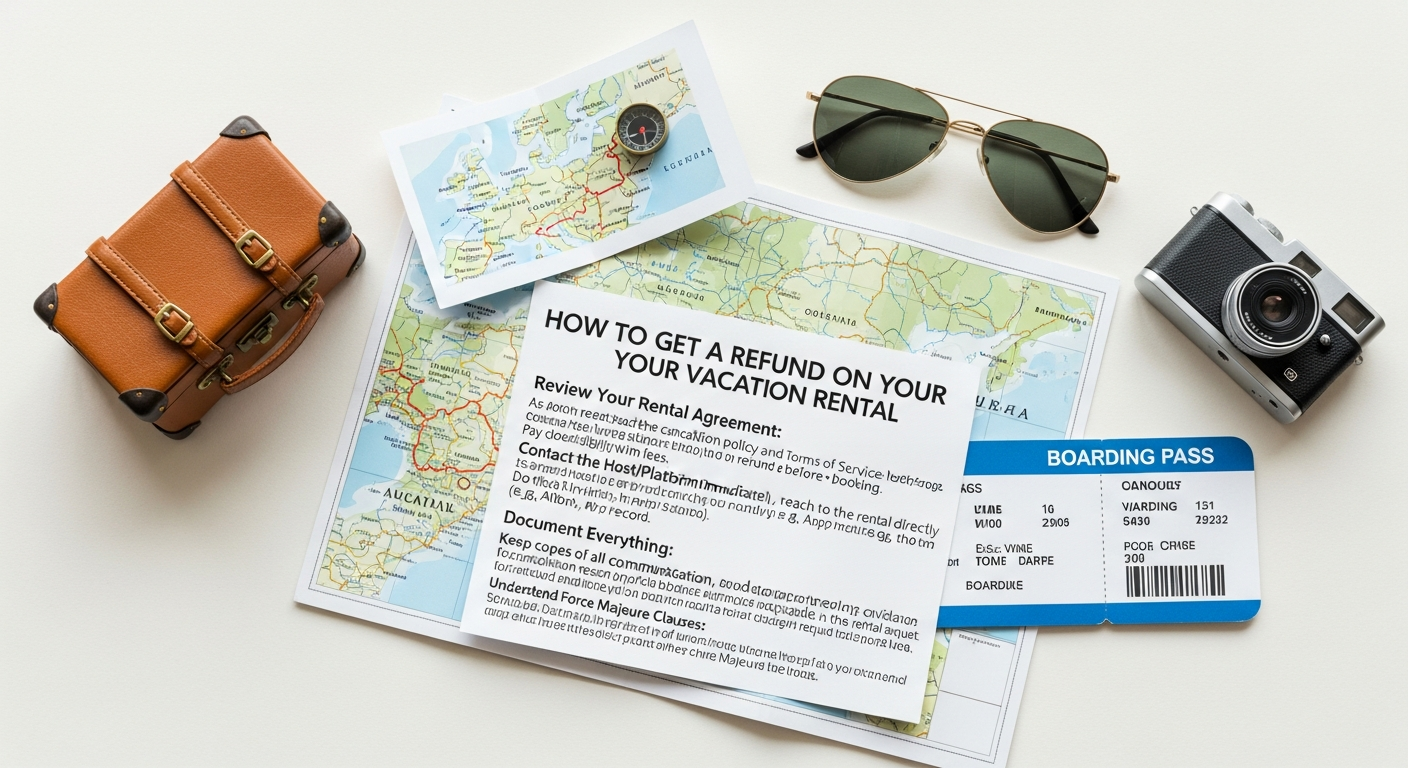
While cancellation policies dictate when you can get a refund for simply changing your mind, specific issues with the rental property itself often warrant a refund request regardless of the cancellation window. These scenarios typically involve the property not meeting reasonable expectations or being uninhabitable. Knowing what constitutes a valid reason for a refund is key to building a strong case.
- Misrepresentation of Property: This is a frequent cause for dispute. If the property significantly differs from its listing description or photos, you likely have grounds for a refund. Examples include a different number of bedrooms/bathrooms, advertised amenities (like a hot tub, pool, or ocean view) being unavailable or non-functional, or a significant discrepancy in the property’s condition (e.g., advertised as luxury but is dilapidated).
- Property Not Clean or Uninhabitable: A rental property should be clean and safe upon arrival. If you find the property to be excessively dirty, unsanitary, or infested with pests, this is a serious issue. Referencing a Vacation Rental Cleaning Checklist can help you identify what standards should be met. If the property is truly uninhabitable due to severe cleanliness issues, structural problems, or a lack of essential utilities (water, electricity, heating/cooling in extreme weather), a refund is often warranted.
- Major Maintenance Issues: While minor issues can often be resolved, major maintenance problems that significantly impact your stay can justify a refund. This includes non-functional essential appliances (refrigerator, stove), lack of hot water, persistent plumbing issues, or a broken heating/air conditioning system (especially critical during extreme weather). The key is whether the issue substantially interferes with your reasonable enjoyment of the property.
- Safety Concerns: Any legitimate safety concern, such as broken locks, exposed wiring, or a lack of smoke detectors, should be reported immediately. If the host is unresponsive or unable to rectify the situation, your safety is paramount, and you should seek alternative accommodation and a refund.
- Booking Errors: While less common for full refunds, significant booking errors (e.g., incorrect dates booked by the host, or issues with the number of guests) can sometimes lead to partial refunds or rebooking options, especially if the error was on the host’s side or a technical glitch. Always double-check your booking confirmation immediately after reserving.
- Unforeseen Circumstances / Force Majeure: Events like natural disasters (hurricanes, wildfires), government travel bans, or widespread health emergencies can render a booking impossible or unsafe. Many policies include a “force majeure” clause that outlines how refunds are handled in such situations. This is also where travel insurance becomes incredibly valuable, as it often covers cancellations due to these types of events, complementing the host’s or platform’s policies.
For any of these scenarios, documentation is your best friend. Take photos and videos, note dates and times, and keep records of all communications. This evidence will be crucial when you initiate your refund request.
The Step-by-Step Process for Initiating a Refund Request
-
Document Everything Immediately: As soon as you discover an issue, start gathering evidence.
- Take clear, timestamped photos and videos of the problem. For example, if the property is unclean, photograph the dirty areas. If an appliance is broken, video its non-functionality.
- Note the exact date and time you discovered the issue.
- Keep a detailed log of all communication with the host or property manager.
This documentation is your strongest asset.
-
Contact the Host/Owner Promptly: Your first course of action should always be to contact the host or property manager directly and immediately.
- Use the communication channel provided by the booking platform (e.g., Airbnb messaging system, Vrbo inbox) or the direct contact information if you booked directly.
- Clearly and politely explain the problem, providing specific details and attaching your photographic or video evidence.
- State what resolution you are seeking (e.g., immediate repair, alternative accommodation, a partial refund, or a full refund if the issue makes the property uninhabitable).
- Give the host a reasonable opportunity to rectify the situation. For a minor issue, this might be a few hours; for a major issue, it might mean they need to arrange a repair or offer an alternative.
Most platforms require you to attempt to resolve issues with the host first.
-
Escalate to the Booking Platform (if necessary): If the host is unresponsive, unwilling to resolve the issue, or their proposed solution is inadequate, it’s time to escalate.
- Initiate a formal dispute or refund request through the booking platform’s resolution center. For example, Airbnb has its Resolution Center, and Vrbo offers a dispute resolution process.
- Provide all your documentation, including photos, videos, and the communication history with the host.
- Clearly articulate why you believe you are entitled to a refund, referencing the booking platform’s policies and any relevant sections of the host’s listing.
- Be prepared to explain the situation concisely and factually. Avoid emotional language; stick to the facts.
Adhere to the platform’s deadlines for reporting issues. Many platforms have strict time limits (e.g., 24-72 hours after check-in) for reporting problems that occurred upon arrival. Missing these deadlines can jeopardize your claim.
-
Consider Alternative Accommodation (if necessary): If the property is genuinely uninhabitable and the host or platform cannot provide a satisfactory solution quickly, you may need to find alternative accommodation.
- Keep receipts for any alternative lodging or expenses incurred.
- Notify the host and platform of your decision to vacate and seek alternatives, explaining why you felt it was necessary.
- Follow Through: Be persistent but polite. Respond to any requests for additional information from the platform’s support team promptly. The resolution process can sometimes take several days or even weeks, depending on the complexity of the issue.
By meticulously following these steps, you build a robust case and significantly improve your chances of securing a satisfactory refund for your vacation rental.
Leveraging Travel Insurance and Credit Card Protections
While the direct approach with the host and booking platform is usually the first line of defense, sometimes external protections can be your ultimate safety net. Travel insurance and credit card benefits offer crucial safeguards, especially when unforeseen circumstances or intractable disputes arise.
Travel Insurance: Your Trip’s Ultimate Backup Plan
Travel insurance is often overlooked but can be a lifesaver, particularly for vacation rentals. It’s designed to protect your financial investment against a wide range of unexpected events. Here’s how it can help you get a refund on a vacation rental:
- Trip Cancellation/Interruption: Most comprehensive travel insurance policies cover non-refundable expenses if you have to cancel or cut short your trip due to covered reasons. These can include illness, injury, death in the family, severe weather events at your destination, or even job loss. If your reason for not being able to stay at the rental is covered, the insurance can reimburse you for the non-refundable portion of your booking.
- Medical Emergencies: If a medical emergency prevents you from traveling or forces you to leave early, travel insurance can cover associated costs, including your non-refundable rental fees.
- Natural Disasters and Unforeseen Events: While booking platforms often have force majeure clauses, travel insurance can offer broader protection. If your rental becomes uninhabitable due to a natural disaster, or if travel to your destination becomes impossible, your policy might cover the cost. This is particularly relevant when planning trips to Best Vacation Destinations Us 2026, where weather patterns or local events might be unpredictable.
- “Cancel For Any Reason” (CFAR) Insurance: This premium add-on allows you to cancel your trip for literally any reason and receive a partial reimbursement (typically 50-75%) of your non-refundable expenses. While more expensive, it offers the ultimate flexibility if your plans change unexpectedly and are not covered by standard policies.
It’s vital to purchase travel insurance soon after making your initial trip deposit or booking your rental, as some benefits (like pre-existing condition waivers) have time-sensitive enrollment periods. Always read the policy details carefully to understand what is and isn’t covered.
Credit Card Protections: A Last Resort
Many credit cards, especially premium travel cards, offer various protections that can assist with vacation rental disputes. These are typically a last resort after you’ve exhausted options with the host, booking platform, and travel insurance.
-
Chargebacks: If you paid for your vacation rental with a credit card and believe you were defrauded or received a service significantly different from what was advertised (e.g., the property was uninhabitable, and no refund was provided), you can initiate a chargeback with your credit card company. This involves disputing the charge, and the credit card issuer will investigate your claim.
- Conditions for a Chargeback: You’ll need strong evidence (photos, communication logs, documentation of platform’s refusal to refund) to support your claim.
- Time Limits: There are typically strict time limits for initiating a chargeback, often 60-120 days from the date of the charge appearing on your statement.
- Impact: A chargeback can be a lengthy process and may damage your relationship with the host or booking platform, potentially leading to account suspension in extreme cases. It should only be pursued when all other avenues have failed.
- Trip Interruption/Cancellation Benefits: Some premium credit cards offer built-in trip interruption or cancellation insurance as a cardholder perk, similar to a basic travel insurance policy. If you used your card to book the rental, check your card’s benefits guide to see if your situation is covered. This can also apply if you’ve used How To Use Travel Rewards Points from your credit card to book, as the underlying card benefits might still be applicable.
Always contact your credit card issuer directly to understand the specific protections offered by your card and the process for making a claim. These protections can be invaluable when you’re determined to get a refund on a vacation rental and face an uncooperative host or platform.
Preventing Refund Disputes: Proactive Measures for Future Bookings
The best way to get a refund on a vacation rental is often to avoid needing one in the first place. By adopting proactive planning and booking strategies, you can significantly reduce the likelihood of encountering issues that lead to disputes. For your upcoming trips, perhaps to the Best Vacation Destinations Us 2026, consider these preventative measures:
-
Thorough Research of Properties and Hosts:
- Read Reviews Carefully: Go beyond the star rating. Read recent reviews for consistent complaints or praises regarding cleanliness, accuracy of listing, host responsiveness, and specific amenities. Pay attention to how the host responds to negative feedback.
- Scrutinize Listing Descriptions and Photos: Look for discrepancies or vague language. If photos seem too good to be true, they might be. Use satellite views or street view tools to verify location and surrounding area if possible.
- Check Host Profile: On platforms like Airbnb and Vrbo, review the host’s profile. Look for a verified identity, a good response rate, and a history of positive interactions. “Superhosts” or “Premier Hosts” often indicate a higher level of reliability and experience.
-
Ask Questions Before Booking: Don’t hesitate to contact the host with any questions or concerns you have before committing to a reservation.
- Clarify specific amenities (e.g., “Is the pool heated year-round?”, “Is the Wi-Fi reliable for remote work?”).
- Inquire about neighborhood noise levels or local construction if that’s a concern.
- Ask for more photos if the listing feels incomplete.
- Confirm check-in/check-out procedures and flexibility.
Your inquiries and the host’s responses can provide valuable insight into their communication style and the property’s true condition.
-
Understand the Cancellation Policy BEFORE Committing: This cannot be stressed enough. Always, always, always read and understand the cancellation policy for your specific booking.
- Know the deadlines for full or partial refunds.
- Be aware of any non-refundable fees (e.g., service fees, cleaning fees).
- If booking directly, ensure you have a copy of the rental agreement and understand its terms.
- Consider Travel Insurance for Significant Investments: For expensive bookings or trips where unforeseen circumstances could have a major financial impact, travel insurance is a wise investment. It provides a safety net beyond the host’s or platform’s policies.
- Use Reputable Booking Platforms: Stick to well-established platforms like Airbnb, Vrbo, Booking.com, or reputable property management companies. These platforms offer built-in protections, dispute resolution services, and secure payment processing that independent or less-known sites might lack.
- Pay Attention to Payment Methods: While using How To Use Travel Rewards Points can be advantageous, be aware of the refund implications. Always prefer credit cards for vacation rental payments, as they offer chargeback protection that debit cards or direct bank transfers do not.
- Confirm and Reconfirm: A week or two before your arrival, send a polite message to the host to reconfirm your booking details, arrival time, and key collection instructions. This can preempt last-minute issues.
By integrating these proactive steps into your vacation rental planning, you not only minimize the chances of needing a refund but also enhance your overall travel experience, ensuring your 2026 adventures are smooth and stress-free.
Legal Avenues and Consumer Rights (When All Else Fails)
When you’ve exhausted all other avenues – direct communication with the host, escalation through the booking platform, and even exploring travel insurance or credit card protections – you might find yourself considering legal recourse. This is typically a last resort, as it can be time-consuming and potentially costly, but understanding your consumer rights and available legal avenues is important for comprehensive vacation rental planning.
Small Claims Court
For disputes involving amounts within specific limits (which vary by state or region, often ranging from a few thousand to tens of thousands of dollars), small claims court can be an accessible option. This court system is designed to be less formal and doesn’t always require legal representation, making it more manageable for individuals. To pursue a claim:
- Jurisdiction: You’ll typically need to file in the jurisdiction where the property is located or where the host resides. This can be challenging if the property is in a different state or country.
- Evidence: You will need to present all your documented evidence: booking confirmations, communication logs, photos, videos, receipts for alternative accommodation, and any correspondence from the booking platform’s resolution process.
- Costs: There are filing fees and potentially service fees to formally notify the defendant. While generally lower than traditional court, these costs add up.
- Enforcement: Winning a judgment is one thing; collecting the money is another. The court doesn’t enforce payment, leaving it up to you to pursue collection if the defendant doesn’t pay voluntarily.
Small claims court is most effective when the host is a local individual or business, making it easier to serve them and enforce a judgment.
Consumer Protection Agencies
Government consumer protection agencies exist to mediate disputes and protect consumers from unfair business practices. While they typically don’t directly resolve individual refund cases or enforce judgments, they can investigate patterns of misconduct and apply pressure on businesses. You can file a complaint with:
- State or Local Consumer Protection Offices: These agencies can often provide advice or mediate disputes.
- Federal Trade Commission (FTC) in the US: The FTC collects complaints about deceptive or unfair business practices. While they don’t resolve individual cases, your complaint helps them identify patterns of fraud or abuse.
- Better Business Bureau (BBB): While not a government agency, the BBB is a non-profit organization that helps resolve disputes between consumers and businesses. Filing a complaint can sometimes prompt a business to respond more constructively.
These agencies are generally more effective against larger, established property management companies or platforms rather than individual hosts.
Arbitration Clauses
Many booking platforms and direct rental agreements include arbitration clauses in their terms of service. These clauses state that any disputes must be resolved through binding arbitration rather than traditional court litigation. Arbitration is a private dispute resolution process where a neutral third party (the arbitrator) hears both sides and makes a decision. While often faster and less formal than court, it does have implications:
- Binding Decision: The arbitrator’s decision is usually final and legally binding, with very limited grounds for appeal.
- Costs: Arbitration can involve significant fees, which may be split between the parties or assigned by the arbitrator.
- Limited Discovery: The ability to gather evidence (discovery) is often more limited than in court.
Before considering arbitration, carefully review the terms of service of the platform or the rental agreement to understand the specific rules and costs involved.
Legal Counsel
For high-value disputes or complex legal issues, consulting with an attorney specializing in consumer law or contract law is advisable. An attorney can assess the strength of your case, explain your rights, and guide you through the most appropriate legal avenue. However, the cost of legal representation can quickly outweigh the refund amount for most vacation rental disputes, making it a viable option only in specific circumstances.
Understanding these legal avenues provides a complete picture of how to get a refund on a vacation rental, ensuring you know all your options, even in the most challenging situations.
Frequently Asked Questions
Recommended Resources
Related reading: Japan Cash Vs Credit Card Travel Tips (Onomichi Guide).
Learn more about this topic in Onomichi Art Galleries And Culture at Onomichi Guide.