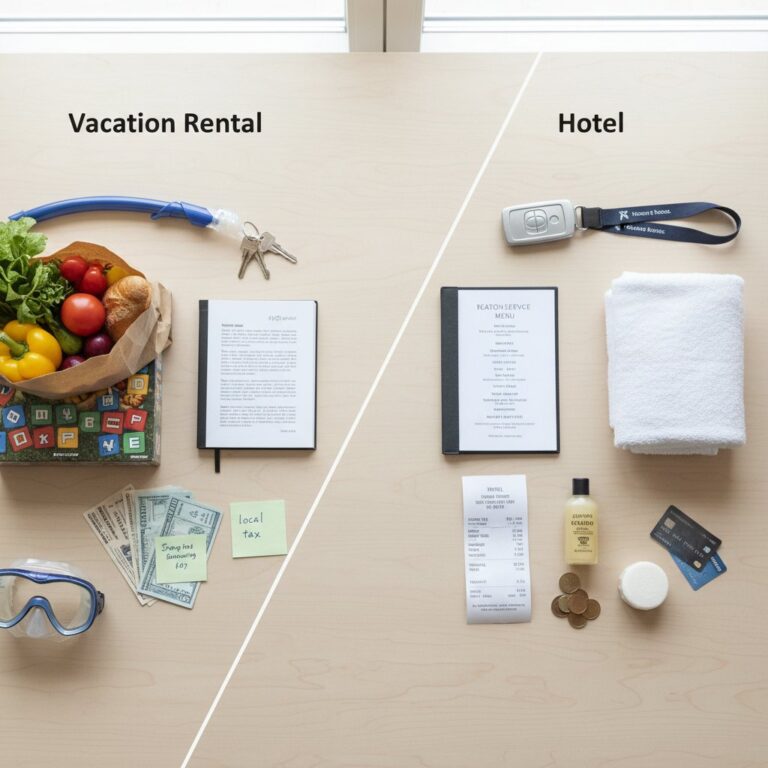

Airbnb vs Vrbo: The Ultimate 2026 Guide to Choosing Your Vacation Rental
Affiliate disclosure: This article may contain affiliate links. Recommendations are independent and editorially driven.
When planning your next getaway, the question often arises: Airbnb vs Vrbo? These two titans of the vacation rental industry dominate the short-term accommodation market, offering millions of unique stays worldwide. But while they both connect travelers with private properties, their philosophies, fee structures, property types, and overall user experiences can differ significantly. Understanding these nuances is crucial for making an informed decision, ensuring your trip is exactly what you envision – whether it’s a cozy studio for a solo adventure or a sprawling villa for a family reunion. In this comprehensive 2026 guide, we’ll delve deep into the offerings of Airbnb and Vrbo, comparing them side-by-side across various crucial aspects to help you choose the platform that best suits your travel style, budget, and specific needs.
From exploring hidden gems in bustling city centers to finding spacious homes near serene beaches, the right platform can make all the difference. We’ll break down everything from booking fees and cancellation policies to property diversity, customer support, and even their unique approaches to safety and guest protection. By the end of this guide, you’ll be equipped with all the insights needed to confidently navigate the world of vacation rentals and book your ideal stay.
Understanding the Core Differences: Airbnb vs Vrbo at a Glance
While both Airbnb and Vrbo facilitate peer-to-peer property rentals, their fundamental business models and target markets have historically set them apart. Airbnb, launched in 2008, pioneered the concept of “sharing economy” travel, allowing anyone to rent out a spare room, a unique space like a treehouse, or an entire home. Vrbo, a veteran in the industry tracing its roots back to 1995 as “Vacation Rental By Owner,” has always focused exclusively on entire homes, emphasizing family-friendly spaces and traditional vacation destinations.
In 2026, both platforms have evolved, with some overlap in their offerings, but their core identities largely remain. Airbnb continues to offer a broader spectrum of property types and experiences, catering to a diverse demographic from budget solo travelers to luxury seekers. Vrbo, now part of the Expedia Group, maintains its stronghold on whole-home rentals, often in resort towns, catering primarily to families and larger groups seeking a private, self-contained vacation experience. This initial distinction is vital when you begin your search, as it immediately helps filter for the kind of stay you’re looking for.
Airbnb: The Pioneer of Diverse Stays and Unique Experiences
Airbnb revolutionized travel by making it possible to live like a local. Its inventory ranges from private rooms in shared homes to entire apartments, houses, cabins, and an array of “unique stays” like yurts, castles, and houseboats. This diversity is a major draw, appealing to travelers looking for specific aesthetics, novel experiences, or budget-friendly options. Airbnb also offers “Experiences,” which are curated activities led by local hosts, further cementing its position as a platform for immersive travel.
- Property Variety: Unmatched diversity, from shared rooms to luxury villas.
- Experiences: A key differentiator, offering guided tours, cooking classes, and more.
- Target Audience: Broad appeal, including solo travelers, couples, business travelers, and families.
- Origin Story: Born from the need to rent out air mattresses, it embodies the sharing economy.
Vrbo: The Home-Away-From-Home Specialist
Vrbo positions itself as the go-to for travelers seeking the comfort and privacy of an entire home. You won’t find shared rooms or hosts living on-site with Vrbo; every listing guarantees exclusive access to the property. This focus makes it incredibly popular for family vacations, group trips, and longer stays where amenities like full kitchens, multiple bedrooms, and private outdoor spaces are priorities. Vrbo properties often feature amenities geared towards vacationers, such as private pools, hot tubs, and game rooms.
- Property Variety: Exclusively entire homes, condos, and cabins.
- Focus: Family vacations, group travel, traditional holiday homes.
- Target Audience: Families, groups of friends, travelers prioritizing privacy and space.
- Origin Story: Started as a direct-to-owner rental service, emphasizing independence.
[INLINE IMAGE 1: place after second H2 | alt=”airbnb vs vrbo concept illustration”]
Comparing Fees and Pricing Structures: Where Does Your Money Go?
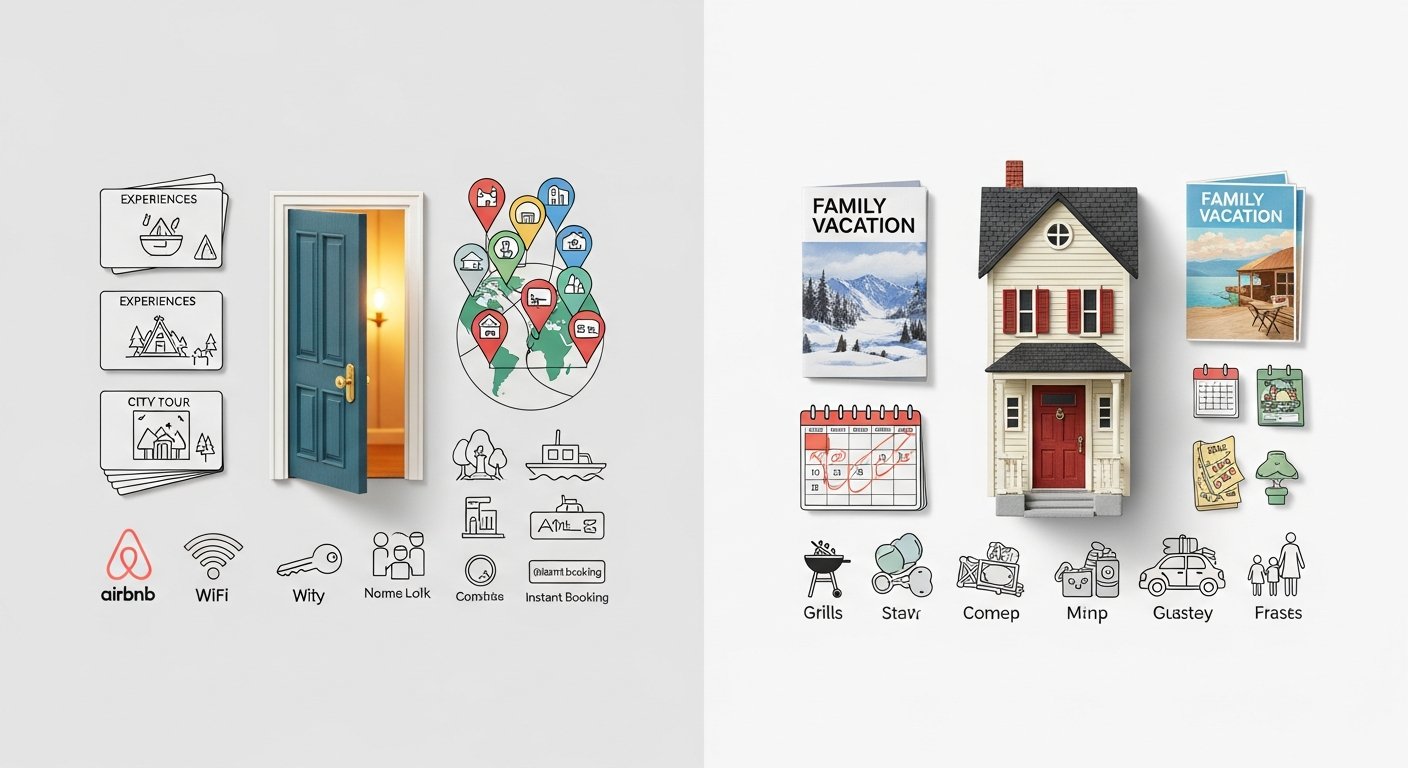
Understanding the total cost of a vacation rental can be complex, as both Airbnb and Vrbo employ service fees, cleaning fees, and taxes that can significantly impact the final price. While a nightly rate might look appealing, comparing the ‘all-in’ cost is essential.
Airbnb’s Fee Breakdown: Guest Service Fees and Host Charges
Airbnb typically charges a guest service fee, which is usually between 0-14.2% of the booking subtotal (nightly rate + cleaning fee). This fee covers the cost of running the platform, customer support, and payment processing. Some hosts also choose to pay the entire service fee, meaning guests see a flat, all-inclusive price. This ‘host-only fee’ model is becoming more common, especially for professional hosts, to offer greater transparency upfront.
- Guest Service Fee: Varies, typically 0-14.2%, calculated on the subtotal.
- Cleaning Fees: Set by the host, can range significantly based on property size and location. These are one-time fees.
- Occupancy Taxes: Collected by Airbnb and remitted to local authorities, varying by location.
- Cancellation Fees: Depend on the host’s chosen cancellation policy.
Example Booking Scenario (Airbnb):
Let’s say you book a charming apartment in Paris for 5 nights at $150/night for a total of $750. The host charges a $75 cleaning fee.
The subtotal is $750 + $75 = $825.
Assuming a 14.2% guest service fee, that’s $825 * 0.142 = $117.15.
Local occupancy taxes might add another 5% ($825 * 0.05 = $41.25).
Total estimated cost: $825 + $117.15 + $41.25 = $983.40
For more detailed insights on how to minimize your expenses, consider reading our guide on How to Save on Service Fees for Vacation Rentals.
Vrbo’s Fee Breakdown: Service Fees and Property-Specific Charges
Vrbo also charges a service fee to guests, usually between 5-12% of the rental amount (excluding taxes and cleaning fees). This fee is generally lower than Airbnb’s average but is also based on the rental subtotal. Like Airbnb, Vrbo hosts also set their own cleaning fees and may charge additional fees for pets, extra guests, or resort amenities.
- Guest Service Fee: Typically 5-12%, calculated on the rental amount.
- Cleaning Fees: Determined by the host.
- Property Fees: Can include pet fees, hot tub fees, resort fees, etc., set by the host.
- Taxes: Collected and remitted based on local regulations.
Example Booking Scenario (Vrbo):
You book a family-friendly beach house in Florida for 5 nights at $200/night, totaling $1000. The host charges a $100 cleaning fee and a $50 pet fee.
The rental amount for service fee calculation is $1000.
Assuming an 8% Vrbo service fee, that’s $1000 * 0.08 = $80.
Cleaning fee: $100. Pet fee: $50.
Local taxes (e.g., 12% on nightly rate + fees): ($1000 + $100 + $50) * 0.12 = $138.
Total estimated cost: $1000 + $80 + $100 + $50 + $138 = $1368
Which is Cheaper? A Complex Calculation
Determining which platform is definitively cheaper often comes down to the specific property, location, and length of stay. While Airbnb *can* have higher guest service fees, its wider range of property types (including private rooms) might offer lower starting nightly rates. Vrbo’s service fees can sometimes be lower, but its focus on entire homes means higher base prices. Always compare the total price listed at checkout, including all fees and taxes, before making a final decision.
Property Types and Inventory: What Kind of Stay Are You Looking For?
The type of accommodation you desire is often the most significant factor in choosing between Airbnb and Vrbo. Their inventories reflect their distinct business models.
Airbnb’s Eclectic Collection: From Shared Spaces to Luxury Estates
Airbnb boasts an incredibly diverse inventory. This platform is ideal if you’re:
- A Solo Traveler or Couple on a Budget: Private rooms in shared homes offer a cost-effective way to travel and potentially interact with locals.
- Seeking Unique Stays: From treehouses, yurts, and geodesic domes to houseboats and tiny homes, Airbnb excels in offering quirky and memorable accommodations.
- Looking for City Apartments: A vast selection of apartments in urban centers globally, perfect for immersing yourself in city life.
- Considering Extended Stays: Many hosts offer discounts for weekly or monthly bookings, making it suitable for digital nomads or long-term travelers.
The “Airbnb Categories” feature introduced recently helps travelers discover stays based on themes like “Amazing pools,” “Ski-in/out,” “Beachfront,” or “Design,” making it easier to find properties that match specific interests rather than just location.
Vrbo’s Whole-Home Focus: Ideal for Families and Groups
Vrbo’s strength lies in its exclusive focus on entire private residences. This makes it the superior choice if you’re:
- Planning a Family Vacation: Homes with multiple bedrooms, fully equipped kitchens, and private yards are standard. You won’t find private rooms or shared spaces.
- Traveling with a Group: Whether it’s friends or extended family, Vrbo properties often accommodate larger parties comfortably, frequently featuring multiple bathrooms and communal living areas.
- Prioritizing Privacy: The guarantee of an entire home means no shared common areas with hosts or other guests.
- Seeking Traditional Vacation Homes: Often found in popular holiday destinations like beach towns, ski resorts, and national park gateways, with amenities like private pools, hot tubs, and game rooms.
Vrbo’s search filters are also highly geared towards these needs, allowing you to easily search by specific amenities like “pool,” “pet-friendly,” “waterfront,” or “hot tub.”
[INLINE IMAGE 2: place after fourth H2 | alt=”airbnb vs vrbo comparison illustration”]
Cancellation Policies and Flexibility: What Happens When Plans Change?
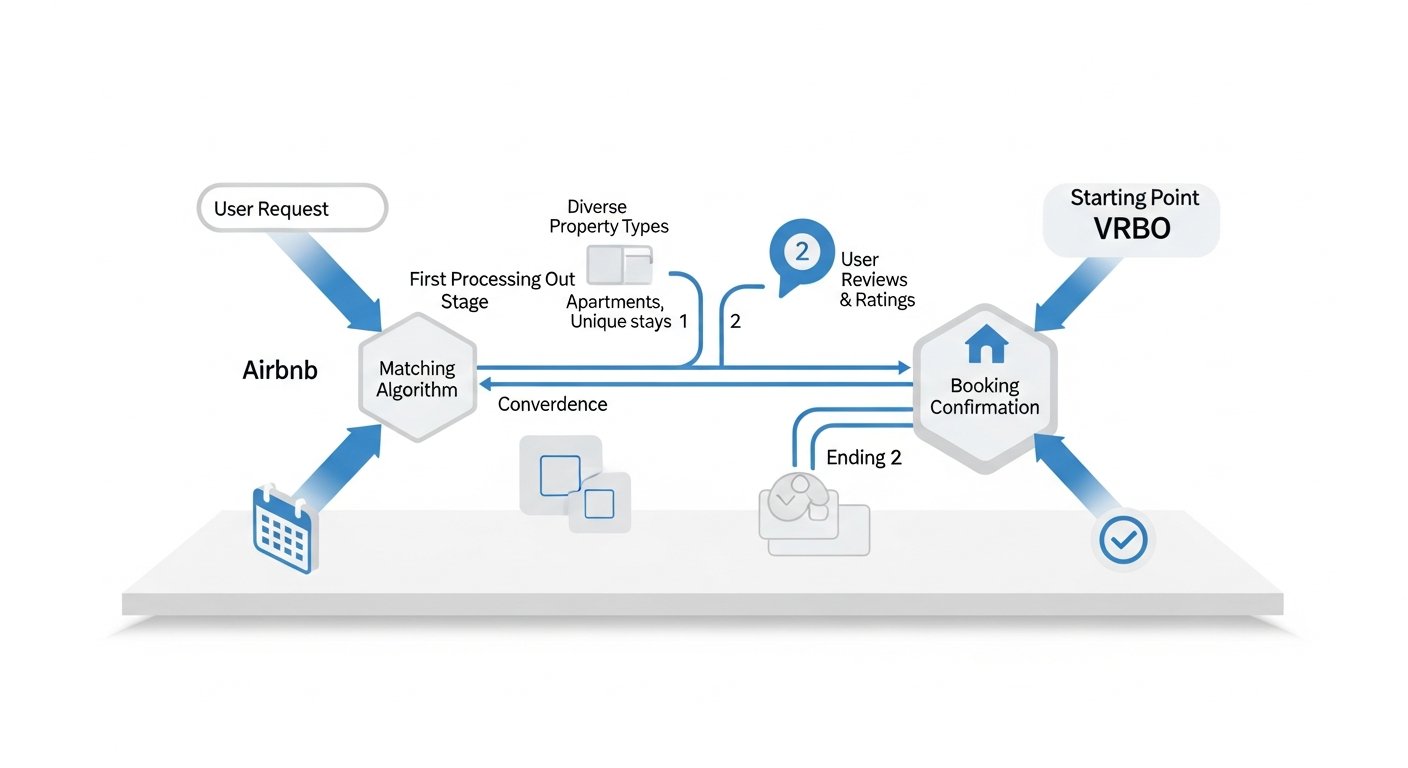
Life is unpredictable, and travel plans can change. Understanding the cancellation policies of both platforms is paramount, as they directly impact your financial risk.
Airbnb’s Flexible Policies: From Super Strict to Completely Free
Airbnb allows hosts to choose from several standardized cancellation policies, offering varying degrees of flexibility:
- Flexible: Full refund up to 24 hours before check-in. After that, guests get a full refund for all nights remaining if they cancel more than 24 hours after check-in, plus the first night and the service fee.
- Moderate: Full refund up to 5 days before check-in. After that, guests get a 50% refund for all nights remaining.
- Strict: Full refund if canceled within 48 hours of booking and at least 14 days before check-in. After that, 50% refund for nights stayed if canceled before check-in.
- Firm: Full refund if canceled within 30 days of check-in. 50% refund between 7 and 30 days before check-in. No refund within 7 days.
- Long-Term: For stays of 28 nights or more, requires 30 days’ notice for cancellation without penalty, otherwise, the first month is non-refundable.
- Super Strict (by invitation only for certain partners): 50% refund up to 30 or 60 days before check-in. No refund after that.
It’s crucial to check the specific policy for each listing before booking. Airbnb also offers a “Free cancellation” filter in its search, which can be very helpful for travelers seeking maximum flexibility. For detailed advice on navigating these policies, see our Comprehensive Airbnb Cancellation Guide.
Vrbo’s Varied Policies: Host-Set Terms
Vrbo also provides hosts with several policy options, similar in concept to Airbnb’s but with slightly different naming conventions and implementation:
- No Refund: The strictest policy. No refunds are given after booking.
- Strict: 60-day full refund. If canceled between 30 and 60 days, 50% refund. No refund within 30 days.
- Firm: Full refund 60 days out, 50% refund 30 days out. No refund within 30 days.
- Moderate: Full refund 30 days out, 50% refund 14 days out. No refund within 14 days.
- Relaxed: Full refund 14 days out, 50% refund 7 days out. No refund within 7 days.
Vrbo often allows hosts to create custom cancellation policies, so it’s essential to read the specific terms on each listing carefully. Always confirm the refund eligibility window and the percentage of refund you can expect. Travel insurance is always a wise consideration for non-refundable bookings or when traveling with complex itineraries.
Guest and Host Protections: Safety, Security, and Support
Both platforms prioritize safety and trust, offering various protections for both guests and hosts. However, their approaches and specific features differ.
Airbnb’s AirCover: Comprehensive Protection
Airbnb introduced “AirCover” as its comprehensive protection for guests. This includes:
- Booking Protection Guarantee: If a host cancels within 30 days of check-in, or if you can’t check into a listing, Airbnb will find you a similar or better place, or refund you.
- Check-in Guarantee: If you can’t check in and the host can’t resolve the issue, Airbnb will find you a similar or better place for the length of your original stay, or refund you.
- Get-What-You-Booked Guarantee: If the listing isn’t what was advertised (e.g., fewer bedrooms, broken hot tub), you have three days to report it, and Airbnb will either rebook you or offer a refund.
- 24-hour Safety Line: Direct access to a trained safety agent in 16 languages, around the clock.
For hosts, AirCover provides $3M in Host liability insurance and $1M in Host damage protection, covering damages by guests and liability for guest injuries.
Vrbo’s Book With Confidence Guarantee
Vrbo offers its “Book With Confidence Guarantee” for guests, which includes:
- Payment Protection: Full refund if you’re wrongfully denied access to a property or if the property is not as advertised and you’re unable to resolve it with the owner.
- Fraud Protection: Protection against fraudulent listings or scams.
- Rebooking Assistance: Vrbo will help you find another property if the original booking becomes unavailable due to owner cancellation or misrepresentation.
- 24/7 Customer Service: Support available for urgent issues during your stay.
For property owners, Vrbo provides liability insurance options and resources for managing potential damages, though specific coverage can vary and often relies on the host’s personal insurance policy. Hosts can also take advantage of optional travel insurance for guests.
Trust and Verification
Both platforms have verification processes for users. Airbnb requires guests and hosts to verify their identity and provides a review system for both parties. Vrbo also encourages guests and hosts to complete profiles and relies heavily on its rating and review system to build trust. Always read reviews thoroughly before booking on either platform.
User Experience: Website, App, and Customer Support
The ease of navigating each platform, from initial search to post-stay feedback, plays a significant role in user satisfaction.
Airbnb’s Intuitive Interface and Community Focus
Airbnb is generally praised for its sleek, modern interface and user-friendly mobile app. The search experience is highly visual, with large photos and innovative categories that encourage discovery. Its filtering options are extensive, allowing users to narrow down searches by property type, amenities, accessibility features, and even unique styles.
- Search and Discovery: Excellent visual search, ‘Categories’ feature, and comprehensive filters.
- Booking Process: Streamlined, with clear steps and transparent pricing (though full transparency sometimes only appears at final checkout).
- Communication: Robust in-app messaging system for direct communication with hosts.
- Community: Strong emphasis on community, with host profiles and guest reviews.
- Customer Support: Accessible via phone, chat, and email, with varying response times. AirCover has strengthened their emergency response.
Vrbo’s Practical Approach and Destination Focus
Vrbo’s website and app are practical and functional, designed to cater to its whole-home, vacation-oriented demographic. While perhaps less ‘design-forward’ than Airbnb, its filters are highly effective for finding specific amenities crucial for family or group trips (e.g., number of bedrooms, private pool, proximity to attractions).
- Search and Discovery: Strong filters for specific home amenities and traditional vacation destinations.
- Booking Process: Straightforward, often with direct contact options for property managers or owners.
- Communication: In-app messaging and sometimes direct email/phone contact information for hosts/property managers.
- Destination Focus: Stronger presence and curated collections in popular vacation areas.
- Customer Support: Available 24/7 via phone and chat, with support agents specialized in property rentals.
Both platforms offer robust mapping features to help visualize property locations, and both allow users to save favorite listings for later consideration. The choice between the two often comes down to personal preference for interface design and how you typically search for accommodations.
Market Coverage and Regional Strengths: Where Does Each Platform Shine?
While both Airbnb and Vrbo have a global presence, their market penetration and strengths can vary significantly from one region or type of destination to another. Understanding these differences can help you focus your search more effectively.
Airbnb’s Urban Dominance and Global Reach
Airbnb generally boasts a stronger presence in major cities worldwide. Its ability to list private rooms and apartments makes it incredibly popular for urban tourism, business travel, and solo adventurers looking to experience city life like a local. You’ll find a massive inventory in places like New York, London, Paris, Tokyo, and Rome. Beyond cities, Airbnb has expanded significantly into rural and unique destinations, offering glamping, cabins, and offbeat stays. This makes it a strong contender for virtually any type of destination, though its strength in high-density urban areas is particularly notable.
- Urban Centers: A vast inventory of apartments and rooms, ideal for city breaks and business trips.
- International Reach: Strong global presence, with listings in virtually every country with a tourism industry.
- Emerging Markets: Often the first platform to establish a significant foothold in newer or less conventional tourist destinations.
- Unique Destinations: Excellent for finding non-traditional stays in remote or niche locations.
Vrbo’s Vacation Hotspots and Traditional Holiday Markets
Vrbo’s strength lies in traditional vacation destinations, particularly those known for family-oriented travel, beach holidays, ski trips, and large group getaways. You’ll often find a higher concentration of large, private homes in places like the Outer Banks, Orlando (near theme parks), European ski resorts, and coastal areas across the US and Europe. In many of these established vacation markets, Vrbo might even have a larger or more specialized inventory of whole-home rentals compared to Airbnb.
- Coastal and Beach Towns: Extensive listings in popular beach destinations.
- Ski Resorts: Abundant chalets and condos for ski season.
- Theme Park Areas: Strong inventory of large homes with amenities near major attractions.
- Rural/Cabin Retreats: Excellent for finding secluded homes and cabins.
If you’re heading to a bustling metropolis and considering a private room or a stylish apartment, Airbnb might offer more choices and better prices. If your sights are set on a spacious beach house for a week-long family gathering, Vrbo is often the platform of choice.
The Host Perspective: Listing and Management
While this guide primarily focuses on the guest experience, understanding the host perspective can offer valuable insights into how properties are managed and what to expect.
Listing on Airbnb: Flexibility and Exposure
Airbnb’s hosting model allows for incredible flexibility, enabling anyone to become a host, from renting out a spare room to managing multiple properties. Hosts benefit from a vast global audience and tools designed for easy listing creation and management.
- Diverse Listing Options: Hosts can list private rooms, shared spaces, entire homes, or unique accommodations.
- Target Audience: Attracts a wide range of guests, including budget travelers, business travelers, and those seeking unique experiences.
- Host Tools: Comprehensive dashboard, pricing tools, Smart Pricing, instant booking options, and a robust messaging system.
- Host Community: Active host community and forums for support and advice.
- Fees: Typically charges hosts a commission of 3% (standard) to 14-16% (if they absorb guest fees).
For those considering listing their property, our guide on Setting Up a Vrbo Host Listing offers a comparative overview of the process.
Listing on Vrbo: Focusing on Whole-Home Management
Vrbo is tailored towards hosts and property managers primarily offering entire homes for rent. Its tools and features are designed to support a more traditional vacation rental business model.
- Exclusive Whole-Home Listings: No shared spaces, ensuring guest privacy.
- Target Audience: Attracts families and groups seeking full homes, often for longer durations.
- Host Tools: Integrated with property management software, advanced calendar management, and detailed financial reporting.
- Payment Structure: Hosts can choose between an annual subscription fee or a pay-per-booking commission model (typically 5% for Vrbo commission + 3% payment processing fee).
- Direct Contact: Vrbo often allows for more direct communication between guests and hosts/property managers prior to booking, which some prefer.
For many hosts with traditional vacation homes, Vrbo is often the platform of choice due to its specific focus and clientele.
Side-by-Side Comparison: Airbnb vs Vrbo in 2026
To summarize the key differences and help you decide, here’s a comprehensive comparison table:
| Feature | Airbnb | Vrbo |
|---|---|---|
| Property Types | Private rooms, shared spaces, entire homes, unique stays (treehouses, yurts, etc.) | Exclusively entire homes, condos, cabins, villas. No shared spaces. |
| Typical Guest Service Fee % | 0-14.2% (can be host-paid for full transparency) | 5-12% (applied to rental amount, excluding taxes/cleaning) |
| Cancellation Policies | Flexible, Moderate, Strict, Firm, Long-Term, Super Strict (host choice) | No Refund, Strict, Firm, Moderate, Relaxed (host choice) |
| Best For | Solo travelers, couples, business trips, unique experiences, city breaks, budget stays, digital nomads. | Families, groups, longer stays, traditional vacation homes, privacy, destinations like beaches/mountains. |
| Average Party Size | 1-4 guests (highly varied) | 4-8+ guests (often larger homes) |
| Key Differentiator | Sharing economy, experiences, diverse inventory, urban focus. | Whole-home privacy, family-friendly amenities, traditional vacation markets. |
| Guest Protection | AirCover (Booking, Check-in, Get-What-You-Booked Guarantees, 24-hr Safety Line) | Book With Confidence Guarantee (Payment, Fraud Protection, Rebooking Assistance) |
| Payment Schedule | Often full payment upfront or split payments available. | Often allows for deposit-and-balance payment structure. |
| Host Interaction | Can range from very active (shared spaces) to minimal (self check-in entire homes). | Typically less direct interaction during stay (host off-site), managed by property managers or owners. |
Making Your Decision: Which Platform is Right for Your Trip?
Choosing between Airbnb and Vrbo boils down to your specific travel needs, priorities, and the nature of your trip. There isn’t a universally “better” platform; rather, there’s a better platform for a particular situation.
When to Choose Airbnb:
- You’re a Solo Traveler or Couple: Access to private rooms and smaller apartments offers more budget-friendly options.
- You’re Seeking Unique Experiences: From glamping in a dome to sleeping in a treehouse, Airbnb’s “Categories” make finding one-of-a-kind stays easy.
- You’re on a Budget: The sheer variety, including rooms in shared homes, often presents lower nightly rates.
- You Value Local Immersion: Staying in a local’s spare room or an apartment in a residential neighborhood can offer a more authentic experience.
- You’re Flexible with Your Stay Type: Open to different types of accommodations beyond traditional homes.
- You’re Heading to a Major City: Airbnb typically has a larger and more diverse inventory in urban areas.
- You’re Booking a Last-Minute Trip: Often more availability for quick bookings due to diverse inventory.
Case Study: Best for Unique City Stays – Airbnb Example
Sarah, a solo traveler, wanted to explore Berlin’s vibrant art scene. She searched Airbnb and found a private room in a bohemian apartment in the Kreuzberg district. Her host, a local artist, provided fantastic recommendations for galleries and cafes off the beaten path. The lower nightly rate compared to a hotel allowed her to extend her stay by two days, and the unique neighborhood experience was exactly what she craved.
When to Choose Vrbo:
- You’re Planning a Family Vacation: Vrbo’s exclusive focus on entire homes means you’ll find properties with multiple bedrooms, full kitchens, and private spaces suitable for children.
- You’re Traveling with a Large Group: Properties often accommodate 6+ guests, ideal for reunions, friend getaways, or multi-family trips.
- You Prioritize Privacy and Space: You want an entire home to yourself without sharing any common areas.
- You Need Specific Amenities: Searching for a private pool, hot tub, large yard, or pet-friendly accommodations is often easier and more prevalent on Vrbo.
- You’re Visiting a Traditional Vacation Destination: Beach towns, ski resorts, and lakeside retreats often have a robust Vrbo inventory.
- You Prefer a “Home Away From Home” Feel: Many Vrbo listings are purpose-built vacation homes with amenities designed for holidaymakers.
- You Want More Control Over Payment Schedule: Vrbo often allows for a deposit-and-balance payment structure, which can be easier for larger bookings.
Case Study: Best for Family Beach Trips – Vrbo Example
The Miller family, with two young children and a small dog, planned their annual week-long beach vacation to the Outer Banks. They used Vrbo to filter specifically for a 4-bedroom house with a private pool, direct beach access, and a fenced yard. They found a perfect home, paid a deposit, and settled the balance closer to their travel date, enjoying the privacy and space that a hotel couldn’t offer.
Tips for Cross-Platform Comparison
The smartest approach for any significant vacation rental booking is to check both platforms. Here’s how to do it effectively:
- Start with Your Core Needs: Determine if you need an entire home or are open to shared spaces. This immediately directs you towards Vrbo or opens up Airbnb’s full range.
- Use Detailed Filters: Input your exact dates, number of guests, specific amenities (e.g., “pool,” “pet-friendly,” “wheelchair accessible”), and desired location.
- Compare Total Costs: Don’t just look at the nightly rate. Proceed to checkout on both platforms to view the full price, including all service fees, cleaning fees, and taxes.
- Read Reviews Thoroughly: Pay attention to recent reviews, especially regarding accuracy, cleanliness, and host responsiveness.
- Examine Cancellation Policies: Ensure the policy aligns with your comfort level for flexibility.
- Look for the Same Property: Sometimes the same property is listed on both platforms, but with different pricing or availability. It’s worth a quick check!
Ultimately, by understanding the unique strengths of both Airbnb and Vrbo in 2026, you can leverage their features to find the perfect vacation rental that matches your travel style and creates unforgettable memories.
Frequently Asked Questions
Airbnb vs Vrbo: The Ultimate 2026 Guide to Choosing Your Vacation Rental
Affiliate disclosure: This article may contain affiliate links. Recommendations are independent and editorially driven.
When planning your next getaway, the question often arises: Airbnb vs Vrbo? These two titans of the vacation rental industry dominate the short-term accommodation market, offering millions of unique stays worldwide. But while they both connect travelers with private properties, their philosophies, fee structures, property types, and overall user experiences can differ significantly. Understanding these nuances is crucial for making an informed decision, ensuring your trip is exactly what you envision – whether it's a cozy studio for a solo adventure or a sprawling villa for a family reunion. In this comprehensive 2026 guide, we'll delve deep into the offerings of Airbnb and Vrbo, comparing them side-by-side across various crucial aspects to help you choose the platform that best suits your travel style, budget, and specific needs.
From exploring hidden gems in bustling city centers to finding spacious homes near serene beaches, the right platform can make all the difference. We'll break down everything from booking fees and cancellation policies to property diversity, customer support, and even their unique approaches to safety and guest protection. By the end of this guide, you'll be equipped with all the insights needed to confidently navigate the world of vacation rentals and book your ideal stay.
Understanding the Core Differences: Airbnb vs Vrbo at a Glance
While both Airbnb and Vrbo facilitate peer-to-peer property rentals, their fundamental business models and target markets have historically set them apart. Airbnb, launched in 2008, pioneered the concept of "sharing economy" travel, allowing anyone to rent out a spare room, a unique space like a treehouse, or an entire home. Vrbo, a veteran in the industry tracing its roots back to 1995 as "Vacation Rental By Owner," has always focused exclusively on entire homes, emphasizing family-friendly spaces and traditional vacation destinations.
In 2026, both platforms have evolved, with some overlap in their offerings, but their core identities largely remain. Airbnb continues to offer a broader spectrum of property types and experiences, catering to a diverse demographic from budget solo travelers to luxury seekers. Vrbo, now part of the Expedia Group, maintains its stronghold on whole-home rentals, often in resort towns, catering primarily to families and larger groups seeking a private, self-contained vacation experience. This initial distinction is vital when you begin your search, as it immediately helps filter for the kind of stay you're looking for.
Airbnb: The Pioneer of Diverse Stays and Unique Experiences
Airbnb revolutionized travel by making it possible to live like a local. Its inventory ranges from private rooms in shared homes to entire apartments, houses, cabins, and an array of "unique stays" like yurts, castles, and houseboats. This diversity is a major draw, appealing to travelers looking for specific aesthetics, novel experiences, or budget-friendly options. Airbnb also offers "Experiences," which are curated activities led by local hosts, further cementing its position as a platform for immersive travel.
- Property Variety: Unmatched diversity, from shared rooms to luxury villas.
- Experiences: A key differentiator, offering guided tours, cooking classes, and more.
- Target Audience: Broad appeal, including solo travelers, couples, business travelers, and families.
- Origin Story: Born from the need to rent out air mattresses, it embodies the sharing economy.
Vrbo: The Home-Away-From-Home Specialist
Vrbo positions itself as the go-to for travelers seeking the comfort and privacy of an entire home. You won't find shared rooms or hosts living on-site with Vrbo; every listing guarantees exclusive access to the property. This focus makes it incredibly popular for family vacations, group trips, and longer stays where amenities like full kitchens, multiple bedrooms, and private outdoor spaces are priorities. Vrbo properties often feature amenities geared towards vacationers, such as private pools, hot tubs, and game rooms.
- Property Variety: Exclusively entire homes, condos, and cabins.
- Focus: Family vacations, group travel, traditional holiday homes.
- Target Audience: Families, groups of friends, travelers prioritizing privacy and space.
- Origin Story: Started as a direct-to-owner rental service, emphasizing independence.
[INLINE IMAGE 1: place after second H2 | alt="airbnb vs vrbo concept illustration"]
Comparing Fees and Pricing Structures: Where Does Your Money Go?
Understanding the total cost of a vacation rental can be complex, as both Airbnb and Vrbo employ service fees, cleaning fees, and taxes that can significantly impact the final price. While a nightly rate might look appealing, comparing the 'all-in' cost is essential.
Airbnb's Fee Breakdown: Guest Service Fees and Host Charges
Airbnb typically charges a guest service fee, which is usually between 0-14.2% of the booking subtotal (nightly rate + cleaning fee). This fee covers the cost of running the platform, customer support, and payment processing. Some hosts also choose to pay the entire service fee, meaning guests see a flat, all-inclusive price. This 'host-only fee' model is becoming more common, especially for professional hosts, to offer greater transparency upfront.
- Guest Service Fee: Varies, typically 0-14.2%, calculated on the subtotal.
- Cleaning Fees: Set by the host, can range significantly based on property size and location. These are one-time fees.
- Occupancy Taxes: Collected by Airbnb and remitted to local authorities, varying by location.
- Cancellation Fees: Depend on the host's chosen cancellation policy.
Example Booking Scenario (Airbnb):
Let's say you book a charming apartment in Paris for 5 nights at $150/night for a total of $750. The host charges a $75 cleaning fee.
The subtotal is $750 + $75 = $825.
Assuming a 14.2% guest service fee, that's $825 * 0.142 = $117.15.
Local occupancy taxes might add another 5% ($825 * 0.05 = $41.25).
Total estimated cost: $825 + $117.15 + $41.25 = $983.40
For more detailed insights on how to minimize your expenses, consider reading our guide on How to Save on Service Fees for Vacation Rentals.
Vrbo's Fee Breakdown: Service Fees and Property-Specific Charges
Vrbo also charges a service fee to guests, usually between 5-12% of the rental amount (excluding taxes and cleaning fees). This fee is generally lower than Airbnb's average but is also based on the rental subtotal. Like Airbnb, Vrbo hosts also set their own cleaning fees and may charge additional fees for pets, extra guests, or resort amenities.
- Guest Service Fee: Typically 5-12%, calculated on the rental amount.
- Cleaning Fees: Determined by the host.
- Property Fees: Can include pet fees, hot tub fees, resort fees, etc., set by the host.
- Taxes: Collected and remitted based on local regulations.
Example Booking Scenario (Vrbo):
You book a family-friendly beach house in Florida for 5 nights at $200/night, totaling $1000. The host charges a $100 cleaning fee and a $50 pet fee.
The rental amount for service fee calculation is $1000.
Assuming an 8% Vrbo service fee, that's $1000 * 0.08 = $80.
Cleaning fee: $100. Pet fee: $50.
Local taxes (e.g., 12% on nightly rate + fees): ($1000 + $100 + $50) * 0.12 = $138.
Total estimated cost: $1000 + $80 + $100 + $50 + $138 = $1368
Which is Cheaper? A Complex Calculation
Determining which platform is definitively cheaper often comes down to the specific property, location, and length of stay. While Airbnb *can* have higher guest service fees, its wider range of property types (including private rooms) might offer lower starting nightly rates. Vrbo's service fees can sometimes be lower, but its focus on entire homes means higher base prices. Always compare the total price listed at checkout, including all fees and taxes, before making a final decision.
Property Types and Inventory: What Kind of Stay Are You Looking For?
The type of accommodation you desire is often the most significant factor in choosing between Airbnb and Vrbo. Their inventories reflect their distinct business models.
Airbnb's Eclectic Collection: From Shared Spaces to Luxury Estates
Airbnb boasts an incredibly diverse inventory. This platform is ideal if you're:
- A Solo Traveler or Couple on a Budget: Private rooms in shared homes offer a cost-effective way to travel and potentially interact with locals.
- Seeking Unique Stays: From treehouses, yurts, and geodesic domes to houseboats and tiny homes, Airbnb excels in offering quirky and memorable accommodations.
- Looking for City Apartments: A vast selection of apartments in urban centers globally, perfect for immersing yourself in city life.
- Considering Extended Stays: Many hosts offer discounts for weekly or monthly bookings, making it suitable for digital nomads or long-term travelers.
The "Airbnb Categories" feature introduced recently helps travelers discover stays based on themes like "Amazing pools," "Ski-in/out," "Beachfront," or "Design," making it easier to find properties that match specific interests rather than just location.
Vrbo's Whole-Home Focus: Ideal for Families and Groups
Vrbo's strength lies in its exclusive focus on entire private residences. This makes it the superior choice if you're:
- Planning a Family Vacation: Homes with multiple bedrooms, fully equipped kitchens, and private yards are standard. You won't find private rooms or shared spaces.
- Traveling with a Group: Whether it's friends or extended family, Vrbo properties often accommodate larger parties comfortably, frequently featuring multiple bathrooms and communal living areas.
- Prioritizing Privacy: The guarantee of an entire home means no shared common areas with hosts or other guests.
- Seeking Traditional Vacation Homes: Often found in popular holiday destinations like beach towns, ski resorts, and national park gateways, with amenities like private pools, hot tubs, and game rooms.
Vrbo's search filters are also highly geared towards these needs, allowing you to easily search by specific amenities like "pool," "pet-friendly," "waterfront," or "hot tub."
[INLINE IMAGE 2: place after fourth H2 | alt="airbnb vs vrbo comparison illustration"]
Cancellation Policies and Flexibility: What Happens When Plans Change?
Life is unpredictable, and travel plans can change. Understanding the cancellation policies of both platforms is paramount, as they directly impact your financial risk.
Airbnb's Flexible Policies: From Super Strict to Completely Free
Airbnb allows hosts to choose from several standardized cancellation policies, offering varying degrees of flexibility:
- Flexible: Full refund up to 24 hours before check-in. After that, guests get a full refund for all nights remaining if they cancel more than 24 hours after check-in, plus the first night and the service fee.
- Moderate: Full refund up to 5 days before check-in. After that, guests get a 50% refund for all nights remaining.
- Strict: Full refund if canceled within 48 hours of booking and at least 14 days before check-in. After that, 50% refund for nights stayed if canceled before check-in.
- Firm: Full refund if canceled within 30 days of check-in. 50% refund between 7 and 30 days before check-in. No refund within 7 days.
- Long-Term: For stays of 28 nights or more, requires 30 days' notice for cancellation without penalty, otherwise, the first month is non-refundable.
- Super Strict (by invitation only for certain partners): 50% refund up to 30 or 60 days before check-in. No refund after that.
It's crucial to check the specific policy for each listing before booking. Airbnb also offers a "Free cancellation" filter in its search, which can be very helpful for travelers seeking maximum flexibility. For detailed advice on navigating these policies, see our Comprehensive Airbnb Cancellation Guide.
Vrbo's Varied Policies: Host-Set Terms
Vrbo also provides hosts with several policy options, similar in concept to Airbnb's but with slightly different naming conventions and implementation:
- No Refund: The strictest policy. No refunds are given after booking.
- Strict: 60-day full refund. If canceled between 30 and 60 days, 50% refund. No refund within 30 days.
- Firm: Full refund 60 days out, 50% refund 30 days out. No refund within 30 days.
- Moderate: Full refund 30 days out, 50% refund 14 days out. No refund within 14 days.
- Relaxed: Full refund 14 days out, 50% refund 7 days out. No refund within 7 days.
Vrbo often allows hosts to create custom cancellation policies, so it's essential to read the specific terms on each listing carefully. Always confirm the refund eligibility window and the percentage of refund you can expect. Travel insurance is always a wise consideration for non-refundable bookings or when traveling with complex itineraries.
Guest and Host Protections: Safety, Security, and Support
Both platforms prioritize safety and trust, offering various protections for both guests and hosts. However, their approaches and specific features differ.
Airbnb's AirCover: Comprehensive Protection
Airbnb introduced "AirCover" as its comprehensive protection for guests. This includes:
- Booking Protection Guarantee: If a host cancels within 30 days of check-in, or if you can't check into a listing, Airbnb will find you a similar or better place, or refund you.
- Check-in Guarantee: If you can't check in and the host can't resolve the issue, Airbnb will find you a similar or better place for the length of your original stay, or refund you.
- Get-What-You-Booked Guarantee: If the listing isn't what was advertised (e.g., fewer bedrooms, broken hot tub), you have three days to report it, and Airbnb will either rebook you or offer a refund.
- 24-hour Safety Line: Direct access to a trained safety agent in 16 languages, around the clock.
For hosts, AirCover provides $3M in Host liability insurance and $1M in Host damage protection, covering damages by guests and liability for guest injuries.
Vrbo's Book With Confidence Guarantee
Vrbo offers its "Book With Confidence Guarantee" for guests, which includes:
- Payment Protection: Full refund if you're wrongfully denied access to a property or if the property is not as advertised and you're unable to resolve it with the owner.
- Fraud Protection: Protection against fraudulent listings or scams.
- Rebooking Assistance: Vrbo will help you find another property if the original booking becomes unavailable due to owner cancellation or misrepresentation.
- 24/7 Customer Service: Support available for urgent issues during your stay.
For property owners, Vrbo provides liability insurance options and resources for managing potential damages, though specific coverage can vary and often relies on the host's personal insurance policy. Hosts can also take advantage of optional travel insurance for guests.
Trust and Verification
Both platforms have verification processes for users. Airbnb requires guests and hosts to verify their identity and provides a review system for both parties. Vrbo also encourages guests and hosts to complete profiles and relies heavily on its rating and review system to build trust. Always read reviews thoroughly before booking on either platform.
User Experience: Website, App, and Customer Support
The ease of navigating each platform, from initial search to post-stay feedback, plays a significant role in user satisfaction.
Airbnb's Intuitive Interface and Community Focus
Airbnb is generally praised for its sleek, modern interface and user-friendly mobile app. The search experience is highly visual, with large photos and innovative categories that encourage discovery. Its filtering options are extensive, allowing users to narrow down searches by property type, amenities, accessibility features, and even unique styles.
- Search and Discovery: Excellent visual search, 'Categories' feature, and comprehensive filters.
- Booking Process: Streamlined, with clear steps and transparent pricing (though full transparency sometimes only appears at final checkout).
- Communication: Robust in-app messaging system for direct communication with hosts.
- Community: Strong emphasis on community, with host profiles and guest reviews.
- Customer Support: Accessible via phone, chat, and email, with varying response times. AirCover has strengthened their emergency response.
Vrbo's Practical Approach and Destination Focus
Vrbo's website and app are practical and functional, designed to cater to its whole-home, vacation-oriented demographic. While perhaps less 'design-forward' than Airbnb, its filters are highly effective for finding specific amenities crucial for family or group trips (e.g., number of bedrooms, private pool, proximity to attractions).
- Search and Discovery: Strong filters for specific home amenities and traditional vacation destinations.
- Booking Process: Straightforward, often with direct contact options for property managers or owners.
- Communication: In-app messaging and sometimes direct email/phone contact information for hosts/property managers.
- Destination Focus: Stronger presence and curated collections in popular vacation areas.
- Customer Support: Available 24/7 via phone and chat, with support agents specialized in property rentals.
Both platforms offer robust mapping features to help visualize property locations, and both allow users to save favorite listings for later consideration. The choice between the two often comes down to personal preference for interface design and how you typically search for accommodations.
Market Coverage and Regional Strengths: Where Does Each Platform Shine?
While both Airbnb and Vrbo have a global presence, their market penetration and strengths can vary significantly from one region or type of destination to another. Understanding these differences can help you focus your search more effectively.
Airbnb's Urban Dominance and Global Reach
Airbnb generally boasts a stronger presence in major cities worldwide. Its ability to list private rooms and apartments makes it incredibly popular for urban tourism, business travel, and solo adventurers looking to experience city life like a local. You'll find a massive inventory in places like New York, London, Paris, Tokyo, and Rome. Beyond cities, Airbnb has expanded significantly into rural and unique destinations, offering glamping, cabins, and offbeat stays. This makes it a strong contender for virtually any type of destination, though its strength in high-density urban areas is particularly notable.
- Urban Centers: A vast inventory of apartments and rooms, ideal for city breaks and business trips.
- International Reach: Strong global presence, with listings in virtually every country with a tourism industry.
- Emerging Markets: Often the first platform to establish a significant foothold in newer or less conventional tourist destinations.
- Unique Destinations: Excellent for finding non-traditional stays in remote or niche locations.
Vrbo's Vacation Hotspots and Traditional Holiday Markets
Vrbo's strength lies in traditional vacation destinations, particularly those known for family-oriented travel, beach holidays, ski trips, and large group getaways. You'll often find a higher concentration of large, private homes in places like the Outer Banks, Orlando (near theme parks), European ski resorts, and coastal areas across the US and Europe. In many of these established vacation markets, Vrbo might even have a larger or more specialized inventory of whole-home rentals compared to Airbnb.
- Coastal and Beach Towns: Extensive listings in popular beach destinations.
- Ski Resorts: Abundant chalets and condos for ski season.
- Theme Park Areas: Strong inventory of large homes with amenities near major attractions.
- Rural/Cabin Retreats: Excellent for finding secluded homes and cabins.
If you're heading to a bustling metropolis and considering a private room or a stylish apartment, Airbnb might offer more choices and better prices. If your sights are set on a spacious beach house for a week-long family gathering, Vrbo is often the platform of choice.
The Host Perspective: Listing and Management
While this guide primarily focuses on the guest experience, understanding the host perspective can offer valuable insights into how properties are managed and what to expect.
Listing on Airbnb: Flexibility and Exposure
Airbnb's hosting model allows for incredible flexibility, enabling anyone to become a host, from renting out a spare room to managing multiple properties. Hosts benefit from a vast global audience and tools designed for easy listing creation and management.
- Diverse Listing Options: Hosts can list private rooms, shared spaces, entire homes, or unique accommodations.
- Target Audience: Attracts a wide range of guests, including budget travelers, business travelers, and those seeking unique experiences.
- Host Tools: Comprehensive dashboard, pricing tools, Smart Pricing, instant booking options, and a robust messaging system.
- Host Community: Active host community and forums for support and advice.
- Fees: Typically charges hosts a commission of 3% (standard) to 14-16% (if they absorb guest fees).
For those considering listing their property, our guide on Setting Up a Vrbo Host Listing offers a comparative overview of the process.
Listing on Vrbo: Focusing on Whole-Home Management
Vrbo is tailored towards hosts and property managers primarily offering entire homes for rent. Its tools and features are designed to support a more traditional vacation rental business model.
- Exclusive Whole-Home Listings: No shared spaces, ensuring guest privacy.
- Target Audience: Attracts families and groups seeking full homes, often for longer durations.
- Host Tools: Integrated with property management software, advanced calendar management, and detailed financial reporting.
- Payment Structure: Hosts can choose between an annual subscription fee or a pay-per-booking commission model (typically 5% for Vrbo commission + 3% payment processing fee).
- Direct Contact: Vrbo often allows for more direct communication between guests and hosts/property managers prior to booking, which some prefer.
For many hosts with traditional vacation homes, Vrbo is often the platform of choice due to its specific focus and clientele.
Side-by-Side Comparison: Airbnb vs Vrbo in 2026
To summarize the key differences and help you decide, here's a comprehensive comparison table:
| Feature | Airbnb | Vrbo |
|---|---|---|
| Property Types | Private rooms, shared spaces, entire homes, unique stays (treehouses, yurts, etc.) | Exclusively entire homes, condos, cabins, villas. No shared spaces. |
| Typical Guest Service Fee % | 0-14.2% (can be host-paid for full transparency) | 5-12% (applied to rental amount, excluding taxes/cleaning) |
| Cancellation Policies | Flexible, Moderate, Strict, Firm, Long-Term, Super Strict (host choice) | No Refund, Strict, Firm, Moderate, Relaxed (host choice) |
| Best For | Solo travelers, couples, business trips, unique experiences, city breaks, budget stays, digital nomads. | Families, groups, longer stays, traditional vacation homes, privacy, destinations like beaches/mountains. |
| Average Party Size | 1-4 guests (highly varied) | 4-8+ guests (often larger homes) |
| Key Differentiator | Sharing economy, experiences, diverse inventory, urban focus. | Whole-home privacy, family-friendly amenities, traditional vacation markets. |
| Guest Protection | AirCover (Booking, Check-in, Get-What-You-Booked Guarantees, 24-hr Safety Line) | Book With Confidence Guarantee (Payment, Fraud Protection, Rebooking Assistance) |
| Payment Schedule | Often full payment upfront or split payments available. | Often allows for deposit-and-balance payment structure. |
| Host Interaction | Can range from very active (shared spaces) to minimal (self check-in entire homes). | Typically less direct interaction during stay (host off-site), managed by property managers or owners. |
Making Your Decision: Which Platform is Right for Your Trip?
Choosing between Airbnb and Vrbo boils down to your specific travel needs, priorities, and the nature of your trip. There isn't a universally "better" platform; rather, there's a better platform for a particular situation.
When to Choose Airbnb:
- You're a Solo Traveler or Couple: Access to private rooms and smaller apartments offers more budget-friendly options.
- You're Seeking Unique Experiences: From glamping in a dome to sleeping in a treehouse, Airbnb’s “Categories” make finding one-of-a-kind stays easy.
- You're on a Budget: The sheer variety, including rooms in shared homes, often presents lower nightly rates.
- You Value Local Immersion: Staying in a local's spare room or an apartment in a residential neighborhood can offer a more authentic experience.
- You're Flexible with Your Stay Type: Open to different types of accommodations beyond traditional homes.
- You're Heading to a Major City: Airbnb typically has a larger and more diverse inventory in urban areas.
- You're Booking a Last-Minute Trip: Often more availability for quick bookings due to diverse inventory.
Case Study: Best for Unique City Stays – Airbnb Example
Sarah, a solo traveler, wanted to explore Berlin's vibrant art scene. She searched Airbnb and found a private room in a bohemian apartment in the Kreuzberg district. Her host, a local artist, provided fantastic recommendations for galleries and cafes off the beaten path. The lower nightly rate compared to a hotel allowed her to extend her stay by two days, and the unique neighborhood experience was exactly what she craved.
When to Choose Vrbo:
- You're Planning a Family Vacation: Vrbo's exclusive focus on entire homes means you'll find properties with multiple bedrooms, full kitchens, and private spaces suitable for children.
- You're Traveling with a Large Group: Properties often accommodate 6+ guests, ideal for reunions, friend getaways, or multi-family trips.
- You Prioritize Privacy and Space: You want an entire home to yourself without sharing any common areas.
- You Need Specific Amenities: Searching for a private pool, hot tub, large yard, or pet-friendly accommodations is often easier and more prevalent on Vrbo.
- You're Visiting a Traditional Vacation Destination: Beach towns, ski resorts, and lakeside retreats often have a robust Vrbo inventory.
- You Prefer a "Home Away From Home" Feel: Many Vrbo listings are purpose-built vacation homes with amenities designed for holidaymakers.
- You Want More Control Over Payment Schedule: Vrbo often allows for a deposit-and-balance payment structure, which can be easier for larger bookings.
Case Study: Best for Family Beach Trips – Vrbo Example
The Miller family, with two young children and a small dog, planned their annual week-long beach vacation to the Outer Banks. They used Vrbo to filter specifically for a 4-bedroom house with a private pool, direct beach access, and a fenced yard. They found a perfect home, paid a deposit, and settled the balance closer to their travel date, enjoying the privacy and space that a hotel couldn't offer.
Tips for Cross-Platform Comparison
The smartest approach for any significant vacation rental booking is to check both platforms. Here’s how to do it effectively:
- Start with Your Core Needs: Determine if you need an entire home or are open to shared spaces. This immediately directs you towards Vrbo or opens up Airbnb’s full range.
- Use Detailed Filters: Input your exact dates, number of guests, specific amenities (e.g., "pool," "pet-friendly," "wheelchair accessible"), and desired location.
- Compare Total Costs: Don't just look at the nightly rate. Proceed to checkout on both platforms to view the full price, including all service fees, cleaning fees, and taxes.
- Read Reviews Thoroughly: Pay attention to recent reviews, especially regarding accuracy, cleanliness, and host responsiveness.
- Examine Cancellation Policies: Ensure the policy aligns with your comfort level for flexibility.
- Look for the Same Property: Sometimes the same property is listed on both platforms, but with different pricing or availability. It's worth a quick check!
Ultimately, by understanding the unique strengths of both Airbnb and Vrbo in 2026, you can leverage their features to find the perfect vacation rental that matches your travel style and creates unforgettable memories.
Frequently Asked Questions