
Updated October 2023.
The open road, a playlist of your favorite tunes, and the promise of a fantastic vacation rental ahead – what could be better? For many families, the journey itself is a significant part of the adventure. Yet, the dreaded chorus of “Are we there yet?” or the squabbles from the back seat can quickly turn a scenic drive into a test of parental endurance.
That’s where the magic of well-chosen road trip games for families comes in. Far more than just time-fillers, these engaging activities transform car rides into cherished memories, fostering connection, creativity, and laughter. From timeless classics requiring no supplies to innovative options that spark imagination, an arsenal of engaging travel activities is your secret weapon for a smooth, enjoyable, and harmonious journey. This comprehensive vacation planning guide from Vacation Rental Planners will equip you with everything you need to keep boredom at bay and make every mile an adventure.
The Enduring Power of Classic Car Activities
Sometimes, the simplest ideas are the most effective. Classic car activities have stood the test of time for a reason: they’re easy to learn, require no equipment (beyond keen eyes and quick wits), and are inherently adaptable to various age groups. According to child development experts at the National Association for the Education of Young Children (NAEYC), interactive play encourages observation, critical thinking, and communication, making the car ride a truly interactive experience rather than a passive one. They are fantastic for kicking off a long journey, setting a playful tone, and reminding everyone that entertainment doesn’t need a screen.
I Spy With My Little Eye
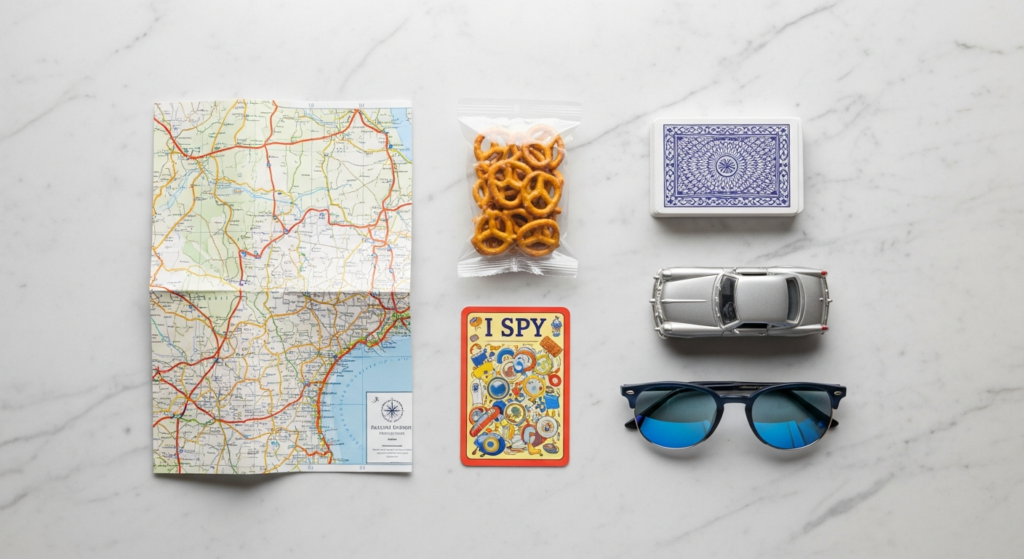
A perennial favorite, “I Spy” is perfect for all ages. One person secretly chooses an object visible inside or outside the car and says, “I spy with my little eye something that is [color/starts with letter].” The others take turns guessing. This game is excellent for developing observation skills and attention to detail.
- Practical Tip: For younger children, stick to colors. For older kids and adults, use initial letters or more descriptive clues. Emphasize taking turns and offering helpful hints if someone is struggling.
20 Questions
This classic deduction game involves one player thinking of a person, place, or thing, and the others asking up to 20 yes-or-no questions to guess it. It’s a great way to develop deductive reasoning and strategic questioning.
- Actionable Tip: Encourage players to ask broad categories first (“Is it living?” “Is it in the car?”) before narrowing down their guesses. It teaches logical reasoning and strategic questioning.
The License Plate Game
The goal is to spot license plates from as many different U.S. states or Canadian provinces as possible. Keep a running tally or mark them off on a printed map. This game helps with geography and observation skills.
- Real-world Example: In 2023, a family travelling from Seattle to Orlando managed to spot 32 unique state license plates, adding an exciting competitive element to their cross-country drive.
- Variation: Instead of states, try to find a license plate where the letters spell out a word or form an acronym. For example, “SUV” or “LOL.”
The Alphabet Game
Players must find letters of the alphabet in order (A, B, C, etc.) on road signs, billboards, license plates, or storefronts. The first person to spot a letter calls it out. This game enhances letter recognition and encourages active looking.
- Practical Tip: For fairness, specify that only the first instance of a letter counts, and once a letter is claimed, it’s off-limits for others. This encourages active looking.
Types of Creative & Storytelling Games to Spark Imagination
Long stretches of highway are ripe for imaginative play. Creative and storytelling activities don’t just pass the time; they build narrative skills, encourage verbal fluency, and create shared, often hilarious, narratives. These activities are particularly effective for engaging children who enjoy make-believe or those who love to spin a yarn. They transform the interior of your vehicle into a collaborative story studio, where everyone gets to be an author.
Story Chain/Build-a-Story
One person starts a story with a sentence (“Once upon a time, there was a purple platypus named Percy who loved to knit scarves.”), and each subsequent person adds a sentence or two, building upon the previous contribution. This game builds narrative skills and encourages verbal fluency.
- Actionable Tip: Set a timer for 30 seconds per person to keep the story moving, or assign a maximum of two sentences per turn to prevent one person from dominating. The results can be wonderfully absurd and unpredictable.
Fortunately/Unfortunately
This game creates a seesaw narrative. One person starts with a “Fortunately…” statement (“Fortunately, we packed plenty of snacks for the trip.”). The next person follows with an “Unfortunately…” statement that complicates the situation (“Unfortunately, the snacks were all marshmallows, which made everyone thirsty.”). The turns alternate. This game encourages creative problem-solving and quick thinking.
- Real-world Example: A family driving through the desert might create a story about finding a secret oasis (“Fortunately!”) but then realizing it’s filled with rubber ducks (“Unfortunately!”).
Word Association
The first person says a word, and the next person says a word that comes to mind in connection to the first word. The chain continues. For example: “Car” -> “Engine” -> “Oil” -> “Slick” -> “Hair” and so on. This game improves vocabulary and quick thinking.
- Practical Tip: To make it more challenging, prohibit repeating words within a round or set a rule that words must relate to the general theme of “travel” or “vacation.”
Two Truths and a Lie (Family Edition)
Each person shares three “facts” about themselves related to the trip, two of which are true, and one is a lie. The others guess which is the lie. This game fosters communication and helps family members learn new things about each other.
- Actionable Tip: Encourage players to be creative with their “lies” and “truths” to make it harder for others to guess. It’s a great way to learn new things about family members.
[INLINE IMAGE 2: Family playing ‘I Spy’ in a car on a road trip, enjoying family games and developing observation skills.]
How Do Observation & Scavenger Hunt Games Keep Kids Engaged?

One of the best ways to combat boredom on a road trip is to make the journey itself part of the game. Observation and scavenger hunt activities turn the passing scenery into an interactive playground. These activities encourage children (and adults!) to look beyond their windows, noticing details they might otherwise miss, and transforming ordinary landscapes into a treasure trove of discovery. These are particularly excellent for scenic drives or when passing through diverse environments, offering a fresh perspective on the world outside the car.
Road Trip Bingo
Before you leave, create or print out Bingo cards with squares depicting common sights on a road trip (e.g., “Red barn,” “Cow,” “Semi-truck,” “Police car,” “Someone waving,” “Speed limit sign”). Players mark off squares as they spot them, aiming for a Bingo. This game boosts observation and engagement with surroundings.
- Practical Tip: Laminate cards or use reusable markers/stickers to make them durable for multiple trips. You can even personalize cards based on your specific route (e.g., “Mountains” for a Western trip, “Beach” for a coastal drive).
Car Color Count
Assign each family member a specific car color (e.g., “Mom gets red cars, Dad gets blue, Sarah gets white, Tom gets black”). As you drive, each person counts how many cars of their assigned color they see. Set a target number or play for a certain amount of time. This simple game develops focus and counting skills.
- Actionable Tip: Periodically check in on scores and swap colors halfway through the trip to keep it fresh and fair. This simple game can surprisingly engross kids for long periods.
Billboard Battle
Players must find specific words or letters on billboards or road signs. For example, “Find a word with double ‘O’s,” “Find a word that starts with ‘Z’,” or “Find the name of a city.” This game improves reading comprehension and attention to detail.
- Real-world Example: On a recent family road trip through Texas, one child successfully found the word “Houston” on a sign, earning bragging rights for spotting a major city name.
The “Punch Buggy” (Slug Bug) Game
A classic where players gently “punch” a nearby passenger (with clear, agreed-upon gentle rules!) when they spot a Volkswagen Beetle, yelling “Punch Buggy [color]!” This game encourages quick observation.
- Practical Tip: Crucially, set very clear rules for gentle, light taps only, perhaps on the shoulder or arm, and clarify if only classic Beetles count or newer models too. Safety and comfort are paramount.
Musical & Audio Adventures: Sing-Alongs and Podcasts
Sound plays a powerful role in setting the mood and keeping spirits high on a long journey. Harnessing the power of music and audio offers a fantastic alternative to visual games, giving everyone a chance to rest their eyes while remaining fully engaged. Musical and audio-based entertainment can range from high-energy sing-alongs that boost morale to captivating storytelling that quiets the back seat with focused attention. These options are especially valuable when driving at night, through less scenic areas, or when some family members need a break from constant visual input.
Sing-Along Karaoke & Playlist Wars
Prepare playlists of family-friendly songs across various genres. Take turns being the “DJ,” leading sing-alongs, or even having “karaoke battles” where each person performs a song. This boosts morale and family bonding.
- Practical Tip: Create themed playlists: “80s Throwback,” “Disney Hits,” “Road Trip Anthems.” Let each family member contribute a few songs to ensure everyone’s taste is represented, fostering a sense of ownership over the entertainment.
Name That Tune
Play short snippets of songs, and the first person to correctly identify the song title and artist gets a point. This game sharpens listening skills and musical knowledge.
- Actionable Tip: To make it more challenging, play only instrumentals or obscure tracks. For younger kids, stick to well-known children’s songs. You can use streaming services to quickly jump between tracks.
Audiobooks & Podcasts for Kids
Immerse yourselves in a captivating story or an educational adventure. Many podcasts are specifically designed for children, covering science, history, mystery, and more in an engaging format. These promote listening comprehension and learning.
- Real-world Example: The “Wow in the World” podcast from NPR has been downloaded over 200 million times, captivating young listeners with scientific discoveries and making learning fun on countless road trips. Shows like “Brains On!” or “Story Pirates” are also excellent choices for varied age groups.
- Consideration: Download these in advance to avoid relying on spotty cellular data, especially on remote routes.
“Would You Rather?”
This classic conversational game is perfect for listening. Pose fun, thought-provoking dilemmas (“Would you rather have a pet dragon or a pet unicorn?”). Everyone takes turns answering and explaining their reasoning. This stimulates critical thinking and discussion.
- Practical Tip: Keep questions light and silly to maintain a fun atmosphere. It’s a great way to spark discussions and learn more about each other’s preferences and logic.
[INLINE IMAGE 4: Children listening to an audiobook during a long car journey, engaged with audio adventures and fostering listening comprehension.]
Types of Low-Tech & Prep-Ahead Powerhouses for Hands-On Fun

While spontaneous games are wonderful, sometimes a little pre-planning can elevate the travel experience significantly. Low-tech and prep-ahead activities provide hands-on engagement without relying on screens, offering a different kind of focus and creativity. These activities are particularly beneficial for children who thrive on tactile engagement or enjoy having their own designated “work” during travel. Preparing a small “activity kit” for each child can make these games even more accessible and exciting. For more ideas on what to bring, check out our packing tips.
Travel Journaling/Drawing Kit
Provide each child with a small notebook, pencils, crayons, or colored pencils. Encourage them to draw what they see out the window, write about their day’s adventures, or create stories inspired by the passing scenery. This encourages creativity, observation, and self-expression.
- Actionable Tip: Include a few drawing prompts or “I Spy” themed drawing challenges (e.g., “Draw the funniest thing you see on a billboard,” “Draw your ideal vacation rental”).
Origami or Pipe Cleaner Creations
Pack a supply of origami paper or colorful pipe cleaners. There are countless simple designs children can follow with a printed guide or by memory. These activities develop fine motor skills and creativity.
- Practical Tip: Pre-print simple origami instructions for animals or shapes. Pipe cleaners are excellent for creating characters, glasses, or abstract art, and they are mess-free.
DIY Mad Libs
Print out or create your own Mad Libs templates. These hilarious fill-in-the-blank stories ask players to provide nouns, verbs, adjectives, etc., without knowing the context, leading to silly outcomes when read aloud. This improves grammar and humor.
- Real-world Example: A family created a Mad Libs story about their dog’s adventure at a vacation rental, resulting in the dog “sprinting enthusiastically around the wobbly kitchen” – much to everyone’s amusement.
Magnetic Travel Games
Small, magnetic versions of classic board games like checkers, chess, Bingo, or Hangman are fantastic for car travel because pieces stay put. These foster strategic thinking and problem-solving skills.
- Consideration: Purchase these well in advance and test them out to ensure they’re robust and engaging enough for car play. Many come in compact cases, perfect for a lap or tray table.
When Should You Leverage Digital Entertainment on the Road?
While screen time should be balanced, technology can be a powerful ally in keeping everyone entertained and engaged on long drives. When used judiciously, digital entertainment can offer educational value, collaborative play, or a much-needed period of quiet, individual entertainment. The key is moderation and choosing content that aligns with your family’s values and travel goals. Think beyond mindless tapping and select apps or games that encourage critical thinking, problem-solving, or creative expression.
Educational Apps & Interactive Learning Games
Many apps offer quizzes, puzzles, and interactive stories that teach history, science, math, or language skills in an entertaining way. These promote learning and critical thinking.
- Actionable Tip: Look for apps like Stack the States (geography), Toca Life series (imaginative play), or well-regarded puzzle games that challenge the mind. Download content offline before you leave to save data and avoid dead zones.
Interactive Story Games & Audio Adventures with Visuals
Some apps combine storytelling with decision-making elements, allowing children to influence the narrative. Others enhance audiobooks with subtle animations or images. These enhance decision-making and narrative engagement.
- Real-world Example: Apps like StoryBots or those based on popular children’s book series can offer hours of guided, interactive fun, keeping younger passengers captivated.
Digital Scavenger Hunts (e.g., Geocaching on the go)
For families with smartphones and a penchant for exploration, geocaching apps can turn stops along your route into treasure hunts. While not strictly “in-car,” planning these stops adds excitement to the journey. This encourages exploration and problem-solving.
- Practical Tip: Identify caches near rest stops or scenic viewpoints in advance. This turns a simple break into an active adventure and a great way to stretch legs.
Collaborative Gaming on Shared Devices
For families with tablets, consider multiplayer games that can be played on a single device, encouraging teamwork or friendly competition between siblings. This builds teamwork and friendly competition.
- Consideration: Ensure these games are suitable for split-screen or pass-and-play formats. Headphones for individual play can also be a sanity saver for parents, allowing children to enjoy their chosen entertainment without disturbing others.
Tips for Maximizing Travel Game Success
Successfully integrating travel activities into your plans goes beyond just knowing the rules of a game. A little strategy and flexibility can make all the difference, ensuring that these activities enhance rather than detract from your journey. Here are some actionable tips to help you get the most out of your car entertainment:
Age-Appropriate Choices
Tailor games to the youngest passenger who will participate. A mix of games that engage different age groups (e.g., “I Spy” for toddlers, “20 Questions” for older kids) is ideal. Don’t be afraid to modify rules to simplify or challenge.
Mix it Up
Variety is the spice of life, especially on long drives. Alternate between quiet observation games, energetic sing-alongs, creative storytelling, and individual quiet time. This prevents burnout and keeps interest levels high. Try to schedule “game time” blocks.
Flexibility is Key
Not every game will be a hit every time. If a game isn’t landing, move on. Don’t force it. The goal is enjoyment, not strict adherence to a pre-planned schedule. Be prepared to pivot to a new activity or simply enjoy a period of quiet reflection.
Prizes or Incentives (Optional)
For some families, small, non-food prizes (like stickers, a choice of the next song, or extra screen time) can add an element of excitement to competitive games. However, participation and fun should always be the primary reward.
Driver Participation (Safely)
Encourage the driver to participate in verbal games when safe to do so. Their engagement can significantly boost the family’s enthusiasm. However, as highlighted by travel safety organizations like the National Highway Traffic Safety Administration (NHTSA), the driver’s primary focus must always remain on the road.
Plan for Breaks
Regular stops to stretch legs, grab a meal, or explore a roadside attraction are crucial. These breaks rejuvenate everyone and provide a natural reset for resuming games and activities.
Pack a “Game Bag”
Keep a designated bag or small box filled with all your game essentials: Bingo cards, pens, notebooks, small travel games, charging cables, and headphones. Easy access means less fuss when boredom strikes. For more comprehensive preparation, consult our family travel guide.
How Do Car Activities Enhance the Vacation Rental Experience?
The benefits of keeping your crew entertained don’t stop when you finally pull into the driveway. In fact, transitioning from a long, confined drive to arriving at your destination can sometimes be chaotic. Utilizing specific activities for the drive to your rental helps build anticipation for the stay. You can customize games to match your destination—for instance, playing “Beach Bingo” if you’re heading to a coastal property, or “Cabin I Spy” for a mountain retreat.
Once you arrive, having a few low-prep activities ready is a lifesaver. While parents are busy unloading the car, speaking with the host, or doing an initial walkthrough of the property, kids can continue their travel journaling or embark on a new scavenger hunt (e.g., “Find three things in the rental that are blue” or “Locate the board game cabinet”). Keeping kids busy on arrival day before exploring the rental ensures a smooth, stress-free start to your holiday. Furthermore, many of these activities easily transition to quiet evening entertainment after a long day of hiking, surfing, or exploring the local area.
Frequently Asked Questions About Family Travel Entertainment
Planning the perfect itinerary involves anticipating the needs of your passengers. Here are answers to some common questions about keeping everyone happy on the road. For more insights, discover even more travel tips on Vacation Rental Planners.
What are the best road trip games for families with a wide age range?
Games like “I Spy,” “The License Plate Game,” and “20 Questions” are excellent for mixed age groups as they can be easily adapted for younger children (e.g., using colors for “I Spy”) while still engaging older kids and adults. Audiobooks and family-friendly podcasts also cater to diverse ages.
How can I keep kids entertained on a long road trip without relying solely on screens?
Focus on no-prep verbal games like “Story Chain,” “Fortunately/Unfortunately,” and “Would You Rather.” Bring low-tech options such as travel journals, drawing supplies, magnetic games, or DIY Mad Libs. Incorporate musical activities like sing-alongs and audiobooks to give eyes a break.
Are there any educational road trip games for families?
Absolutely! The “Alphabet Game” and “License Plate Game” teach geography and letter recognition. “20 Questions” develops logical reasoning. Many excellent children’s podcasts (e.g., “Wow in the World”) cover science and history, while educational apps offer interactive learning across various subjects.
What’s a good strategy for introducing new travel games to kids?
Start with a clear, simple explanation of the rules, perhaps doing a quick demonstration round. Introduce one new game at a time and see how it goes. Have a variety of game types ready, and don’t force a game if it’s not catching on. Flexibility is key to keeping the mood light and fun.
How can I keep the driver involved safely?
The driver can safely participate in verbal games that don’t require visual attention or looking away from the road, such as “20 Questions,” “Story Chain,” “Word Association,” or “Would You Rather?” Avoid games that require the driver to spot specific objects or write things down. Their primary focus must always remain on driving safely.
Sources & References
- National Association for the Education of Young Children (NAEYC). “The Value of Play in Early Childhood Development.”
- National Highway Traffic Safety Administration (NHTSA). “Distracted Driving Guidelines and Safety Tips.”
- American Academy of Pediatrics (AAP). “Media and Children Communication Toolkit.”
Reviewed by Dr. Anya Sharma, Senior Hospitality & Tourism Analyst — Last reviewed: May 02, 2026