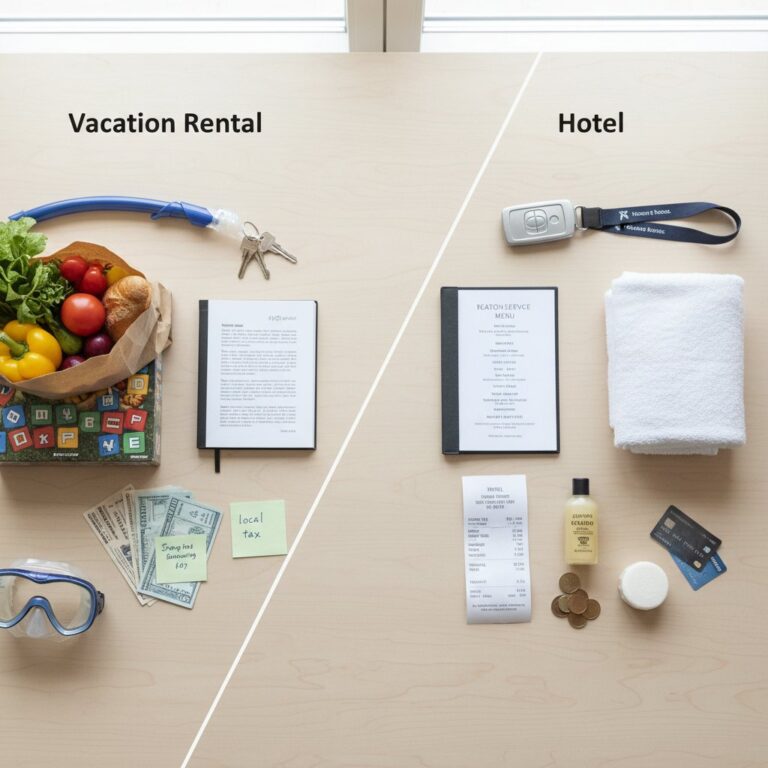


Mastering Your Vacation Rental Taxes: A Comprehensive Guide to Schedule E Reporting and Smart Strategies
From distinguishing between personal and rental use to unlocking powerful deductions and maintaining impeccable records, we’ll walk you through every critical step. We’ll delve into the nuances of federal tax law, offer advice on state and local considerations, and highlight how smart planning can significantly impact your bottom line. Get ready to transform tax season from a dreaded chore into an opportunity for strategic financial optimization!
Understanding Your Vacation Rental’s Tax Identity: Personal Use vs. Rental Property
Before you even begin to think about Schedule E, it’s paramount to correctly classify your vacation rental property for tax purposes. The IRS has specific rules that dictate how you report income and expenses, largely depending on how much personal use you have of the property versus how much it’s rented out. Misclassifying your property can lead to missed deductions or, worse, penalties.
The 14-Day Rule and Its Implications
The most critical threshold to understand is the “14-day rule” (or 10% of total rental days, whichever is greater). This rule determines whether your property is considered a personal residence with some rental income, or a true rental property:
- Rented for less than 15 days during the year: If you rent out your property for fewer than 15 days in a tax year, the income you earn is generally not taxable. This is a fantastic perk for occasional renters! However, you also cannot deduct any rental expenses (though you can still deduct mortgage interest and property taxes as itemized deductions if you qualify for them on your personal return).
- Rented for 15 days or more, with significant personal use: If you rent out the property for 15 days or more AND use it for personal purposes for more than 14 days or 10% of the total days rented at fair rental value (whichever is greater), the property is considered a “residence used for rental.” In this scenario, you must report all rental income, but your deductible rental expenses are limited to the amount of rental income. You cannot claim a rental loss. Personal use days include days used by you, family members (even if they pay fair market rent), or anyone paying less than fair market rent.
- Rented for 15 days or more, with minimal personal use: If you rent the property for 15 days or more and your personal use is 14 days or less (or 10% of total rental days, whichever is less), the property is generally treated as a “rental property.” This is the ideal scenario for maximizing deductions, as you can typically deduct all ordinary and necessary expenses, even if they result in a net loss (subject to passive activity loss rules, which we’ll discuss later).
The Heart of Vacation Rental Taxes: Diving Deep into Schedule E

For most vacation rental owners, Schedule E, Supplemental Income and Loss, is where your property’s financial story unfolds for the IRS. This form is specifically designed for reporting income and expenses from rental real estate, royalties, partnerships, S corporations, estates, and trusts. For your vacation rental, it’s the primary document to summarize your rental activity.
Who Files Schedule E?
If you rent out your vacation property for 15 days or more during the tax year and it’s not considered solely personal use (as per the 14-day rule explained above), you will typically need to file Schedule E. This applies whether you’re renting through platforms like Airbnb, Vrbo, or directly to guests.
What Information Does Schedule E Require?
Schedule E, Part I, is dedicated to income and expenses from rental real estate. You’ll need to provide:
- Property Information: Address, type of property (e.g., single-family, condo, multi-family).
- Income Details: Total rental income received (before any deductions). This includes rent, cleaning fees, pet fees, and any other charges to guests.
- Expense Breakdown: A detailed list of all deductible expenses, categorized by type (e.g., advertising, cleaning, insurance, repairs, utilities, interest, taxes, depreciation).
- Depreciation: One of the most significant deductions, requiring careful calculation based on the property’s cost basis and useful life.
- Net Income or Loss: The form calculates your net rental income or loss after subtracting all eligible expenses from your gross rental income.
Practical Insight: Many vacation rental owners underestimate the power of depreciation. While it’s a non-cash expense, it can significantly reduce your taxable income. For instance, a property purchased for $500,000 (with $100,000 allocated to land, which is not depreciable) could yield annual depreciation deductions of over $14,000 for 27.5 years. Don’t leave this money on the table!
Unlocking Deductions: Maximizing Your Write-Offs and Reducing Taxable Income
This is where smart tax planning truly shines! The IRS allows vacation rental owners to deduct “ordinary and necessary” expenses related to their rental activity. Understanding and meticulously tracking these can dramatically reduce your taxable income. Here’s a comprehensive list of common deductions:
Key Deductible Expenses:
- Advertising: Listing fees for platforms like Airbnb, Vrbo, travel agency commissions, website hosting, social media ads.
- Cleaning and Maintenance: Costs for professional cleaning services between guests, supplies, and general upkeep.
- Commissions: Fees paid to property managers or booking agents.
- Insurance: Premiums for liability, property, and flood insurance specific to your rental.
- Interest: Mortgage interest paid on the loan used to purchase or improve the rental property.
- Legal and Professional Fees: Costs for attorneys, accountants, tax preparers, or real estate advisors related to your rental business.
- Management Fees: If you hire a property management company, their fees are fully deductible.
- Repairs: Costs to keep the property in good operating condition (e.g., fixing a leaky faucet, patching a wall, replacing a broken appliance). Note: Improvements (which add value or extend life) are capitalized and depreciated, not immediately expensed.
- Supplies: Toiletries, linens, kitchen essentials, welcome baskets, and other consumables provided for guests.
- Taxes: Real estate property taxes, state and local lodging taxes (if you pay them directly), and any other business-related taxes.
- Travel Expenses: Reasonable and necessary travel costs if you travel to your rental property to manage it, perform repairs, or meet with service providers. Keep detailed logs!
- Utilities: Electricity, gas, water, internet, trash removal, and cable TV provided for guests.
- Depreciation: The systematic expensing of the cost of the property (excluding land) and qualifying improvements over their useful life. This is a powerful non-cash deduction.
- Home Office Deduction: If you have a dedicated space in your primary residence used exclusively and regularly for your vacation rental business (e.g., managing bookings, finances), you might qualify.
Comparison of Rental Scenarios and Tax Implications
To illustrate how different operational models affect your tax deductions and overall financial picture, consider this comparison table:
| Feature/Scenario | Owner-Managed (High Involvement) | Professionally Managed (Low Involvement) | Hybrid Model (Partial Management) |
|---|---|---|---|
| Direct Expenses (e.g., cleaning, supplies) | Owner tracks and deducts individually. | Often included in management fee or billed separately by manager. | Shared responsibility; owner tracks some, manager tracks others. |
| Management Fees | N/A (owner performs management). | Fully deductible as a business expense. | Deductible for services rendered by the manager. |
| Personal Use Days | Higher potential for personal use, impacting deduction limits. | Typically lower personal use, easier to qualify as pure rental. | Varies based on owner’s agreement; careful tracking needed. |
| Travel Expenses to Property | Likely higher, more frequent deductible trips. | Lower, fewer trips needed. | Moderate, depending on owner involvement. |
| Time & Material Participation | Higher likelihood of meeting material participation thresholds. | Lower likelihood, often considered passive income. | Varies, could be active or passive depending on hours. |
| Record Keeping Burden | High, owner responsible for all receipts and logs. | Lower, manager provides consolidated statements. | Moderate, requires coordination between owner and manager. |
| Potential for Rental Loss Deduction | Higher, especially if material participation met. | Limited by passive activity rules unless other passive income exists. | Depends on material participation. |
Statistic: A survey by Hostfully revealed that properties managed by professional property managers often see higher occupancy rates (up to 20% higher) and better reviews, which can indirectly lead to higher gross income, offsetting management fees and providing more income against which to deduct expenses.
Navigating the Nuances: Passive vs. Active Income and Material Participation

The distinction between passive and active income is critical for vacation rental owners, especially if your property generates a loss. The IRS has rules that limit your ability to deduct “passive losses” against “non-passive income” (like your salary or business profits).
What is Passive Activity?
Generally, rental activities are considered passive activities, regardless of whether you materially participate. However, there’s a significant exception for real estate professionals and certain short-term rental activities.
The Short-Term Rental Exception
If the average period of customer use for your rental property is seven days or less, the activity is generally not considered a rental activity for passive activity purposes. This means it can be treated as an “active trade or business” if you “materially participate” in it.
Material Participation Tests
You materially participate if you meet any of the following seven tests. For vacation rentals, the most common tests are:
- You participate in the activity for more than 500 hours during the tax year.
- Your participation is substantially all the participation in the activity of all individuals (including non-owners) for the tax year.
- You participate in the activity for more than 100 hours during the tax year, and you participate at least as much as any other individual (including non-owners).
If you materially participate in your short-term rental activity, any losses generated can potentially be deducted against your other non-passive income, which can be a huge tax advantage. This typically requires significant hands-on involvement – managing bookings, cleaning, maintenance, marketing, guest communication, etc.
Expert Advice: Keep meticulous records of your time spent on rental activities if you intend to claim material participation. A daily log or detailed calendar entries noting hours spent on specific tasks can be invaluable in case of an IRS inquiry. Many vacation rental owners underestimate the time commitment required to meet these thresholds.
Special Tax Considerations: Sales Tax, Local Lodging Taxes, and State Specific Rules
Federal income tax is only part of the equation. Vacation rental owners must also contend with a patchwork of state and local taxes that can vary dramatically by jurisdiction.
Sales Tax and Lodging Tax (Occupancy Tax)
Many states, counties, and cities impose sales tax, transient occupancy tax (TOT), hotel tax, or lodging tax on short-term rentals. These taxes are typically collected from the guest and then remitted to the appropriate tax authority.
- Collection Responsibility: While major platforms like Airbnb and Vrbo often collect and remit these taxes on your behalf in many jurisdictions, it’s crucial to verify their coverage for your specific location.
- Owner Responsibility: If the platform doesn’t collect for your area, or if you rent directly to guests, the responsibility falls squarely on you to register with local authorities, collect the taxes from guests, and remit them on time.
- Rates and Rules: Rates can range from a few percent to over 15-20% when combining state, county, and city taxes. Rules also vary regarding exemptions (e.g., for longer stays) and reporting frequency (monthly, quarterly, annually).
State Income Tax
Beyond federal income tax, most states also have their own income tax. Your rental income will likely be subject to state income tax in the state where the property is located, even if you reside in a different state. Some states (like Florida, Texas, Nevada) have no state income tax, offering an advantage to owners there.
Business Licenses and Permits
Many localities require vacation rental owners to obtain specific business licenses, permits, or registrations before operating. These often come with fees and compliance requirements (e.g., safety inspections, insurance minimums). Failure to comply can result in fines or even the inability to operate legally.
Practical Tip: Before launching your rental, research your specific city, county, and state regulations thoroughly. Websites for local government and tourism boards are good starting points. Consider consulting with a local real estate attorney or tax professional who specializes in vacation rentals to ensure full compliance. The National Conference of State Legislatures (NCSL) regularly tracks short-term rental legislation, highlighting the dynamic nature of these regulations.
Record-Keeping Excellence: Your Best Defense Against Audits
Meticulous record-keeping is not just a good practice; it’s your absolute best defense in the event of an IRS audit. Without proper documentation, even legitimate deductions can be disallowed.
What Records Should You Keep?
- Income Records:
- Bank statements showing deposits from rental income.
- Statements from booking platforms (Airbnb, Vrbo, etc.) detailing gross income, fees, and taxes collected.
- Direct booking invoices and payment confirmations.
- Expense Records:
- Receipts for all purchases (cleaning supplies, repairs, furniture, etc.).
- Invoices from contractors and service providers (cleaners, handymen, property managers).
- Utility bills, insurance statements, property tax bills.
- Mileage logs for business-related travel to and from the property.
- Bank and credit card statements dedicated to your rental business.
- Property Records:
- Purchase documents for the property.
- Records of significant improvements (capital expenditures).
- Depreciation schedules.
- Closing statements for purchase and sales.
- Usage Logs:
- Detailed calendars showing every day the property was rented, used personally, or vacant. This is critical for the 14-day rule and material participation.
- Communication:
- Emails and contracts with property managers, cleaning services, or other vendors.
How Long to Keep Records?
Generally, you should keep records for at least three years from the date you filed your original return or two years from the date you paid the tax, whichever is later. However, for certain items like property purchase documents or records related to depreciation, it’s wise to keep them for as long as you own the property plus several years after you sell it.
Leveraging Technology and Professional Help for Seamless Tax Season
The complexity of vacation rental taxes can be daunting, but you don’t have to navigate it alone. Technology and professional expertise can be invaluable allies.
Property Management Software (PMS)
Many modern PMS solutions (e.g., Guesty, Hostfully, Lodgify) offer robust financial reporting features. They can:
- Centralize income from various booking channels.
- Track expenses, often allowing for receipt uploads.
- Generate detailed financial reports that can be easily handed over to your tax preparer.
- Provide occupancy calendars crucial for personal use tracking.
Accounting Software
Dedicated accounting software (e.g., QuickBooks, Xero, FreshBooks) allows you to:
- Link bank accounts and credit cards for automatic transaction importing.
- Categorize income and expenses according to Schedule E lines.
- Generate profit and loss statements.
- Streamline year-end tax preparation.
Professional Tax Preparers and CPAs
For many vacation rental owners, especially those with multiple properties, significant rental income, or complex situations (like material participation claims), a qualified tax professional is indispensable. They can:
- Ensure compliance with all federal, state, and local tax laws.
- Identify all eligible deductions, including often-missed ones like depreciation or home office deductions.
- Advise on the passive vs. active income rules and strategies for maximizing loss deductions.
- Help with strategic planning to minimize future tax liabilities.
- Represent you in case of an audit.
Expert Insight: Don’t wait until April 14th to engage a tax professional. Proactive planning throughout the year can yield significantly better results. A good CPA specializing in real estate can provide guidance on everything from entity structure (e.g., LLC vs. sole proprietorship) to capital expenditure planning, ensuring your tax strategy aligns with your long-term business goals. A recent study by the National Society of Accountants found that small businesses that use a professional tax preparer save an average of 15% on their tax bill compared to those who self-prepare.
Strategic Planning for Future Growth: Tax Implications of Expansion and Property Improvements
As your vacation rental business grows, so do the complexities and opportunities within your tax strategy. Thinking ahead can save you considerable money and effort.
Capital Improvements vs. Repairs
Understanding the difference between a repair and a capital improvement is vital. A repair keeps the property in good operating condition and is generally deductible in the year incurred. A capital improvement, however, adds value, prolongs the useful life, or adapts the property to a new use. Capital improvements must be “capitalized” and depreciated over their useful life, rather than expensed immediately.
- Repairs Examples: Fixing a broken window, painting a room, replacing a leaky faucet.
- Improvements Examples: Adding a new deck, renovating a bathroom, replacing the entire roof, installing a new HVAC system.
Strategic Tip: Plan larger projects carefully. Sometimes, a series of smaller repairs can be treated differently than a major renovation. Consult your tax professional before undertaking significant projects to understand the tax implications.
Expanding Your Portfolio
If you’re considering purchasing additional vacation rental properties, your tax strategy will evolve. You might need to consider:
- Entity Structure: Should you operate as a sole proprietorship, an LLC, or even an S-Corp? Each has different tax and liability implications. An LLC, for instance, can offer liability protection and may simplify certain tax aspects, though it adds administrative overhead.
- Financing: The interest on loans for additional properties is also deductible, but understanding the debt-to-income ratios and how rental income impacts future loan qualifications is crucial.
- Depreciation Schedules: Each new property will come with its own depreciation schedule, adding to the complexity but also to your deductions.
Cost Segregation Studies
For properties with a higher purchase price, a cost segregation study can be a powerful tool. This engineering-based study identifies components of your property that can be depreciated over shorter periods (5, 7, or 15 years) instead of the standard 27.5 years for residential real estate. This accelerates depreciation deductions, leading to significant tax savings in the early years of ownership.
Expert Advice: While an upfront investment, a cost segregation study can provide substantial tax benefits, especially for properties over $500,000. For example, a $1 million property might identify $200,000 in components eligible for accelerated depreciation, resulting in tens of thousands of dollars in additional deductions in the first few years. This strategy is frequently employed by experienced real estate investors to optimize cash flow and reduce tax liability.
Key Takeaways
- Understand the 14-Day Rule: Your personal use days directly impact how your rental income and expenses are treated for tax purposes, determining if you can deduct losses or if income is even taxable.
- Master Schedule E: This is your primary form for reporting rental income and expenses. Meticulously track all revenue and deductible costs, including often-overlooked items like depreciation.
- Maximize Deductions: From advertising and cleaning to mortgage interest and property taxes, every legitimate expense reduces your taxable income. Don’t leave money on the table!
- Track Time for Material Participation: For short-term rentals (average stay 7 days or less), actively participating can reclassify losses from passive to active, allowing them to offset other income. Document your hours diligently.
- Embrace Technology & Professionals: Utilize property management software for tracking and consider a qualified CPA specializing in real estate to navigate complexities, ensure compliance, and optimize your tax strategy.
Frequently Asked Questions
Q: What if I rent out a room in my primary residence? Do I still file Schedule E?
A: Yes, if you rent out a portion of your primary residence (like a spare bedroom) for 15 days or more, you generally still report the income and expenses on Schedule E. You’ll need to allocate expenses between personal and rental use based on square footage or the number of rooms used for each purpose. The 14-day rule still applies; if you rent for less than 15 days, the income is not taxable, and expenses are not deductible.
Q: Can I deduct the cost of furniture and appliances for my vacation rental?
A: Yes, you can deduct the cost of furniture, appliances, and other personal property used in your vacation rental. However, these items are typically considered “personal property” and are depreciated over a shorter useful life, usually 5 or 7 years, rather than immediately expensed. For example, a new refrigerator might be depreciated over 5 years. Keep detailed records of purchase dates and costs.
Q: What is the difference between a “repair” and an “improvement” for tax purposes?
A: A “repair” maintains the property in good operating condition and is generally deductible in the year it occurs (e.g., fixing a broken window). An “improvement” adds value, prolongs the property’s useful life, or adapts it to a new use (e.g., adding a new bathroom, replacing an entire roof). Improvements are capitalized and depreciated over many years, not fully deducted in one year. This distinction is crucial for accurate tax reporting.
Q: How do I handle state and local lodging taxes if Airbnb or Vrbo collects them?
A: If a platform like Airbnb or Vrbo collects and remits lodging taxes on your behalf, you typically do not need to do anything further for those specific taxes. However, it is essential to verify that the platform indeed collects for your specific jurisdiction. Always check your booking platform’s tax documentation and your local government’s requirements. If you have direct bookings or the platform doesn’t cover your area, you are responsible for collection and remittance.
Q: Is my vacation rental considered a “business” by the IRS, and does that change anything?
A: For tax purposes, your vacation rental activity can be classified as either a “rental activity” (generally passive) or, in certain short-term rental scenarios, an “active trade or business” (if you materially participate). If it’s an active trade or business, you may be able to deduct losses against other non-passive income, and it might be subject to self-employment taxes (though this is less common for typical vacation rentals unless significant services are provided). Most vacation rentals fall under “rental activity,” but the “short-term rental exception” allows for active treatment if material participation rules are met.
Navigating the world of vacation rental tax reporting, especially with Schedule E, can seem like a complex puzzle. However, with the right knowledge, meticulous record-keeping, and strategic planning, you can transform this annual obligation into a powerful tool for financial optimization. By understanding the nuances of personal use, maximizing your deductions, and leveraging professional expertise, you not only ensure compliance but also significantly enhance the profitability and long-term success of your vacation rental venture. Embrace these strategies, and approach tax season with confidence, knowing you’re building a resilient and financially savvy business.
By Sarah Jenkins, Senior Editor at VacationRentalPlanners.com