

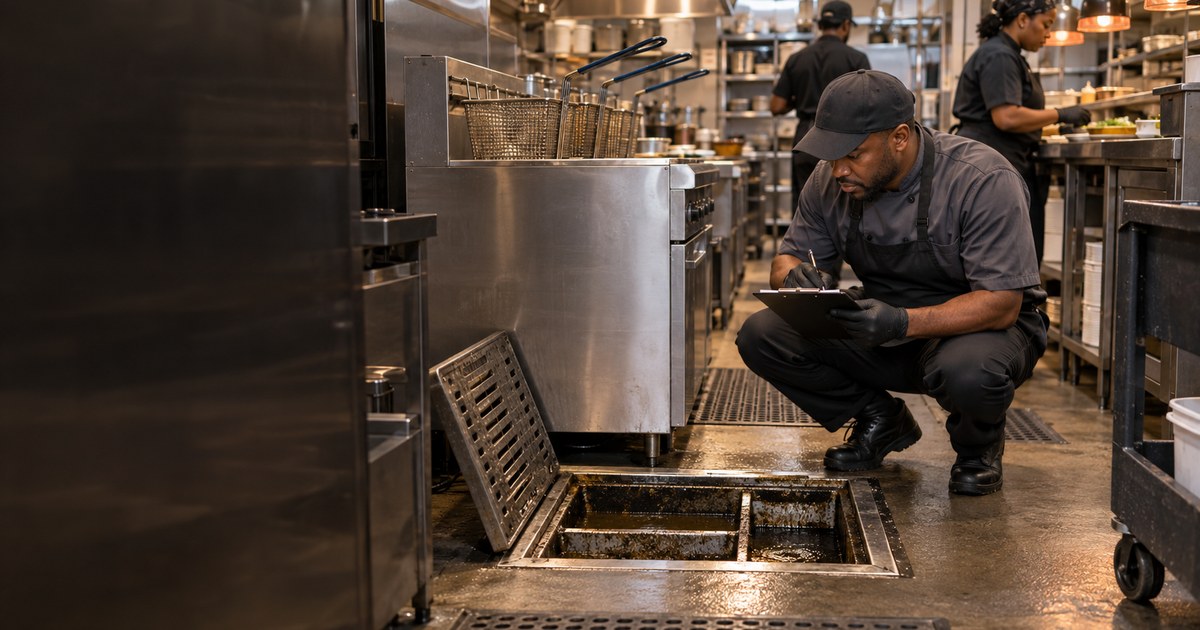
A commercial kitchen rarely has just one grease problem. Grease rises into the hood and exhaust system, collects on filters and rooftop components, enters grease traps, settles behind equipment, and accumulates as used cooking oil awaiting pickup. Treating each area as an unrelated maintenance task can create scheduling gaps, duplicated service visits, and unnecessary downtime.
For Atlanta restaurant owners and facility managers, coordinating these services can make maintenance easier to manage. The goal is not simply to keep surfaces looking clean. It is to control grease wherever it can affect fire safety, sanitation, drainage, equipment performance, and daily operations.
Hood Cleaning Is Only One Part of the System
Commercial hood cleaning removes grease deposits from the kitchen exhaust system, including accessible portions of the hood, filters, ductwork, and exhaust fan. These areas collect grease-laden vapors produced by fryers, grills, ranges, and other cooking equipment.
The National Fire Protection Association’s NFPA 96 standard addresses ventilation control and fire protection for commercial cooking operations, including grease-removal devices, exhaust ducts, and system cleaning. Depending on the equipment and level of buildup, cleaning methods may include scraping, chemical cleaning, pressure washing, or steam cleaning.
A hood may look clean from the cooking line while grease remains farther inside the ductwork or around rooftop exhaust components. Restaurant operators should ask which parts of the system are included, how difficult-to-reach areas are evaluated, and whether the completed work is documented.
Cleaning frequency should reflect the kitchen’s cooking methods and volume. A high-output restaurant using deep fryers or charbroilers may accumulate grease faster than a lower-volume operation. Managers should monitor buildup and follow the requirements that apply to their equipment, insurer, property, and local jurisdiction.
Coordinating Related Services Reduces Maintenance Gaps
The exhaust system is not the only place where restaurant grease causes problems. Grease traps require service before accumulated fats, oils, grease, and solids interfere with drainage. Used cooking oil containers need dependable collection before they overflow. Filters require regular cleaning or exchange, while floors, walls, equipment sides, and hard-to-reach areas still need periodic deep cleaning.
When several vendors handle these tasks independently, managers must maintain multiple schedules, invoices, access arrangements, and service records. One missed appointment can leave an important part of the kitchen’s maintenance plan unaddressed. A grease trap problem, for example, may create odors or drainage issues even when the hood was recently cleaned.
Bundling compatible services can reduce separate appointments and help managers build a more consistent maintenance calendar. Companies such as Premier Grease provide hood cleaning alongside grease trap cleaning, used cooking oil collection, filter exchange, restaurant deep cleaning, and rooftop cleaning for food-service businesses throughout the Atlanta area.
The main advantage is coordination. A restaurant can review several grease-related needs together, identify overlapping service intervals, and reduce the administrative time spent managing different contractors. Not every service must occur at the same frequency, but each can be managed as part of one broader plan.
Used Cooking Oil and Rooftop Areas Matter
Used cooking oil should be stored and collected in a way that minimizes spills and keeps service areas orderly. The U.S. Environmental Protection Agency explains that waste cooking oil can be used as a feedstock for biodiesel and other industrial applications, giving restaurants another reason to maintain an organized collection and recycling process.
Rooftop areas also deserve attention because exhaust fans discharge above the kitchen. Grease can collect around fan housings, curbs, roof surfaces, and nearby components. This residue may attract dirt, create odors, and complicate future roof maintenance. Coordinating rooftop cleaning with exhaust-system service helps operators follow the complete path grease takes instead of focusing only on visible kitchen surfaces.
Atlanta restaurants should also arrange service around deliveries, preparation periods, closing times, and neighboring businesses. Clear communication about equipment shutdowns, service access, cleanup procedures, and reopening times helps prevent maintenance from disrupting normal operations.
Build the Plan Around the Kitchen
A practical grease-management plan begins with an inventory of the restaurant’s grease-producing equipment and every area affected by it. Managers can document hood and duct cleaning, filter service, grease trap pumping, used cooking oil pickup, deep cleaning, and rooftop maintenance separately while coordinating everything through one calendar.
This approach makes missed services easier to identify and allows schedules to change as cooking volume increases or decreases. More importantly, it treats grease management as an ongoing operating system rather than a series of emergency cleanups. For busy Atlanta kitchens, that shift can reduce administrative work, limit service interruptions, and support a cleaner, safer, and more predictable working environment.