

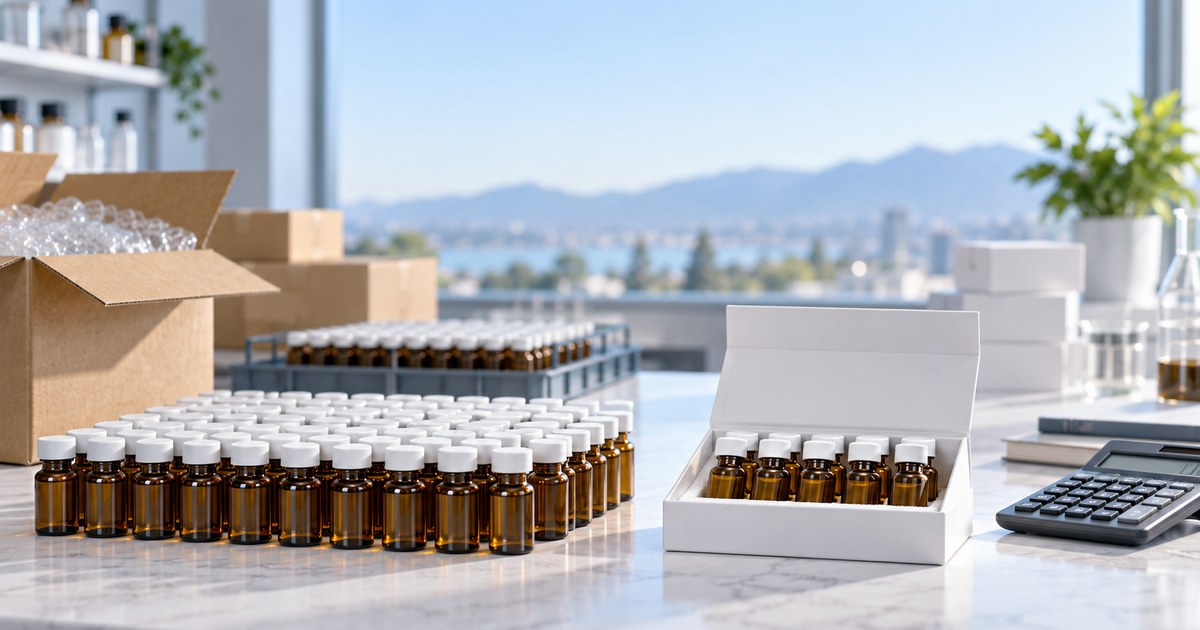
BPC-157 is sold both by the vial and by the case, and the price gap raises an obvious question for any lab: why pay retail? The answer depends entirely on whether the work will actually consume the quantity that wholesale pricing requires. Here is how Wholesale BPC-157 compares with buying retail, and where the cheaper unit price stops being cheaper. This is a research compound for laboratory use, not a clinical product.
What Changes With Volume
Wholesale pricing exists because one large order costs a supplier less to process than many small ones. The discount is real, and on paper it looks compelling. What the unit price hides is everything else the lab takes on: paying up front, storing the material correctly, and using it before it degrades. A low price on vials that expire in a freezer is not a saving.
So the first number to run is not the discount. It is how much the planned experiments will genuinely consume within the material's shelf life. If that quantity clears the wholesale minimum, the math works. If it does not, retail costs less in practice.
Storage Is the Catch
Peptides are perishable in a way ordinary inventory is not. BPC-157 needs to stay cold and dry, protected from light, and it has a limited life once reconstituted. Buying months of stock means having verified refrigeration with enough space and temperature monitoring, not a corner of a shared fridge that gets opened constantly.
Factor the cost of that storage and the risk of loss into the price comparison. A wholesale order that requires equipment the lab does not own, or that exposes a whole study's material to a single power failure, carries a cost the price list never shows.
Quality Matters More at Volume
A bad vial ruins one experiment. A bad case ruins a quarter's work. Before buying quantity from anyone, confirm the supplier provides a certificate of analysis for the specific batch, with identity and purity testing, and that lot numbers on the vials match the paperwork. This matters doubly for wholesale because the lab is committing money before it has tested the result.
Ask what happens with a batch that fails the lab's own checks. A supplier with a clear replacement policy is pricing honestly. One without a policy is where the apparent discount comes from.
Who Wholesale Actually Suits
- Labs running ongoing studies that can forecast consumption over the shelf life.
- Core facilities supplying several research groups from one stock, with proper cold storage already in place.
- Groups whose protocols are stable enough that a protocol change will not leave a case unused.
For a single short study, the wholesale tier usually means overbuying. Retail costs more per vial and far less overall, and it lets the lab switch suppliers if quality disappoints without being stuck with a case.
The Retail Side
Buying retail means small quantities, higher unit prices and much less risk. The lab can check one vial's documentation before ordering more, nobody is managing inventory, and a disappointing order costs one vial instead of thirty. The premium pays for flexibility.
Watch what retail should still include. A legitimate seller provides the same batch testing as a wholesaler, states the quantity and form clearly, and ships cold when the compound requires it. A retail price without that documentation is not the safe option. It is the unmarked one.
Running the Comparison Honestly
Put both options on one line. Wholesale unit price multiplied by the minimum order, plus storage cost, plus the share the work might not consume. Retail unit price multiplied by what the experiments actually use over the same period. Include shipping in both. The smaller total wins, and it is often the retail figure once waste is counted. Recheck the arithmetic when prices move, because these markets change quickly and a conclusion from six months ago may have flipped.
Questions to Ask Before a Volume Order
Get written answers. What is the minimum order, and can the first one be smaller so quality can be verified? How is the shipment packed and kept cold, and what happens if it arrives warm? What is the stated shelf life, and will the supplier replace a batch whose testing does not match its certificate? Evasive answers on any of these mean the discount is not worth taking, because the risk sits entirely with the lab once the case is shipped.
Avoiding Waste
If the lab does buy in volume, manage it like inventory. Label every vial with its arrival date and lot number, rotate so older stock is used first, and set a reminder well before the expiration window. Reconstituted material should be dated and discarded on schedule rather than stretched. Review consumption monthly against the forecast, and if usage is consistently behind it, drop back to smaller orders even at a worse unit price. The goal is the lowest cost per vial actually used.
Verifying a Batch
Documentation is only as good as the willingness to spot-check it. Occasionally send a vial to an independent lab and compare the result with the supplier's certificate. The cost is modest against a volume order, and it shows whether the paperwork reflects reality. Keep those results with the batch records. Over a few orders they reveal whether quality is consistent or drifting, which is the trend a single certificate can never show. Consistent results earn a supplier more of the lab's business. Drifting results are the cue to test the next order harder or move on.
Wholesale BPC-157 is the better deal exactly when the lab has steady, forecastable work, proper storage, and a supplier who documents every batch. Without all three, the lower unit price is an illusion and retail is the cheaper, safer choice.
Keeping the Decision Current
Whichever tier the lab chooses, write down why. Record the monthly consumption assumed, the storage available, and the price comparison on the day of the order. Six months later, when someone asks why this supplier and this quantity, the answer should be a page in the lab notebook rather than a guess.
Revisit it when anything changes. A new study starting, an old one ending, a price move, or a certificate that does not match an independent test are all reasons to rerun the comparison. The wrong outcome is staying on autopilot: reordering the same case because that is what was ordered last time, long after the work that justified it has stopped.
And keep one small order's worth of flexibility in the relationship. A lab that can pause, shrink or switch without penalty is a lab that will actually act on bad news. Volume discounts that lock you in for a year are worth less than they look, because they price away the option to leave.
An Example With Numbers
Suppose a lab uses fifteen vials a month and the wholesale tier requires sixty. That is four months of stock. If the material's reliable shelf life is only three months refrigerated, the last fifteen vials are at risk before they are ever used, and the real cost per vial used rises right back to, or above, the retail price. The discount was real and the saving was not.
Now change one fact. If usage is thirty a month against the same minimum of sixty, the stock turns in two months, comfortably inside shelf life, and the discount survives contact with reality. The entire decision hinges on that ratio of usage to minimum to shelf life, which is why guessing at usage is the expensive step.
Measure it. Run one month on retail, count what was actually consumed, and only then decide whether the wholesale tier clears the bar. A month of data beats a year of assumptions, and the cost of that month is trivial against a case that expires.
Document the Choice
Whoever approves the purchase should be able to see the reasoning: the measured usage, the shelf life, the storage available and the price comparison. Attach it to the order. Future orders get easier, audits go faster, and nobody reorders a quantity simply because it was reordered before. Wholesale buying rewards labs that write things down and punishes the ones that rely on memory.