

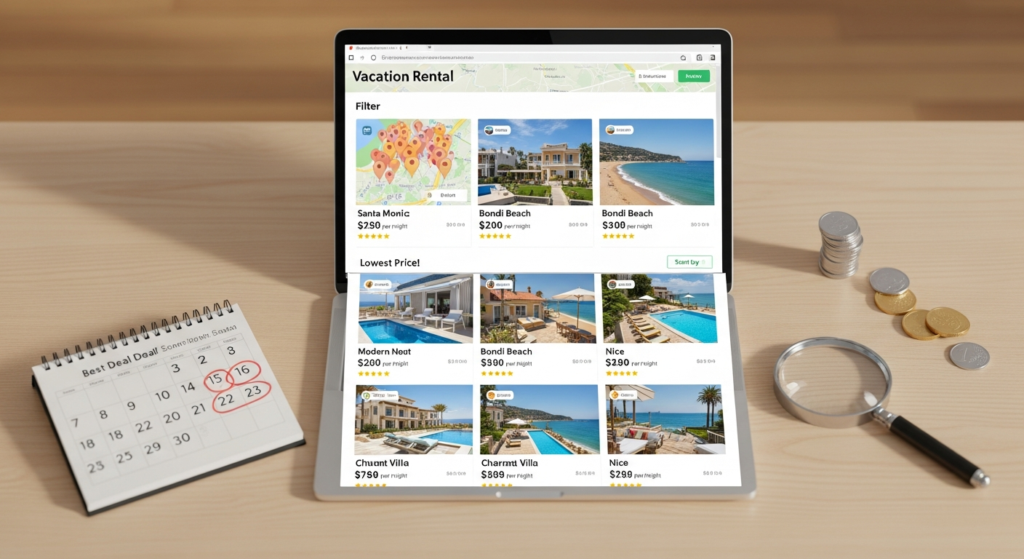
Unlock Unforgettable Stays: Your Ultimate Guide to Finding the Best Vacation Rental Deals
Imagine waking up to the gentle lapping of waves outside your private beachfront villa, sipping coffee on a charming balcony overlooking Parisian rooftops, or gathering your family around a cozy fireplace in a mountain chalet after a day of adventure. Vacation rentals offer the dream – space, privacy, and an authentic local experience that hotels often can’t match. But let’s be honest, securing that dream stay at a price that doesn’t break the bank can feel like finding a needle in a haystack. Fear not, fellow travelers! As your trusted guides at Vacation Rental Planners, we’re here to equip you with the insider knowledge and practical strategies to unearth incredible deals, transforming your travel aspirations into an affordable reality. Get ready to embark on a journey where smart planning meets unforgettable escapes!
1. The Early Bird (and the Last-Minute Maverick): Timing Your Search for Maximum Savings
Timing is everything when it comes to snagging the best vacation rental deals. There are two primary strategies, each suited to different travel styles and destinations: booking far in advance or diving in at the last minute.
Early Booking: Your Path to Perfect Planning and Premium Picks
If you’re eyeing a popular destination, traveling during peak season (think summer in Europe, spring break in Florida, or Christmas in Aspen), or coordinating a large group trip, booking early is your golden ticket. We recommend starting your search 6 to 12 months out, especially for highly sought-after locations like a sun-drenched villa in Tuscany, a spacious condo near Disney World in Orlando, or a cozy cottage on the Outer Banks for a specific summer week.
- Why it works: Early birds get the widest selection of properties. The most desirable rentals – those with prime locations, stunning views, or exceptional amenities like private pools and multiple bedrooms for families – are snapped up quickly. Booking ahead allows you to secure exactly what you want before prices surge due to demand. You’ll often find more competitive rates before hosts adjust them as the calendar fills up.
- Destinations where it shines:
- Maui, Hawaii: Prime beachfront homes or condos, especially in Wailea or Ka’anapali, can be reserved a year in advance, with rates starting from $400-$800/night for a multi-bedroom unit.
- Orlando, Florida: Large villas close to theme parks are essential for family trips. Booking 8-10 months out can save you 15-20% on peak-season rates, potentially bringing a 4-bedroom home from $350 down to $280/night.
- European City Apartments (e.g., Paris, Rome): Charming apartments with unique character get reserved quickly, especially those near iconic landmarks. Secure yours 6-9 months prior for better selection and rates around $150-$250/night for a central 2-bedroom.
- Peace of Mind: Knowing your accommodation is secured well in advance lets you focus on other exciting aspects of trip planning without stress.
Last-Minute Deals: For the Flexible and Spontaneous Traveler
If your travel dates and destination are flexible, waiting until the last minute can unveil surprisingly deep discounts. Hosts sometimes prefer to secure any booking rather than have their property sit empty, especially if a cancellation occurs or their calendar isn’t full. This strategy typically works best 2 to 4 weeks before your desired check-in date, sometimes even closer.
- Why it works: Hosts want to avoid lost income from vacant nights. They might drop prices significantly to fill last-minute gaps in their booking calendar.
- Destinations where it shines:
- Shoulder Season Beach Towns: Think the Gulf Coast of Florida (e.g., Destin, Panama City Beach) in late September or early May, or the Outer Banks in early June or late August. You might find a beachfront condo for $180/night that was $300/night just a month prior.
- Lesser-Known Ski Resorts: While prime resorts book early, smaller, charming ski towns in Colorado or Utah might have deals a few weeks out, especially mid-week.
- Urban Stays: Major cities often have a steady supply of rentals. If you’re flexible on exact neighborhood, you can find a stylish loft in Denver or a spacious apartment in Nashville for 20-30% off standard rates just weeks before arrival.
- Insider Tip: Use the “Flexible Dates” search option on platforms like Airbnb and VRBO. Also, sign up for price alerts if the platform offers them for your desired area. Be prepared to make a quick decision, as these deals can vanish as fast as they appear!
2. Beyond the Obvious: Unearthing Hidden Gems and Alternative Locations
Sometimes, the best deal isn’t about timing, but about location. While everyone flocks to the iconic hotspots, smart travelers know that incredible experiences and significant savings often lie just beyond the most famous boundaries.
Expand Your Geographic Horizons
Don’t limit your search to only the most popular neighborhoods or towns. A slight shift in your geographical focus can lead to substantially lower prices, fewer crowds, and often a more authentic local experience.
- Coastal Charms: Instead of aiming for the absolute beachfront in a prime resort town, look one or two towns over, or a few blocks back from the sand.
- Example: For a California beach vacation, consider Capitola or Pacific Grove instead of the bustling Santa Cruz or Monterey. You might find a charming 2-bedroom cottage for $200-$250/night, compared to $350-$450+ in the more central areas.
- Example: In Florida, try Hollywood Beach or Pompano Beach instead of South Beach Miami. You’ll still get gorgeous beaches and vibrant atmospheres, often with family-friendly rentals starting at $180-$250/night.
- European Enchantment: Dreaming of Italy’s Amalfi Coast? While breathtaking, it’s also famously expensive.
- Example: Explore Puglia, in Italy’s “heel.” This region boasts stunning coastlines, charming trulli homes, delicious food, and a more relaxed pace, with beautiful villas or masserias (farmhouses) available from $150-$300/night, compared to $500-$1000+ on the Amalfi Coast.
- Example: For a quintessential French experience, look to the Dordogne region for fairytale castles and gites (holiday cottages) starting around $100-$200/night, rather than the pricier French Riviera.
- Mountain Escapes: When planning a ski trip, consider smaller, family-friendly ski resorts or towns adjacent to the major ones.
- Example: Instead of Vail or Aspen in Colorado, explore Fraser or Winter Park. You can find spacious cabins or condos for $250-$400/night, offering incredible value compared to the $600-$1000+ you might pay in the prime resorts.
These alternative locations often offer a more laid-back vibe, easier parking (a godsend for families!), and a chance to discover local eateries and hidden gems that aren’t on every tourist’s radar. The savings can be significant, often 20-40% less than the most popular spots, freeing up your budget for amazing local experiences.
3. Mastering the Platforms: Smart Search Strategies on Airbnb, VRBO, and Beyond
The major vacation rental platforms are powerful tools, but truly mastering them means going beyond the basic search. Leveraging their features effectively can dramatically improve your chances of finding a fantastic deal.
Become a Filter Fanatic
This is arguably the most crucial step. Don’t just input dates and destination. Dive deep into the filters:
- Price Range: Set a realistic maximum. You can always adjust it if you’re not finding what you need.
- Number of Guests: Be precise. Some properties have strict occupancy limits. For families, this is vital to ensure everyone has space.
- Amenities: This is where savings and convenience meet.
- Kitchen: A full kitchen is a game-changer for saving money on meals, especially for families.
- Laundry Facilities: Essential for longer stays or travel with kids, saving on costly laundry services.
- Pool: Can be a deal-breaker for family fun and relaxation.
- Pet-Friendly: If traveling with a furry friend, this filter is non-negotiable.
- Property Type: Filter for “entire home” for privacy, or “apartment” if you’re looking for a city base.
- Instant Book: If you need to secure something quickly, this filter streamlines the process.
- Superhost/Premier Host: These badges indicate experienced, highly-rated hosts, often ensuring a smoother experience.
Leverage Flexible Dates and Map View
- Flexible Dates: As mentioned, this is huge for deals. Airbnb, for example, allows you to search for “1 week,” “1 month,” or “weekend” stays within a broader date range (“next 3 months,” “next 6 months”). This often reveals gaps in calendars that hosts are eager to fill at a discount.
- Map View: Once you have some results, switch to the map view. This visual tool is invaluable for:
- Spotting Value: You might see a property just a few blocks outside the “prime” area, but still very accessible, offering significantly lower rates.
- Understanding Proximity: Verify how close you are to attractions, public transport, or family and friends.
New Listings and Beyond the Big Three
- New Listings: Keep an eye out for newly listed properties. Hosts often offer introductory rates and may be more open to negotiation to build up their review count.
- Beyond Airbnb, VRBO, and Booking.com: While these are the giants, don’t forget other options:
- Google Vacation Rentals: An excellent aggregator that pulls listings from multiple sites, giving you a broad overview.
- Local Property Management Companies: In specific vacation areas (e.g., Myrtle Beach, Lake Tahoe), local companies often manage hundreds of properties and might have exclusive deals or properties not listed elsewhere. A quick Google search for “[Destination] vacation rental management” can yield results.
- Specialty Sites: Think about sites like Glamping Hub for unique outdoor stays or HomeExchange for potentially free accommodation if you’re open to swapping homes.
By using these platform strategies, you’re not just browsing; you’re actively hunting for the perfect, budget-friendly stay.
4. The Art of Negotiation and Off-Season Savvy
For the truly savvy traveler, finding deals isn’t just about searching; it’s about strategic timing and a bit of polite persuasion. Mastering the art of negotiation and embracing off-season travel can lead to some of the most rewarding savings.
Polite Negotiation: When and How to Ask for a Deal
While not every host will negotiate, it never hurts to ask, especially under specific circumstances:
- Longer Stays: If you’re planning a stay of a week or more, politely inquire if the host offers a further discount beyond any automatic weekly rate. “We’re looking to book for 10 nights in November. We love your property! Would you be open to a slight discount for this extended stay?” is a perfectly acceptable message. Hosts value longer bookings as they reduce turnover costs and vacant nights.
- Off-Peak or Shoulder Season: During less busy times, hosts are often more flexible. If you’re traveling mid-week or in a transitional season, you have more leverage.
- Last-Minute Gaps: If you notice a few open nights between two existing bookings, a host might be willing to offer a discount to fill that “orphan” gap.
- Just Ask Nicely: Always be polite, highlight what you appreciate about their property, and be specific about your request. Never demand a discount; instead, ask if there’s any flexibility. The worst they can say is no!
Embrace the Off-Season and Shoulder Season
This is perhaps the single most impactful strategy for significant savings. Traveling during the off-season or shoulder season (the periods just before or after peak season) can unlock deals of 30-50% or more, along with fewer crowds and often delightful weather.
- Mediterranean Coasts (e.g., Greece, Italy, Spain): Instead of blistering July or August, consider late April/May or late September/October.
- Example: A charming villa on the Greek island of Santorini might cost $500-$800/night in August. In October, with pleasant temperatures (perfect for exploring without the heat) and stunning sunsets, you could find a similar property for $250-$400/night. Many restaurants are still open, and the local experience is richer.
- Caribbean & Tropical Destinations: Avoid the high season of December-April. Look at late spring (May-early June) or early fall (September-early November, being mindful of hurricane season, though deals are abundant).
- Example: A beachfront condo in Aruba could drop from $400/night in February to $250/night in September.
- Ski Resorts: While deep winter is peak, consider early December or late March/early April.
- Example: A large chalet in Park City, Utah, for $800/night in January could be $400-$500/night in late March, offering fantastic spring skiing and fewer lift lines.
- Popular US Beach Destinations: The Outer Banks of North Carolina, Florida’s Gulf Coast, or Southern California beaches.
- Example: A spacious family home on the Outer Banks might be $4000/week in July, but just $2000-$2500/week in May or September. The water is still warm enough for swimming, and the traffic is significantly lighter.
- Mid-Week Magic: Even within peak season, booking Sunday through Thursday can be significantly cheaper than Friday and Saturday nights, especially for urban rentals or quick getaways. Many hosts have lower mid-week rates built into their pricing.
Embracing these strategic booking times allows you to experience your dream destination without the peak-season price tag or the shoulder-to-shoulder crowds.
5. Unlocking Savings: Group Travel, Long Stays, and Understanding the True Cost
Beyond finding the right property at the right time, there are further strategies to maximize your budget, especially for families and groups.
Group Travel: The Power of Splitting Costs
For families traveling together, or multiple couples, booking a larger vacation rental is often dramatically more cost-effective than booking multiple hotel rooms. Not only do you get more space, but you also gain shared amenities like a full kitchen, living areas, and often a private pool or garden.
- Example: Three families traveling to a destination like Tuscany could rent a sprawling villa with 4-5 bedrooms, a private pool, and stunning views for $500-$800/night. Split three ways, that’s $167-$267 per family per night. Compare this to three separate hotel rooms at $200-$300 each, and the savings are clear, not to mention the communal experience.
- Benefits: More space for everyone, common areas for bonding, shared cooking facilities, and often laundry. This creates a much more relaxed and cohesive travel experience, especially with children.
Long Stays: The Longer You Stay, the More You Save
Many hosts offer significant discounts for extended bookings. These can range from 10-20% off for weekly stays and 20-40% off for monthly stays. This is a fantastic strategy for digital nomads, those planning an extended family visit, or travelers who enjoy “slow travel,” immersing themselves in a destination.
- Example: A charming apartment in Lisbon, Portugal, might be listed at $100/night. For a 30-day stay, a 30% monthly discount could bring the effective nightly rate down to $70, saving you $900 over the month!
- Tip: Always input your full desired dates to see if these discounts automatically apply. If not, don’t hesitate to politely inquire with the host.
Understanding the True Cost: Don’t Forget the Fees
When comparing vacation rentals, it’s crucial to look beyond just the nightly rate. Various fees can significantly impact the total cost:
- Cleaning Fees: These are one-time charges that can range from $50 to $300+, depending on the size of the property. For a short, 1-2 night stay, a high cleaning fee can make a seemingly cheap nightly rate expensive. For longer stays, it gets diluted.
- Service Fees (Platform Fees): Airbnb, VRBO, and other platforms charge a service fee to guests, typically 5-15% of the booking subtotal.
- Local Taxes: Many destinations levy occupancy or tourist taxes, which are added to your total.
Always click through to see the “total price” before making a decision. Sometimes a property with a slightly higher nightly rate but lower cleaning or service fees can end up being cheaper overall. Be aware of these charges so there are no surprises when you hit that “Book Now” button!
Frequently Asked Questions About Finding Vacation Rental Deals
Q: Is it always cheaper to book directly with a host?
A: Not always, but often. Booking directly can save you the 5-15% service fees charged by platforms like Airbnb or VRBO. However, platforms offer payment protection and dispute resolution services. If you find a host on a platform and then consider booking directly (which is often against platform rules before a booking is made), proceed with caution and ensure you trust the host completely, perhaps after a positive previous stay. For first-time bookings, the security of the platform often outweighs potential small savings.
Q: What’s the best time of year to find deals in popular destinations like Disney World or Hawaii?
A: For Disney World (Orlando, FL), the best deals are typically in late January/February (after holiday crowds and before spring break) and late August/September (after summer and before fall breaks). For Hawaii, look to the shoulder seasons: mid-April to mid-June and September to mid-December (excluding major holidays like Thanksgiving and Christmas). These periods offer pleasant weather, fewer crowds, and noticeably lower rental prices.
Q: How can I ensure a listing is legitimate and not a scam?
A: Always book through reputable platforms (Airbnb, VRBO, Booking.com) which offer some level of protection. Look for listings with numerous positive reviews (especially from “Superhosts” or “Premier Hosts”). Read reviews carefully. Communicate with the host only through the platform. Be wary of requests to pay outside the platform or through wire transfers. If a deal seems too good to be true, it probably is. You can also do a reverse image search of the property photos to see if they appear on other sites with different details.
Q: Are last-minute deals truly worth the risk of limited choice?
A: For travelers with high flexibility, absolutely! If you’re open to various dates, neighborhoods, or even destinations, last-minute deals can offer significant savings on excellent properties. However, if you have specific dates, a large group, or require particular amenities (like a specific number of bedrooms or a private pool), the risk of limited choice might make early booking a safer and more satisfying strategy.
Q: What amenities should I prioritize for family travel to save money?
A: A full kitchen is paramount. Eating out for every meal, especially with a family, quickly adds up. Being able to prepare breakfasts, pack lunches, and cook some dinners can save hundreds over a week. Laundry facilities are also a huge money-saver, reducing the need to pack excessive clothing (and saving on airline baggage fees) and avoiding expensive hotel laundry services. Finally, a property with a pool or a nearby playground can provide built-in entertainment, reducing the need to spend money on external activities every day.
Conclusion: Your Adventure Awaits, Smarter and More Affordable
The allure of a vacation rental is undeniable – the space, the freedom, the feeling of truly living like a local. Now, with the strategies and insider tips we’ve shared, finding that perfect stay doesn’t have to come with a hefty price tag. From timing your booking just right to exploring charming alternative destinations, mastering platform filters, and embracing the art of negotiation and off-season travel, you are now equipped to be a deal-finding maestro.
Remember, every savvy search is a step closer to that sun-kissed morning on a private balcony, that cozy family evening by the fire, or that exhilarating exploration of a new city. Your dream vacation rental is out there, waiting to be discovered at an unbeatable price. At Vacation Rental Planners, we believe unforgettable travel should be accessible to everyone. So go forth, plan smart, and embark on your next incredible journey with confidence and a well-deserved sense of triumph!
{
“@context”: “https://schema.org”,
“@graph”: [
{
“@type”: “Article”,
“mainEntityOfPage”: {