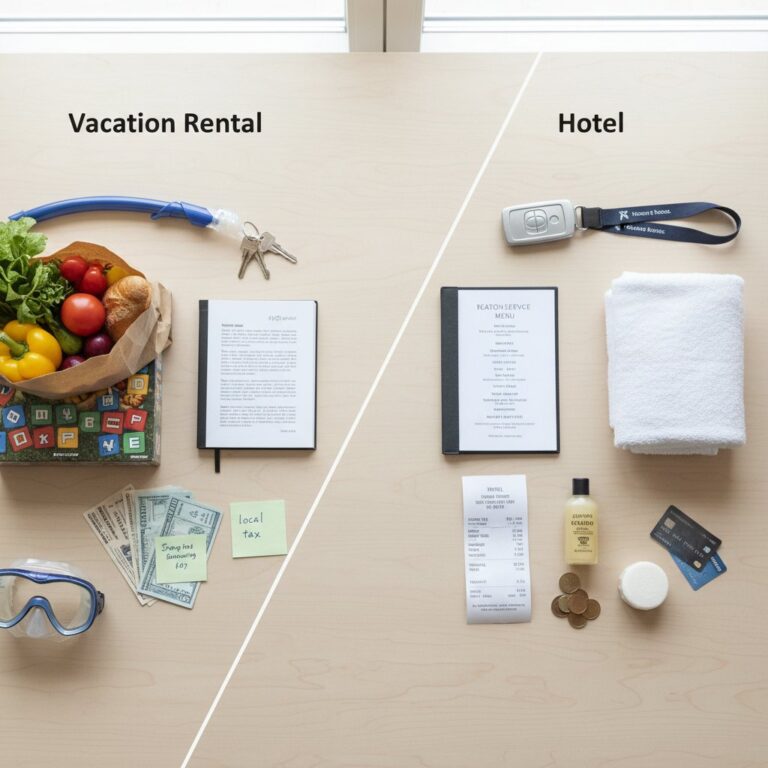


Vacation Rental Property Management vs. Self-Management: The Real Math Behind Your Investment
The Allure of Self-Management: Pros and Perceived Savings
The appeal of self-managing your vacation rental is undeniable, especially for new owners or those with a single property. On the surface, it seems like a straightforward way to keep more of your hard-earned rental income. The most obvious benefit is the avoidance of property management fees, which typically range from 15% to 35% of your gross rental revenue. This percentage can look substantial on paper, leading many to believe that cutting out the middleman directly translates to higher profits.
Beyond the direct financial aspect, self-management offers a sense of complete control. You get to make every decision, from setting nightly rates and crafting your listing description to choosing cleaning services and approving guest bookings. This level of autonomy can be incredibly appealing if you have a specific vision for your property or enjoy being hands-on. You can personalize the guest experience down to the smallest detail, ensuring your property reflects your unique style and hospitality standards. Direct communication with guests allows you to build relationships, gather immediate feedback, and address any issues personally, which can be very rewarding. For some, the satisfaction of seeing their property thrive under their direct stewardship is a significant non-financial benefit.
Furthermore, self-managing provides flexibility. You can block out dates for personal use whenever you wish without coordinating with a management company. You also have direct oversight of all expenses, from maintenance repairs to amenity restocking, potentially allowing you to shop around for the best deals and keep a tighter rein on your budget. This direct access to your financial inflows and outflows can offer a clear picture of your property’s performance. For owners who live close to their rental property and have ample free time, self-management can indeed be a viable and even enjoyable option. However, it’s crucial to understand that these perceived savings and benefits come with a significant investment of your most valuable resource: your time.
The Hidden Costs of Self-Management: Time, Effort, and Opportunity

While the absence of management fees might initially seem like a significant saving, the true cost of self-management often lies in the immense time commitment and the opportunity costs you might not immediately recognize. Managing a vacation rental is far more than just handing over keys. It’s a 24/7 operation that demands constant attention, meticulous organization, and a willingness to be on call at all times.
Consider the following time sinks:
- Guest Communication: From initial inquiries and booking confirmations to pre-arrival instructions, mid-stay check-ins, and post-departure follow-ups, guest communication is continuous. Guests expect prompt responses, often within minutes, regardless of the time zone or day of the week. This alone can consume several hours per week, especially during peak seasons.
- Marketing and Listing Management: You’re responsible for creating compelling listings on platforms like Airbnb, Vrbo, and Booking.com. This involves writing engaging descriptions, taking professional-quality photos, updating calendars, and adjusting pricing dynamically. Keeping your listings competitive and current requires ongoing effort and market research.
- Booking Management & Dynamic Pricing: Manually tracking bookings across multiple platforms, preventing double-bookings, and adjusting prices based on demand, local events, and competitor rates is a complex task. Without sophisticated pricing tools, you risk leaving money on the table or having long vacant periods.
- Cleaning and Housekeeping Coordination: Arranging for reliable cleaners after every guest departure, ensuring high standards of cleanliness, restocking supplies (toiletries, paper towels, coffee), and managing laundry is a constant logistical challenge. Finding and vetting trustworthy cleaning staff can be a job in itself.
- Maintenance and Repairs: From leaky faucets and broken appliances to landscaping and seasonal upkeep, maintenance issues will inevitably arise. You’ll need to be available to troubleshoot problems, coordinate with contractors, and ensure repairs are completed efficiently and cost-effectively, often under tight deadlines between guests.
- Emergency Response: Guests can lock themselves out, experience power outages, or have medical emergencies. Being the sole point of contact means you’re responsible for immediate assistance, day or night.
- Administrative Tasks: This includes managing reviews, handling security deposits, reconciling finances, preparing tax documents, and staying abreast of local regulations and licensing requirements.
Expert Tip: A study by Hostyapp suggests that self-managing a single Airbnb property can take anywhere from 10 to 20 hours per week, especially for owners dedicated to maximizing their income and guest satisfaction. If you value your time at, say, $50 per hour, that’s an additional “cost” of $500 to $1,000 per week, or $26,000 to $52,000 annually, not including actual expenses. This opportunity cost – the income you could be earning or the leisure time you could be enjoying – is a critical factor often overlooked in the self-manage vs. hire calculation. What could you be doing with those extra hours?
Understanding Property Management Fees: What You Get for Your Investment
When you hire a professional vacation rental property management company, you’re not just paying a fee; you’re investing in a comprehensive service designed to optimize your property’s performance and free up your valuable time. The fees typically fall into a few categories, and understanding what each covers is key to appreciating the value proposition.
Common fee structures include:
- Percentage-Based Fees: This is the most common model, where the management company takes a percentage of your gross rental revenue. Rates usually range from 15% to 35%, depending on the level of service, location, and the property’s size/type. A higher percentage often indicates a more all-inclusive service.
- Fixed-Fee Per Booking: Less common, but some companies charge a flat fee for each booking they secure, regardless of the rental price.
- Hybrid Models: Some companies combine a lower percentage fee with additional charges for specific services, such as a one-time onboarding fee, maintenance coordination fees, or fees for specific marketing campaigns.
What services do these fees typically cover? A reputable property management company provides an extensive suite of services that would individually consume vast amounts of your time and resources if self-managed:
- Comprehensive Marketing & Advertising: Professional photography, compelling listing descriptions, multi-platform distribution (Airbnb, Vrbo, Booking.com, their own website), SEO optimization, and targeted advertising campaigns to maximize visibility and bookings.
- Dynamic Pricing & Revenue Management: Utilizing sophisticated software and market data to continuously adjust nightly rates based on seasonality, local events, competitor pricing, and demand fluctuations, ensuring your property is always priced optimally to maximize occupancy and revenue.
- 24/7 Guest Communication & Support: Handling all guest inquiries, booking confirmations, check-in instructions, concierge services, and immediate resolution of any issues or emergencies, day or night.
- Professional Cleaning & Housekeeping: Coordinating reliable, vetted cleaning teams, ensuring strict cleanliness standards, inventory management for supplies, and often providing laundry services for linens.
- Maintenance & Repairs: Conducting regular property inspections, coordinating preventative maintenance, and handling all repair requests with trusted vendors, often at negotiated rates. They manage the entire process, from diagnosis to completion.
- Legal & Regulatory Compliance: Staying up-to-date with ever-changing local short-term rental laws, permitting requirements, tax regulations, and safety standards, protecting you from potential fines and legal liabilities.
- Financial Reporting: Providing detailed monthly and annual statements, making tax preparation simpler and giving you a clear overview of your property’s financial performance.
Expert Insight: While a 25% management fee might sound steep, consider that a professional manager often boosts your annual revenue by 20-40% through optimized pricing and higher occupancy. For example, if your self-managed property earns $50,000 annually, a manager might increase that to $65,000. Even after their 25% fee ($16,250), your net income is $48,750, plus you save hundreds of hours of your own time and benefit from expert care. This often results in a higher net profit than self-management, even with the fees.
Revenue Optimization: How Professionals Boost Your Bottom Line

One of the most compelling arguments for partnering with a vacation rental property management company is their ability to significantly optimize your revenue. This isn’t just about filling more nights; it’s about filling them at the right price and attracting the right guests. Professional managers employ a multi-faceted approach that is difficult, if not impossible, for individual owners to replicate effectively.
Here’s how they do it:
- Dynamic Pricing Strategies: This is perhaps the biggest revenue booster. Professional managers use sophisticated algorithms and real-time market data to adjust your nightly rates continuously. This means higher prices during peak seasons, holidays, and local events, and strategic discounts during off-peak times to maintain occupancy. A study by AirDNA suggests that properties utilizing dynamic pricing can see revenue increases of 10-40% compared to static pricing.
- Multi-Channel Distribution: Beyond just Airbnb and Vrbo, professional companies list your property on a wide array of booking platforms, their own direct booking websites, and sometimes even through travel agencies. This vastly expands your reach to a global audience, increasing visibility and booking potential.
- Professional Photography & Listing Optimization: High-quality photos are paramount. Managers invest in professional photography and craft compelling, SEO-optimized listing descriptions that highlight your property’s unique selling points, drawing in more potential guests. Research indicates that listings with professional photos can earn up to 20-40% more than those with amateur photos.
- Enhanced Occupancy Rates: Through aggressive marketing, optimized pricing, and a broad distribution network, professional managers consistently achieve higher occupancy rates. While the average self-managed property might hover around 50-60% occupancy, managed properties often reach 70-85% or even higher in desirable markets.
- Superior Guest Experience & Reviews: Professional guest communication, quick issue resolution, and attention to detail lead to happier guests and, critically, better reviews. High ratings and glowing testimonials are vital for attracting future bookings and maintaining premium pricing. Properties with a 4.8-star rating or higher often command a premium and experience higher booking conversion rates.
- Repeat Bookings & Direct Bookings: Many management companies cultivate a loyal guest base, encouraging repeat visits and direct bookings through their own channels. Direct bookings bypass platform fees, further increasing your net revenue.
Practical Tip: Consider the “revenue lift” a professional manager can provide. If your self-managed property generates $4,000 in gross monthly revenue with 60% occupancy, a manager might push that to $6,000 with 80% occupancy through better pricing and marketing. Even with a 25% management fee ($1,500), your net revenue is $4,500 – a $500 increase, plus the invaluable savings of your time and effort. This demonstrates how professional management can genuinely improve your financial outcome, not just reduce your workload.
The Legal and Compliance Maze: A Professional’s Advantage
Navigating the complex and ever-evolving landscape of short-term rental regulations is arguably one of the most challenging aspects of self-managing a vacation property. What seems like a simple rental can quickly become a legal minefield if you’re not fully compliant. This is where professional property management companies offer an invaluable advantage, shielding you from potential fines, legal disputes, and operational headaches.
Consider the myriad of regulations you need to be aware of:
- Local Zoning and Permitting: Many cities and counties have specific zoning laws that dictate where short-term rentals are allowed and often require special permits or licenses. These regulations can change frequently, and non-compliance can lead to hefty fines or even the inability to operate your rental.
- Taxes: Beyond federal and state income taxes, you might be subject to local occupancy taxes, tourism taxes, and sales taxes. Understanding how to collect, remit, and report these taxes accurately is crucial.
- Safety Standards: Ensuring your property meets all health and safety codes is non-negotiable. This includes fire safety (smoke detectors, CO detectors, fire extinguishers), pool safety, proper egress, and general property maintenance to prevent accidents.
- Insurance: Standard homeowner’s insurance typically doesn’t cover commercial short-term rental activities. You need specialized short-term rental insurance, and understanding the nuances of liability coverage, property damage, and loss of income is vital.
- HOA Rules and Covenants: If your property is part of a Homeowners Association (HOA) or Condo Association, you must comply with their specific rules regarding short-term rentals, noise, parking, and common area usage.
- Fair Housing Laws: You must adhere to fair housing regulations, ensuring non-discriminatory practices in advertising and booking.
- ADA Compliance: Depending on the size and type of your rental, you may need to consider aspects of Americans with Disabilities Act (ADA) compliance.
- Noise Ordinances & Guest Behavior: Managing guest behavior, particularly noise levels, and ensuring they respect local ordinances and neighbors is a constant concern.
Peace of Mind and Work-Life Balance: The Intangible ROI
While the financial aspects of vacation rental management are paramount, the non-monetary benefits of hiring a professional company – particularly peace of mind and an improved work-life balance – often prove to be invaluable. These “intangible returns on investment” can significantly enhance your quality of life and allow you to truly enjoy the benefits of property ownership without the constant burden.
Consider the following:
- Freedom from 24/7 Demands: No more late-night calls about a broken air conditioner or a locked-out guest. Your property manager handles all emergencies, guest inquiries, and operational issues around the clock. This means you can travel, spend time with family, or simply relax without constantly checking your phone.
- Reduced Stress and Anxiety: The weight of managing bookings, coordinating cleanings, dealing with maintenance issues, and handling potentially difficult guests can be incredibly stressful. A professional manager shoulders this burden, allowing you to sleep soundly knowing your investment is in capable hands.
- More Time for Yourself: Imagine reclaiming those 10-20 hours per week you would spend on self-management. What could you do with that time? Pursue hobbies, focus on your primary career, or invest in other ventures. This newfound freedom is a significant benefit that often outweighs the management fees.
- Ability to Enjoy Your Property: Many vacation rental owners also want to use their property for personal getaways. With a manager, you simply block out your desired dates, and they handle the rest. No need to worry about cleaning before or after your stay, or coordinating with your own “staff.”
- Expertise at Your Fingertips: You gain access to a team of experts in marketing, pricing, guest relations, maintenance, and legal compliance. This collective knowledge and experience is a powerful asset that helps your property perform at its best.
- Protection from Guest Issues: Professional managers are adept at screening guests, handling disputes, and managing situations like property damage or excessive noise, protecting your investment and your reputation.
Real-World Scenario: Imagine you’re on a family vacation, thousands of miles away, when a pipe bursts at your rental property. If you’re self-managing, you’re now scrambling to find a plumber, coordinate access, and communicate with guests, potentially ruining your own trip. With a property manager, this entire crisis is handled for you, often before you even hear about it, allowing you to enjoy your vacation undisturbed. This peace of mind is not easily quantifiable but is profoundly valuable.
Case Study: The Math of a Mid-Range Coastal Condo
Let’s put the “Vacation Rental Property Management Companies vs Self-Manage Math” to the test with a hypothetical scenario. Consider a 2-bedroom, 2-bathroom coastal condo in a popular vacation destination, purchased for $450,000. We’ll analyze its performance over a year under both self-management and professional management.
Assumptions:
- Property Value: $450,000
- Mortgage/Taxes/Insurance (fixed costs): $2,000/month ($24,000/year)
- Cleaning Fee per stay: $150 (charged to guest, but impacts net revenue if self-managed due to coordination/effort)
- Maintenance/Supplies (annual estimate): $3,000
- Utilities (annual estimate): $3,600
- Professional Management Fee: 25% of gross revenue
- Self-Manager’s Time Value: $50/hour
Annual Performance Comparison: Self-Manage vs. Professional Management
| Metric | Self-Manage Scenario | Professional Management Scenario |
|---|---|---|
| Average Nightly Rate | $200 | $230 (due to dynamic pricing & optimization) |
| Annual Occupancy Rate | 60% (219 nights) | 75% (274 nights) |
| Gross Rental Revenue | $43,800 ($200 * 219 nights) | $63,020 ($230 * 274 nights) |
| Cleaning Costs (Paid to service) | $150 * 219 stays = $32,850 (offset by guest fees, but coordination time is high) | $150 * 274 stays = $41,100 (offset by guest fees, managed by PM) |
| Maintenance/Supplies | $3,000 | $3,000 (PM coordinates, may negotiate better rates) |
| Utilities | $3,600 | $3,600 |
| Platform Fees (e.g., Airbnb/Vrbo) | 3% Host Fee: $1,314 | 3% Host Fee: $1,891 |
| Property Management Fees | $0 | $15,755 (25% of $63,020) |
| Total Annual Expenses (Excl. Mortgage/Taxes/Insurance) | $7,914 | $24,246 |
| Net Rental Income (Before Fixed Costs & Time Value) | $35,886 ($43,800 – $7,914) | $38,774 ($63,020 – $24,246) |
| Estimated Annual Time Spent (Self-Manage) | 15 hours/week * 52 weeks = 780 hours | 0-1 hour/week (minimal oversight) |
| Value of Self-Manager’s Time (Opportunity Cost) | $39,000 ($50/hour * 780 hours) | $0 (for comparison) |
| True Net Profit (After all expenses & time value) | -$3,114 ($35,886 – $39,000) | $38,774 |
Analysis: This comparison starkly illustrates the “hidden cost” of self-management. While the self-managed property shows a positive net rental income before accounting for the owner’s time, once the opportunity cost of that time is factored in, the self-managed scenario actually results in a negative “true” profit. The professional management scenario, despite the significant management fee, generates a higher net rental income and a substantial true net profit because it optimizes revenue and eliminates the owner’s time burden. This math consistently shows that professional management, while an upfront cost, often leads to a significantly better financial outcome and, crucially, a far less stressful ownership experience.
Choosing Your Path: When to Self-Manage, When to Hire
The decision between self-managing and hiring a professional vacation rental property management company is a personal one, with no single “right” answer. It depends heavily on your individual circumstances, goals, and resources. Here’s a breakdown to help you determine which path aligns best with your situation:
Consider Self-Management If:
- You Live Very Close to Your Property: Proximity makes it easier to handle emergencies, conduct inspections, and coordinate services personally.
- You Have Ample Free Time: If you’re retired, have a flexible schedule, or genuinely enjoy the hands-on aspects of property management, you might have the 10-20 hours per week required.
- You Own Only One Property: Managing a single unit is more feasible than juggling multiple properties.
- You Enjoy Guest Interaction: If you love being a host, building rapport with guests, and providing a personalized experience.
- You Are Tech-Savvy: Comfortable with online booking platforms, dynamic pricing tools (even basic ones), and digital communication.
- You Are Highly Organized and Detail-Oriented: Managing schedules, finances, and maintenance requires meticulous attention to detail.
- You Are Comfortable with DIY Marketing: You have the skills or willingness to learn how to create compelling listings and market your property effectively.
- Your Property is in a Low-Demand Area: In markets with less competition, the need for aggressive dynamic pricing and extensive marketing might be reduced.
Consider Hiring a Professional Property Management Company If:
- You Live Far from Your Property: Geographic distance makes hands-on management impractical and stressful.
- Your Time is Limited or More Valuable Elsewhere: If your primary career or other commitments demand your full attention, or if your hourly rate is high, outsourcing management is a clear financial win.
- You Own Multiple Properties: Scaling self-management across several units becomes exponentially more complex and time-consuming.
- You Seek Maximum Revenue Optimization: You want to leverage expert dynamic pricing, professional marketing, and broad distribution channels to ensure your property earns its highest potential income.
- You Prioritize Peace of Mind: You want to enjoy passive income without the stress of 24/7 guest demands, maintenance emergencies, and administrative burdens.
- You Value Expert Compliance: You want to ensure your property is always up-to-date with local regulations, taxes, and safety standards, minimizing legal risks.
- You Want a Professional Guest Experience: You believe that professional guest communication, concierge services, and swift issue resolution are critical for positive reviews and repeat bookings.
- Your Property is High-Value or in a Competitive Market: In these scenarios, the expertise of a professional manager can make a significant difference in profitability and protection of your investment.
Final Thought: For most vacation rental owners, especially those with busy lives or multiple properties, the “math” ultimately favors professional management. The combination of increased revenue, reduced stress, and expert handling of all operational aspects often results in a higher net profit and a far more enjoyable ownership experience, making the management fee a worthwhile investment rather than a cost to be avoided.
Key Takeaways
- Self-management offers control and perceived savings by avoiding management fees, but often incurs significant hidden costs in time, effort, and missed revenue.
- Professional property management fees (15-35% of gross revenue) cover comprehensive services including dynamic pricing, multi-channel marketing, 24/7 guest support, cleaning, maintenance, and legal compliance.
- Property managers typically boost gross revenue by 20-40% through optimized pricing, professional listings, and higher occupancy rates, often leading to a higher net profit even after fees.
- Navigating complex and changing short-term rental regulations, taxes, and safety standards is a major challenge for self-managers, where professionals provide invaluable expertise and risk mitigation.
- The “intangible ROI” of peace of mind, reduced stress, and reclaimed personal time often makes professional management an invaluable investment for a better work-life balance.
Frequently Asked Questions
Q: What is the average percentage a vacation rental property management company charges?
A: The average percentage typically ranges from 15% to 35% of your gross rental revenue. This percentage can vary based on the location of your property, the level of service included (e.g., full-service vs. à la carte), and the type of property you own.
Q: Can I really make more money with a property manager even after paying their fees?
A: Yes, often you can. Property managers excel at revenue optimization through dynamic pricing, professional marketing, and broader distribution channels, leading to higher occupancy rates and average nightly rates. These factors combined can increase your gross revenue significantly enough that your net profit, after deducting management fees, is higher than what you could achieve through self-management.
Q: How much time does it typically take to self-manage a vacation rental property?
A: Self-managing a single vacation rental can demand anywhere from 10 to 20 hours per week, especially if you’re committed to maximizing bookings and guest satisfaction. This includes time spent on guest communication, marketing, booking management, cleaning coordination, maintenance, and administrative tasks.
Q: What are the biggest risks of self-managing my vacation rental?
A: The biggest risks include non-compliance with local short-term rental regulations and taxes, leading to fines or legal issues; missed revenue opportunities due to inefficient pricing and marketing; poor guest experiences resulting in negative reviews; and the significant personal time commitment that can lead to burnout and stress.